
WhisperKOOL: Complete Guide to Wine Cellar Cooling
Discover how WhisperKOOL cooling systems protect luxury wine collections. Expert insights on installation, sizing, and performance for cellars.
Wine is a living treasure that demands exacting environmental conditions. For collectors investing in bottles worth hundreds or thousands of dollars, protecting that value means more than simply storing wine in a cool room. A luxury wine cellar requires precision climate control, and that's where advanced cooling technology becomes essential. Among the premium solutions available today, one name consistently rises to the top among serious collectors and design professionals who understand that temperature stability isn't negotiable when safeguarding exceptional vintages.
Understanding WhisperKOOL Cooling Technology
WhisperKOOL represents the gold standard in dedicated wine cellar refrigeration systems. Unlike traditional HVAC systems or residential air conditioners, whisperkool units are purpose-built for the unique demands of wine storage environments. These specialized systems maintain precise temperature ranges between 55-58°F while controlling humidity levels that prevent cork degradation and label damage.
The engineering behind whisperkool technology addresses challenges that conventional cooling cannot. Wine cellars require consistent temperatures without fluctuation, adequate humidity control, and quiet operation that doesn't disturb the home environment. Each whisperkool unit integrates these requirements into a compact, powerful system designed specifically for wine preservation.
Why Dedicated Wine Cellar Cooling Matters
Standard air conditioning systems cycle on and off throughout the day, creating temperature swings that accelerate wine aging and can damage delicate flavor profiles. A dedicated whisperkool cooling system operates continuously at lower power levels, maintaining stable conditions that protect your investment.
Key benefits of specialized wine cellar cooling include:
Precise temperature control within ±2°F
Integrated humidity management preventing cork drying
Vibration reduction protecting sediment integrity
Energy-efficient operation reducing long-term costs
Quiet performance maintaining home tranquility
When designing custom wine cellars, climate control represents the invisible foundation upon which everything else rests. The most beautiful mahogany racking or stunning glass enclosure means nothing if the wine inside spoils from inadequate cooling.
Sizing Your WhisperKOOL System Correctly
Proper system sizing determines whether your wine cellar maintains optimal conditions or struggles constantly. Too small a unit runs continuously without achieving target temperatures; too large creates temperature swings as the system cycles rapidly. Professional sizing calculations account for multiple variables that impact cooling requirements.
Critical Sizing Factors
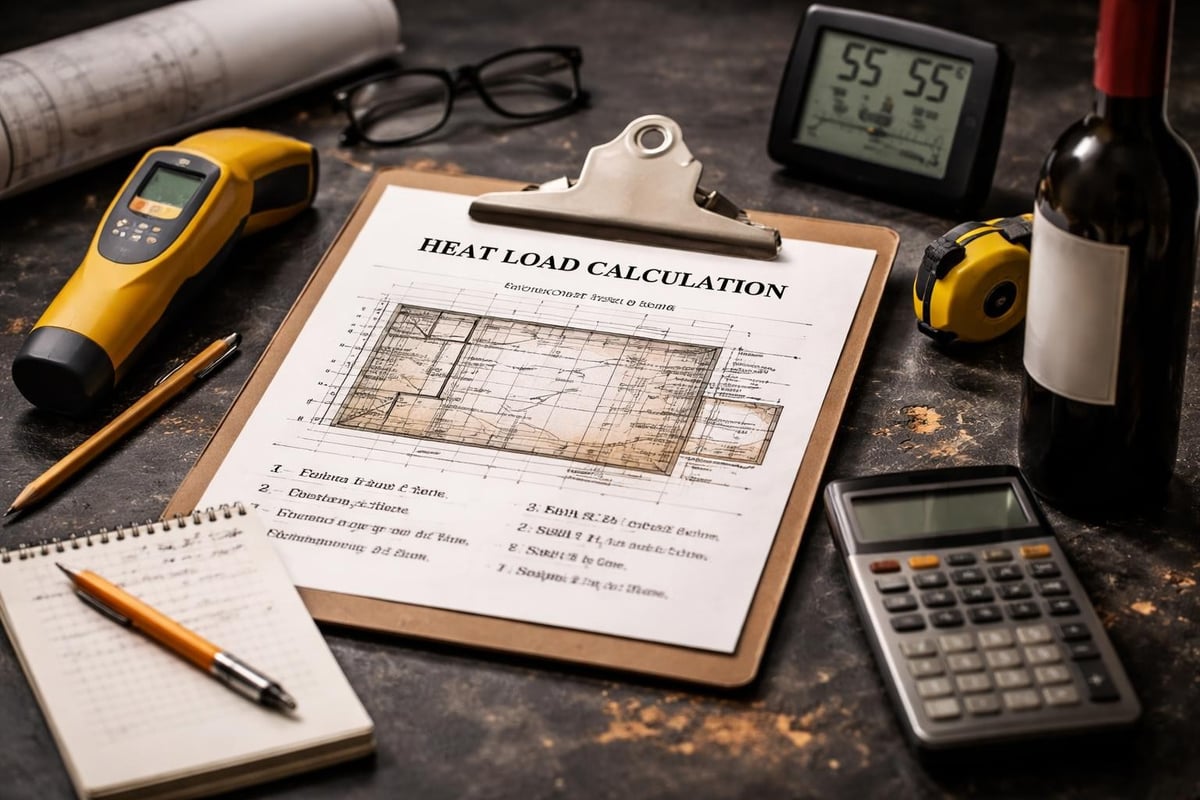
Cellar volume forms the baseline calculation, but it's just the starting point. A 500-cubic-foot cellar in Houston faces vastly different challenges than the same size space in a climate-controlled basement. The whisperkool sizing process examines comprehensive environmental factors.
Sizing Factor | Impact Level | Consideration |
|---|---|---|
Cellar Volume | Primary | Total cubic footage determines base BTU requirement |
Insulation Quality | High | R-19 minimum walls, R-30 ceiling recommended |
Glass Exposure | Very High | Single-pane glass increases load 30-40% |
Ambient Temperature | High | Adjacent room temperature affects efficiency |
Door Traffic | Moderate | Frequent access increases cooling demand |
Lighting Heat | Moderate | LED vs. incandescent impacts load significantly |
Professional installers use detailed heat load calculators incorporating these variables to determine precise BTU requirements. A typical residential cellar requires between 2,000-8,000 BTU capacity, while commercial installations may demand substantially more.
The whisperkool product line offers models ranging from compact 2,500 BTU units for small reach-in cellars to powerful 8,000 BTU systems handling expansive collections. Understanding your specific requirements prevents costly oversizing or inadequate cooling performance.
Installation Configurations and Best Practices
One of whisperkool's strongest advantages lies in installation flexibility. Different cellar designs demand different mounting approaches, and understanding the various mounting configurations helps optimize both performance and aesthetics.
Through-Wall Installation
Through-wall mounting represents the most common configuration for whisperkool systems. The unit sits partially inside the cellar wall with the evaporator (cold side) facing the wine storage space and the condenser (hot side) exhausting into an adjacent ventilated area. This approach maximizes efficiency while minimizing visible equipment inside the cellar.
Installation requires:
Properly framed opening matching unit dimensions
Adequate ventilation in the exhaust space (minimum 150 CFM)
Dedicated electrical circuit meeting manufacturer specifications
Insulated sleeve preventing air bypass around unit
Sealed vapor barrier maintaining cellar envelope integrity
Through-wall installations work beautifully in traditional wine cellars where mechanical equipment can exhaust into garage spaces, utility rooms, or exterior locations. The key lies in ensuring the exhaust area never exceeds 95°F, even during peak summer months.
Ducted and Remote Systems
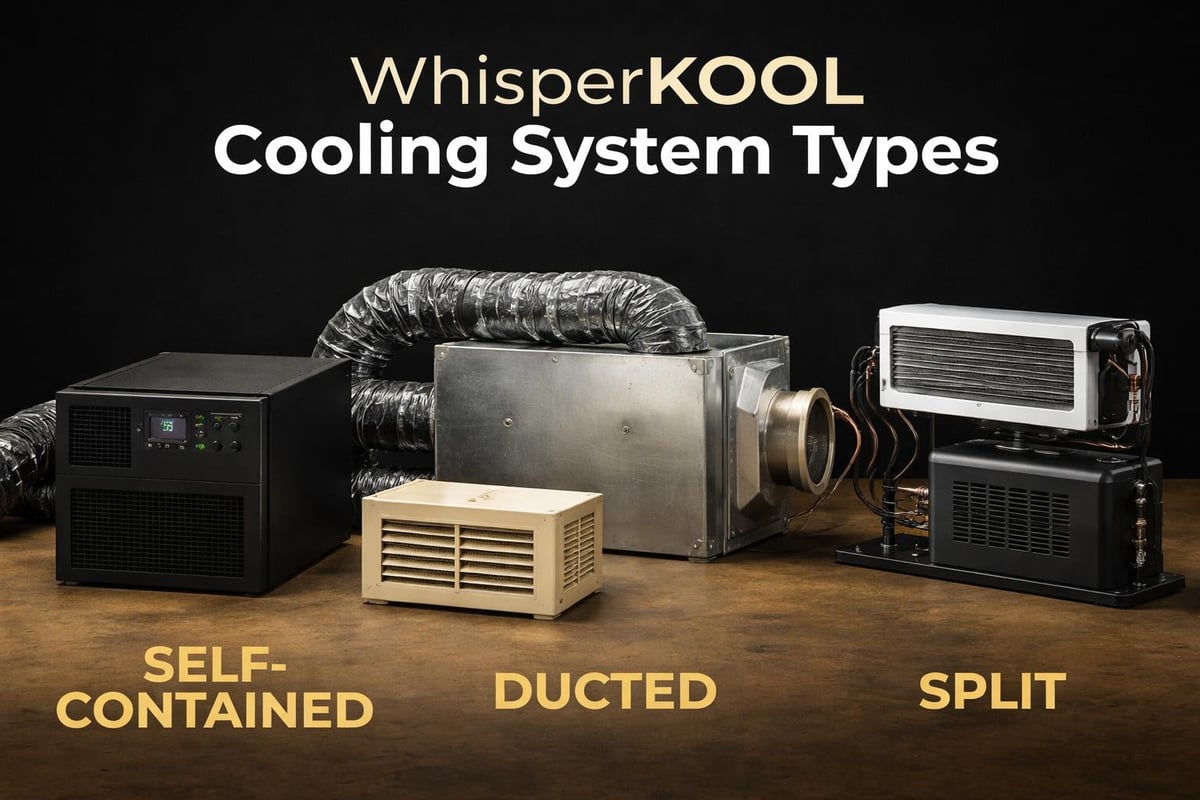
Ducted configurations allow whisperkool units to be installed completely outside the cellar, with supply and return ducts directing conditioned air into the wine storage space. This approach suits glass-enclosed showpiece wine cellars where visible mechanical equipment would compromise aesthetics.
Remote installations offer maximum design freedom but require professional ductwork design ensuring adequate airflow. Undersized ducts create noise and reduce efficiency; oversized ducts fail to maintain proper air velocity for temperature distribution.
Maintenance Requirements for Longevity
A well-maintained whisperkool system operates reliably for 15-20 years, protecting wine collections worth far more than the equipment investment. Regular maintenance prevents costly failures and ensures consistent performance year-round.
Quarterly Maintenance Tasks
Filter cleaning tops the priority list for whisperkool care. Dusty filters reduce airflow, forcing the system to work harder while delivering less cooling. Most units feature washable filters requiring simple cleaning every three months.
Remove filter according to manufacturer instructions
Vacuum loose debris or wash with mild detergent
Allow complete drying before reinstallation
Inspect filter condition, replacing if damaged
Condenser coil cleaning prevents heat buildup that reduces cooling efficiency. The condenser (hot side) accumulates dust, pet hair, and debris that acts as insulation, preventing heat dissipation. A soft brush or vacuum attachment clears buildup without damaging delicate fins.
Annual Professional Service
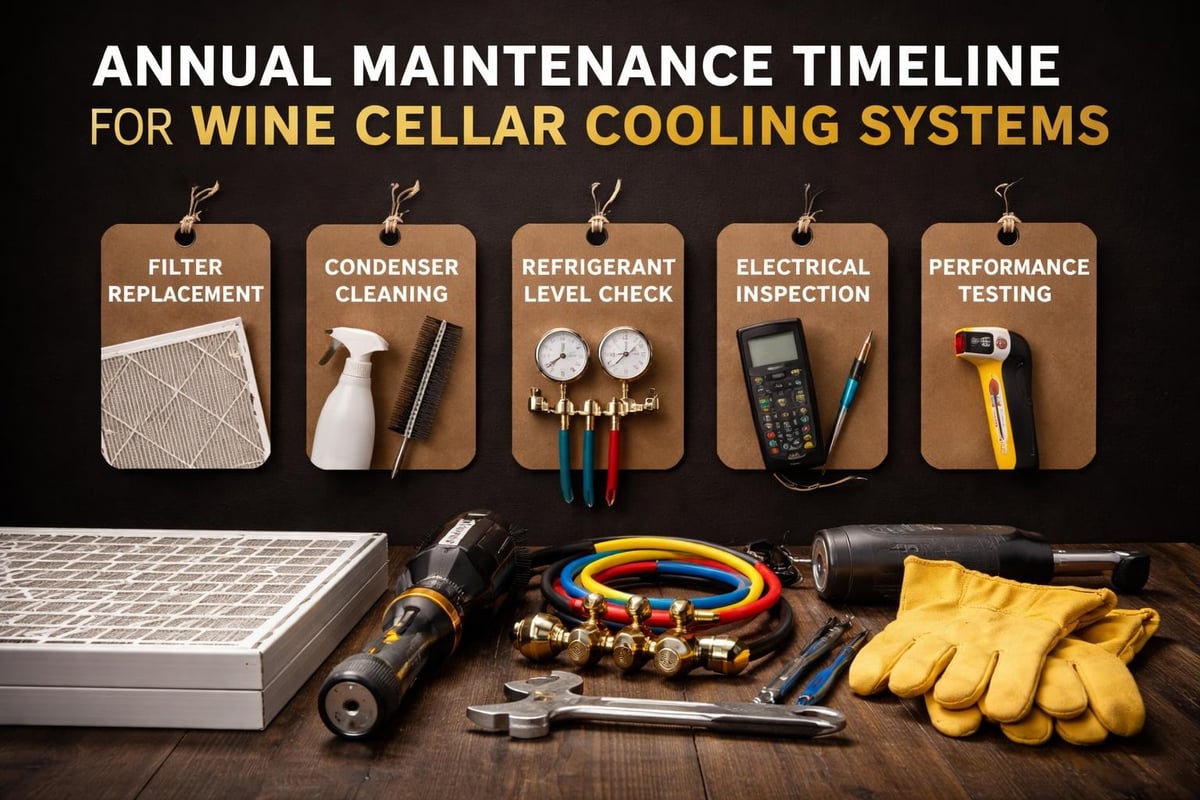
While homeowners can handle basic maintenance, annual professional service ensures long-term reliability. Certified technicians check refrigerant levels, inspect electrical connections, test safety controls, and verify overall system performance. The WhisperKOOL training portal provides resources for professionals maintaining these specialized systems.
Professional service typically includes:
Service Component | Purpose | Frequency |
|---|---|---|
Refrigerant Level Check | Ensures cooling capacity | Annual |
Electrical Connection Inspection | Prevents failures, fire hazards | Annual |
Temperature Accuracy Verification | Confirms proper wine storage conditions | Annual |
Condensate Drain Cleaning | Prevents water damage, mold growth | Annual |
Performance Testing | Identifies efficiency decline | Annual |
Many cellar owners combine cooling system service with comprehensive wine cellar maintenance addressing racking integrity, door seals, and lighting systems. This integrated approach ensures every element protecting the collection receives proper attention.
Performance in Texas Climate Conditions
Texas presents unique challenges for wine cellar cooling systems. Summer temperatures regularly exceed 100°F, while high humidity levels stress equipment designed for temperature control and moisture management. Understanding how whisperkool systems perform in these demanding conditions helps collectors make informed decisions.
Heat Load Challenges in Austin, Houston, and Dallas
Cities across Texas experience different climate stresses. Houston's coastal humidity creates moisture management challenges, while Austin's hill country heat demands robust cooling capacity. Dallas combines both concerns with temperature extremes and variable humidity.
A properly sized whisperkool unit handles these challenges through intelligent engineering. The systems maintain target temperatures even when ambient conditions reach 95°F (the maximum rated exhaust temperature). However, installation quality becomes critical-poor insulation or inadequate ventilation undermines even the finest equipment.
Climate-specific considerations for Texas installations:
Enhanced insulation (R-19 walls minimum, R-30 ceiling preferred)
Vapor barriers preventing humid air infiltration
Exhaust spaces with supplemental ventilation or air conditioning
Oversizing calculations accounting for extreme temperature differentials
Backup monitoring systems alerting owners to cooling failures
Collectors building wine cellars in Houston, Dallas, or other Texas markets should consult professionals experienced with regional climate demands. The difference between adequate and exceptional performance often lies in understanding local conditions.
Comparing WhisperKOOL Model Lines
The whisperkool product portfolio spans multiple model lines, each engineered for specific applications and performance requirements. Understanding these differences helps collectors select systems matching their cellar design and collection value.
Self-Contained vs. Split Systems
Self-contained units integrate all cooling components in a single cabinet. These prove ideal for through-wall installations where the exhaust space provides adequate ventilation. Models like the Platinum series deliver powerful, reliable cooling in compact packages suited to most residential applications.
Split systems separate the evaporator and condenser, connecting them via refrigerant lines. This configuration offers maximum installation flexibility, particularly in modern wine cellars where aesthetics demand invisible mechanical systems.
Model Line Breakdown
Model Series | BTU Range | Best Application | Key Features |
|---|---|---|---|
Platinum | 4,000-8,000 | Large residential cellars | Digital controls, low ambient operation |
Extreme | 2,500-8,000 | Standard residential | Reliable performance, proven design |
SlimLine | 1,500-3,000 | Compact cellars, wine cabinets | Space-saving profile |
XLT | 3,500-8,500 | Commercial, demanding residential | Extended temperature range, enhanced durability |
Each whisperkool model line addresses specific needs, from compact urban wine cellars requiring space-efficient solutions to expansive estate collections demanding commercial-grade performance. Detailed product documentation helps designers and collectors evaluate technical specifications.
Integration with Custom Cellar Design
Superior climate control technology reaches its full potential when integrated thoughtfully into overall cellar design. The relationship between cooling systems, insulation, vapor barriers, and cellar construction determines long-term success.
Design Phase Considerations
Early cooling system planning prevents compromises and costly modifications. When architects and designers incorporate whisperkool requirements from project inception, the result harmonizes mechanical function with aesthetic vision.
Critical design integration points include:
Structural framing accommodating through-wall units or ducted returns
Electrical infrastructure providing dedicated circuits at proper locations
Ventilation pathways ensuring adequate exhaust air movement
Acoustic planning directing operational noise away from living spaces
Access panels facilitating maintenance without compromising cellar aesthetics
Projects featured in our portfolio demonstrate how thoughtful climate control integration creates seamless installations where mechanical systems disappear behind stunning design elements. The Lakeway traditional wine cellar exemplifies this approach, with cooling equipment hidden within millwork while maintaining optimal performance.
Backup Systems and Monitoring
Serious collectors protect six-figure wine investments with redundant systems and remote monitoring. While whisperkool units deliver exceptional reliability, single-point failures can occur. Power outages, component failures, or refrigerant leaks potentially threaten entire collections.
Advanced installations incorporate temperature and humidity monitoring with smartphone alerts. When cellar conditions drift outside acceptable parameters, owners receive immediate notification enabling rapid response. Some collectors install backup cooling capacity or emergency generators ensuring protection during extended power failures.
Real-World Performance and User Experiences
Understanding how whisperkool systems perform in actual installations provides valuable perspective beyond technical specifications. Customer testimonials reveal insights into long-term reliability, service quality, and overall satisfaction from collectors who've entrusted their wines to these systems.
Common Performance Themes
Quiet operation emerges consistently in user feedback. Unlike window air conditioners or loud refrigeration systems, properly installed whisperkool units operate at whisper-quiet levels-hence the name. This proves particularly important in open-concept homes where wine displays integrate with living spaces.
Temperature stability represents another consistently praised attribute. Collectors report their whisperkool systems maintaining target temperatures within one degree, year after year. This consistency prevents the wine damage caused by temperature cycling in inadequate cooling systems.
Addressing Concerns
While overall satisfaction rates run high, some users report challenges primarily related to improper installation or sizing. Undersized units run continuously without reaching target temperatures. Inadequate exhaust ventilation causes high-temperature shutdowns. These issues underscore the importance of professional design and installation rather than reflecting equipment deficiencies.
The manufacturer provides comprehensive support through detailed installation guides and technical resources. However, the complexity of proper wine cellar cooling often exceeds DIY capabilities. Professional installation ensures systems operate as engineered, protecting valuable collections and preventing expensive troubleshooting.
Energy Efficiency and Operating Costs
Operating a dedicated wine cellar cooling system adds to monthly utility expenses, but well-designed whisperkool installations prove remarkably efficient. Understanding energy consumption patterns helps collectors budget appropriately while appreciating the value delivered.
Factors Affecting Energy Use
A typical residential whisperkool system draws 5-12 amps during operation, translating to approximately 600-1,440 watts. However, duty cycle (the percentage of time the unit actively cools versus standing by) significantly impacts actual consumption.
Variables influencing energy efficiency include:
Insulation quality reducing heat infiltration
Door seal integrity preventing conditioned air loss
Glass exposure increasing solar heat gain
Ambient temperature differential
Cellar access frequency
Lighting heat contribution
Well-insulated cellars in climate-controlled homes might see 30-40% duty cycles, while poorly insulated spaces or those exposed to extreme ambient conditions could experience 70-80% operation. This difference substantially affects monthly costs and equipment longevity.
Cost-Benefit Analysis
Monthly operating costs for properly sized whisperkool systems typically range from $30-80, depending on local electricity rates and the efficiency factors above. Compared to the value of wine collections often exceeding $50,000-500,000, this investment proves minimal.
Furthermore, energy-efficient operation extends equipment life. Units running constantly wear faster than those cycling normally, potentially requiring replacement years earlier. Proper sizing and installation maximize both efficiency and longevity.
Professional vs. DIY Installation
The technical complexity of whisperkool installation raises important questions about professional services versus DIY approaches. While some homeowners possess skills for self-installation, several factors favor professional expertise.
Technical Requirements
Electrical work demands licensed contractors in most jurisdictions. Wine cellar cooling systems require dedicated circuits with proper amperage, GFCI protection where applicable, and code-compliant wiring. Mistakes create fire hazards or equipment damage.
Refrigerant handling in split systems requires EPA certification. Proper evacuation, charging, and leak testing demand specialized equipment and knowledge beyond typical DIY capabilities.
Structural modifications for through-wall installations involve cutting framing members, installing headers, and maintaining building envelope integrity. Errors compromise both building structure and cellar performance.
When DIY Makes Sense
Experienced homeowners with electrical knowledge, proper tools, and construction skills can successfully install self-contained whisperkool units in straightforward applications. The manufacturer provides detailed documentation and the training portal offers valuable resources.
However, professional installation typically costs $800-2,000-a modest investment ensuring proper system performance protecting collections worth exponentially more. Most luxury cellar projects incorporate cooling installation within comprehensive turnkey services delivering complete, tested, warrantied solutions.
Selecting and installing the right cooling system represents one of the most critical decisions in wine cellar development, directly impacting both your collection's safety and your long-term satisfaction with the space. WhisperKOOL technology delivers the precision, reliability, and performance that serious collectors demand, but realizing that potential requires thoughtful integration with overall cellar design and professional installation. At Prestige Wine Cellars, we bring decades of expertise designing and building luxury wine storage environments throughout Texas, ensuring every element-from climate control to custom millwork-works together flawlessly to protect your investment and showcase your collection beautifully.
Your Dream Wine Cellar Starts Here
Let our design team craft a cellar that matches your taste, space, and your collection — built for beauty, function, and prestige.

Email us at
Serving Austin, Dallas–Fort Worth, Houston & San Antonio