
Glass Enclosed
The pinnacle of modern wine architecture where engineering precision meets breathtaking visual design.
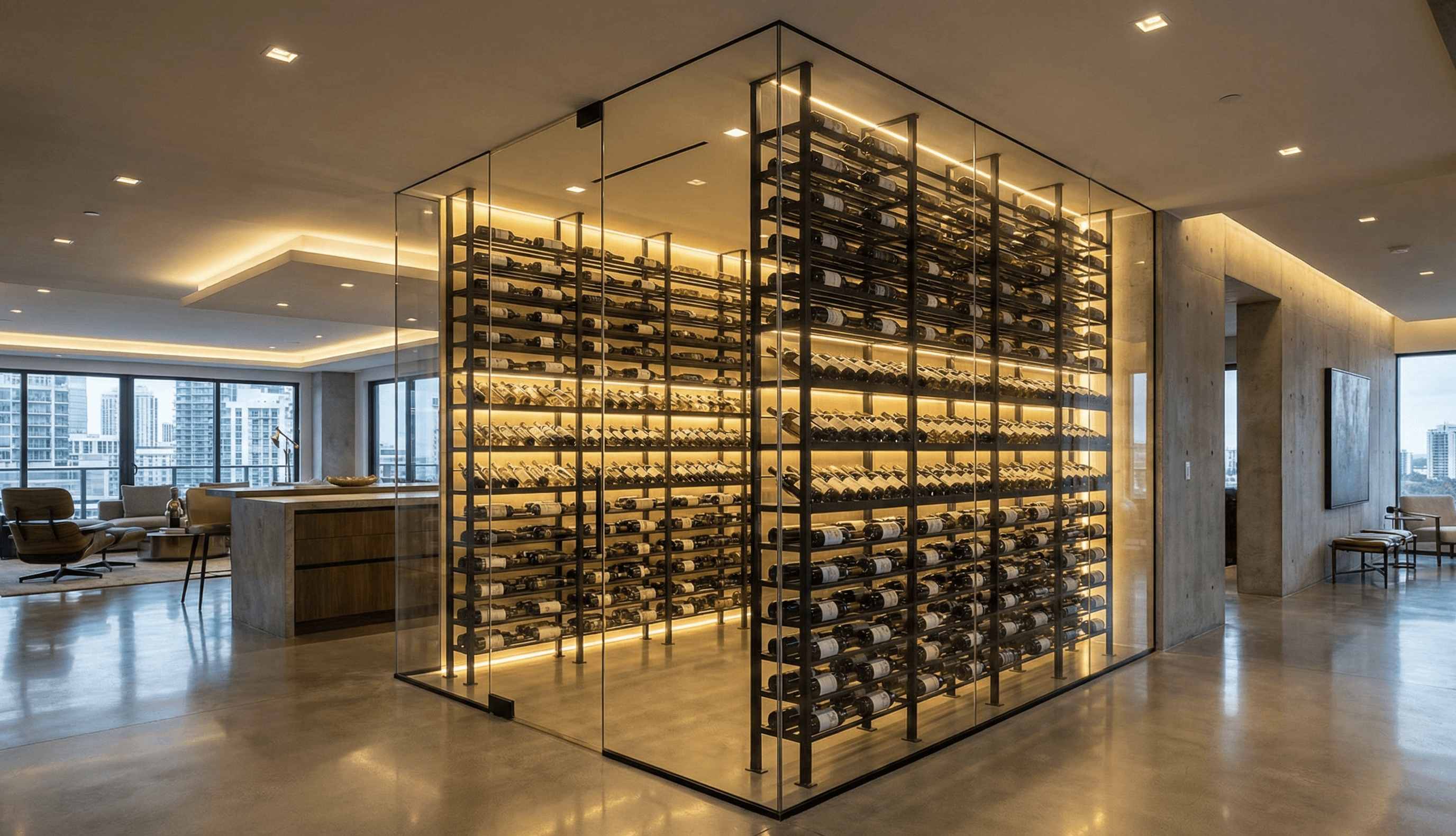
Design a Glass-Enclosed Wine Cellar That Becomes the Centerpiece
Showcase your collection without compromising preservation. Our team designs custom, climate-controlled glass-enclosed wine cellars for luxury homes across Austin, Dallas, Houston, and the Texas Hill Country. From frameless glass and architectural lighting to proper insulation, cooling, humidity control, and display racking, every detail is engineered to protect your wine and elevate your home.
Frameless glass enclosed wine cellars have become the defining luxury trend in contemporary residential design. Ranked #2 in popularity in the 2026 Style Report, these showpiece installations deliver maximum visual impact while offering the full preservation integrity of a traditional climate-controlled cellar.
More than a storage solution, the glass enclosed wine cellar functions as a central architectural feature, transforming the collection into a curated gallery that becomes the focal point of a home’s interior design. Whether placed in a dining room, living room, hallway, or integrated into an open concept floor plan, a glass wine room elevates the entire space with transparency, symmetry, and refined lighting.
1. Total Transparency & Architectural Integration
A floor to ceiling glass wine room is designed to blend seamlessly into the home’s architecture. Using frameless or minimally framed glass panels, the enclosure becomes invisible, placing full visual emphasis on the wine collection and the racking design.
This approach aligns with 2025–2026 design trends emphasizing “jewel box” visibility and smooth transitions between living spaces .
2. High Performance Insulated Glass Engineering
Glass wine rooms require advanced glazing systems to maintain the essential wine preservation environment of 55°F and 60–70% humidity. The report notes that thermal management is the most critical challenge in glass applications, making glazing choice essential.
Required glazing often includes:
Low-E (Low-Emissivity) glass → reflects infrared heat, increasing insulation
Double-glazed insulated panels → two panes with an insulating air gap
Tempered safety glass → required for strength and code compliance
Laminated UV-blocking glass → prevents light-related wine spoilage
3. Modern Metal or Acrylic Label Forward Racking
To achieve the dramatic “floating bottle” effect, most glass wine rooms utilize thin, unobtrusive racking systems such as:
black metal peg systems
stainless steel rods
acrylic bottle cradles
tension cables
These maximize visibility and reinforce the modern aesthetic.
4. Sophisticated LED Lighting Systems
Lighting is a defining feature of all glass cellars. Designers use:
backlit walls
integrated shelf lighting
recessed ceiling lighting
linear LED strips along the perimeter
All lighting must be low-heat, UV-safe LEDs to protect the wine and maintain proper climate control.
5. Dedicated Cooling Systems Designed for Glass
Because glass allows more thermal transfer than insulated walls, a glass wine enclosure always requires a true wine cellar cooling system—never residential HVAC.
The 2026 report emphasizes the need for:
ducted or split systems for quiet operation
units sized for higher thermal gain
sound-controlled equipment when the cellar is in high-traffic rooms
A Dramatic Architectural Centerpiece
This is the style homeowners choose when they want their wine collection to stand at the center of their interior design. The effect is sculptural, elegant, and undeniably luxurious.
Maximum Visibility & Label-Forward Display
Every bottle becomes part of the design. This makes it ideal for collectors who want to showcase rare bottles, diverse regions, or a visually impressive collection.
Perfect for Modern & Transitional Homes
Glass wine rooms complement:
open-concept floor plans
modern minimalist architecture
transitional homes blending wood + metal
high-end remodels
luxury new construction
Ideal for Entertaining
Placed in dining rooms or living rooms, a glass wine room becomes a warm, inviting backdrop that enhances the ambiance of the entire space.
Metal Peg Racking
Offers a floating look, ideal for minimalist designs.
Acrylic Floating Cradles
Creates an ultra-modern “invisible support” effect that pairs perfectly with glass walls.
Black Steel Frame Systems
Provides structure and contrast for homes with industrial or modern aesthetics.
Mixed-Material Racking (Glass + Wood)
Increasingly popular in transitional homes, blending warmth with modern clarity.
Full Glass Room / Walk-In Enclosure
Large format, perfect for high-value homes and expansive collections.
Glass Wine Wall / Wine Feature Wall
Slim, space-efficient, and visually striking — ideal for hallways, dining rooms, or living spaces.
Under-Stair Glass Wine Enclosure
One of the fastest-growing applications. Maximizes unused space and becomes a sculptural feature.
Corner Glass Showcase
Using two glass walls, this configuration creates compelling sightlines from multiple rooms.
1. Insulation + Vapor Barrier
Even when fully transparent, a glass wine cellar requires:
insulated surrounding walls
sealed vapor barrier
proper framing to prevent condensation
2. Cooling Unit Sizing
Due to heat gain from glass, climate control requires:
increased BTU capacity
ducted or split systems for low noise
careful heat-load calculations in design phase
3. Door Systems
Glass doors must be:
weather-stripped
airtight
insulated
self-closing where possible
4. UV Protection
Glass wine rooms MUST integrate UV protection through:
laminated glass
Low-E coatings
placement away from direct sunlight
This style is favored by:
high-net-worth homeowners
fine-dining restaurants
luxury developers
modern high-rise condo owners
collectors looking for a showpiece display
Are glass wine cellars more expensive?
Yes — engineered glass and climate systems increase cost, but dramatically enhance visual impact.
Do glass wine rooms lose temperature faster?
Not if insulated and cooled correctly. Double-glazed Low-E glass and a well-sized cooling unit maintain perfect stability.
Do I need a vapor barrier even though it’s glass?
Yes — the surrounding walls and ceiling require full sealing.

Email us at
Give us a call
Serving Austin, Dallas–Fort Worth, Houston & San Antonio