
Traditional
Old-world craftsmanship, rich materials, and timeless preservation — the original wine cellar brought into the modern age.
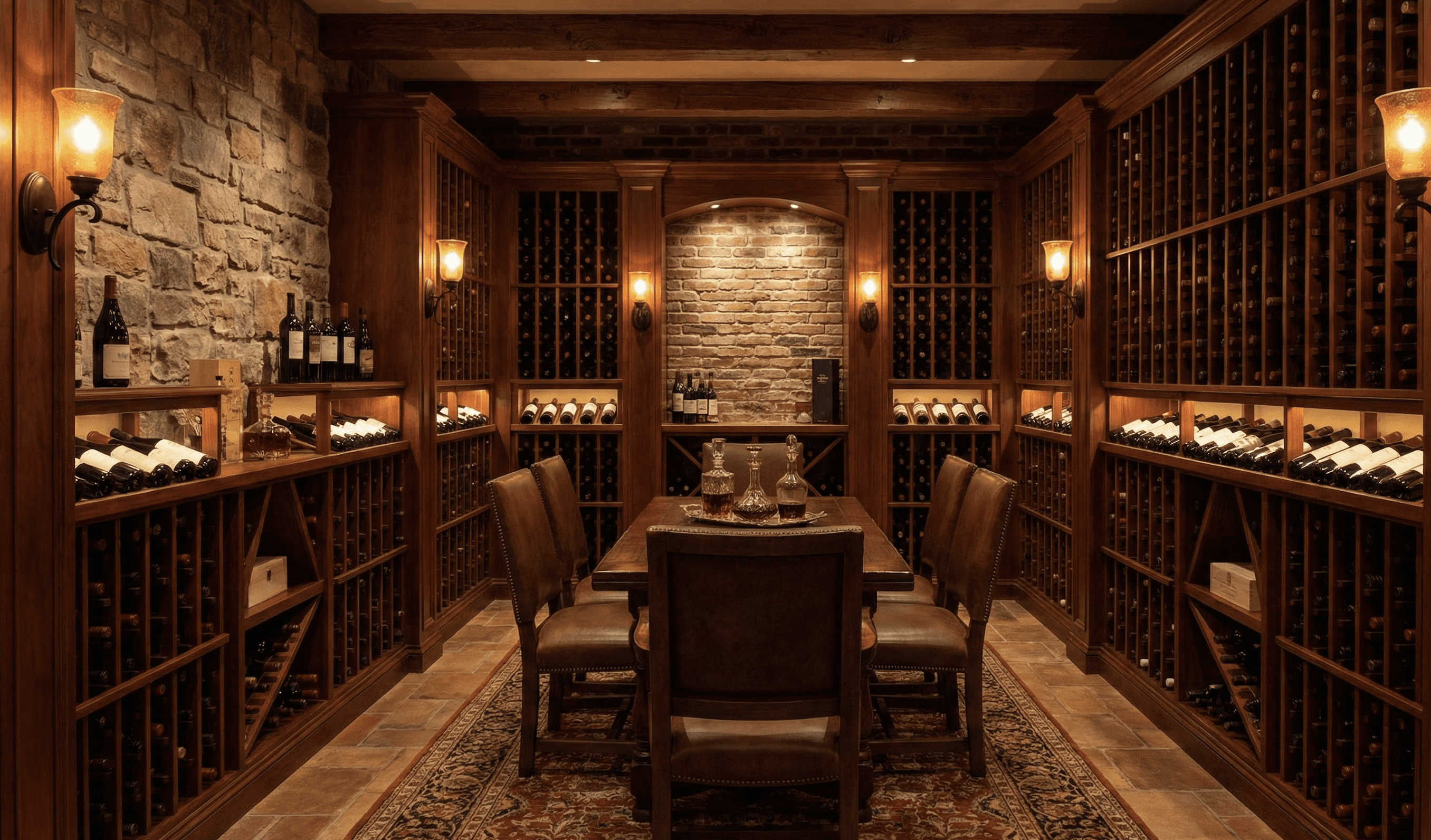
Design a Traditional Wine Cellar With Lasting Character
Rich woodwork. Classic craftsmanship. Engineered for proper wine preservation. Our team designs custom, climate-controlled traditional wine cellars for luxury homes across Austin, Dallas, Houston, and the Texas Hill Country. From handcrafted racking and arched displays to tasting spaces, lighting, and long-term collection planning, every detail is tailored to your home, your collection, and your lifestyle.
Traditional wine cellars embody the essence of classic wine storage: warm wood tones, handcrafted racking, stone accents, and a deep, inviting ambiance rooted in centuries-old European cellars. Ranked #4 in the 2026 Wine Cellar Styles Report , Traditional cellars remain one of the most sought-after choices for collectors who prioritize long-term aging, capacity, and historic appeal.
While modern and glass-enclosed cellars dominate visual trends, Traditional wood wine cellars continue to lead in actual material usage and volume storage because of their durability, preservation value, and timeless aesthetic. For homeowners who want their collection stored the way wine was always meant to be, nothing compares to a Traditional cellar.
1. Rich Wood Racking — The Heart of Traditional Design
Traditional cellars use premium hardwoods known for their strength, beauty, and performance in humid environments.
The most common choices include:
Mahogany → prized for elegance, anti-warping stability, and natural resistance to humidity
Redwood → naturally oily, superior for high-humidity preservation
Oak → classic European tone, excellent structural integrity
The report confirms that wood racking remains “by far the most popular material being used” in wine cellar construction due to its longevity and proven performance.
2. Deep, Warm, Old-World Tones
Traditional cellars feature rich color palettes:
espresso mahogany
natural redwood
walnut brown
golden oak
warm amber lighting
These tones create the familiar, old-world atmosphere associated with European wine caves, châteaus, and historic estates.
3. Architectural Character & Textural Detail
Unlike the minimalist modern aesthetic, Traditional wine cellars proudly display craftsmanship:
crown moldings
corbels
carved wood elements
stone or brick accent walls
barrel ceilings
tile or stone floors
These details create the immersive sense of stepping into a centuries-old wine room.
4. Cork-Forward Storage Orientation
Traditional cellars use cork-forward racks to keep corks moist — the safest method for long-term preservation.
This orientation protects bottles from oxidation and premature aging.
5. Deep Bottle Capacity & High Density Storage
Collectors with 500–3,000+ bottles often choose Traditional cellars because:
wood racks maximize storage density
layouts can include bulk storage
diamond bins, case storage, and display rows are easy to integrate
This makes the Traditional cellar ideal for serious collectors.
1. The Best Long-Term Preservation Environment
Wine aging requires absolute consistency (55°F, 60–70% humidity) — and wood racking paired with stone or insulated walls creates highly stable conditions.
Traditional cellars originated underground for a reason. Their construction materials naturally resist temperature swings, making them exceptionally safe for long-term storage.
2. Aesthetic Warmth That Never Goes Out of Style
While modern styles shift with trends, a Traditional cellar is timeless.
The atmosphere is warm, intimate, and inviting — perfect for wine tastings, celebrations, or quiet enjoyment.
3. Ideal for High-Touch Craftsmanship
Traditional designs allow your builder to showcase artisanal woodworking and stonework.
Homeowners who appreciate fine materials and handcrafted details often prefer this style.
4. Aligns With Old-World Architecture & Luxury Homes
This style pairs beautifully with:
Mediterranean homes
Tuscan villas
French and Italian-inspired estates
Rustic luxury homes
Traditional and transitional high-end properties
1. Walk-In Wood Wine Cellar
The classic layout: full-height wood racking in a dedicated room, often with stone or brick accents.
2. Barrel Ceiling Wine Room
A European-inspired look with curved ceilings built from brick, stone, or wood planks.
3. Wood Cellar With Tasting Table or Sitting Area
A timeless setting for tastings, gatherings, and entertaining.
4. Stone + Wood Hybrid Cellar
Mixing stone walls or archways with mahogany or redwood racking.
5. Subterranean or Basement Wine Cellar
The most authentic version, offering natural insulation and old-world atmosphere.
Wood Types (Most Popular)
Mahogany
Redwood
White Oak
Walnut
Stone & Masonry Elements
Natural stone
Brick veneer
Travertine
Limestone
Flooring Options
Clay tile
Travertine
Stone pavers
Hand-scraped hardwood (sealed properly)
Lighting
Traditional cellars use:
warm LED ambient lighting
wall sconces
vintage-style fixtures
soft up/downlighting for displays
All LEDs must be low-heat.
1. Proper Cooling & Humidity Control
Must maintain a stable 55°F
Humidity held at 60–70%
Requires wine-specific cooling systems
Standard HVAC is insufficient
2. Vapor Barrier & Insulation
Stone and wood cellars still require:
a complete vapor barrier
proper insulation to prevent condensation
sealed entry points
3. Wood Treatment
High-humidity environments require:
mold-resistant construction
proper sealing
naturally stable hardwoods like Redwood & Mahogany
Both materials are highlighted in the report for their resistance to warping and humidity issues.
4. LED Lighting to Avoid Heat
Because Traditional cellars often use enclosed areas, lighting must be low-heat and UV-safe.
This style is ideal for:
large estates
Mediterranean, Tuscan, or French architectural homes
luxury remodels
historic-inspired residences
serious collectors with long-term aging needs
homeowners wanting warmth over minimalism
Do Traditional cellars cost more than modern ones?
Not necessarily — wood-based cellars often cost less than glass-heavy designs, depending on racking type and complexity.
Is a stone wall required?
No, but it enhances the Old-World atmosphere and adds insulation.
Can I mix Traditional with modern elements?
Yes — this is how Transitional wine cellars are created.
Does wood hold up in humidity?
Absolutely. Premium hardwoods like Redwood and Mahogany thrive in cellar humidity.

Email us at
Give us a call
Serving Austin, Dallas–Fort Worth, Houston & San Antonio