
Commercial Wine Cellar Cooling Units: A Complete Guide
Discover how to select and install commercial wine cellar cooling units for restaurants, hotels, and estates. Expert insights on sizing, efficiency, and design.
When designing a wine cellar for a high-end steakhouse, boutique hotel, or private estate, the cooling system isn't just an afterthought. It's the invisible guardian of your investment, ensuring every bottle ages gracefully at precisely controlled temperatures and humidity levels. Commercial wine cellar cooling units differ fundamentally from residential systems, engineered to handle larger capacities, extended operating cycles, and the unique demands of professional environments where access, aesthetics, and reliability cannot be compromised.
Selecting the right climate control system requires understanding not only the size of your collection but also the architectural constraints of your space, ambient conditions, and how the cellar will be accessed and utilized. The stakes are higher in commercial applications. A restaurant wine program might represent hundreds of thousands of dollars in inventory, while a hotel cellar serves as both storage and showcase.
Understanding Commercial-Grade Cooling Requirements
Commercial wine cellars face challenges residential systems never encounter. Higher foot traffic introduces warm air each time the door opens. Ambient lighting generates heat. Glass walls, while stunning, create thermal transfer issues that demand more robust cooling solutions.
The fundamental requirements for commercial applications include:
Continuous operation capability without degradation
Redundancy planning for system failures
Integration with building management systems
Compliance with commercial building codes
Higher BTU capacity for larger volumes
Unlike home wine storage, commercial cooling systems must account for business hours when doors may open frequently, staff accessing inventory throughout service, and the need for absolute reliability. A residential unit cycling on and off throughout the day won't withstand the demands of a busy restaurant or hotel.
Calculating Your Cooling Load Accurately
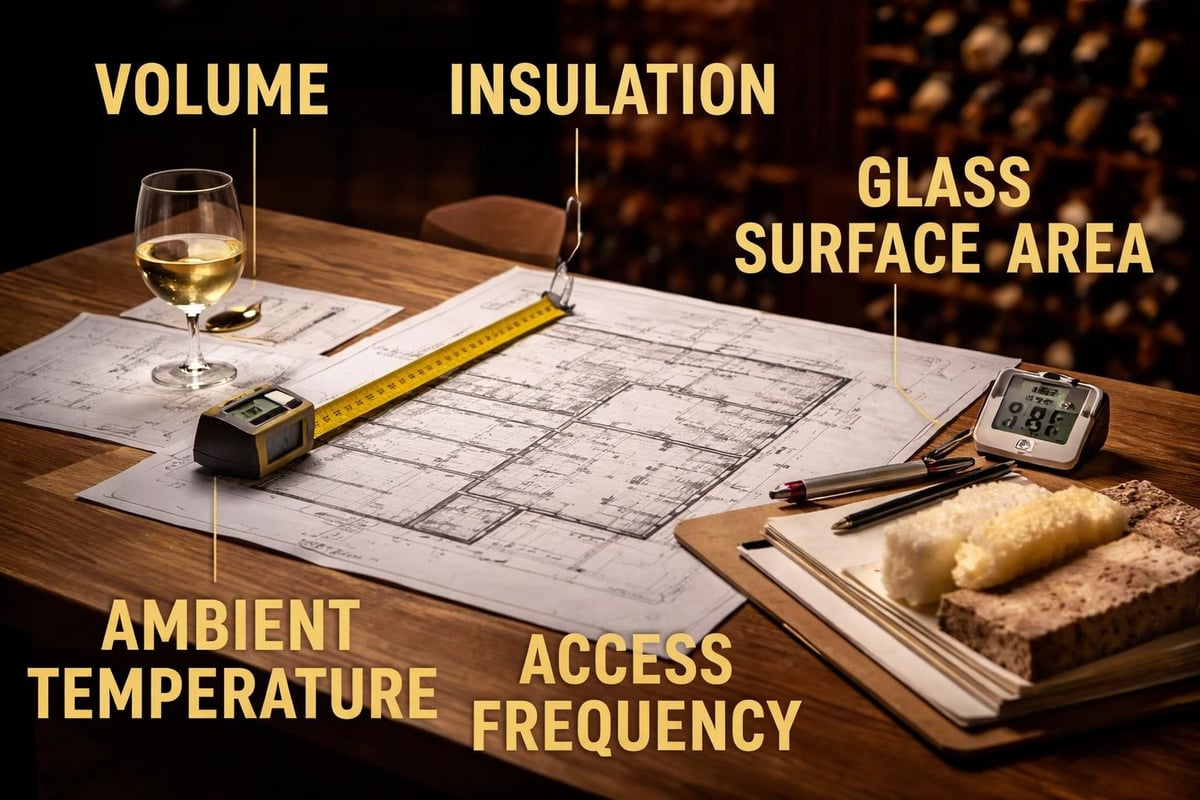
Before exploring specific commercial wine cellar cooling units, you need precise load calculations. This goes beyond simple cubic footage. Professional calculations factor in:
Total cellar volume (length × width × height)
Insulation R-values for all six surfaces
Glass surface area and type (single pane, double pane, insulated)
Ambient temperature in adjacent spaces
Door openings frequency during peak hours
Lighting heat generation (especially track lighting)
Geographic location and seasonal variations
Many manufacturers provide online calculators, but commercial applications often benefit from professional assessment. At Prestige Wine Cellars, we've developed proprietary tools that account for Texas-specific climate challenges and the nuances of both traditional cellars and modern glass-enclosed installations.
Types of Commercial Wine Cellar Cooling Units
The market offers several configurations, each with distinct advantages for different commercial scenarios. Understanding these systems allows you to match technology to your specific architectural and operational requirements.
Split Systems: The Professional Standard
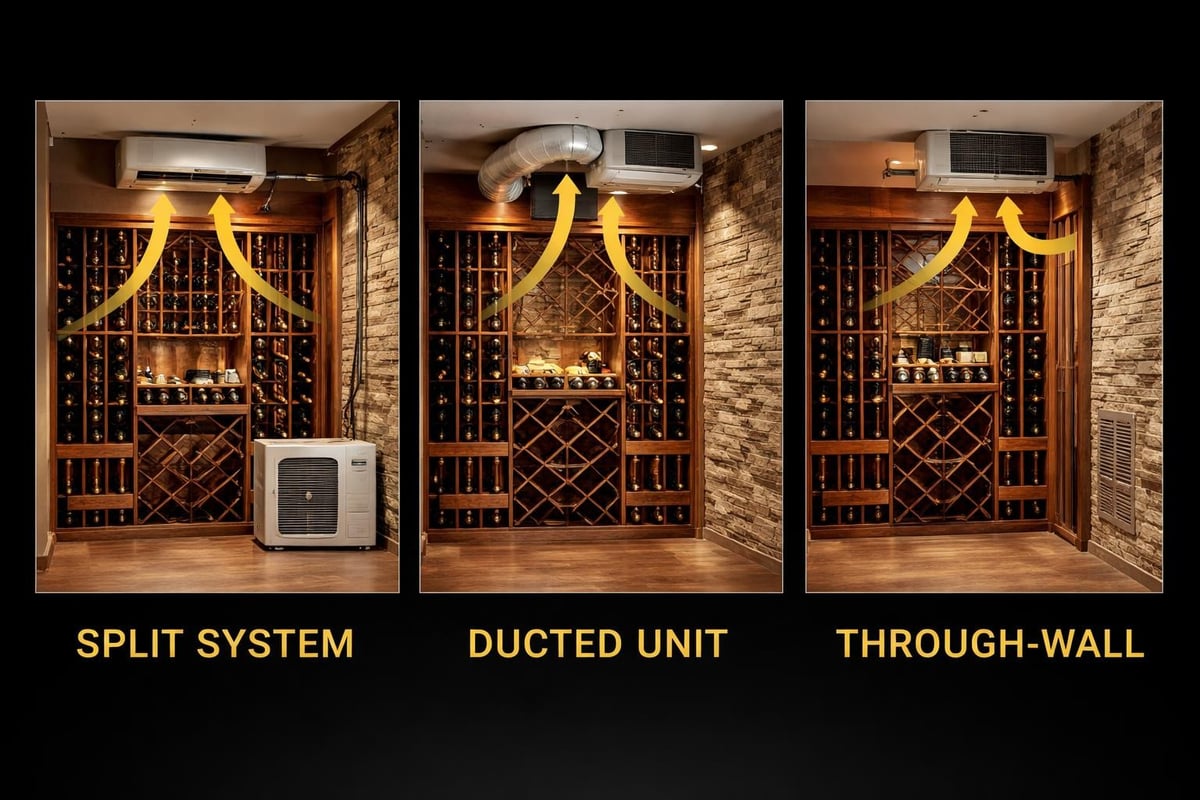
Split systems separate the evaporator (inside the cellar) from the condenser (located remotely). This configuration dominates commercial applications for compelling reasons.
Why split systems excel in commercial settings:
Silent operation within the cellar itself
Flexible placement of noisy components away from guest areas
Higher capacity available (up to 8,000+ BTUs)
Professional appearance with concealed components
Reduced vibration affecting wine sediment
The evaporator mounts inside or adjacent to the cellar, connected via refrigerant lines to a condenser that can be positioned on a roof, in a mechanical room, or even outdoors. This flexibility proves invaluable in retrofits where space is constrained or in hospitality environments where noise would disrupt the guest experience.
For our glass-enclosed showpiece cellars, split systems allow the dramatic visual impact of floor-to-ceiling glass without compromising the cooling infrastructure. The wine cellar cooling systems we specify integrate seamlessly with architectural vision rather than dictating it.
Ducted Self-Contained Units
Ducted systems house all components in a single cabinet but distribute cooled air through ductwork. They occupy a middle ground between simplicity and performance.
Feature | Ducted Units | Split Systems | Through-Wall Units |
|---|---|---|---|
Installation Complexity | Moderate | High | Low |
Noise Level (in cellar) | Low | Very Low | Moderate to High |
Capacity Range | 2,000-6,000 BTU | 1,000-8,000+ BTU | 1,000-4,000 BTU |
Aesthetic Impact | Minimal (hidden ducts) | Minimal | Visible unit |
Maintenance Access | Moderate | Easy (remote condenser) | Easy |
Cost | $$ | $$$ | $ |
Ducted configurations work well when you have ceiling or wall cavity space for duct runs and want to position the unit in an adjacent mechanical space. They're particularly effective for cellars in the 500-1,500 bottle range where split system costs may not be justified but through-wall aesthetics are unacceptable.
Through-Wall and Ductless Options
While less common in high-end commercial applications, through-wall units serve specific niches. These self-contained systems mount in an exterior wall, exhausting heat to the outside while cooling the cellar interior.
Appropriate applications for through-wall units:
Budget-conscious installations with appropriate wall access
Retrofit projects in older buildings with solid masonry walls
Secondary or seasonal storage areas
Wine storage in commercial kitchens or back-of-house areas
The primary limitation? Noise and aesthetics. These units place the compressor directly in the cellar wall, creating operational sound that's acceptable in utilitarian spaces but inappropriate for customer-facing environments or luxury residential settings.
Selecting the Right Commercial Wine Cellar Cooling Units
Beyond system type, specific brands and models offer different features, reliability records, and support networks. When specifying commercial wine cellar cooling units for projects across Texas and beyond, we evaluate manufacturers on performance, longevity, and service availability.
Premium Manufacturer Considerations
The wine cellar cooling unit market includes several reputable manufacturers, each with strengths in different applications:
Wine Guardian has earned respect for commercial-grade split systems with precise digital controls and robust construction. Their units handle high-capacity cellars and integrate well with building automation systems.
US Cellar Systems specializes in customizable commercial applications, offering both ducted and ductless configurations with the flexibility to adapt components to unique project requirements. Their commercial-grade split units perform reliably in demanding environments.
CellarPro provides a range from residential to light commercial applications, with straightforward installation and dependable performance for medium-sized cellars.
WhisperKOOL focuses on quieter operation across their product line, making them suitable for hospitality environments where sound management is critical.
When we design turnkey wine cellar installations, manufacturer selection aligns with the specific performance envelope, architectural constraints, and long-term service considerations of each project.
Features That Matter in Commercial Applications
Not all specifications carry equal weight. Focus on features that directly impact reliability, efficiency, and longevity in commercial environments.
Critical features for commercial installations:
Digital temperature and humidity control with ±1°F accuracy
Auto-restart after power failure (essential for unattended locations)
Remote monitoring capability for proactive maintenance
Stainless steel or coated evaporator coils for corrosion resistance
Washable filters with easy access for regular maintenance
Low ambient operation for units exhausting to unconditioned spaces
Variable speed compressors for improved efficiency
Commercial environments demand systems that continue performing year after year with minimal intervention. A restaurant can't afford a cooling failure during a holiday weekend, and a hotel wine cellar must maintain perfect conditions 24/7/365 regardless of occupancy.
Installation Considerations for Optimal Performance
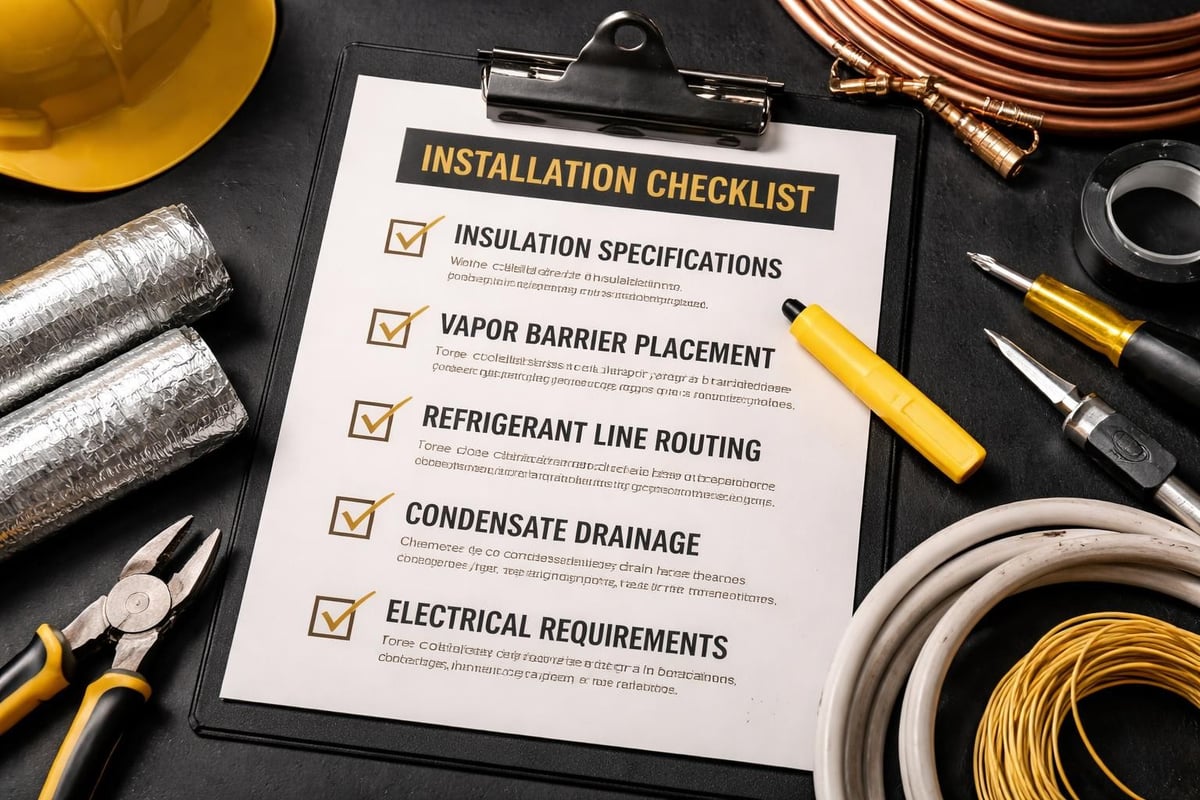
Even the finest commercial wine cellar cooling units will underperform if improperly installed. Professional installation addresses thermal envelope integrity, proper refrigerant charging, adequate airflow, and condensate management.
Insulation and Vapor Barriers
Commercial cellars require minimum R-19 insulation in walls and R-30 in ceilings, with continuous vapor barriers on the warm side. This isn't optional for reliable temperature and humidity control.
Common insulation failures we address:
Gaps around door frames and penetrations
Inadequate sealing at glass wall junctions
Missing or improperly positioned vapor barriers
Compressed insulation reducing effective R-value
Thermal bridging through metal framing
The relationship between insulation quality and cooling system sizing is direct. Poor insulation forces the unit to work harder, cycle more frequently, consume more energy, and fail sooner. Conversely, exceptional insulation can allow a smaller, more efficient unit to maintain conditions effortlessly.
Proper Condensate Management
Commercial wine cellar cooling units generate significant condensate, particularly in humid climates like Houston or San Antonio. This water must be reliably removed without creating flooding risks or requiring constant attention.
Condensate system requirements:
Gravity drains sloped at minimum 1/4" per foot
Condensate pumps with alarm switches for upward drainage
Regular cleaning schedules to prevent algae buildup
Overflow sensors integrated with building management systems
Insulated drain lines where they pass through conditioned spaces
We've seen supposedly high-end installations compromised by inadequate condensate planning. A backed-up drain pan isn't just inconvenient; it can damage wine labels, create mold issues, and potentially shut down the cooling system at the worst possible time.
Electrical and Control Integration
Commercial installations often integrate cooling systems with broader building automation. This allows remote monitoring, scheduled setpoint adjustments, and alarm notifications when conditions deviate from specifications.
Modern commercial wine cellar cooling units typically require:
Dedicated 115V or 208-230V circuits (size varies by capacity)
Emergency power consideration for critical facilities
Network connectivity for smart monitoring
Integration points for security and access control systems
For our hotel and resort projects, we coordinate with facility management teams to ensure cooling systems communicate with existing building platforms, providing facilities staff with visibility and control without requiring specialized training.
Maintenance and Long-Term Performance
Commercial wine cellar cooling units require more frequent maintenance than residential systems due to extended run times and accumulated operating hours. A proactive maintenance program prevents failures and extends equipment lifespan.
Recommended Maintenance Schedule
Monthly tasks:
Inspect and clean air filters
Verify temperature and humidity readings against calibrated reference
Check condensate drainage for proper flow
Listen for unusual noises or vibrations
Quarterly tasks:
Clean evaporator and condenser coils
Inspect refrigerant line insulation for damage
Verify control system operation and alarm functions
Document operating pressures and temperatures
Annual professional service:
Complete refrigerant charge verification
Electrical connection inspection and tightening
Compressor operational testing
Control calibration and sensor verification
Complete system performance documentation
Many commercial clients opt for comprehensive maintenance programs that bundle these services with priority response for any issues. The cost of preventive maintenance pales compared to emergency service calls or, worse, wine loss from cooling failure.
Common Issues and Solutions
Understanding failure modes allows proactive intervention before minor issues become major problems.
Problem | Symptoms | Common Causes | Solution |
|---|---|---|---|
Insufficient cooling | Temperature creeps above setpoint | Dirty coils, low refrigerant, undersized unit | Clean coils, check charge, verify load calculations |
Excessive humidity | Condensation on bottles or walls | Poor vapor barrier, oversized unit short-cycling | Address envelope, consider dehumidification |
Frequent cycling | Unit starts and stops repeatedly | Thermostat location, oversized capacity | Relocate sensor, consider variable speed unit |
Ice buildup | Frost on evaporator coils | Low refrigerant, restricted airflow, defrost issues | Professional diagnostic and repair |
Noise increase | Louder operation over time | Worn compressor mounts, loose panels, failing fan | Inspection and component replacement |
When we complete custom wine cellar projects, we provide detailed documentation specific to the installed system, including normal operating parameters that allow staff to identify deviations early.
Special Considerations for Different Commercial Applications
The optimal cooling approach varies by venue type, each presenting unique requirements and constraints.
Restaurant and Steakhouse Wine Programs
High-turnover wine programs in restaurants demand systems that recover quickly after frequent door openings during service. Split systems with adequate overcapacity (125-150% of calculated load) handle these demands while maintaining conditions during rush periods.
Restaurant-specific considerations:
Proximity to kitchen heat sources requiring additional capacity
Presentation requirements (glass walls) creating thermal challenges
Sommelier access needs during service hours
Inventory rotation requiring good air circulation
Backup systems or redundancy for business continuity
For our restaurant clients across Texas, we often specify dual smaller units rather than a single large system, providing redundancy and the ability to stage cooling based on occupancy and season. This approach delivers reliability while managing energy costs.
Hotel and Resort Applications
Hotels combine the display requirements of restaurants with the reliability demands of commercial facilities and the aesthetic expectations of luxury residential installations. Their wine cellar designs must impress guests while operating flawlessly without constant attention.
Hospitality priorities:
Absolutely silent operation in guest areas
Remote monitoring and alarm integration
Scheduled access control coordination
Architectural integration with interior design
Energy efficiency for sustainability goals
Private Estate and Collector Installations
While technically residential, serious collectors often specify commercial-grade systems for reliability and capacity. Estates with 2,000+ bottle collections benefit from the robust construction and precise control of commercial wine cellar cooling units.
Our work on estate wine cellars frequently incorporates commercial-grade components when collection value and size justify the investment in superior reliability and longevity.
Energy Efficiency and Operating Costs
Commercial wine cellar cooling units operate continuously, making efficiency a significant factor in total cost of ownership. Small efficiency differences compound over years of 24/7 operation.
Factors influencing energy consumption:
SEER rating of the cooling system (higher is better)
Insulation quality reducing thermal load
Setpoint temperature (each degree cooler increases consumption ~8%)
Ambient conditions in surrounding spaces
Door opening frequency and duration
Lighting heat within the cellar
The most energy-efficient installation combines an efficient unit with exceptional insulation, LED lighting, and thoughtful design that minimizes unnecessary cooling load. When designing modern wine cellars with extensive glass, we carefully balance aesthetic impact with thermal performance to avoid oversized, energy-hungry cooling systems.
Variable speed compressors and digital controls allow commercial wine cellar cooling units to modulate capacity rather than cycling on and off, improving both efficiency and temperature stability. The premium for these features typically pays back within 3-5 years through reduced energy costs.
Integration with Architectural Design
The most successful commercial wine cellars integrate cooling infrastructure seamlessly into architectural vision rather than treating it as a separate mechanical consideration. This requires early collaboration between designers, architects, and climate control specialists.
Concealing Mechanical Components
Modern commercial projects increasingly demand invisible climate control. Split systems excel here, allowing complete concealment of mechanical components while maintaining cooling performance.
Concealment strategies:
Evaporators ducted through ceiling plenums with custom grilles
Condensers located in remote mechanical rooms or rooftop
Refrigerant lines routed through wall cavities and chases
Controls integrated into architectural millwork
Supply and return air through custom-designed diffusers
For traditional wine cellar designs with extensive woodwork, we coordinate cooling placement during the design phase, ensuring racking layouts provide return air pathways without compromising capacity or aesthetics.
Glass Wall Thermal Challenges
Glass-enclosed cellars create stunning visual impact but present significant thermal challenges. Glass conducts heat far more readily than insulated walls, dramatically increasing cooling load while creating potential condensation issues.
Successful glass installations require:
Dual-pane insulated glass minimum, triple-pane preferred
Low-E coatings to reduce radiant heat transfer
Proper frame selection with thermal breaks
Oversized cooling capacity to handle additional load
Humidity control to prevent condensation
When we design glass wine walls and display cellars, cooling system specification accounts for these factors from initial concept, avoiding the all-too-common scenario of impressive design undermined by inadequate climate control.
Selecting and installing appropriate commercial wine cellar cooling units requires balancing technical requirements, architectural vision, and long-term operational reliability. Whether you're developing a restaurant wine program, hotel showcase cellar, or private collection, the cooling system represents the foundation of wine preservation. At Prestige Wine Cellars, we bring decades of experience integrating climate control with exceptional design across Texas and beyond, ensuring your investment in wine is protected by proven engineering and meticulous attention to detail.
Your Dream Wine Cellar Starts Here
Let our design team craft a cellar that matches your taste, space, and your collection — built for beauty, function, and prestige.

Email us at
Serving Austin, Dallas–Fort Worth, Houston & San Antonio