
Luxury Wine Racks: Expert Guide to Premium Storage
Discover how luxury wine racks blend artistry with engineering to protect your collection. Expert insights on materials, design, and placement.
The right storage transforms a wine collection from mere bottles into a curated display of passion and investment. Luxury wine racks represent the pinnacle of this transformation, merging preservation science with architectural elegance to create functional art that safeguards your treasures while elevating your interior spaces. Whether you're a collector seeking to showcase first-growth Bordeaux in your private residence or a restaurateur designing a statement piece for discerning guests, understanding what distinguishes premium racking systems from ordinary storage becomes essential to making an informed investment.
Understanding What Makes Wine Racks Truly Luxurious
Premium storage solutions extend far beyond basic bottle organization. Authentic luxury wine racks combine precision engineering with aesthetic mastery, addressing the delicate environmental requirements that fine wines demand while creating visual impact that commands attention.
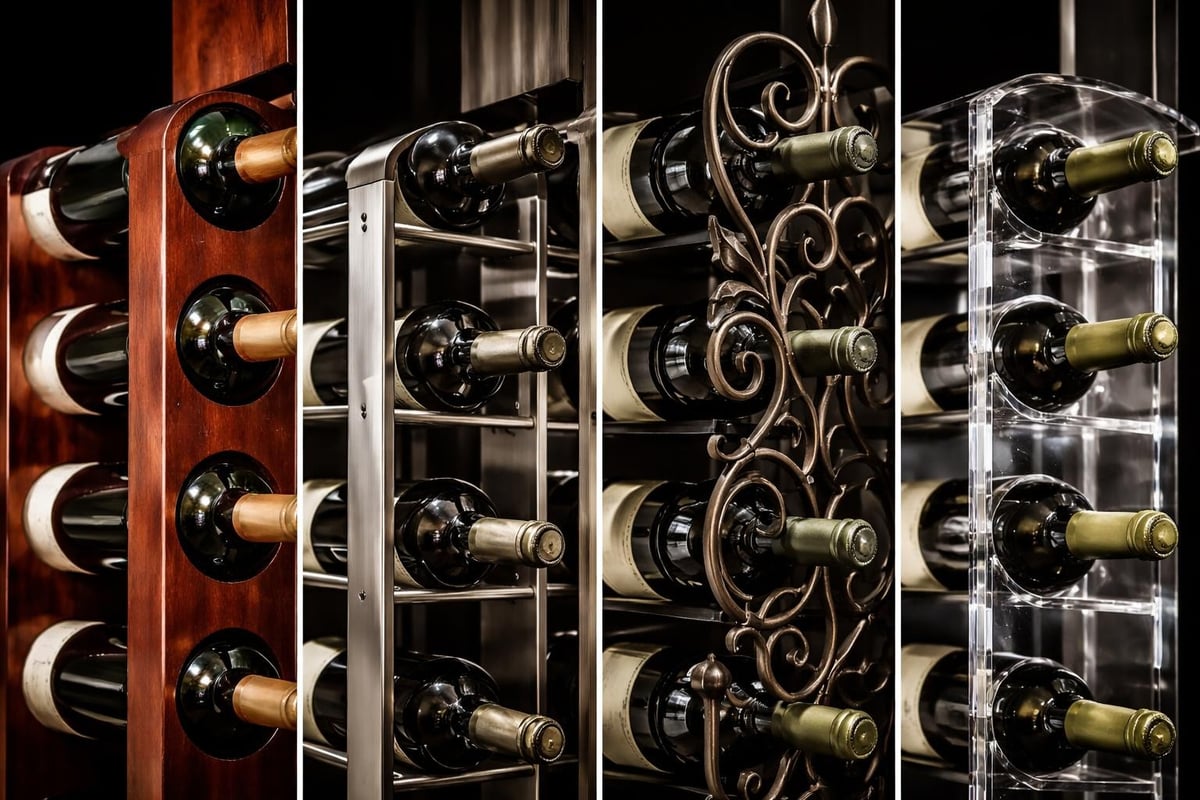
The foundation of any exceptional racking system begins with material selection. Premium hardwoods like mahogany, walnut, and redwood offer natural beauty and structural integrity, while wrought iron, stainless steel, and custom metalwork provide contemporary alternatives that speak to modern design sensibilities. According to comprehensive wine rack design principles, the material choice directly influences both the longevity of the installation and its ability to maintain stable conditions around stored bottles.
Material Excellence Sets the Standard
Different materials serve distinct purposes within luxury installations:
All-heart redwood: Naturally resistant to moisture, mold, and temperature fluctuations, making it ideal for climate-controlled environments
Mahogany: Rich grain patterns and exceptional durability create timeless elegance in traditional settings
Metal and glass combinations: Offer transparency and sculptural presence, particularly effective in glass-enclosed showpiece cellars
Acrylic and modern composites: Provide contemporary minimalism while maintaining structural performance
The best luxury wine racks incorporate these materials through expert craftsmanship rather than mass production. Hand-finished joinery, custom staining techniques, and meticulous attention to weight distribution ensure each system functions flawlessly while delivering the refined appearance discerning collectors expect.
Design Approaches That Define Premium Storage
The architecture of luxury wine racks reflects both practical storage needs and personal style preferences. Contemporary design trends in 2026 emphasize personalization and innovation, with emerging wine cellar design trends highlighting glass-forward installations and sculptural racking configurations that function as focal points rather than mere storage.
Traditional Elegance Meets Modern Innovation
Classic design approaches continue to resonate with collectors who appreciate heritage aesthetics. Traditional wine cellars featuring floor-to-ceiling wooden racking, diamond bins for bulk storage, and individual bottle displays create the romantic ambiance of European wine caves. These installations often incorporate architectural details like arched doorways, wrought iron accents, and Old World lighting fixtures that transport visitors to Bordeaux or Burgundy.
Modern interpretations challenge convention through minimalist frameworks, floating displays, and architectural transparency. Wall-mounted configurations maximize space efficiency while creating dramatic visual statements. The shift toward wall-mounted wine rack solutions reflects how contemporary luxury prioritizes clean lines and spatial economy without compromising capacity or presentation quality.
Design Style | Key Characteristics | Ideal Applications |
|---|---|---|
Traditional | Warm woods, detailed millwork, enclosed spaces | Private estates, classic homes, steakhouses |
Modern | Glass, metal, minimal frames, open concept | Urban residences, restaurants, hotels |
Transitional | Blended materials, neutral palettes, versatile | Flexible spaces, evolving collections |
Rustic | Reclaimed wood, industrial metals, textured finishes | Wine country properties, casual dining venues |
The genius of professional wine cellar design lies in creating custom solutions that reflect individual taste while addressing practical considerations like collection size, growth projections, and spatial constraints.
Capacity Planning and Configuration Options
Determining the right capacity requires honest assessment of your current collection and realistic growth projections. Luxury wine racks should accommodate today's bottles while allowing room for acquisitions that naturally accompany deepening appreciation for fine wine.
Individual bottle racking provides the most versatile storage, allowing single-bottle access and display flexibility. Standard depths of 12-14 inches accommodate most bottle formats, while magnum storage requires deeper configurations to properly support larger formats.
Strategic Storage Configurations
Different racking styles serve specific organizational purposes:
Single-deep individual storage: Maximum accessibility, ideal for frequently rotated bottles and prized selections
Double-deep bulk storage: Efficient use of space for cases purchased for aging
Diamond bins: Showcase appeal while holding multiple bottles of the same vintage
Display rows: Eye-level presentation for labels worth showing, conversation-starting bottles
Magnum and large format sections: Dedicated spaces for oversized bottles requiring special accommodation
Thoughtful collectors often incorporate case storage areas where unopened wooden cases remain intact, preserving provenance documentation. This approach particularly benefits those building serious collections where maintaining provenance adds significant value.
Many luxury installations now include dedicated tasting areas within the cellar itself, requiring careful planning to integrate comfortable seating, appropriate lighting, and serving surfaces without compromising storage capacity. This trend toward experiential wine spaces reflects how luxury wine racks form part of broader lifestyle environments rather than isolated storage rooms.
Climate Control Integration and Environmental Protection
Even the most beautiful luxury wine racks fail their primary purpose without proper environmental management. Temperature stability, humidity control, and vibration isolation form the trinity of preservation science that protects investment-grade collections.
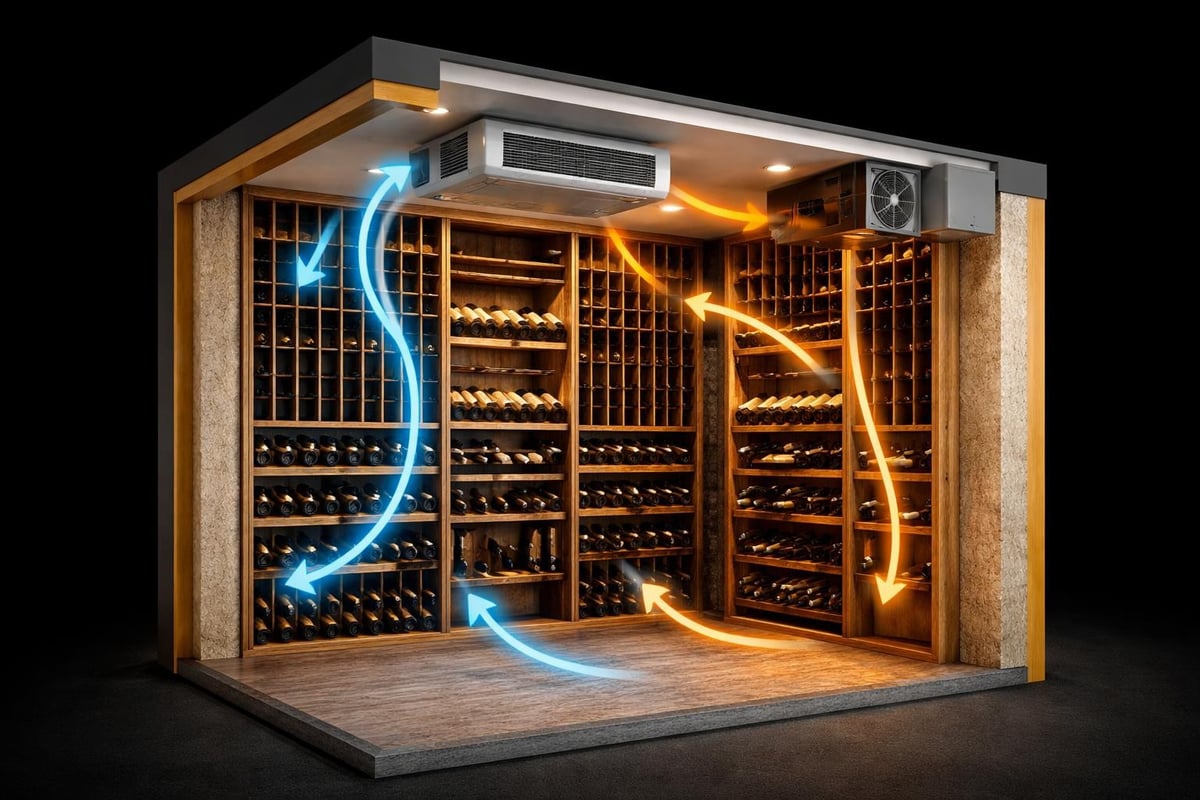
Wine requires narrow environmental parameters for optimal aging. Temperatures between 55-58°F remain ideal for long-term cellaring, while humidity levels between 60-70% prevent cork drying without encouraging mold growth. The racking system itself plays a crucial role in maintaining these conditions by promoting air circulation around bottles and avoiding materials that trap moisture or emit harmful compounds.
Material Selection for Climate Stability
Certain materials perform better in controlled environments than others. All-heart redwood naturally resists moisture-related warping and mold growth, making it the gold standard for temperature-controlled wine cellars. Metal racking requires powder coating or stainless construction to prevent corrosion in humid conditions, while certain finishes on wooden racks can emit volatile compounds that affect wine through the cork over decades of storage.
Modern wine refrigeration technology has advanced considerably, incorporating smart controls and multi-zone capabilities that allow different temperature zones within a single installation. This sophistication enables collectors to maintain separate sections for red wines, white wines, and champagnes at their respective ideal temperatures, all within one cohesive design.
Professional installation ensures:
Proper insulation integration around racking frameworks
Strategic placement away from external walls and heat sources
Adequate spacing between bottles for air circulation
Compatibility with cooling system air flow patterns
Moisture barrier integration where wooden racks meet walls
The comprehensive approach offered through turnkey wine cellar design and build services addresses these technical requirements while maintaining design integrity throughout the installation process.
Placement Strategies for Maximum Impact
Location determines both the practical success and visual impact of luxury wine racks. The ideal placement balances accessibility, environmental stability, and architectural presence within your home or commercial space.
Basement installations remain popular for residential projects, offering naturally cool temperatures and humidity levels that reduce climate control demands. However, modern waterproofing and insulation techniques now enable luxury wine cellars in virtually any location, from ground-floor wine rooms adjacent to dining areas to glass-enclosed displays visible from multiple rooms.
Residential Placement Considerations
Converting underutilized spaces into wine cellars requires careful evaluation of structural and environmental factors:
Load-bearing capacity: Full wine cellars can exceed several tons when completely stocked
Moisture sources: Proximity to plumbing, exterior walls, or grade level affects humidity management
Accessibility: Daily use differs from long-term storage, influencing configuration choices
Visual integration: Glass walls and open designs require thoughtful placement within sightlines
For Texas homeowners in communities like River Oaks, Highland Park, and The Woodlands, climate considerations become particularly important given the intense summer heat and humidity that challenge conventional cooling systems.
Commercial Applications
Restaurants, hotels, and private clubs leverage luxury wine racks as marketing tools that communicate sophistication and commitment to quality. Glass wine cellars in luxury homes demonstrate how transparent storage creates dramatic focal points, a principle equally applicable to hospitality environments where the wine program becomes part of the guest experience.
The most successful commercial installations balance practical service requirements with theatrical presentation. Restaurants need rapid access during service hours, suggesting organizational systems that group wines by varietal or region. Hotels may prioritize visual impact in lobby displays while maintaining larger working inventory in back-of-house locations.
Lighting Design That Enhances Without Damaging
Proper illumination transforms luxury wine racks from storage into showcase, but requires careful specification to avoid UV damage that degrades wine over time. The best lighting designs employ LED technology that produces minimal heat while offering color temperature control and dimming capabilities.
Strategic lighting placement creates depth and drama:
Overhead downlighting: Highlights vertical columns and creates ambient glow throughout the space
Toe-kick lighting: Provides subtle illumination that defines floor boundaries and creates floating effects
Label lighting: Focused beams at eye level make reading labels effortless
Accent lighting: Emphasizes architectural details, vintage displays, or rare bottles
Motion sensors add convenience and energy efficiency, illuminating the cellar automatically upon entry while ensuring lights don't remain on unnecessarily. Dimming controls allow adjustment based on whether you're selecting a bottle for dinner or giving collectors a tour of prized acquisitions.
Color temperature matters significantly. Warm whites (2700-3000K) create inviting atmospheres suitable for tasting areas, while neutral whites (3500-4000K) render wine labels and bottle colors accurately. Avoid cool whites that create clinical rather than luxurious ambiance.
Investment Considerations and Value Protection
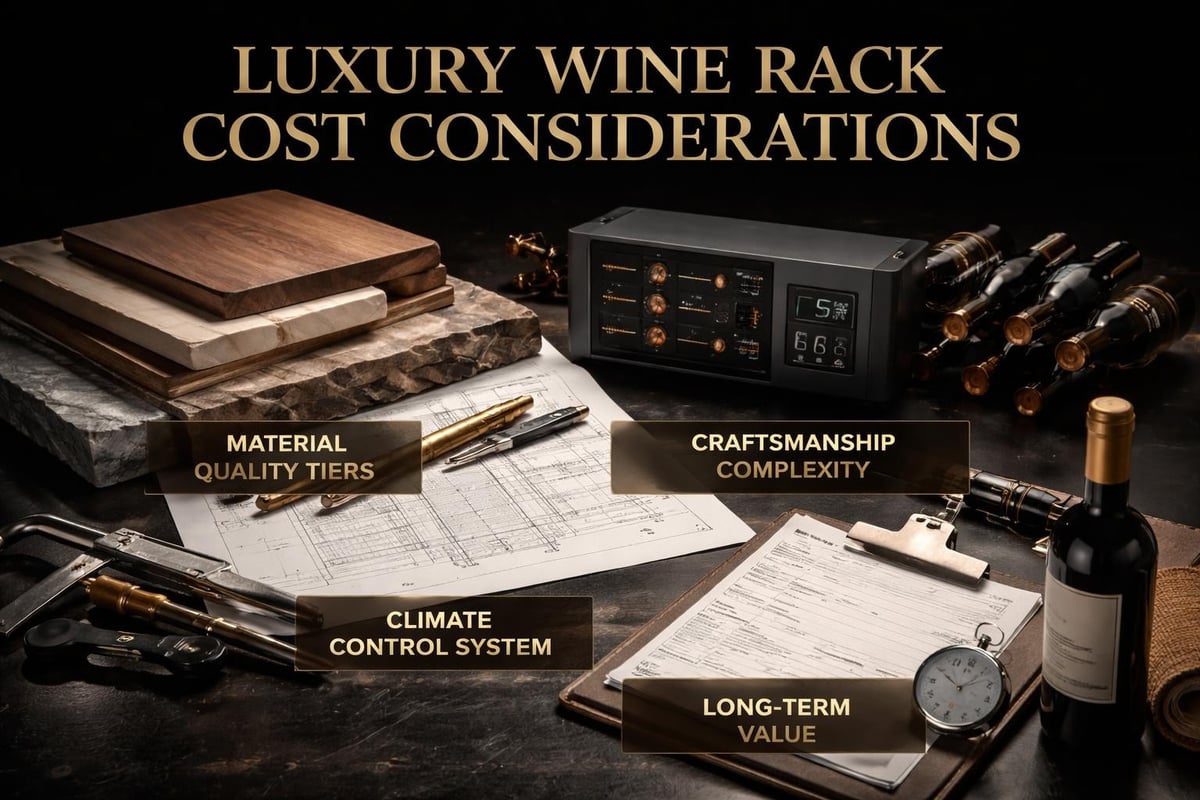
Luxury wine racks represent significant investment, with custom installations ranging from several thousand to over one hundred thousand dollars depending on size, materials, and complexity. Understanding what drives cost helps make informed decisions that balance budget with long-term value.
Cost Factor | Budget Impact | Quality Indicators |
|---|---|---|
Materials | High | Solid hardwoods, premium metals, custom finishes |
Craftsmanship | High | Hand joinery, custom millwork, precision fitting |
Capacity | Medium-High | Bottle count, specialty storage, flexibility |
Climate Control | High | Cooling system integration, insulation quality |
Installation Complexity | Medium | Structural requirements, finish coordination |
The true cost of wine storage extends beyond initial construction. Ongoing maintenance requirements ensure climate systems operate efficiently and racking remains structurally sound, protecting collections that often exceed the value of the cellar itself.
Protecting Your Investment
Premium installations should include warranties covering materials, workmanship, and climate system performance. Reputable builders stand behind their work with comprehensive service agreements and rapid response to any issues that affect storage conditions.
Documentation matters tremendously for insurance purposes and future property sales. Professional photography, material specifications, and system documentation provide proof of value while helping new owners understand operation and maintenance requirements.
For collectors with truly exceptional holdings, integrating security features like reinforced doors, alarm systems, and access controls protects against theft while maintaining the aesthetic integrity of the space. These considerations become particularly relevant for commercial wine cellar projects where valuable inventory requires professional-grade protection.
Custom Versus Prefabricated Solutions
The decision between custom-built and prefabricated luxury wine racks hinges on budget, timeline, and design flexibility requirements. Each approach offers distinct advantages depending on project scope and objectives.
Prefabricated modular systems provide quick installation and predictable costs, making them suitable for straightforward rectangular spaces with standard ceiling heights. Quality manufacturers offer impressive materials and finishes, though design options remain limited to available configurations. These systems work particularly well for compact urban wine cellars where space constraints favor efficient, proven solutions.
The Custom Advantage
Fully custom luxury wine racks address irregular spaces, unique architectural features, and specific collection requirements that modular systems cannot accommodate. Custom work enables:
Perfect spatial utilization in challenging layouts with angles, columns, or varying ceiling heights
Seamless integration with existing architectural details and interior design themes
Specialized storage for unusual bottle formats, decanters, or wine accessories
Future flexibility through adaptable configurations that evolve with your collection
The design freedom inherent in custom fabrication allows creation of truly unique installations that become architectural statements. Whether you envision a traditional wood cellar with Old World charm or a modern glass showcase with contemporary minimalism, custom construction delivers precisely what prefabricated systems cannot: a one-of-a-kind expression of your taste and requirements.
Regional Considerations for Texas Installations
Geography significantly influences luxury wine rack design and installation requirements. Texas presents unique challenges that demand specialized approaches to ensure optimal performance and longevity.
The state's intense summer heat and high humidity require robust climate control systems and careful material selection. Wooden racks need proper sealing to resist moisture fluctuation, while metal components require corrosion-resistant finishes. The cooling load calculations for Texas cellars typically exceed those in more temperate climates, making professional engineering essential.
Foundation and structural considerations vary across Texas regions. Houston's clay soils expand and contract dramatically, requiring careful foundation analysis before constructing basement cellars. Dallas-area properties often feature slab foundations, making ground-floor or above-grade installations more practical. Understanding these regional variations ensures your luxury wine racks rest on stable, properly prepared foundations.
Communities across Texas from Southlake to Sugar Land showcase diverse architectural styles that influence cellar design approaches. Modern estates with open floor plans often favor glass-enclosed wine walls that integrate storage into living spaces, while traditional homes might incorporate classic designs in dedicated basement spaces.
Design Trends Shaping 2026
The luxury wine storage landscape continues evolving as new materials, technologies, and aesthetic preferences emerge. Several key trends define premium installations in 2026.
Transparency dominates contemporary design conversations. Glass-enclosed cellars that showcase collections from multiple vantage points have moved from novel to expected in high-end properties. This shift reflects broader interior design movements toward open concepts and visual connectivity between spaces.
Sculptural racking that functions as art represents another significant trend. Rather than viewing wine racks purely as functional infrastructure, leading designers now create installations that command attention through bold geometry, unexpected materials, and architectural presence. These statement pieces often become defining features of luxury homes.
Technology integration extends beyond climate control into inventory management, automated lighting, and even augmented reality applications that provide bottle information when viewed through mobile devices. Smart cellars track collection value, suggest optimal drinking windows, and alert owners to environmental anomalies before damage occurs.
Sustainability considerations increasingly influence material choices and system specifications. Reclaimed woods, recycled metals, and energy-efficient cooling systems appeal to environmentally conscious collectors who want luxury that aligns with responsible practices.
Working With Professional Designers
Creating truly exceptional luxury wine racks requires collaboration with experienced professionals who understand both the technical requirements of wine storage and the artistic vision necessary for architectural excellence. The right partnership transforms abstract ideas into tangible spaces that exceed expectations.
Professional designers begin with comprehensive discovery conversations that explore collection size, growth projections, budget parameters, and aesthetic preferences. This foundation ensures proposed solutions address practical needs while reflecting personal style. Many collectors find value in reviewing portfolio examples that demonstrate range and capability before committing to a designer.
The design process typically unfolds through several phases:
Initial consultation establishing project scope and objectives
Conceptual design presenting overall approach and spatial organization
Detailed design specifying materials, finishes, and technical systems
Engineering addressing structural, mechanical, and electrical requirements
Installation coordination managing trades and ensuring quality execution
Transparent communication throughout these phases prevents misunderstandings and ensures the final installation matches initial vision. The best designers welcome questions, explain technical requirements in accessible language, and provide regular updates as projects progress.
Luxury wine racks elevate collections from simple storage to sophisticated showcases that protect investment while enhancing living spaces. The combination of premium materials, expert craftsmanship, and thoughtful design creates environments where wines age gracefully and collectors experience daily pleasure from their treasures. Whether you're planning a private estate cellar, a restaurant showcase, or a boutique hotel installation, Prestige Wine Cellars brings decades of expertise to every project, delivering bespoke solutions that blend artistry with engineering excellence throughout Texas and beyond.
Your Dream Wine Cellar Starts Here
Let our design team craft a cellar that matches your taste, space, and your collection — built for beauty, function, and prestige.

Email us at
Serving Austin, Dallas–Fort Worth, Houston & San Antonio