
Wine Cellar Design Austin: Custom Luxury Solutions
Discover expert wine cellar design in Austin. From climate control to custom materials, create a luxury wine room tailored to your collection.
Austin's Hill Country setting and thriving culinary scene have cultivated a sophisticated wine culture that demands equally refined storage solutions. Whether you're designing a home cellar in Westlake, outfitting a downtown steakhouse, or creating a showpiece for a Barton Creek estate, wine cellar design Austin projects require careful attention to climate, space, and aesthetic vision. The unique challenges of Texas heat and humidity mean that proper engineering isn't optional; it's fundamental to protecting your investment and ensuring every bottle ages gracefully.
Understanding Austin's Climate Challenges for Wine Storage
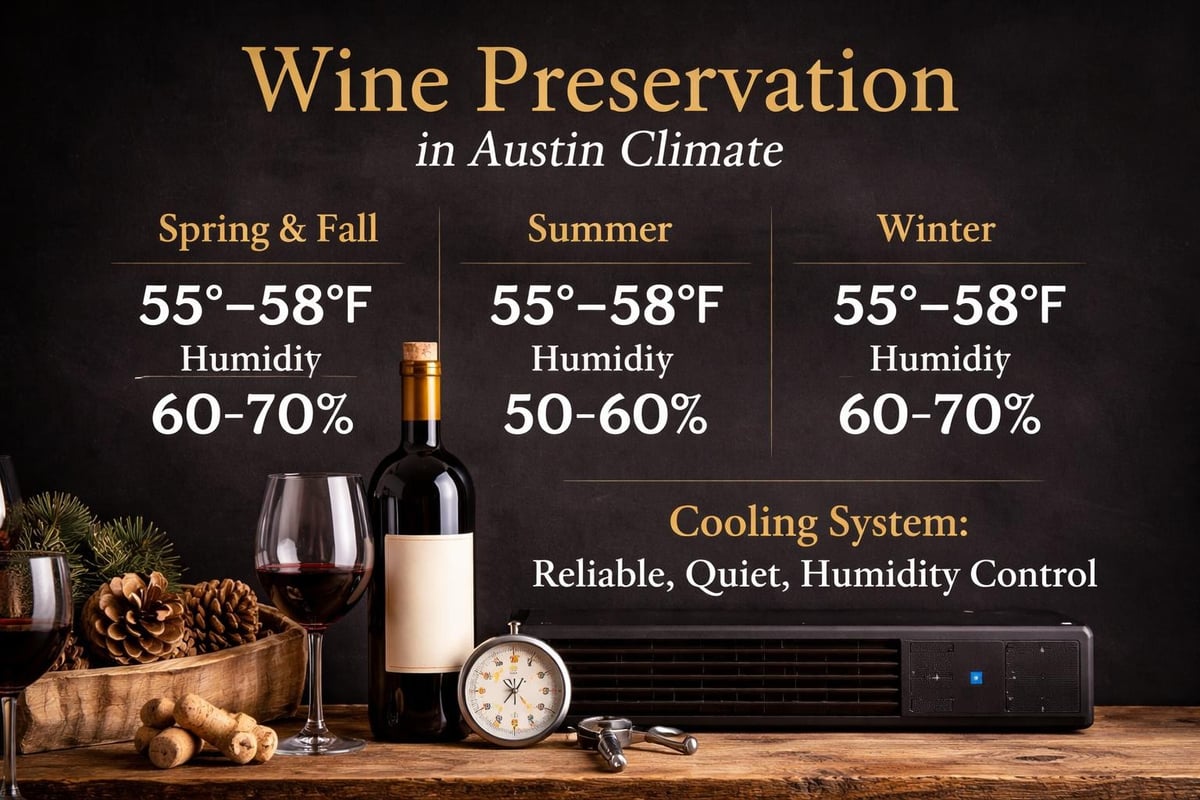
Central Texas presents distinctive obstacles that directly impact wine cellar design Austin specialists must address. Summer temperatures routinely exceed 100°F, while humidity levels fluctuate dramatically throughout the year.
Wine requires precise conditions to mature properly:
Temperature stability between 55-58°F
Humidity maintained at 60-70%
Minimal vibration and light exposure
Protection from temperature swings
These requirements become more challenging in Austin's climate, where exterior walls absorb intense heat and HVAC systems work overtime. The foundation of any successful project starts with proper insulation and vapor barriers that create a true thermal envelope.
Location Selection Within Your Home
Choosing where to build determines half your success before design even begins. Basements offer natural advantages in temperature stability, but Austin homes rarely include them. Instead, most wine cellar design Austin projects utilize interior spaces away from exterior walls.
Ideal locations include:
Interior ground-floor rooms with minimal exterior wall exposure
Under-stair spaces converted into climate-controlled environments
Former closets or pantries with existing HVAC access
Dedicated rooms in new construction planned from the foundation
Corner spaces touching two exterior walls require significantly more cooling capacity and insulation investment. Determining the proper location impacts both construction costs and long-term energy efficiency.
Capacity Planning and Storage Configuration
Before selecting materials or finishes, establish how many bottles you need to store and how you want to access them. A 500-bottle collection requires different racking strategies than a 2,000-bottle inventory.
Storage Style | Bottles per sq ft | Access Type | Best For |
|---|---|---|---|
Individual bottle racking | 80-100 | Full visibility | Display collections |
Bulk/bin storage | 120-150 | Case storage | Investment wines |
Mixed configuration | 100-120 | Flexible | Most collectors |
Your custom wine cellar design should accommodate current holdings while allowing 30-40% growth capacity. Collectors inevitably expand their selections, and building too small means costly renovations within a few years.
Racking Systems and Material Choices
Wood remains the preferred material for wine cellar design Austin projects, offering both thermal properties and timeless elegance. Different species create distinct aesthetic statements while serving practical functions.
Popular wood selections include:
Redwood: Naturally moisture-resistant, rich color, California aesthetic
Mahogany: Deep tones, exceptional durability, traditional luxury
Walnut: Contemporary appeal, varied grain patterns, premium choice
Alder: Budget-friendly, accepts stains well, versatile
Metal racking offers modern alternatives, particularly for glass-enclosed showpiece wine cellars where minimalist design takes priority. Cable wine wall systems create floating bottle displays that showcase labels while maintaining proper storage angles.
The wine cellar materials you select should complement your home's existing architecture. A contemporary Tarrytown residence benefits from sleek metal and glass, while a traditional estate might embrace rich wood tones and ornate millwork.
Climate Control Engineering
No element matters more than precise temperature and humidity management. Even the most beautiful wine cellar design Austin craftsmen can create will fail without proper cooling systems.
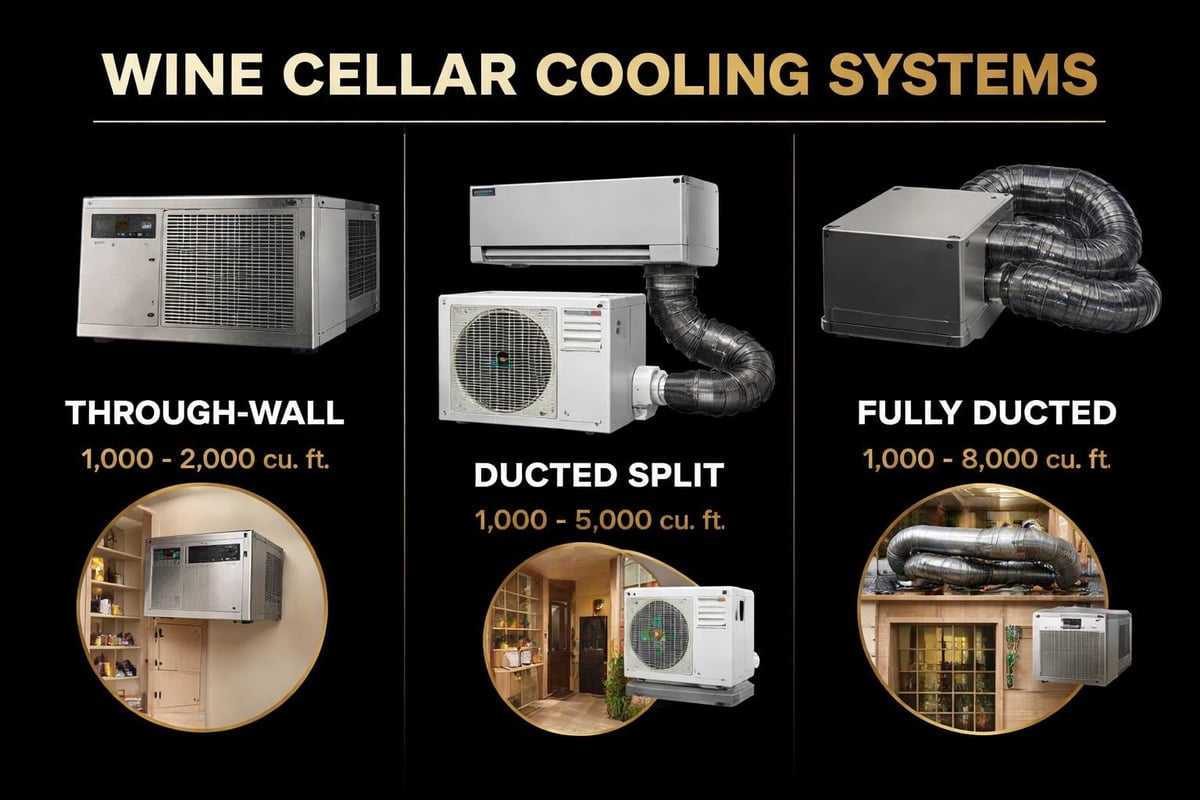
Residential wine cellars typically require dedicated cooling units separate from home HVAC systems. Calculating the correct capacity depends on multiple factors: insulation quality, glass surface area, door specifications, ambient temperature, and desired interior temperature.
Cooling system options:
Through-wall units: Cost-effective, requires exterior venting, suitable for smaller spaces
Ducted split systems: Quiet operation, remote compressor placement, ideal for residential
Fully ducted systems: Complete integration with home design, premium solution
Water-cooled systems: Maximum efficiency, requires water line access
Maintaining consistent climate control requires proper system sizing and backup plans. Power outages during Texas storms can threaten collections, making battery backup and alarm systems valuable additions.
Design Styles That Complement Austin Architecture
Wine cellar design Austin homeowners choose often reflects the architectural character of their properties. The city's diverse housing stock-from historic bungalows to modern glass boxes-demands flexible design approaches.
Traditional and Rustic Designs
Hill Country estates and traditional homes pair beautifully with rustic estate wine cellars featuring reclaimed wood, wrought iron accents, and stone elements. Arched doorways, hand-hewn beams, and antique-finished hardware create spaces that feel transported from Tuscan vineyard estates.
Traditional wine cellars with classic wood construction offer warmth and timeless appeal. Detailed crown molding, furniture-quality cabinetry, and carefully selected lighting fixtures transform functional storage into sophisticated living spaces.
Modern and Contemporary Approaches
Austin's urban core and new developments favor clean lines and innovative materials. Modern wine cellar designs incorporate floor-to-ceiling glass, LED accent lighting, and minimalist metal racking systems.
Contemporary design elements include:
Frameless glass walls and doors
Backlit onyx or acrylic panels
Floating display shelves
Integrated LED lighting strips
Cable wine wall systems
Transitional wine cellars blend traditional warmth with contemporary simplicity, offering versatility for homes that don't commit fully to either style extreme.
Space-Efficient Solutions for Urban Properties
Not every wine cellar design Austin project involves sprawling square footage. Downtown condos, smaller homes, and properties with limited floor plans still deserve proper wine storage.
Compact urban wine cellars maximize vertical space and creative configurations. Under-stair installations, converted closets, and reach-in designs deliver full climate control in minimal footprints.
Space Type | Typical Capacity | Dimensions | Design Considerations |
|---|---|---|---|
Under-stair | 300-600 bottles | 4' x 6' x 8'H | Angled ceiling, limited depth |
Reach-in closet | 200-400 bottles | 3' x 8' x 8'H | Single-access design |
Corner conversion | 500-800 bottles | 6' x 8' x 8'H | Two-wall configuration |
Full room | 1000+ bottles | 8' x 10'+ | Multiple access points |
Even modest spaces benefit from professional design services that optimize every inch while maintaining proper bottle storage angles and accessibility.
Lighting Design for Function and Ambiance
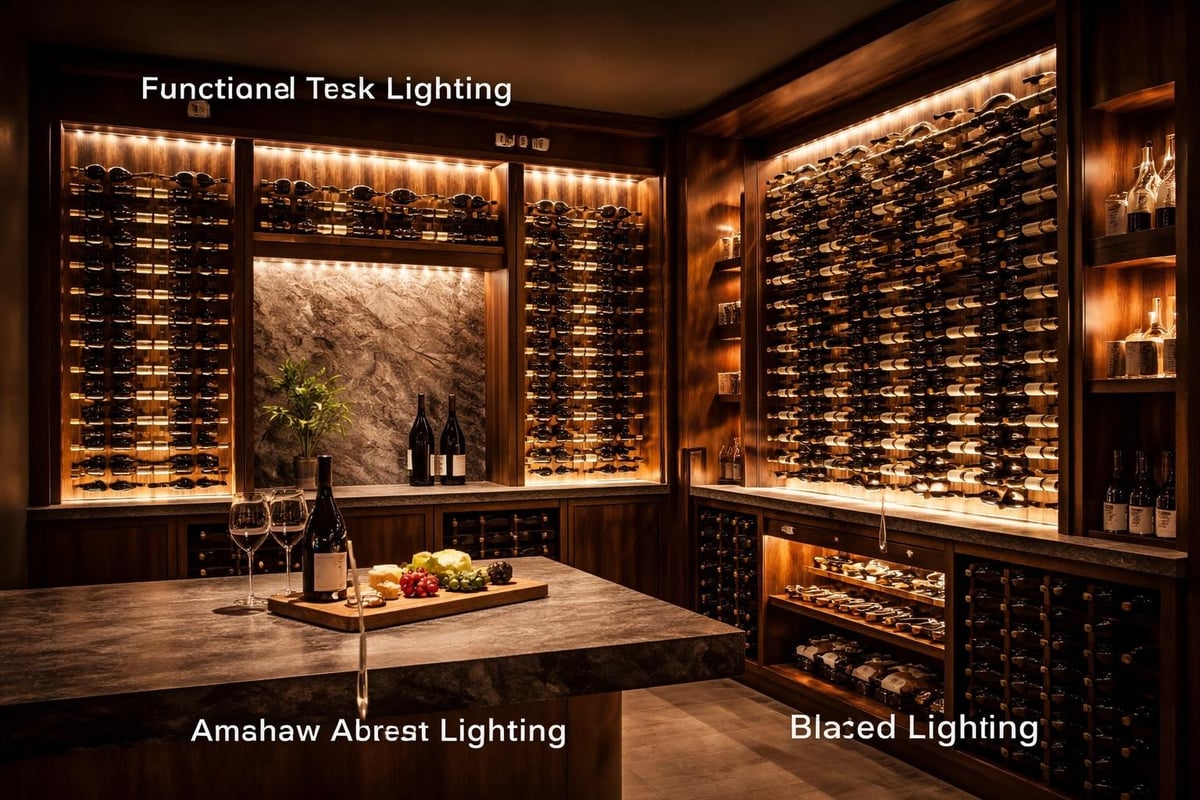
Proper illumination serves dual purposes in wine storage spaces. Functional lighting enables bottle selection and reading labels, while ambient lighting creates atmosphere and showcases your collection as living art.
The role of lighting in wine cellars extends beyond aesthetics. UV-free LED systems protect wine from light damage while offering design flexibility impossible with traditional fixtures.
Effective lighting strategies:
LED strip lighting within racking for label visibility
Recessed ceiling fixtures with dimming controls
Backlit display niches for special bottles
Glass floor panels with underlighting
Temperature-appropriate fixtures rated for cool environments
Avoid incandescent bulbs that generate heat and alter cellar temperatures. Modern LED technology provides thousands of color temperature options while drawing minimal power and producing virtually no thermal output.
Commercial Wine Cellar Design Considerations
Austin's restaurant and hospitality sectors demand wine cellar design Austin expertise that addresses different requirements than residential projects. Steakhouses, hotels, and private clubs need storage that impresses guests while supporting operational efficiency.
Commercial design priorities include:
High-capacity storage: Restaurants may house 3,000-10,000+ bottles
Quick access systems: Service staff need rapid bottle retrieval
Display visibility: Guests should see impressive collections
Security features: Valuable inventory requires protection
Accessibility compliance: Commercial codes apply
The Cambria Waco Hotel wine cellar demonstrates how commercial spaces balance operational needs with guest experience. Glass walls showcase the collection while maintaining proper climate control, and strategic lighting creates destination appeal.
Integration with Home Architecture
Successful wine cellar design Austin architects and designers praise doesn't feel like an afterthought. The space should flow naturally from surrounding rooms, whether visible through glass walls or discovered through dedicated entry doors.
Entry doors deserve special attention. Glass doors allow collection visibility and natural light transmission (filtered through UV-protective glass), while solid doors offer traditional elegance and superior insulation properties. Many projects combine both approaches, using glass for interior-facing walls and insulated doors at exterior boundaries.
Architectural integration elements:
Flooring materials that transition from adjacent spaces
Trim and millwork matching home's existing details
Door hardware consistent with interior design
Ceiling treatments coordinated with room style
Portfolio examples across Austin showcase how custom cellars complement everything from modern renovations to traditional estate designs.
Budget Planning and Investment Value
Wine cellar design Austin homeowners commission represents significant investment, with projects ranging from $15,000 for compact conversions to $150,000+ for elaborate custom installations. Understanding cost drivers helps establish realistic budgets.
Primary cost factors:
Square footage and storage capacity
Cooling system type and capacity
Material selections (wood species, glass, hardware)
Custom millwork and architectural details
Complexity of construction and site access
While some question whether you really need a wine cellar, the right installation adds substantial value for serious collectors. Beyond real estate appreciation, proper storage protects wine investments that may appreciate significantly over decades.
Phased Construction Approaches
Budget constraints don't require compromising vision. Many wine cellar design Austin projects implement phased construction strategies that establish proper infrastructure initially while allowing aesthetic refinement over time.
Phase 1: Climate envelope, insulation, cooling system, basic racking Phase 2: Custom millwork upgrades, enhanced lighting, display features Phase 3: Expansion into adjacent spaces, tasting areas, humidor integration
This approach ensures your collection stays properly protected while spreading investment across multiple budget cycles.
Maintenance and Long-Term Performance
Creating a beautiful cellar represents only the beginning. Ongoing maintenance ensures decades of reliable performance and collection protection.
Essential maintenance tasks:
Monthly temperature and humidity monitoring
Quarterly cooling system filter changes
Annual professional system inspection
Regular door seal checks
Wood conditioning (as needed by species)
Digital monitoring systems provide smartphone alerts if conditions drift outside parameters, offering peace of mind whether you're home or traveling. These systems track historical data that helps identify trends before they become problems.
Working with Design Professionals
The complexity of wine cellar design Austin projects-from building codes to cooling calculations-makes professional expertise valuable. Experienced designers bring knowledge that prevents costly mistakes and ensures optimal results.
Prestige Wine Cellars' comprehensive services span initial consultation through final installation and ongoing support. This integrated approach eliminates coordination headaches between separate designers, builders, and mechanical contractors.
Professional design process:
Initial consultation and needs assessment
Space evaluation and capacity planning
Conceptual design development
Material selection and specifications
Engineering and cooling calculations
Construction documentation
Installation and system commissioning
Post-installation support
Texas-based expertise matters because local professionals understand regional climate challenges, building codes, and contractor relationships that streamline projects. Austin-area projects benefit from designers who work regularly with local trades and understand permit requirements.
Emerging Trends in Wine Storage Design
Wine cellar design Austin innovators embrace continues evolving. Recent trends reflect both technological advances and shifting aesthetic preferences among collectors.
Smart home integration allows climate monitoring through existing home automation platforms. Voice-controlled lighting, automated inventory management, and even robotic bottle retrieval systems appear in cutting-edge installations.
Current design trends:
Ultra-clear low-iron glass for maximum transparency
Mixed-material designs combining wood, metal, and stone
Dedicated tasting areas within cellar spaces
Wine walls as room dividers in open floor plans
Sustainable materials and energy-efficient systems
Compact urban living drives innovation in space-efficient designs. Vertical wine walls, slim-profile racking, and creative use of non-traditional spaces allow serious collecting even in modest square footage.
Regional Considerations Across Texas
While this guide focuses on wine cellar design Austin specialists deliver, similar principles apply throughout Texas. However, regional variations in climate, architecture, and design preferences create subtle differences.
Houston's higher humidity requires enhanced dehumidification capacity. Dallas projects often embrace more traditional aesthetics reflecting established neighborhoods. Regional expertise ensures designs respond appropriately to local conditions and preferences.
Whether building in West University Place, Highland Park, or The Woodlands, the fundamental principles remain consistent while execution adapts to specific contexts.
Creating a wine cellar that protects your collection while enhancing your home requires balancing technical precision with aesthetic vision. From climate control engineering to material selection, every decision impacts both immediate function and long-term performance. Whether you're planning a compact urban installation or an expansive estate cellar, Prestige Wine Cellars brings the expertise, craftsmanship, and local knowledge to transform your vision into reality. Reach out today to begin designing a custom wine storage solution perfectly tailored to your collection and your space.
Your Dream Wine Cellar Starts Here
Let our design team craft a cellar that matches your taste, space, and your collection — built for beauty, function, and prestige.

Email us at
Serving Austin, Dallas–Fort Worth, Houston & San Antonio