
Transitional
Where timeless wood craftsmanship meets modern design, creating a balanced, elevated, and universally appealing wine cellar aesthetic.
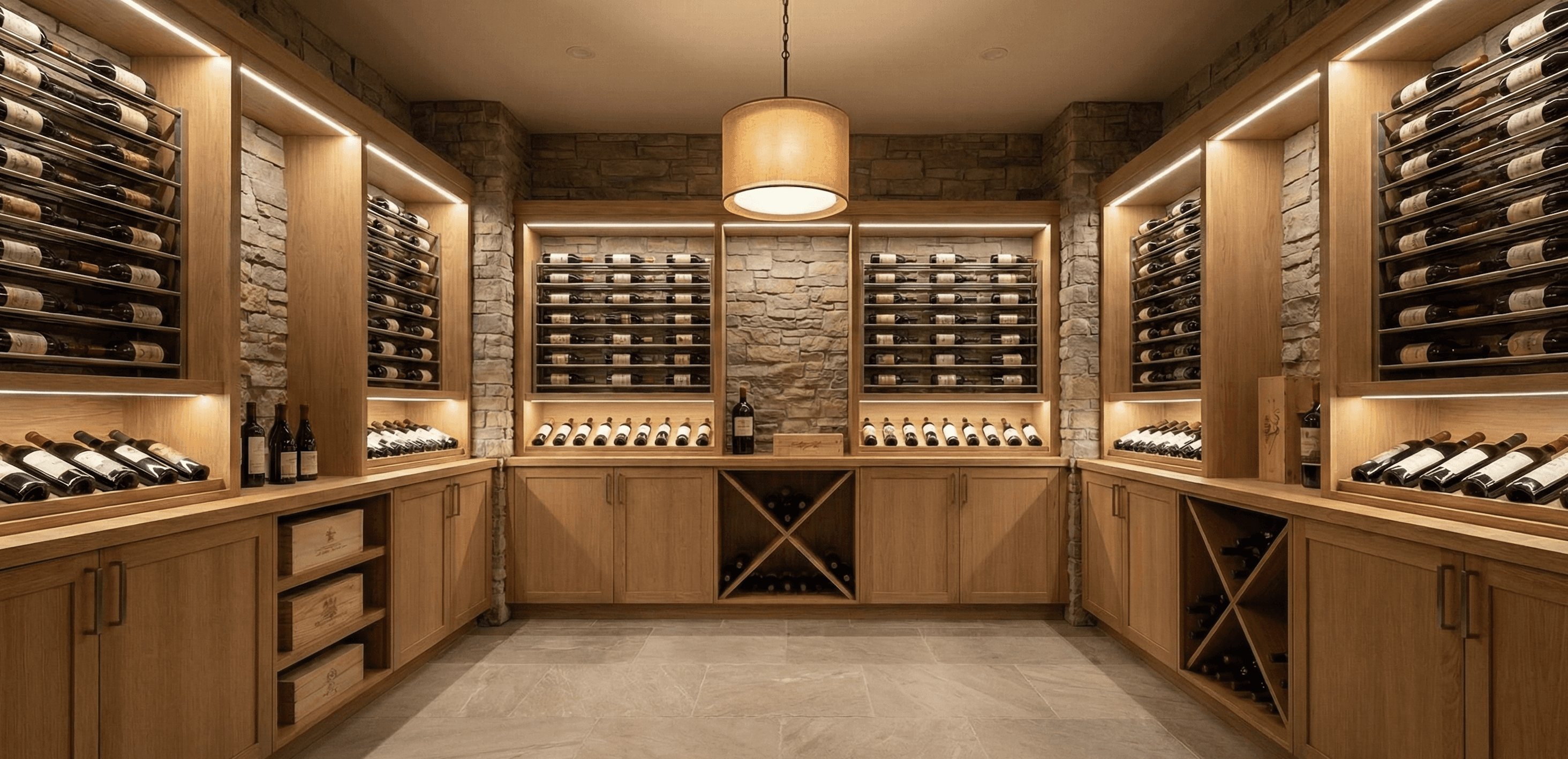
Design a Transitional Wine Cellar That Feels Timeless
Classic details. Modern performance. Built around your collection. Our team designs custom, climate controlled transitional wine cellars for luxury homes across Austin, Dallas, Houston, and the Texas Hill Country — tailored to your space, lifestyle, and longterm storage needs.
Transitional wine cellars are one of the most versatile and widely desirable cellar styles for luxury homeowners. Ranked #3 in popularity in the 2026 Style Report , the Transitional aesthetic bridges the gap between classic wood warmth and modern minimalism — creating a look that feels both comforting and current.
This style blends high-quality wood racking with refined contemporary accents like metal or glass, resulting in a wine cellar that feels welcoming, timeless, and architecturally elevated. For homeowners who want a design that will never go out of style, the Transitional wine cellar is the perfect choice.
1. Light, Warm Wood Tones Paired With Modern Accents
Transitional wine cellars typically use premium woods like:
light or medium-toned oak
softer-toned mahogany
subtle, warm-stained maple
These materials create the classic warmth of traditional craftsmanship, but with clean finishes and streamlined profiles that feel modern rather than rustic.
According to the 2026 report, Transitional design succeeds because it delivers the warmth of wood with the contemporary refinement today’s homeowners prefer.
2. Clean Lines & Minimal Ornamentation
Unlike fully traditional cellars, Transitional designs eliminate heavy trim work, ornate carvings, or old-world motifs.
Instead, they emphasize:
straight geometry
soft edges
simplified decorative profiles
functional shelving layouts
This creates a balanced, uncluttered environment.
3. Mixed-Material Racking (Wood + Metal)
Transitional cellars often combine the durability and warmth of wood with the sleek, modern look of metal:
black metal supports
stainless steel rods
slim metal pegs integrated into wooden frames
This mixed-material approach is one reason Transitional ranks among the top styles for broad market appeal.
4. Optional Glass Enclosures
While not always required, many Transitional cellars incorporate glass enclosures or glass doors.
This adds a contemporary feel and increases visibility while maintaining the warmth of the wood interior.
5. Integrated Soft Ambient Lighting
Transitional cellars use lighting to create an elevated, warm, inviting atmosphere:
warm white LED downlighting
soft backlighting behind wood racking
under-shelf LED accents
Lighting is essential for striking the right balance between traditional and modern.
Broadest Aesthetic Appeal
Transitional designs are so widely desired because they work beautifully in:
modern homes
traditional homes
new construction
luxury remodels
contemporary and eclectic interiors
This universal appeal is highlighted in industry reports as a major driver for this style’s popularity in 2025–2026 .
Warm, Timeless, and Inviting
Where modern wine rooms lean sleek and minimalist, Transitional cellars retain warmth — making them ideal for homeowners who want a space that feels both comfortable and refined.
Adds Resale Value
Because the aesthetic appeals to so many buyers, Transitional wine cellars often enhance property desirability and long-term resale value.
Perfect for Entertaining
With their warm wood tones and elegant lighting, Transitional cellars create a beautiful backdrop for tastings and gatherings.
1. Walk-In Wood + Metal Cellar
A balanced room featuring wood racking accented with black metal hardware.
2. Glass-Front Transitional Cellar
A popular choice that blends modern visibility with classic warmth.
3. Under-Stair Transitional Wine Cellar
Showcases wood racking with subtle metal supports and warm integrated lighting.
4. Hybrid Traditional–Modern Wine Rooms
A combination of wood shelving and minimalist label-forward displays.
Preferred Wood Types
White oak
Mahogany (light, medium stain)
Walnut (subtle, not rustic)
Maple
Metal Accents
black powder-coated steel
brushed stainless steel
brass or bronze touches for luxury contrast
Lighting
warm LED strips (2700K–3000K)
downlights above display sections
hidden lighting behind crown or base molding
1. Proper Climate Control (55°F & 60–70% humidity)
Even though Transitional cellars are warm and wood-focused, they still require:
a wine-specific cooling system
proper insulation of surrounding walls
a vapor barrier
sealed, insulated doors
2. Wood Stability & Preservation
Wood racking must be properly treated and designed to prevent:
warping
cracking
mold from humidity
Mahogany and Redwood are industry favorites due to their natural oils and stability in the wine cellar environment, however by adding a lacquer you can use any wood.
3. LED Lighting to Avoid Heat Damage
Because bottles are often label-forward or open to ambient lighting, LEDs must be used exclusively.
4. Optional Glass Engineering
If the Transitional cellar uses a glass front:
Low-E glass
insulated tempered glass
airtight seals
climate-rated glass doors
This style works exceptionally well in:
modern farmhouse homes
transitional new builds
suburban luxury homes
Mediterranean or Tuscan remodels
contemporary homes needing warmth
luxury traditional homes needing a refresh
This is the most flexible, “can’t-go-wrong” style in the entire wine cellar design world.
Is Transitional more affordable than Modern or Glass?
Often yes — because it uses more wood and less engineered glass.
Can Transitional still feel contemporary?
Absolutely. Clean lines and metal accents keep it refined and current.
Is wood safe for wine cellars?
Yes — premium hardwoods like Mahogany and Redwood perform extremely well in humid environments.

Email us at
Give us a call
Serving Austin, Dallas–Fort Worth, Houston & San Antonio