
Build Custom Wine Cellar: Expert Design & Construction
Discover how to build custom wine cellar spaces that preserve your collection and elevate your home. Expert insights on design, climate control, and craftsmanship.
Creating a dedicated space to house and preserve your wine collection represents more than just smart storage. When you build custom wine cellar spaces, you're investing in an environment that protects your bottles while adding architectural distinction to your home or commercial property. Whether you're a seasoned collector with hundreds of bottles or just beginning to curate your selection, understanding the fundamentals of cellar construction ensures your investment delivers both preservation and aesthetic excellence. The right approach balances technical precision with design vision, transforming underutilized spaces into extraordinary showcases that enhance property value and elevate daily living.
Why Invest in a Custom Wine Cellar
The decision to build custom wine cellar storage extends far beyond simple shelving. Wine remains a living product that continues evolving after bottling, and proper storage conditions directly impact how your collection matures over time. Temperature fluctuations, excessive light exposure, and inadequate humidity can compromise even the finest vintages, turning investment-grade bottles into disappointing pours.
Custom cellars offer distinct advantages over pre-fabricated alternatives:
Precise climate control tailored to your specific collection needs
Design flexibility that adapts to unusual architectural constraints
Material selection that complements your home's existing aesthetic
Capacity planning that accommodates future collection growth
Integration of specialized features like tasting areas or display focal points
Beyond preservation, a thoughtfully designed cellar adds measurable property value. According to research on wine cellar investments, well-executed cellars appeal to discerning buyers and can offer returns that exceed standard renovation projects. The key lies in balancing personal preferences with market appeal, creating spaces that serve immediate needs while maintaining broad desirability.
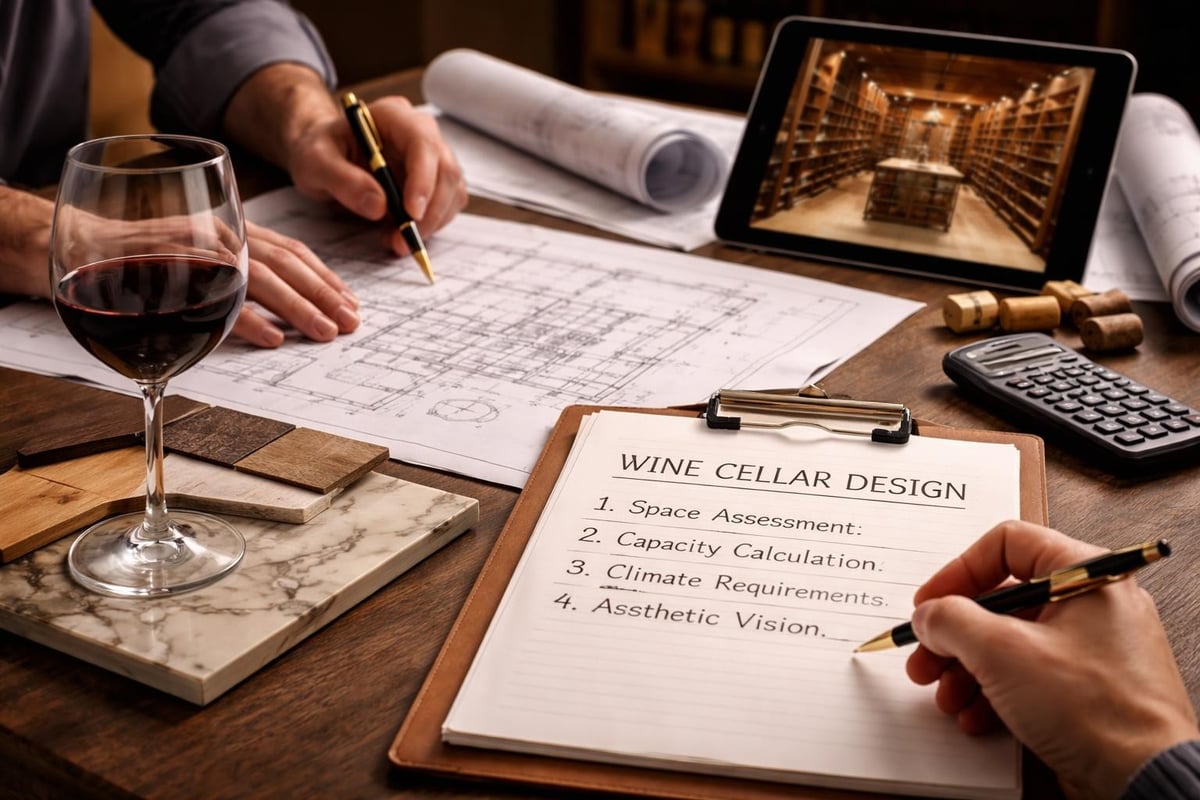
Essential Components of Wine Cellar Construction
Building a proper wine storage environment requires attention to several critical systems working in harmony. Each component plays a specific role in maintaining the stable conditions wine demands for optimal aging.
Insulation and Vapor Barriers
The foundation of any successful cellar build starts with proper insulation. Unlike standard room construction, wine cellars require exceptional thermal resistance to maintain consistent temperatures regardless of external conditions. Expert builders emphasize that inadequate insulation forces cooling systems to work harder, increasing energy costs and risking temperature swings.
Most professional installations use R-19 insulation in walls and R-30 or higher in ceilings. These values ensure minimal heat transfer, creating a stable microclimate within the cellar. Equally important is the vapor barrier installation, which prevents moisture infiltration that could compromise both wine quality and structural integrity. The barrier should face the warm side of the insulation, blocking humidity from condensing inside wall cavities.
Component | Specification | Purpose |
|---|---|---|
Wall Insulation | R-19 minimum | Temperature stability |
Ceiling Insulation | R-30+ recommended | Heat rise prevention |
Vapor Barrier | 6-mil polyethylene | Moisture protection |
Door Sealing | Weather stripping + threshold seal | Air leak prevention |
Climate Control Systems
Temperature and humidity regulation form the heart of wine preservation. When you build custom wine cellar environments, selecting the appropriate cooling system determines long-term success. Wine thrives at 55-58°F with 60-70% relative humidity. These narrow parameters require dedicated refrigeration, not simply extending your HVAC system.
Three primary cooling system types dominate the market:
Through-wall units mount directly into cellar walls, exhausting heat to adjacent spaces
Ducted split systems separate evaporator and condenser components, offering design flexibility
Self-contained systems provide all-in-one solutions for smaller installations
The right choice depends on cellar size, location, and aesthetic priorities. Design professionals who focus on wine storage recommend calculating heat load before selecting equipment, accounting for insulation quality, glass area, lighting heat, and ambient temperature differentials. Many experienced builders offer heat load calculators to ensure proper system sizing.
Doors and Sealing
Entry doors represent the most vulnerable point in cellar construction. Standard interior doors lack the insulation and sealing necessary for temperature stability. Professional installations specify exterior-grade doors with solid cores, proper weather stripping, and threshold seals that prevent air exchange.
Glass doors offer dramatic visual impact, particularly for glass-enclosed showpiece designs, but require triple-pane insulated glass with low-E coatings. The trade-off between aesthetics and thermal efficiency deserves careful consideration during planning stages.
Design Approaches and Style Options
The aesthetic dimension of cellar construction allows personal expression while serving practical storage needs. When you build custom wine cellar spaces, the design language should harmonize with surrounding interiors while creating a distinct destination within your home.
Traditional Wood Racking Systems
Classic wood cellars remain perennially popular, offering warmth and timeless elegance. Mahogany, redwood, and walnut provide both beauty and functionality, with natural moisture resistance and dimensional stability that withstands cellar conditions. Individual bottle storage, display rows, and bulk storage configurations can be mixed to accommodate various bottle sizes and collection priorities.
Wood selection impacts both appearance and longevity. Premium hardwoods develop rich patinas over time, while softer woods like pine require careful finishing to prevent moisture absorption. Construction details matter significantly, proper joinery and finish application ensure racking withstands humidity without warping or degrading.
Contemporary Minimalist Designs
Modern wine cellars embrace clean lines, metal accents, and innovative materials. Powder-coated steel racking, acrylic panels, and LED backlighting create dramatic presentations that complement contemporary architecture. These designs often incorporate visible climate control components as design elements rather than hiding mechanical systems.
Material combinations in modern cellars push creative boundaries. Glass, stone, and metal juxtapositions create visual interest while maintaining the precise environmental control wine demands. The minimalist aesthetic particularly suits urban installations where space efficiency and architectural integration take priority.
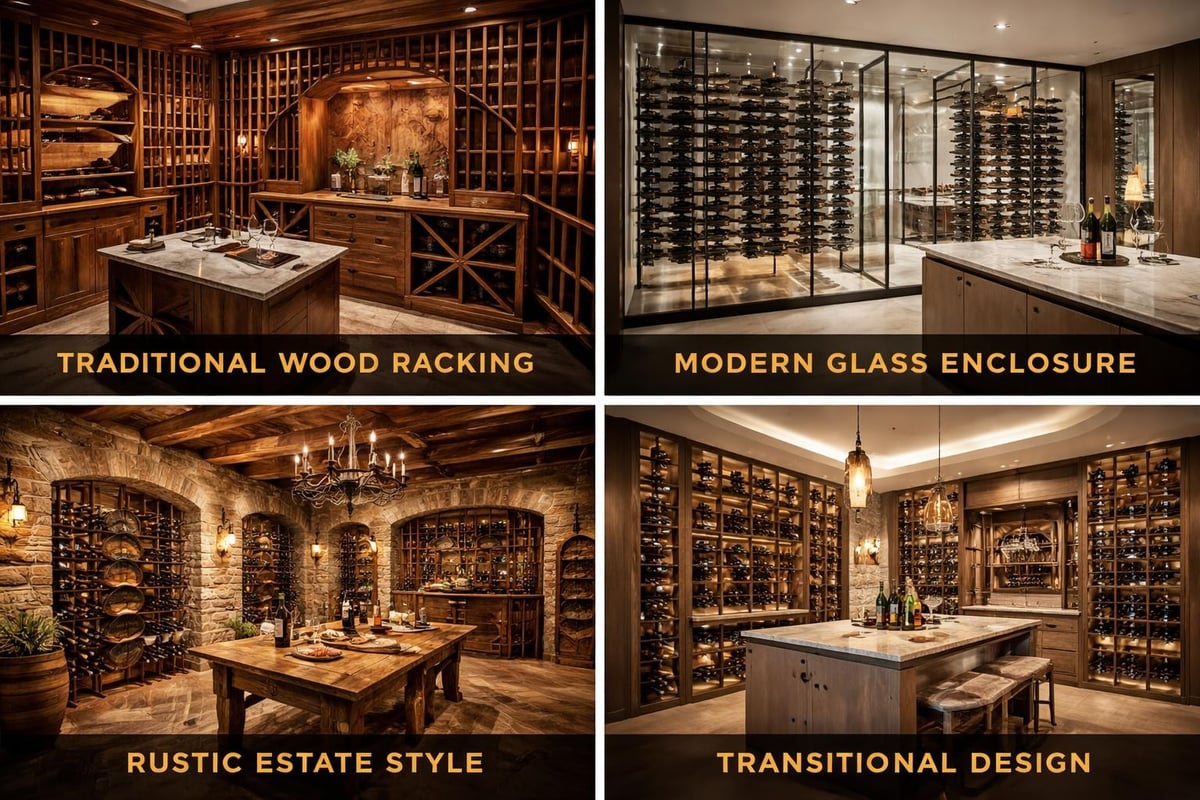
Transitional and Hybrid Approaches
Transitional designs bridge traditional warmth and contemporary simplicity, combining wood tones with metal accents and simplified profiles. This versatile approach suits homes that don't commit fully to either traditional or modern aesthetics, offering flexibility that appeals to broader tastes.
Hybrid cellars might feature traditional racking against one wall with a modern glass display opposite, or rustic reclaimed wood combined with industrial metal elements. The key lies in maintaining cohesive visual flow while incorporating contrasting elements intentionally rather than haphazardly.
Space Planning and Capacity Considerations
Determining appropriate cellar size requires honest assessment of current collection size and realistic growth projections. Under-building forces difficult decisions about bottle selection, while excessive capacity wastes resources and space.
Standard bottle capacity calculations:
Individual bottle slots: 1 bottle per opening
Display rows: 1 bottle deep, showcasing labels
Bulk storage: 2-4 bottles deep per row
Case storage: 12 bottles per standard case dimension
Most collectors find 300-500 bottle capacity provides comfortable room for growth without overwhelming residential spaces. Commercial installations naturally scale larger, with restaurants and hotels often requiring 1,000+ bottle capacity to support extensive wine programs.
Comprehensive guides to building custom cellars emphasize planning for 25-30% more capacity than current needs, acknowledging that collections invariably expand. This buffer prevents premature cellar outgrowing while avoiding the cold, empty feeling of oversized spaces.
Location Selection Within Your Property
Where you build custom wine cellar storage significantly impacts both construction complexity and long-term satisfaction. Ideal locations offer natural advantages that simplify climate control while providing convenient access.
Below-Grade Installations
Basements provide natural temperature stability and humidity levels closer to ideal wine storage conditions than above-grade rooms. Earth-sheltered locations require less aggressive climate control, reducing energy consumption and equipment costs. However, moisture management becomes critical, proper waterproofing and drainage prevent humidity problems that could damage both wine and structure.
Below-grade cellars also offer acoustic isolation, allowing louder cooling equipment without disturbing living spaces. The separation creates appropriate cellar ambiance, a distinct environment removed from everyday household activity.
Converting Existing Spaces
Many successful cellars transform underutilized areas: closets, under-stair spaces, spare bedrooms, or garage corners. These conversions maximize existing square footage while avoiding the expense of additions. The challenge lies in working within predetermined dimensions and addressing structural limitations.
Detailed construction guides outline considerations for various space types, from compact reach-in closets to sprawling basement installations. Each location presents unique opportunities and constraints that influence design approaches.
Climate and Regional Factors
Texas locations present specific considerations when planning cellar construction. High ambient temperatures and humidity levels demand robust cooling systems and exceptional insulation. Regional specialists understand these challenges, specifying equipment and construction techniques suited to local conditions.
The climate impact extends beyond cooling capacity. Vapor barrier placement, insulation type, and ventilation strategies must account for hot, humid summers that create significant temperature differentials between cellar interiors and surrounding spaces.
Material Selection and Quality Considerations
The materials comprising your cellar directly impact both immediate aesthetics and long-term performance. When you build custom wine cellar environments, material choices deserve careful evaluation beyond surface appearance.
Racking Materials
Material | Benefits | Considerations |
|---|---|---|
Mahogany | Rich color, moisture resistant, traditional appeal | Higher cost, requires periodic maintenance |
Walnut | Beautiful grain, excellent stability | Premium pricing, limited availability |
Metal | Modern aesthetic, highly durable, low maintenance | Can feel cold, may show fingerprints |
Acrylic | Contemporary look, lightweight, creative options | Less traditional, requires careful handling |
Each material brings distinct characteristics affecting both function and feel. The selection of appropriate wine cellar materials should align with overall design vision, maintenance preferences, and budget parameters.
Flooring Options
Cellar floors must withstand humidity while complementing overall design. Stone, tile, and sealed concrete offer durability and moisture resistance, while wood floors require careful selection and sealing. Cork provides unique benefits, natural moisture tolerance, thermal insulation, and comfortable cushioning for extended browsing sessions.
Practical considerations include maintenance requirements and how flooring interacts with cooling system placement. Some materials conduct temperature more efficiently, affecting comfort and energy efficiency.
Lighting Design
Proper illumination enhances cellar aesthetics while avoiding heat and UV exposure that damage wine. LED systems provide cool-running, long-lasting solutions with dimming capabilities that set appropriate ambiance. Lighting placement should illuminate pathways and highlight key display areas without creating hot spots or glare on glass bottles.
Effective lighting strategies include:
Low-voltage LED strips integrated into racking
Recessed ceiling fixtures with narrow beam angles
Accent lights highlighting architectural features or premium bottles
Motion sensors or dimmers reducing energy use and heat generation
Research shows that cellar design elements significantly affect wine maturation, making thoughtful lighting design essential rather than purely aesthetic.
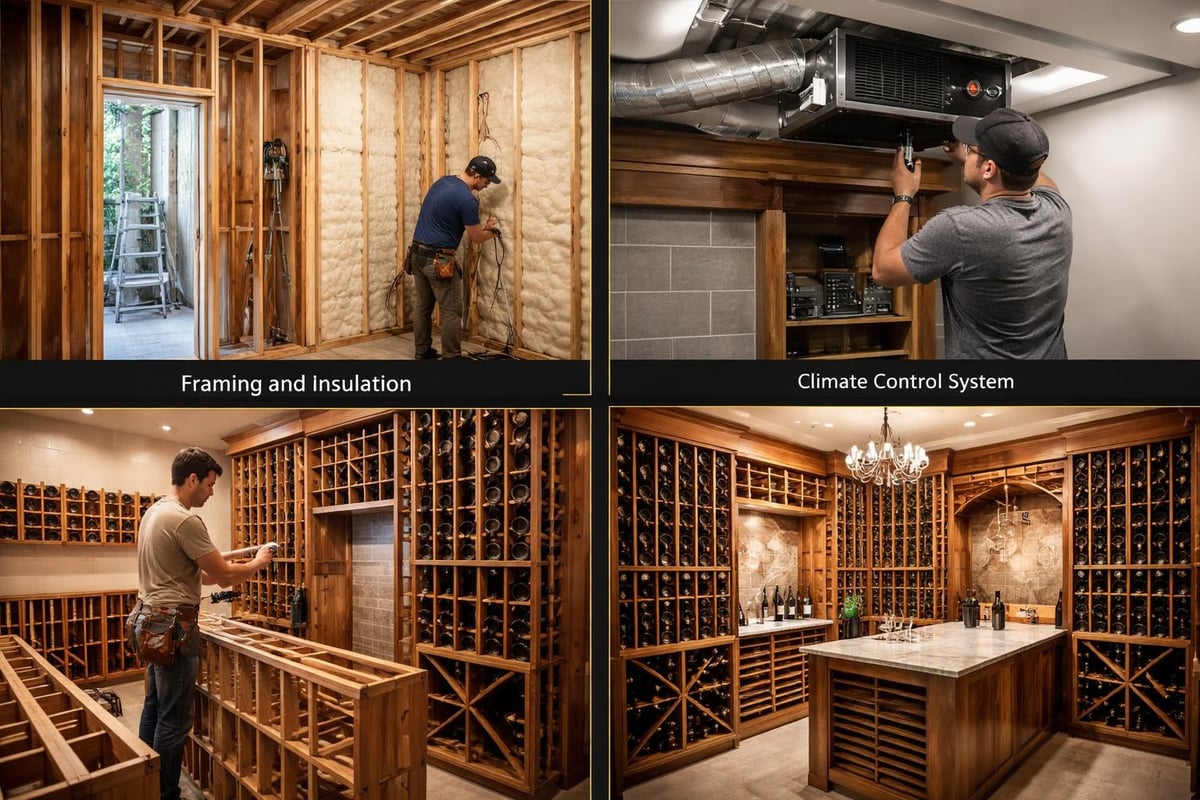
Working With Professional Designers and Builders
While ambitious homeowners might tackle simple cellar projects, most installations benefit from professional expertise. The intersection of construction knowledge, climate control engineering, and design sensibility requires specialized experience that generalist contractors rarely possess.
The Design Process
Professional cellar projects typically follow structured development phases. Initial consultations explore collection size, growth expectations, aesthetic preferences, and budget parameters. Designers then create conceptual layouts showing racking configurations, door placements, and key features.
Detailed design development refines these concepts, specifying exact materials, finishes, and equipment. This phase addresses technical requirements like electrical service, cooling system sizing, and structural modifications. The thoroughness of planning directly impacts installation efficiency and long-term satisfaction.
Turnkey Installation Benefits
Comprehensive design-build services streamline the entire process under single-source responsibility. Rather than coordinating separate designers, contractors, HVAC technicians, and millworkers, turnkey approaches provide unified project management from concept through completion.
This integration typically produces superior results with fewer delays and miscommunications. When design and construction teams collaborate from project inception, details receive appropriate attention and potential conflicts get resolved during planning rather than during installation.
Portfolio Review and References
Evaluating potential partners requires examining completed projects that demonstrate relevant experience. Portfolio galleries showcase design range, craftsmanship quality, and problem-solving creativity across various scales and styles.
Beyond visual assessment, speaking with previous clients provides insight into communication quality, schedule reliability, and post-installation support. The best builders maintain long-term relationships with clients, offering ongoing maintenance services that ensure cellars continue performing optimally years after completion.
Budget Planning and Investment Returns
Understanding cost structures helps establish realistic expectations when planning to build custom wine cellar installations. Prices vary dramatically based on size, complexity, materials, and equipment specifications.
Typical cost factors include:
Square footage and bottle capacity
Racking material and configuration complexity
Cooling system type and capacity
Architectural features like arches, specialty doors, or tasting areas
Existing space conditions requiring remediation
Geographic location affecting labor and material costs
Entry-level residential cellars might start around $15,000-25,000 for modest closet conversions, while elaborate installations with extensive millwork, glass walls, and sophisticated lighting easily exceed $100,000. Commercial projects serving hotels or restaurants scale accordingly, with costs reflecting both capacity and public-facing presentation requirements.
The investment extends beyond initial construction. Ongoing climate control operation, maintenance, and potential bottle insurance contribute to total ownership costs. However, proper storage prevents wine spoilage that could cost thousands in compromised bottles, making the cellar investment economically rational for serious collectors.
Maintenance and Long-Term Care
Completing construction represents the beginning rather than the end of your cellar journey. Proper maintenance ensures the environment continues protecting your collection while preserving the investment you've made in the space itself.
Climate System Monitoring
Regular temperature and humidity monitoring catches problems before they damage wine. Simple data loggers provide continuous tracking, alerting you to fluctuations that might indicate equipment issues or seal failures. Many modern cooling systems include remote monitoring capabilities, allowing oversight even when traveling.
Annual professional service maintains cooling efficiency and catches wear before components fail. Filter changes, refrigerant level checks, and electrical connection inspections prevent unexpected breakdowns during peak summer months when systems work hardest.
Racking and Finish Care
Wood racking benefits from periodic cleaning and occasional refinishing, depending on material and finish type. Gentle dusting prevents buildup that could transfer to bottles, while avoiding harsh chemicals that might damage finishes or create odors in the sealed cellar environment.
Metal and acrylic components typically require only occasional wiping with appropriate cleaners. Glass surfaces need regular attention to maintain clarity and prevent fingerprint buildup that detracts from visual presentation.
Inventory Management
As collections grow, systematic organization prevents forgotten bottles and ensures proper rotation. Whether using software applications, spreadsheets, or physical logs, tracking acquisition dates, optimal drinking windows, and bottle locations transforms collecting from chaos into curated enjoyment.
Regular inventory reviews also inform insurance coverage, ensuring protection matches current collection value as it appreciates over time.
Commercial Applications and Unique Considerations
While residential cellars serve collectors' personal enjoyment, commercial installations serve business objectives requiring different planning approaches. Restaurants, hotels, and private clubs build custom wine cellar spaces that function as both storage and marketing tools.
Restaurant Wine Programs
Restaurant cellars balance operational efficiency with guest experience. Locations need convenient service access while offering visual drama that elevates dining ambiance. Many successful restaurants position cellars as focal points visible from dining rooms, using glass walls that showcase extensive selections while maintaining proper storage conditions.
Capacity planning for commercial cellars accounts for inventory turnover rates much higher than residential collections. Restaurant programs might cycle through hundreds of bottles monthly, requiring organizational systems supporting quick location and retrieval during service.
Hospitality Installations
Hotels and resorts often create destination cellars that enhance property prestige while supporting food and beverage programs. These installations might include tasting rooms, private dining areas, or event spaces that generate additional revenue beyond simple storage function.
Commercial projects like hotel wine cellars showcase how proper design transforms functional spaces into experiential amenities that differentiate properties in competitive markets.
Private Clubs and Estates
Large-scale residential cellars on estates or within private clubs often rival commercial installations in scope while maintaining personal collecting focus. These projects might include extensive storage, dedicated tasting areas, cigar rooms, or entertainment spaces creating complete wine lifestyle environments.
The scale allows for features impractical in typical homes: temperature-controlled zones for different wine types, separate storage for spirits, or extensive display areas highlighting trophy bottles. When building cellars of this magnitude, working with experienced teams becomes even more critical given the complexity and investment involved.
Building a custom wine cellar represents the convergence of preservation science, design artistry, and personal passion, creating spaces that protect valuable collections while adding architectural distinction. Whether you're planning an intimate residential installation or an expansive commercial showcase, success requires balancing technical precision with aesthetic vision. Prestige Wine Cellars brings decades of specialized experience to every project, guiding clients through design, engineering, and installation with the attention to detail that transforms ordinary spaces into extraordinary wine environments that serve collectors for generations.
Your Dream Wine Cellar Starts Here
Let our design team craft a cellar that matches your taste, space, and your collection — built for beauty, function, and prestige.

Email us at
Serving Austin, Dallas–Fort Worth, Houston & San Antonio