
Wine Guardian D088: Ultimate Guide for Luxury Cellars
Discover why the Wine Guardian D088 is the preferred cooling solution for luxury wine cellars. Expert insights on installation, performance, and benefits.
When designing a luxury wine cellar, the climate control system determines whether your collection thrives or suffers. The wine guardian d088 stands out as a premier solution for discerning collectors who refuse to compromise on performance, reliability, or aesthetics. This ducted cooling unit delivers professional-grade temperature and humidity control while operating virtually silently, making it the choice of high-end residential estates, boutique hotels, and fine dining establishments across the country. Understanding its capabilities, installation requirements, and performance characteristics ensures your wine cellar project achieves the precision your collection deserves.
Understanding the Wine Guardian D088 System Architecture
The wine guardian d088 represents a sophisticated approach to wine cellar climate control. Unlike standard air conditioning units that cycle on and off, creating temperature fluctuations that damage wine, this system maintains consistent conditions through intelligent engineering and precision components.
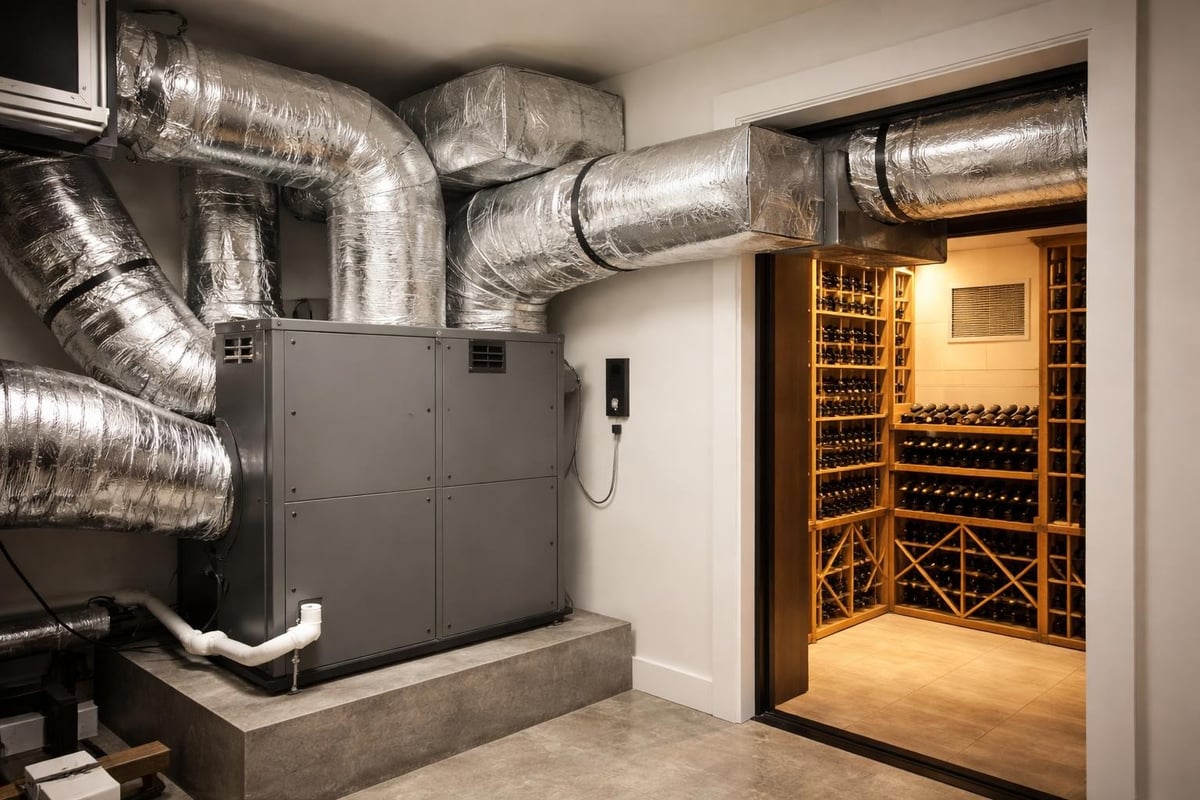
This ducted cooling unit operates as a self-contained system designed specifically for wine preservation. The unit handles cellars up to approximately 1,200 cubic feet, making it ideal for serious collectors who need reliable performance without overwhelming their mechanical spaces. The ducted design allows for flexible installation, positioning the unit in adjacent rooms, attics, or mechanical spaces where noise and aesthetics become non-issues.
Key Technical Specifications That Matter
Performance specifications tell you whether a cooling system matches your cellar requirements:
Cooling Capacity and Range:
BTU output: 8,200 BTU/hr cooling capacity
Recommended cellar volume: Up to 1,200 cubic feet
Temperature range: 50°F to 65°F (optimal wine storage)
Humidity control: Integrated to maintain 50-70% RH
Physical Dimensions:
Unit size: 31" H x 22" W x 22" D
Weight: Approximately 185 pounds
Ducting requirements: 8" flexible ducting for supply and return
Electrical: 115V/60Hz, 15-amp dedicated circuit
The Wine Guardian D088's specifications demonstrate its purpose-built design for wine cellaring applications rather than general HVAC purposes.
Feature | Wine Guardian D088 | Standard AC Unit |
|---|---|---|
Temperature precision | ±1°F | ±3-5°F |
Humidity control | Integrated | Requires separate system |
Noise level | 42 dB (in cellar) | 55-65 dB |
Cycle frequency | Continuous modulation | On/off cycling |
Wine-specific design | Yes | No |
Installation Considerations for Optimal Performance
Proper installation determines whether your wine guardian d088 delivers its full potential. The ducted design offers installation flexibility that accommodates various architectural constraints, but certain requirements remain non-negotiable for optimal operation.
The unit requires placement in a conditioned space, ideally within 25 feet of your cellar. This positioning ensures efficient operation while keeping mechanical components invisible and inaudible from your display space. Many luxury wine cellar projects in Austin and throughout Texas incorporate dedicated mechanical closets adjacent to wine rooms specifically for this purpose.
Ventilation and Airflow Requirements
Heat rejection represents a critical consideration often overlooked in amateur installations. The wine guardian d088 removes heat from your cellar and exhausts it into the surrounding space. Your mechanical room must handle this thermal load without creating a hot box that compromises unit efficiency.
Mechanical space volume: Minimum 200 cubic feet for adequate heat dissipation
Ventilation: Natural or mechanical air movement to prevent heat buildup
Clearances: 18" minimum on all sides for service access
Condensate drainage: Gravity drain or condensate pump required
The design and engineering phase should account for these mechanical requirements from the beginning rather than addressing them as afterthoughts during construction.
Ductwork Design Standards
Ductwork quality directly impacts system performance and noise levels. Undersized or poorly installed ducts create pressure drops, reduce efficiency, and increase sound transmission into your cellar.
Professional ductwork specifications:
Supply duct: 8" insulated flexible duct, maximum 25 feet length
Return duct: 8" insulated flexible duct, maximum 25 feet length
Insulation: R-6 minimum to prevent condensation
Bends: Maximum two 90-degree bends per duct run
Supports: Every 4 feet to prevent sagging and airflow restriction
Tight ductwork connections using mastic sealant rather than standard duct tape prevent air leakage that reduces capacity and introduces uncontrolled humidity. The supply diffuser placement within your cellar affects air circulation patterns-position it to create gentle air movement across all storage areas without directly blasting bottles.
Performance Advantages for High-End Applications
The wine guardian d088 excels in scenarios where standard cooling solutions fail. Its engineering addresses the specific challenges of wine preservation rather than simply cooling air, making it invaluable for serious collectors and commercial applications.
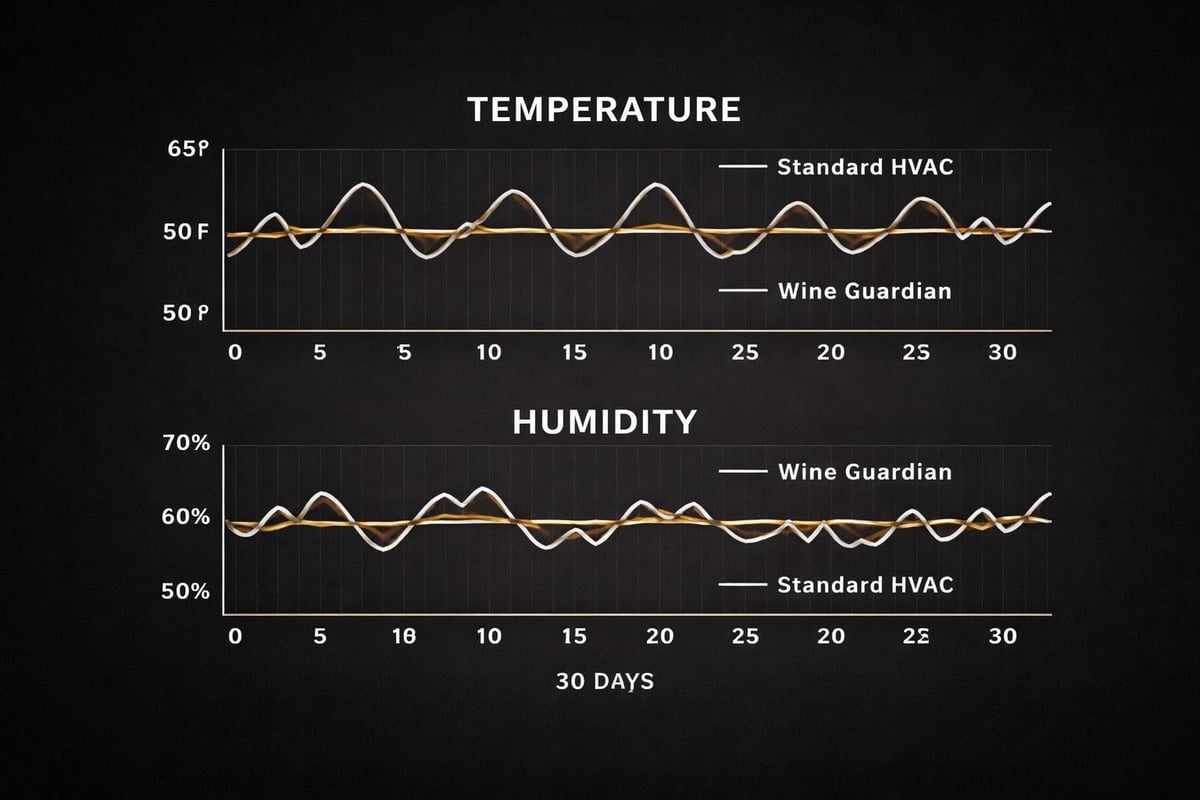
Temperature stability matters more than absolute temperature. Wine tolerates a range of temperatures but suffers from fluctuations. This unit's microprocessor control maintains setpoint within one degree, eliminating the temperature swings that accelerate chemical reactions in wine and promote premature aging.
Humidity Management Without Compromise
Wine corks require specific humidity levels to maintain their seal. Too dry, and corks shrink, allowing oxygen to spoil wine. Too humid, and labels deteriorate while mold threatens your collection. The wine guardian d088 manages both cooling and humidity simultaneously rather than treating them as separate concerns.
The system's integrated humidity control operates through intelligent cycling and reheat technology. When humidity drops below setpoint, the unit reduces cooling to allow humidity to rise naturally. This approach maintains the 50-70% relative humidity range that preserves corks while protecting labels.
Humidity control benefits:
Prevents cork shrinkage and wine oxidation
Protects vintage labels from deterioration
Eliminates mold and mildew growth risks
Maintains proper maturation conditions
Commercial applications particularly benefit from this precision. A hotel wine cellar displaying rare bottles to guests cannot afford label damage or cork failure-the wine guardian d088 prevents both while operating invisibly behind the scenes.
Integration with Architectural Design Elements
Luxury cellars demand invisible climate control. The ducted configuration of the wine guardian d088 aligns perfectly with high-end design aesthetics because the mechanical unit remains completely hidden from view.
Glass-enclosed showpiece wine cellars particularly benefit from this discretion. When every surface is visible, traditional through-wall units create visual disruptions that compromise the design. Ducted systems deliver conditioned air through architecturally integrated grilles that blend seamlessly with racking, flooring, or ceiling treatments.
Supply and Return Grille Placement Strategies
Strategic grille placement affects both aesthetics and performance:
Floor-mounted supply with ceiling return:
Creates gentle upward air movement
Prevents direct bottle contact with cold air
Allows decorative grille integration with flooring materials
Works well in traditional and transitional designs
Concealed toe-kick supply with soffit return:
Maintains completely clean sightlines
Ideal for modern minimalist cellars
Requires careful planning during construction
Provides excellent air distribution
The turnkey design-build approach coordinates mechanical and architectural elements from the beginning, ensuring grille locations enhance rather than compromise the design vision while maintaining optimal airflow patterns.
Maintenance and Long-Term Reliability
Professional-grade equipment demands professional maintenance protocols. The wine guardian d088 incorporates accessible components and diagnostic features that facilitate routine service, but longevity requires adherence to manufacturer recommendations and proactive care.
Annual maintenance prevents minor issues from becoming expensive repairs while ensuring continued precision performance. Filter changes, coil cleaning, and refrigerant level checks maintain peak efficiency and protect your wine investment.
Preventive Maintenance Schedule
Interval | Maintenance Tasks | Performed By |
|---|---|---|
Monthly | Visual inspection, filter check | Owner |
Quarterly | Filter replacement, drain check | Owner or technician |
Annually | Full system service, coil cleaning, refrigerant check | Certified technician |
Bi-annually | Comprehensive inspection, electrical connections, control calibration | Certified technician |
The maintenance services provided by professional wine cellar companies ensure your system receives expert attention from technicians familiar with wine cellar-specific requirements rather than general HVAC contractors who may lack specialized knowledge.
Filter replacement represents the most critical owner-performed maintenance. The wine guardian d088 uses washable filters that require monthly inspection and quarterly replacement or cleaning depending on environmental conditions. Cellars in dusty areas or homes with pets need more frequent attention to maintain airflow and efficiency.
Diagnostic Features and Troubleshooting
Modern wine cooling systems incorporate diagnostic capabilities that alert you to potential issues before they compromise your collection. The microprocessor control monitors system performance continuously, logging fault codes that help technicians quickly identify problems.
Common diagnostic alerts:
High temperature alarm: Indicates cooling failure or inadequate capacity
Low temperature alarm: Suggests control issues or oversized unit
Service reminder: Prompts scheduled maintenance
Filter reminder: Alerts to restricted airflow
Remote monitoring options allow owners to track cellar conditions from anywhere through smartphone apps or web interfaces. This connectivity provides peace of mind for collectors with extensive or valuable collections who travel frequently or maintain multiple properties.
Capacity Calculations and System Sizing
Proper sizing represents the most critical decision in wine cellar climate control. An undersized wine guardian d088 runs constantly without maintaining conditions, while an oversized unit short-cycles and fails to dehumidify properly. Professional heat load calculations determine the precise capacity your cellar requires.
Multiple factors influence cooling requirements beyond simple cellar volume. Insulation quality, glass area, ambient conditions, lighting heat load, and usage patterns all affect system sizing. The heat load calculator tools used by professional designers account for these variables rather than relying on rule-of-thumb estimates.
Heat Load Factors and Their Impact
Insulation value: Wine cellars require superior insulation to minimize heat transfer. Walls should achieve R-19 minimum, with R-30 preferred. Ceilings need R-38 to R-50 depending on attic conditions above. Poor insulation dramatically increases cooling requirements and may exceed the wine guardian d088 capacity even for small cellars.
Glass considerations:
Single-pane glass: Avoid completely in wine cellars
Double-pane: Minimum acceptable standard
Triple-pane or specialized wine cellar glass: Preferred for large glass walls
Each square foot of glass adds significant heat load
Modern wine wall installations featuring extensive glass require careful thermal calculations. The dramatic aesthetic impact of floor-to-ceiling glass must be balanced against the thermal challenges it creates.
Ambient temperature differential: Cellars surrounded by conditioned spaces (70°F) face lower cooling demands than those adjacent to attics, garages, or exterior walls. A cellar maintained at 55°F in a 70°F house requires less capacity than one in a 90°F attic space.

Comparison with Alternative Cooling Solutions
Understanding where the wine guardian d088 fits within the broader cooling system landscape helps you select the optimal solution for your specific application. Different cooling approaches offer distinct advantages and limitations that align with particular cellar configurations and aesthetic priorities.
Various types of wine cellar cooling units serve different purposes, and matching system type to application ensures satisfaction with long-term performance. The wine guardian d088 represents one option within a spectrum of solutions ranging from compact through-wall units to sophisticated split systems.
System Type Comparison Matrix
System Type | Capacity Range | Noise in Cellar | Installation Complexity | Aesthetic Impact | Best Application |
|---|---|---|---|---|---|
Through-wall | 200-800 cu ft | High (50+ dB) | Low | Visible unit | Small cellars, budget projects |
Ducted (D088) | 400-1,200 cu ft | Low (42 dB) | Moderate | Minimal (grilles only) | Medium cellars, quality focus |
Ducted split | 800-2,000 cu ft | Very low (38 dB) | High | Minimal (grilles only) | Large cellars, premium projects |
Ductless split | 600-1,500 cu ft | Low (44 dB) | Moderate-high | Fan coil visible | Renovation, limited duct space |
Water-cooled | Variable | Very low | Very high | Minimal | Geothermal integration, commercial |
The water-cooled version of the D088 serves properties with geothermal systems or cooling towers, rejecting heat into water loops rather than air. This approach suits sustainable luxury estates where renewable energy integration matters as much as wine preservation.
When the D088 Represents the Optimal Choice
Certain scenarios make the wine guardian d088 the clear winner among competing options:
Medium-sized residential cellars (500-1,000 cubic feet) benefit from the D088's sweet spot of capacity, cost, and performance. Smaller cellars may not justify the installation complexity, while larger spaces require more powerful systems.
Noise-sensitive environments where the cellar adjoins living spaces demand the acoustic isolation that ducted systems provide. Transitional wine cellars integrated into open floor plans particularly benefit from nearly silent operation.
Architectural flexibility requirements where mechanical space exists but duct routing remains straightforward favor the D088 over split systems that require refrigerant line installation. Renovation projects in particular benefit from this simplified installation compared to split system complexity.
Budget-conscious luxury projects seeking professional performance without split system pricing find the wine guardian d088 delivers exceptional value. The unit provides serious collectors with reliability and precision at a more accessible investment level.
Real-World Performance in Commercial Applications
Commercial wine cellars face demands that exceed residential requirements. Restaurant wine rooms experience frequent door openings, higher ambient temperatures from adjacent kitchens, and the scrutiny of wine-educated clientele who notice any preservation lapses. The wine guardian d088 handles these challenges when properly specified and installed.
Temperature recovery speed matters in commercial settings. Each time service staff open the cellar door, warm humid air enters and disrupts conditions. The system must quickly restore proper temperature and humidity without creating temperature swings that stress the collection. The D088's consistent compressor operation and adequate capacity for its rated volume provide this recovery capability.
Commercial application considerations:
Door traffic: Install air curtains or vestibule entries for high-traffic cellars
Staff training: Educate team members on minimizing door open times
Monitoring: Implement remote temperature monitoring with alert systems
Backup power: Consider generator connection for power outage protection
Maintenance contracts: Schedule professional service more frequently than residential applications
The portfolio of completed wine cellar projects demonstrates how properly specified cooling systems integrate with diverse commercial and residential applications, from intimate home cellars to impressive restaurant installations that serve as focal points of the dining experience.
Advanced Control and Monitoring Options
Modern wine collectors expect connectivity and remote monitoring capabilities in their cellar systems. The wine guardian d088 integrates with various control platforms that provide smartphone access, data logging, and alert systems that protect collections even when owners travel.
Digital controls replace mechanical thermostats with microprocessor precision. These systems learn usage patterns, optimize efficiency, and provide detailed performance data that helps identify developing issues before they become failures. Temperature and humidity data logging creates documentation valuable for insurance purposes and proves proper storage conditions for investment-grade wines.
Control system benefits:
Remote monitoring from smartphone or computer
Customizable alert thresholds for temperature and humidity
Data logging for insurance documentation
Vacation mode for extended absences
Integration with whole-home automation systems
Energy usage tracking and optimization
Integration with smart home platforms allows cellar climate control to coordinate with other building systems. When you're away, the system can adjust to slightly wider temperature ranges to save energy while maintaining wine-safe conditions. When you return, it pre-cools to perfect serving temperature for your arrival.
The Wine Guardian D088 delivers professional-grade climate control that serious collectors and commercial operators depend on, combining precision performance with acoustic discretion and architectural flexibility. Whether you're planning an intimate residential cellar or a show-stopping restaurant installation, Prestige Wine Cellars brings the expertise to integrate cooling systems seamlessly with architectural vision, ensuring your collection receives the protection it deserves within spaces that inspire admiration for generations to come.
Your Dream Wine Cellar Starts Here
Let our design team craft a cellar that matches your taste, space, and your collection — built for beauty, function, and prestige.

Email us at
Serving Austin, Dallas–Fort Worth, Houston & San Antonio