
Frameless Glass Wine Cellar Design Cost
Discover frameless glass wine cellar design cost factors, pricing breakdowns, and investment insights for your luxury wine storage project.
Frameless glass wine cellars represent the pinnacle of contemporary wine storage, transforming functional spaces into architectural statements that deserve prominent placement in your home or establishment. The seamless transparency of these enclosures creates a gallery-like experience while protecting your collection with precision climate control. Understanding the frameless glass wine cellar design cost requires looking beyond simple square footage calculations to appreciate the craftsmanship, engineering, and materials that deliver both beauty and performance. Whether you're planning a residential showcase or a commercial installation, the investment reflects not just construction but the creation of an heirloom-quality asset that enhances property value and elevates your wine experience for decades to come.
Understanding Frameless Glass Wine Cellar Pricing Structure
The frameless glass wine cellar design cost encompasses multiple components that work together to create a properly functioning display space. Unlike traditional cellars with opaque walls, glass enclosures demand exceptional precision in every detail. The absence of frames means glass panels must meet exacting tolerances, hardware must be engineered to support significant weight, and sealing systems must perform flawlessly to maintain climate separation.
Primary cost drivers include:
Custom-cut tempered or laminated glass panels (typically 1/2" to 3/4" thick)
Specialized frameless hardware systems and pivot hinges
Professional engineering and architectural design services
Climate control equipment sized for glass enclosures
Structural preparation and installation labor
Interior racking systems and display configurations
The transparent nature of frameless glass cellars creates unique thermal challenges. Glass conducts temperature differently than insulated walls, requiring more sophisticated climate control systems to maintain the ideal 55-57°F temperature and 60-70% humidity levels your collection demands.
Base Investment Ranges by Scale
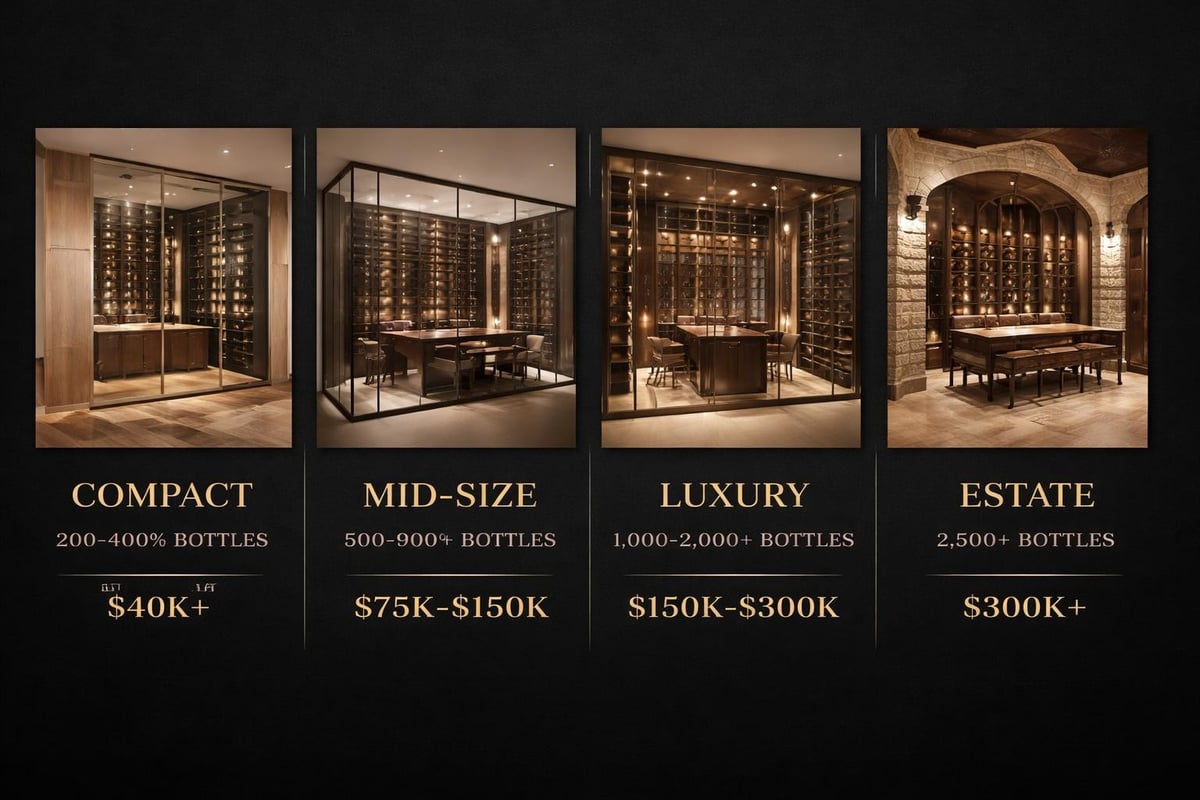
Frameless glass wine cellar projects typically fall into distinct investment categories based on size, complexity, and finish quality. Small residential installations ranging from 150 - 200 bottles often start around $40,000 to $50,000 for basic configurations. These intimate spaces work beautifully as under-stair conversions or reach-in closets, offering stunning visual impact in compact footprints.
Mid-range installations accommodating 200 to 500 bottles generally range from $80,000 to $165,000, depending on glass specifications and racking choices. These cellars often become central architectural features in dining rooms or entertainment spaces, with glass-enclosed showpiece designs that command attention.
Larger estate cellars storing 500 to 2,000+ bottles typically represent investments of $175,000 to $250,000 or more. These sophisticated installations incorporate multiple glass walls, custom entry features, and advanced display racking that rivals high-end retail wine shops.
Glass Specifications and Material Costs
The glass itself represents a substantial portion of overall project costs, yet quality here is non-negotiable. Frameless wine cellar glass must be tempered for safety, ensuring that if breakage occurs, it crumbles into small granules rather than dangerous shards. Many designers specify laminated glass that bonds multiple layers together, providing enhanced security and superior acoustic properties.
Standard 1/2-inch tempered glass panels typically cost $150 per square foot installed, while premium 3/4-inch laminated glass ranges from $150 to $250 per square foot. The thickness you choose impacts both aesthetic weight and structural performance. Thicker glass creates a more substantial, luxurious appearance while requiring more robust hardware and support systems.
Low-iron glass, which eliminates the greenish tint visible in standard glass edges, adds 30-40% to material costs but delivers unmatched clarity. This upgrade becomes especially important when viewing wine labels and bottle contents through multiple glass layers. Current design trends in modern cellar spaces increasingly favor this ultra-clear option for its museum-quality transparency.
Glass Type | Thickness | Cost Per Sq Ft | Best Applications |
|---|---|---|---|
Tempered Clear | 1/2" | $75-$150 | Budget-conscious projects, smaller panels |
Tempered Clear | 3/4" | $100-$150 | Larger spans, enhanced sound dampening |
Low-Iron Tempered | 1/2" | $150-$180 | High-visibility display cellars |
Low-Iron Laminated | 3/4" | $180-$250 | Premium installations, maximum clarity |
Hardware and Installation Components
Frameless glass systems rely on precision-engineered hardware that must support considerable weight while remaining nearly invisible. Quality pivot hinges for a single door typically cost $800 to $2,500, depending on glass weight and desired functionality. Soft-close mechanisms, which prevent slamming and extend hardware life, add another $400 to $800 per door.
Continuous glass to glass connections use specialized channels, clamps, or UV bonded systems. Channel systems offer the most adjustability during installation but create minimal visible lines. UV bonded connections provide the cleanest aesthetic by eliminating metal entirely, though they require expert installation and cost 40-60% more than mechanical systems.
Floor and ceiling mounting hardware must transfer glass weight to structural elements while maintaining waterproof seals. Expect to invest $200 to $500 per linear foot for premium mounting systems that integrate drainage channels and gasket technology. These components prove critical for long-term performance, preventing air infiltration that would compromise climate control efficiency.
Climate Control Engineering Costs
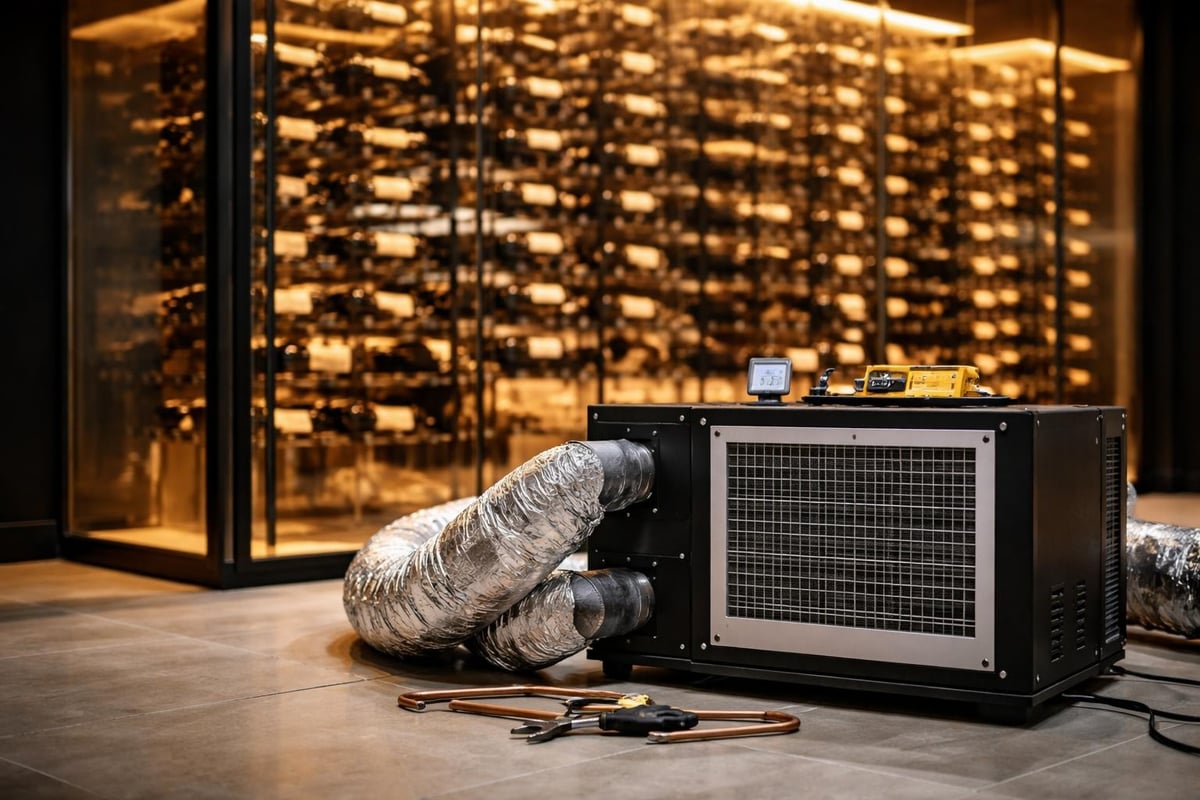
Maintaining proper storage conditions within a glass enclosure presents unique engineering challenges that significantly impact frameless glass wine cellar design cost. Glass provides minimal insulation compared to traditional walls, creating higher cooling loads and requiring more sophisticated equipment. A 100-square-foot glass wine cellar might need a cooling unit sized for a 150-square-foot insulated cellar.
Cooling system investments typically include:
Professional heat load calculation and system sizing
Through-wall or ducted cooling unit ($2,500-$8,000)
Backup humidity management systems ($800-$2,500)
Temperature and humidity monitoring equipment ($400-$1,200)
Electrical work and dedicated circuits ($800-$3,000)
Self-contained cooling units designed specifically for wine cellars range from $3,000 for basic residential models to $12,000+ for commercial-grade systems with redundant components. Split systems, which locate compressor units remotely for quieter operation, typically add 30-50% to equipment costs but deliver superior performance in high end residential applications.
The glass transparency that makes these cellars so attractive also exposes them to light-related temperature fluctuations. Strategic placement away from direct sunlight or incorporation of UV-filtering glass treatments helps minimize cooling demands. Some designers integrate architectural shading elements that reduce solar heat gain while maintaining visual drama.
Custom Racking and Display Systems
Interior wine racking represents both functional storage and sculptural display within glass-enclosed cellars. The transparency of frameless designs means every angle becomes visible, elevating racking from purely practical to prominent design feature. This visibility demands exceptional craftsmanship and often justifies premium materials that would be hidden in traditional cellars.
Metal racking systems in powder-coated steel or brushed aluminum typically range from $150 to $400 per linear foot for standard configurations. Custom metal displays with artistic details, LED accent lighting, or mixed-material construction can reach $600 to $1,200 per linear foot. These contemporary options complement glass enclosures beautifully, creating cohesive modern aesthetics.
Wood racking in premium species like walnut, mahogany, or reclaimed timber costs $200 to $500 per linear foot for traditional designs. Modern wood applications featuring floating shelves, waterfall edges, or artistic cutouts command $450 to $900 per linear foot. The wine cellar materials you select dramatically impact both the visual character and long-term maintenance requirements.
Display Feature Enhancements
Beyond basic bottle storage, many glass wine cellars incorporate display elements that transform the space into a true showpiece. Individual bottle presentation systems with LED backlighting cost $75 to $200 per display position, creating focal points for special vintages. Acrylic or glass shelving for decanter display adds $300 to $800 per shelf, depending on size and lighting integration.
Label-forward racking systems that angle bottles for easy reading require specialized hardware and careful engineering. These configurations typically add 25-40% to base racking costs but provide unmatched convenience for collectors who value quick visual access to their inventory. Digital inventory systems with touchscreen interfaces integrate seamlessly into glass walls, adding $2,500 to $8,000 for professional installations.
Professional Design and Engineering Fees
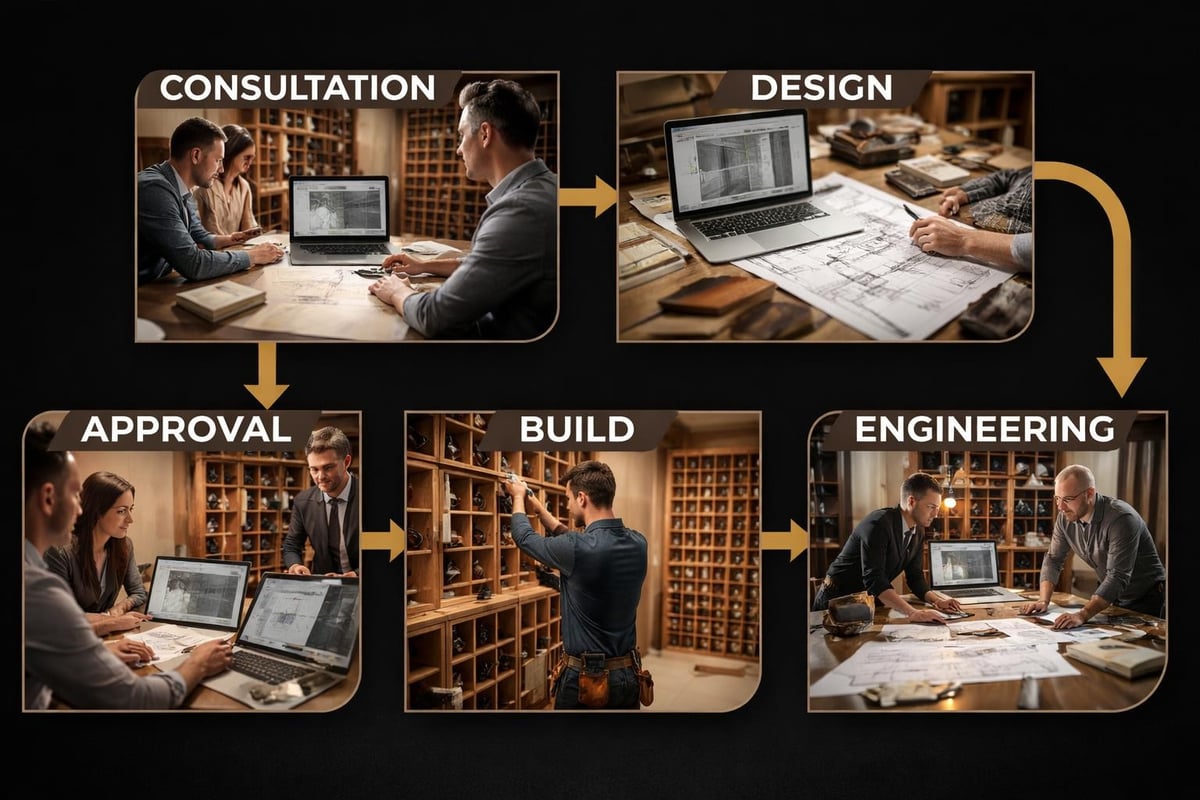
Working with experienced designers who understand the unique challenges of glass wine cellars proves invaluable in avoiding costly mistakes. Professional custom wine cellar design services typically range from 8-15% of total project costs, though this investment returns substantial value through optimized layouts, accurate material specifications, and coordinated installation planning.
Initial consultation and concept development might cost $1,500 to $5,000, depending on project complexity and revision cycles. This phase establishes fundamental parameters including capacity goals, aesthetic direction, and integration with existing architecture. Detailed construction documents with specifications, elevations, and technical details add another $2,000 to $10,000 for residential projects, while commercial installations requiring stamped structural engineering drawings can reach $15,000 to $25,000.
Many builders offer turnkey wine cellar design-build services that bundle design, engineering, procurement, and installation under a single contract. This approach often delivers better value than piecemeal contractor coordination, while providing clear accountability and streamlined communication throughout the project.
Service Component | Typical Investment | What's Included |
|---|---|---|
Initial Consultation | $1,500-$5,000 | Site assessment, concept sketches, feasibility |
Design Development | $2,000-$10,000 | Detailed plans, 3D renderings, specifications |
Engineering | $2,500-$8,000 | Structural analysis, HVAC calculations, permitting |
Project Management | 5-10% of construction | Coordination, quality control, timeline management |
Installation Labor and Timeline
Labor costs for frameless glass wine cellar installation vary considerably based on project complexity, regional rates, and site accessibility. The specialized nature of this work demands experienced craftsmen familiar with both glass handling and wine cellar requirements. Attempting to save money through general contractors lacking this expertise often leads to performance problems and expensive corrections.
Professional installation teams typically charge $250 - $500 per hour in most Texas markets, with projects requiring 90 to 200+ hours depending on size and complexity. A straightforward 150 bottle reach-in conversion might require 40-60 hours of labor, while a sophisticated 1,000-bottle estate cellar could demand 150-250 hours across multiple specialized trades.
Installation timeline phases include:
Site preparation and structural modifications (1-3 days)
Climate control installation and testing (2-3 days)
Glass fabrication and delivery (2-4 weeks lead time)
Glass installation and hardware mounting (1-2 days)
Racking installation and finishing (4-8 days)
Final adjustments and client walkthrough (1-2 days)
Rush projects requiring compressed timelines typically incur premium charges of 15-30%, as fabricators and installers must prioritize your work over scheduled projects. Planning 12-16 weeks from design approval to final completion allows for proper material procurement and optimal scheduling without premium charges.
Geographic and Market Variations
The frameless glass wine cellar design cost fluctuates based on regional factors including labor rates, material availability, and local building requirements. Major Texas markets like Houston, Dallas, and Austin have developed robust networks of specialized wine cellar contractors, creating competitive pricing and deeper expertise pools. Those building custom wine cellars in Houston or Dallas typically enjoy stronger contractor options than those in secondary markets.
Coastal California installations often run 20-30% higher than comparable Texas projects due to elevated labor rates, more stringent building codes, and complex permitting requirements. A California wine cellar cost guide reveals these regional differences clearly, helping you understand how location impacts investment levels.
Remote or resort locations may incur additional mobilization charges for specialized contractors, adding 10-25% to standard pricing. These projects also face extended timelines due to material shipping logistics and limited local support services. However, the unique architectural opportunities in luxury vacation properties often justify the incremental investment.
Value-Engineering Strategies
Controlling frameless glass wine cellar design cost without sacrificing quality requires strategic decisions during the planning phase. Selecting standard glass dimensions that minimize custom cutting reduces both material waste and fabrication charges. Most glass suppliers stock panels in 36", 42", 48", and 60" widths, with custom widths adding 15-25% to costs.
Limiting the number of door openings significantly impacts hardware expenses. A single entry door costs substantially less than designs requiring multiple access points. Similarly, using fixed glass panels rather than operable sections wherever possible reduces both hardware costs and potential maintenance issues.
Phasing projects allows you to spread investment across multiple years while still executing a cohesive design vision. Installing the glass enclosure and climate control first, then adding premium racking systems and display features later, maintains functionality while managing cash flow. This approach works particularly well for growing collections that don't immediately require full capacity.
Additional cost-management approaches:
Standard glass thickness (1/2") for panels under 4 feet wide
Mechanical hardware connections rather than UV-bonded systems
Pre-finished metal racking instead of custom wood millwork
Strategic placement to minimize structural modifications
Commercial Installation Considerations
Restaurants, hotels, and resorts incorporating frameless glass wine cellars face additional requirements that impact investment levels. Commercial codes often mandate specific fire ratings, requiring specialized glass assemblies that cost 40-60% more than residential applications. These installations may need sprinkler integration, emergency egress planning, and accessibility compliance that residential projects can avoid.
High-traffic commercial environments benefit from heavier glass specifications (3/4" minimum) and commercial-grade hardware designed for thousands of operation cycles. While these components increase upfront costs by 30-50%, they dramatically reduce maintenance expenses and downtime over the installation's 20+ year lifespan.
Commercial projects also require comprehensive wine cellar maintenance programs to protect both the wine investment and the cellar asset itself. Professional service contracts typically cost $1,200 to $3,500 annually, covering filter changes, seal inspections, calibration checks, and priority repair response.
Financing and Return on Investment
Frameless glass wine cellars represent significant home improvements that enhance property value, particularly in luxury real estate markets. Well-executed installations in premium neighborhoods typically return 60-80% of their cost in increased property value, with exceptional projects sometimes achieving full cost recovery or better. The dramatic visual impact and architectural sophistication these spaces provide create memorable impressions that differentiate properties in competitive markets.
Many homeowners finance wine cellar projects through home equity lines, renovation loans, or builder financing programs. Interest rates vary, but the tax advantages of home improvement debt and the asset appreciation potential often create favorable financial dynamics. Some collectors view wine cellars as dual-purpose investments, protecting valuable collections while building home equity.
Commercial installations evaluate ROI through increased average check sizes, enhanced customer experience scores, and marketing value. Restaurants with impressive wine programs often command 15-25% price premiums on wine sales, while hotels report higher booking rates and guest satisfaction when showcasing notable wine collections in architectural glass cellars.
Understanding the frameless glass wine cellar design cost empowers you to make informed decisions that balance aesthetics, performance, and investment wisely. Every element from glass specifications to climate engineering contributes to creating a space that protects your collection while serving as an architectural masterpiece. Prestige Wine Cellars brings over a decade of expertise in designing and building luxury glass-enclosed wine cellars throughout Texas and beyond, delivering turnkey solutions that transform your vision into reality with precision craftsmanship and unwavering attention to detail.
Your Dream Wine Cellar Starts Here
Let our design team craft a cellar that matches your taste, space, and your collection — built for beauty, function, and prestige.

Email us at
Serving Austin, Dallas–Fort Worth, Houston & San Antonio