
Wine Guardian Systems: Are They For You?
Discover why Wine Guardian cooling systems are trusted by luxury wine cellars worldwide. Expert insights on technology, installation, and performance.
When you invest thousands or even millions in rare vintages, the climate control system protecting your collection becomes as crucial as the bottles themselves. For discerning collectors, restaurateurs, and luxury homeowners, the name Wine Guardian has become synonymous with reliability, precision, and peace of mind. This reputation wasn't built overnight but earned through decades of engineering excellence and unwavering commitment to preserving the world's finest wines at their peak condition.
Understanding Wine Guardian Technology
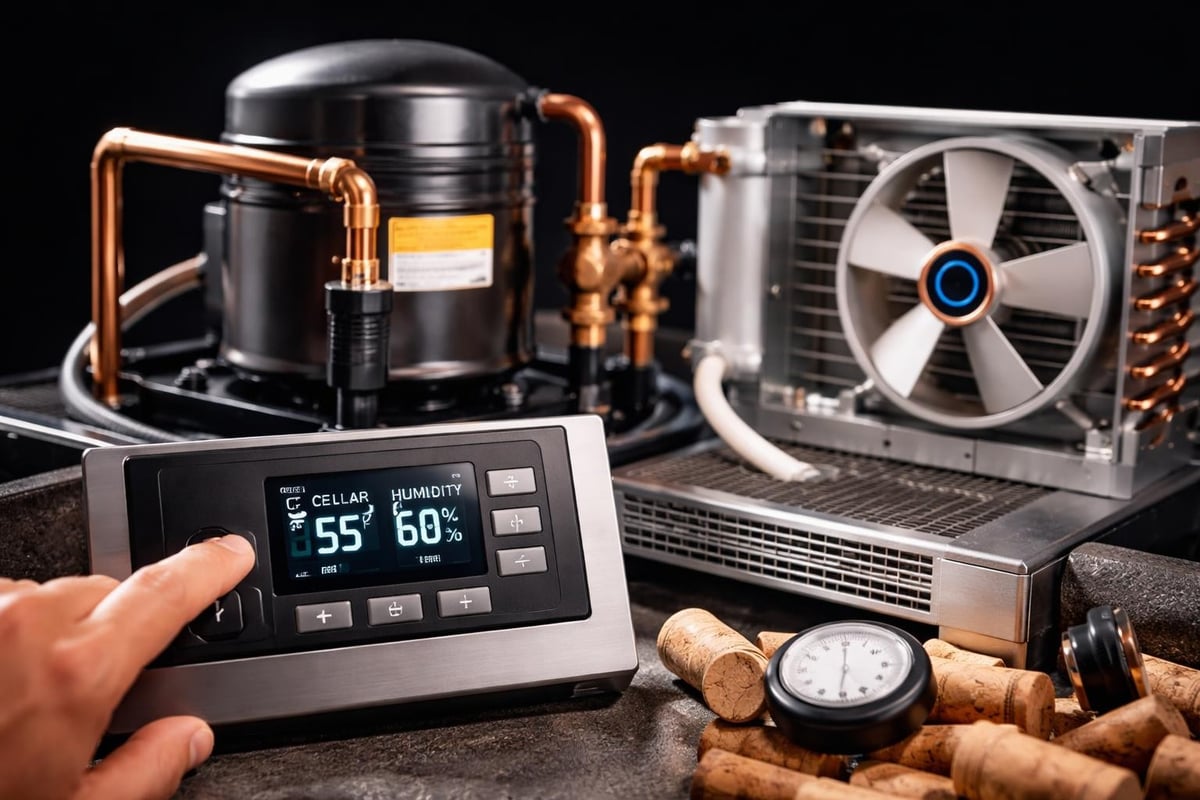
Wine Guardian systems represent the pinnacle of cellar cooling technology, designed specifically for the unique demands of wine preservation. Unlike conventional HVAC systems that prioritize human comfort, a wine guardian unit maintains the exacting conditions required for long-term aging: consistent temperatures between 55-58°F and relative humidity levels of 60-70%.
The technology differentiates itself through several key innovations:
Microprocessor-based controls that monitor and adjust conditions continuously
Dual-zone capability for serving and storage temperatures
Whisper-quiet operation that won't disturb your home environment
Energy-efficient compressors designed for 24/7 operation
Self-diagnostic systems that alert you to potential issues before they compromise your collection
What sets these systems apart is their singular focus on wine preservation. Every component, from the evaporator coils to the control algorithms, has been engineered with one purpose: protecting your investment from the damaging effects of temperature fluctuations and humidity extremes.
The Science Behind Precision Control
Temperature stability matters more than most collectors realize. A variation of just three degrees can accelerate aging by up to 50%, potentially turning a carefully planned 20-year maturation into a rushed 10-year process. Wine cellar climate control isn't simply about keeping wine cold but maintaining the precise, stable environment that allows complex chemical reactions to unfold at their intended pace.
Wine Guardian addresses this challenge through advanced sensor arrays and adaptive cooling cycles. Rather than the on-off cycling of basic refrigeration units, these systems modulate their output to maintain consistency. The result is a cellar environment that varies less than one degree over 24 hours, regardless of external conditions.
Selecting the Right Wine Guardian Configuration
The Wine Guardian product line offers several distinct system types, each engineered for specific architectural requirements and performance goals. Understanding these options ensures your cellar receives precisely calibrated climate control without compromise.
System Type | Best For | Key Advantage | Considerations |
|---|---|---|---|
Through-the-Wall | Small to medium cellars with exterior wall access | Simple installation, self-contained | Visible exterior component |
Ducted Systems | Large cellars, commercial applications | Remote equipment placement | Requires ductwork design |
Ductless Split | Residential projects prioritizing aesthetics | Minimal visible equipment | Higher installation complexity |
Cabinet Systems | Compact urban spaces | All-in-one solution | Limited capacity |
When planning your wine guardian installation, several factors influence the ideal configuration:
Cellar size and insulation quality determine cooling capacity requirements
Architectural constraints dictate feasible equipment placement
Noise sensitivity in adjacent spaces affects system selection
Budget parameters for both initial investment and operating costs
Future expansion plans that may require additional capacity
Our team at Prestige Wine Cellars evaluates these variables during the design phase, ensuring the climate control system integrates seamlessly with your vision while delivering flawless performance for decades.
Through-the-Wall Systems: Elegant Simplicity
For many residential applications, through-the-wall wine guardian units offer the perfect balance of performance and practicality. These self-contained systems mount flush with the cellar wall, exhausting heat to an adjacent space or exterior. Installation typically requires only a sleeve through the wall and electrical connection.
The advantages extend beyond simplicity. Through-the-wall units consolidate all components in one housing, minimizing potential failure points and simplifying maintenance. When service is needed, technicians access everything from a single location rather than troubleshooting distributed components.
However, this configuration works best when your cellar borders a garage, utility room, or exterior wall. Interior cellars surrounded by living spaces often require alternative approaches to avoid exhausting heat into occupied areas.
Installation Excellence and System Integration
A wine guardian system performs only as well as its installation quality allows. Proper sizing, placement, and integration with cellar construction determine whether your system operates at peak efficiency or struggles against preventable challenges.
Critical installation elements include:
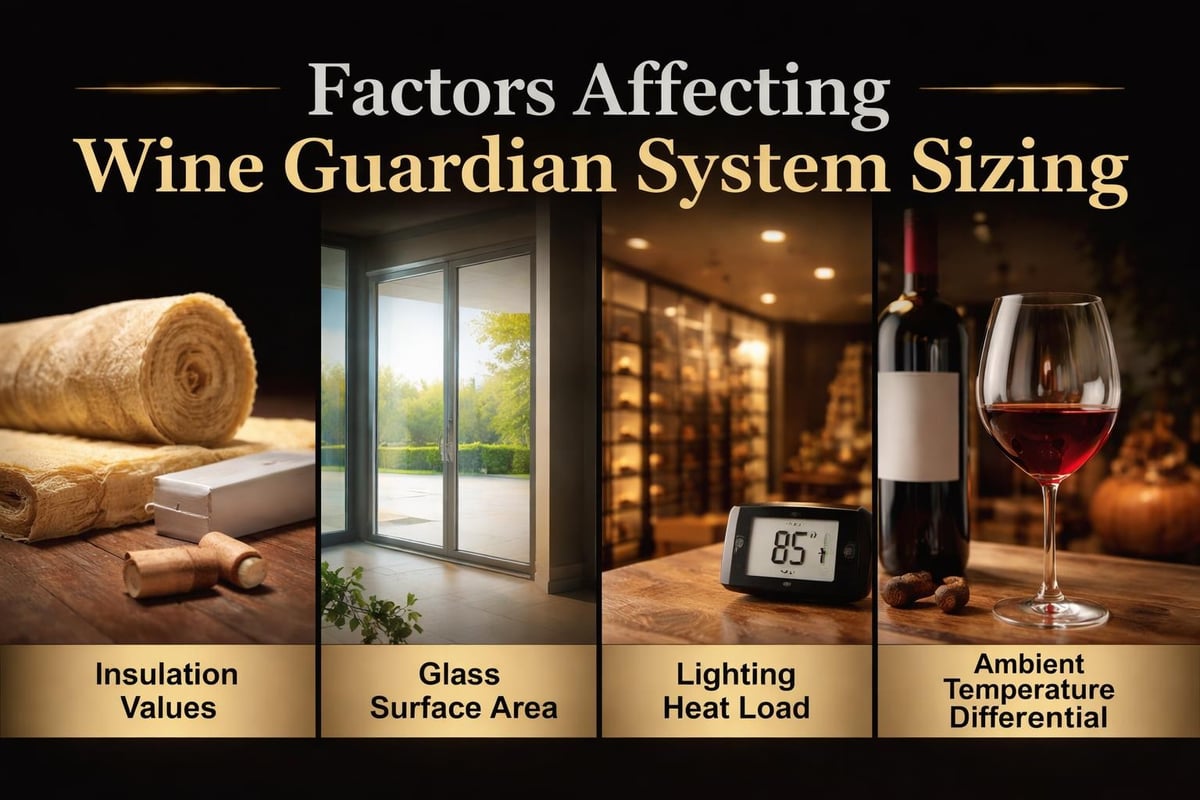
Precise heat load calculations accounting for insulation, lighting, and glass exposure
Strategic equipment placement for optimal air circulation
Properly sized and sealed supply and return air paths
Electrical service adequate for startup loads and continuous operation
Condensate management preventing water damage
The most common installation mistake is undersizing the system based on square footage alone. A 500-square-foot cellar with minimal insulation and extensive glass walls may require twice the cooling capacity of an equally sized, well-insulated space. Our heat load calculator accounts for these variables, ensuring accurate system specification.
Ducted Systems for Architectural Freedom
When the cellar design demands complete aesthetic control or equipment noise concerns dictate remote placement, ducted wine guardian systems deliver uncompromising performance with maximum flexibility. The evaporator unit installs inside the cellar while the condensing unit operates in a mechanical room, garage, or exterior location.
This separation offers compelling advantages for luxury installations. The cellar itself contains only supply and return grilles, which can be subtly integrated into millwork or concealed entirely behind racking. Equipment noise remains distant from living spaces, and maintenance activities don't require accessing the finished cellar.
Ducted systems excel in these scenarios:
Cellars exceeding 1,500 square feet requiring substantial capacity
Commercial wine cellars in hotels and restaurants
Residential projects where mechanical equipment must remain out of sight
Multi-zone installations serving separate storage and service areas
The trade-off is increased installation complexity. Ductwork must be properly sized and sealed to prevent capacity loss and condensation. Supply air distribution requires careful design to avoid hot spots or stagnant areas where wine quality could suffer.
Maintaining Peak Performance Over Time
Your wine guardian system represents a long-term partnership in collection preservation. Like any precision instrument, it requires regular attention to maintain the exacting performance your wines demand. Establishing a comprehensive maintenance schedule protects both your equipment investment and the irreplaceable bottles it safeguards.
Routine Maintenance Protocols
Professional service should occur at least annually, though semi-annual inspections provide additional protection for critical collections or challenging environments. Wine cellar maintenance programs typically include:
Filter replacement to maintain airflow and prevent dust contamination
Condenser coil cleaning ensuring efficient heat rejection
Refrigerant level verification confirming optimal cooling capacity
Control calibration validating temperature and humidity accuracy
Electrical connection inspection preventing potential failures
Condensate drain clearing avoiding water damage
Between professional services, monitor your system's operation for changes in performance. Unusual cycling patterns, temperature drift, or unexpected humidity levels warrant immediate attention. Early intervention prevents minor issues from escalating into collection-threatening failures.
Advanced Features for Discerning Collectors
Modern wine guardian technology extends far beyond basic temperature regulation. Today's systems incorporate sophisticated features that enhance both performance and user experience, transforming climate control from background function to intelligent collection management.
Premium features worth considering include:
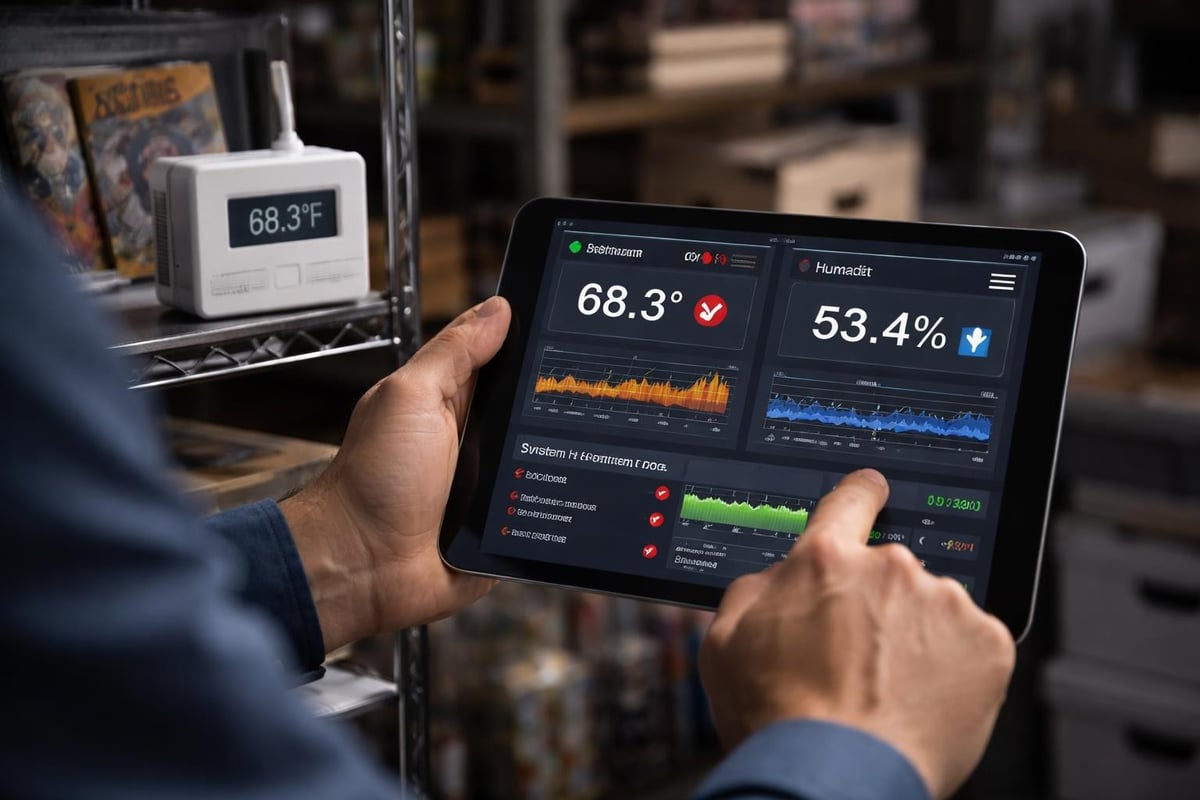
Remote monitoring via smartphone apps that alert you to any deviation
Dual-zone capability maintaining different temperatures for reds and whites
Humidity control systems that add or remove moisture as needed
Backup power integration ensuring protection during outages
Historical data logging tracking conditions over months and years
These capabilities prove particularly valuable for collectors frequently traveling or managing multiple cellar locations. Real-time alerts provide immediate notification if conditions drift outside acceptable parameters, allowing swift intervention before wine quality suffers.
Integration with Smart Home Systems
As residential automation becomes standard in luxury homes, wine cellar cooling technology has evolved to integrate seamlessly with broader home management platforms. Wine guardian systems now communicate with popular automation ecosystems, allowing centralized control alongside lighting, security, and HVAC systems.
This integration offers practical benefits beyond convenience. Automated scheduling can adjust temperatures based on anticipated use, bringing serving temperatures to optimal levels before dinner parties. Energy management systems coordinate cellar cooling with whole-home power consumption, potentially reducing utility costs during peak rate periods.
Commercial Applications and Scalability
While residential collectors represent wine guardian's core market, the technology scales impressively to meet commercial demands. Restaurants, hotels, and wine retailers require the same precision but at dramatically different capacities and configurations.
Application | Typical Capacity | Special Requirements | Common Configuration |
|---|---|---|---|
Private Estate | 500-2,000 bottles | Aesthetic integration, quiet operation | Split or through-wall |
Restaurant | 1,000-5,000 bottles | Accessibility, display lighting | Ducted with remote condenser |
Hotel Display | 2,000-10,000 bottles | 24/7 reliability, service access | Multiple ducted units |
Wine Shop | 5,000+ bottles | Variable load, frequent access | Commercial ducted systems |
Commercial installations demand additional considerations beyond raw capacity. Restaurant cellars experience frequent door openings and body heat from sommeliers selecting bottles. Hotel display cellars must maintain perfect conditions while incorporating dramatic lighting that generates substantial heat loads. These challenges require careful system sizing and often benefit from redundant capacity or backup systems.
Our portfolio of commercial projects demonstrates how wine guardian technology adapts to diverse requirements while maintaining uncompromising performance standards. From intimate private cellars to 10,000-bottle hotel installations, the underlying principle remains constant: precise climate control protecting valuable collections.
Calculating True Cost of Ownership
The initial investment in a wine guardian system represents only one component of total ownership costs. Energy consumption, maintenance requirements, and long-term reliability all impact the economic equation over a system's typical 15-20 year lifespan.
Operating cost factors include:
Monthly electrical consumption averaging $30-150 depending on capacity and local rates
Annual professional maintenance ranging from $300-600
Periodic component replacement such as filters and control boards
Energy efficiency improvements through proper insulation and vapor barriers
However, these costs pale against the value at risk. A moderate collection of 1,000 bottles averaging $75 per bottle represents $75,000 in inventory. The cost of replacing spoiled wine from inadequate climate control dwarfs any investment in quality cooling equipment.
Premium wine guardian systems demonstrate superior energy efficiency through variable-speed compressors and advanced controls that minimize runtime while maintaining conditions. Over 15 years of operation, a more efficient system can offset its higher initial cost through reduced electricity consumption.
Design Considerations for Optimal Performance
The relationship between cellar design and wine guardian performance cannot be overstated. Even the finest cooling system struggles against poor insulation, inadequate vapor barriers, or excessive glass exposure. Integrated design ensures architecture and mechanical systems work harmoniously rather than fighting each other.
Essential design principles include:
Insulation values of R-19 minimum in walls and R-30 in ceilings
Vapor barrier placement on the warm side of insulation preventing condensation
Glass specifications using insulated or triple-pane units to minimize heat transfer
Door sealing with commercial-grade gaskets preventing air infiltration
Lighting selection favoring LED technology that generates minimal heat
The most successful projects integrate these elements from the earliest planning stages. When we begin designing custom wine cellars, climate control requirements inform architectural decisions rather than being retrofitted afterward. This approach optimizes both performance and aesthetics while often reducing total project costs.
Glass Wine Walls and Climate Challenges
Glass-enclosed wine displays create stunning visual impact but present unique climate control challenges. Glass conducts heat far more readily than insulated walls, and large expanses of glazing can overwhelm inadequate cooling systems.
Wine guardian technology handles these installations through careful load calculation and strategic equipment sizing. A glass-walled cellar in Houston's climate may require 50% more capacity than an equivalent interior space with conventional construction. LED lighting becomes essential rather than optional, as traditional fixtures would add crushing heat loads to already-challenged systems.
Regional Climate Considerations in Texas
Texas's diverse climate zones create varying demands on wine guardian systems. Wine cellars in Houston face different challenges than installations in the Texas Hill Country or Dallas-area projects, requiring location-specific design approaches.
Regional climate factors affecting system performance:
Houston: High humidity requires enhanced dehumidification capacity and mold prevention
Dallas: Extreme summer heat increases cooling loads and equipment stress
Austin: Temperature swings demand responsive controls and adequate capacity margins
West Texas: Low humidity environments may require humidification rather than dehumidification
Understanding these regional variations ensures your wine guardian system specification accounts for local conditions rather than relying on generic guidelines. A system perfectly sized for California's mild coastal climate may prove inadequate in Houston's subtropical environment where both temperature and humidity challenge wine preservation.
Protecting a world-class wine collection requires more than beautiful racking and dramatic lighting; it demands climate control technology engineered specifically for wine preservation's exacting requirements. Wine Guardian systems have earned their reputation through decades of reliable performance in the most demanding applications, from intimate residential cellars to grand commercial installations. At Prestige Wine Cellars, we integrate this proven technology with inspired design and meticulous craftsmanship, creating cellars that safeguard your collection while elevating your home or establishment. Whether you're planning a compact urban wine room or a sprawling estate cellar, our team brings the expertise to ensure your investment remains protected for generations.
Your Dream Wine Cellar Starts Here
Let our design team craft a cellar that matches your taste, space, and your collection — built for beauty, function, and prestige.

Email us at
Serving Austin, Dallas–Fort Worth, Houston & San Antonio