
Commercial Wine Storage Houston: Expert Guide for 2026
Discover the essential elements of commercial wine storage Houston businesses need. Expert insights on climate control, design, and cellar solutions.
Houston's thriving culinary scene and expanding hospitality industry have created unprecedented demand for sophisticated wine storage solutions. Whether you're operating a fine dining establishment, managing a luxury hotel, or developing a high-end residential property, understanding the nuances of commercial wine storage Houston providers offer is essential to protecting valuable collections while creating stunning presentation spaces. The city's unique climate challenges and business opportunities require specialized knowledge that goes far beyond standard temperature control.
Why Houston's Climate Demands Specialized Commercial Wine Storage
Houston's subtropical climate presents unique challenges that make professional commercial wine storage Houston businesses absolutely essential. The city's extreme heat, high humidity levels, and dramatic temperature swings can devastate wine collections in a matter of months.
Summer temperatures regularly exceed 95°F, while humidity often hovers above 80%. These conditions accelerate chemical reactions in wine, causing premature aging, cork deterioration, and flavor degradation. Without proper climate control, even premium wines can turn to vinegar.
The financial stakes are considerable. A restaurant's wine program might represent hundreds of thousands of dollars in inventory. Hotels and resorts with extensive cellars can have millions invested in their collections. Protecting this investment requires more than a standard cooling unit.
Climate Control Requirements for Houston Installations
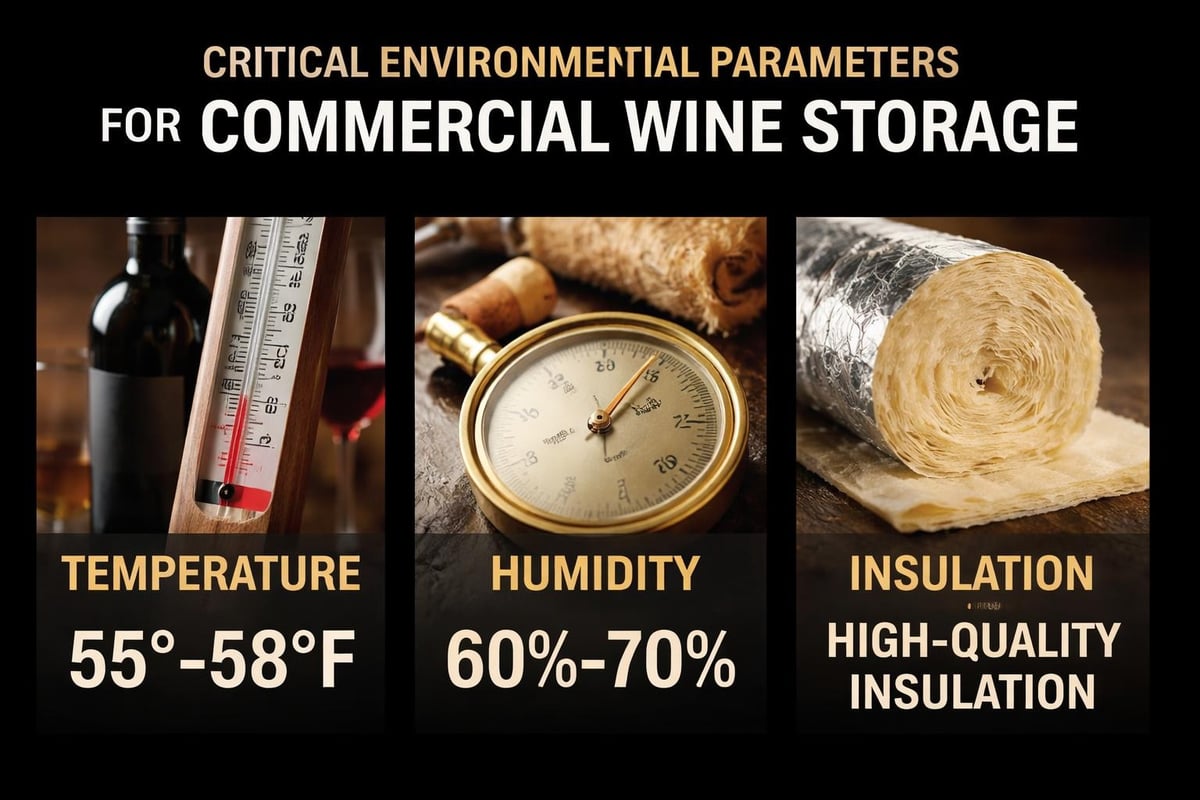
Successful commercial wine storage Houston installations must maintain precise environmental conditions regardless of outdoor weather:
Temperature stability: 55-58°F year-round, with minimal fluctuation
Humidity control: 60-70% relative humidity to preserve cork integrity
Air circulation: Gentle, consistent airflow without direct exposure
Insulation barriers: Multiple layers to combat Houston's heat penetration
Redundant systems: Backup cooling and monitoring for power outages
According to Wine Folly's temperature guidelines, even small temperature variations can significantly impact wine aging processes. In Houston's climate, maintaining these standards requires engineering expertise specific to the region's challenges.
Types of Commercial Wine Storage Solutions for Houston Businesses
The commercial wine storage Houston market offers diverse solutions tailored to different business models and spatial constraints. Understanding these options helps you make informed decisions aligned with your operational needs and brand positioning.
Restaurant and Steakhouse Wine Cellars
Fine dining establishments require storage that balances functionality with guest experience. The most successful custom wine cellar designs integrate seamlessly with dining spaces while providing optimal storage conditions.
Key considerations for restaurant wine cellars:
Glass-enclosed display areas that showcase premium bottles to diners
Strategic positioning near dining rooms for sommelier accessibility
Flexible racking systems accommodating varying bottle sizes and case storage
Proper lighting that enhances presentation without heat generation
Sound insulation to maintain dining room ambiance
Many Houston steakhouses have discovered that visible wine storage becomes a powerful marketing tool. When guests see an impressive collection displayed with theatrical lighting and architectural detail, wine sales increase dramatically. The cellar itself becomes part of the dining experience.
Hotel and Resort Wine Storage
Hospitality properties face unique commercial wine storage Houston requirements that balance guest engagement with operational efficiency. Hotels typically need larger capacity systems that support multiple restaurants, banquet operations, and room service programs.
Facility Type | Typical Capacity | Primary Features | Access Requirements |
|---|---|---|---|
Boutique Hotel | 1,000-3,000 bottles | Intimate display, curated selection | Staff-only with guest viewing |
Full-Service Resort | 5,000-15,000 bottles | Multiple zones, diverse inventory | Department access, service corridors |
Luxury Property | 15,000+ bottles | Showpiece architecture, rare collections | Controlled access, climate monitoring |
Properties like The Woodlands transitional wine cellar demonstrate how hospitality wine storage can elevate a property's entire brand positioning. These installations become signature amenities that distinguish properties in competitive markets.
Private Clubs and Event Venues
Membership-based organizations and high-end event spaces represent a growing segment of commercial wine storage Houston installations. These facilities often feature member storage programs alongside house collections, requiring sophisticated tracking systems and secure access controls.
Private club wine cellars must accommodate:
Individual member allocations with personalized racking
House inventory for events and dining service
Tasting room adjacency for educational programs
Climate-separated zones for different wine styles
Digital inventory management integration
The dual-purpose nature of these installations demands careful planning to ensure both functional efficiency and aesthetic impact.
Design Considerations for Commercial Wine Storage Houston Projects
Creating effective commercial wine storage Houston installations requires balancing technical requirements with spatial realities and brand aesthetics. The design phase determines whether your cellar becomes a functional necessity or a revenue-generating showcase.
Space Planning and Capacity Optimization
Every square foot matters in commercial applications. Unlike residential projects where homeowners might allocate generous space, commercial ventures must maximize storage density while maintaining accessibility and visual appeal.
Professional designers use sophisticated modeling to determine optimal configurations:
Vertical integration utilizing ceiling heights for maximum bottle capacity
Aisle width calculations balancing access requirements with space efficiency
Modular racking systems allowing future expansion or reconfiguration
Display focal points highlighting premium or rare bottles
Service access zones for inventory rotation and management
Compact urban wine cellars showcase how intelligent design transforms limited square footage into impressive storage capacity. These approaches prove particularly valuable in Houston's high-rent commercial districts.
Architectural Integration and Brand Expression
Your wine cellar should reinforce your brand identity while meeting functional requirements. The aesthetic approach must align with your overall design language and clientele expectations.
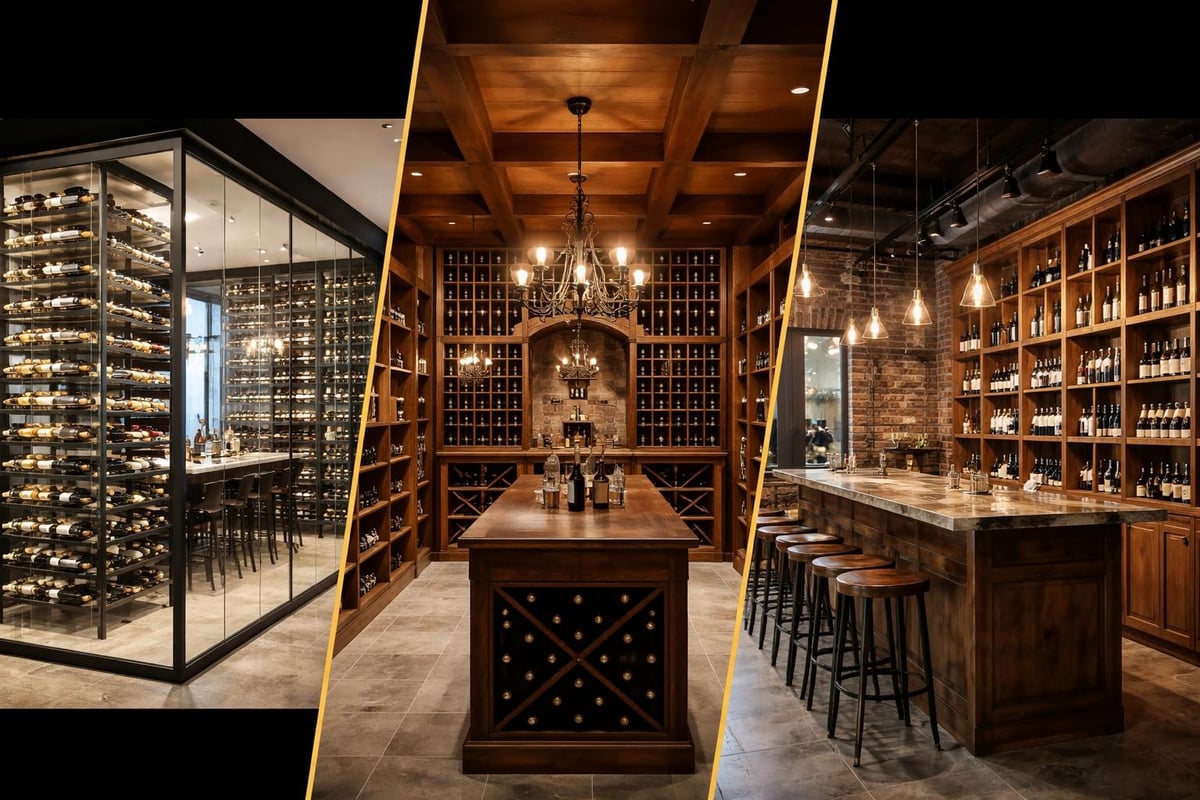
Modern restaurants might choose glass-enclosed showpiece wine cellars with minimalist metal racking and LED accent lighting. Traditional steakhouses often prefer classic wood installations with rich mahogany or walnut racking systems.
Consider how your cellar appears from different vantage points. Glass walls create transparency and visual drama but require meticulous organization and cleanliness. Fully enclosed cellars offer more storage flexibility but miss opportunities for guest engagement.
Engineering and Climate Control Systems
The technical backbone of commercial wine storage Houston installations determines long-term reliability and collection protection. Sophisticated climate control systems represent the largest investment component but prove essential for Houston's challenging environment.
Cooling System Selection and Sizing
Proper system sizing requires precise heat load calculations that account for multiple variables. Under-sized systems run continuously and fail prematurely. Over-sized systems cycle inefficiently and create temperature fluctuations.
Critical factors in cooling system design:
Insulation R-values specific to wall, ceiling, and floor assemblies
Glass surface areas and their heat transmission characteristics
Door traffic patterns and associated heat infiltration
Lighting heat generation from display and ambient fixtures
Adjacent space conditions and temperature differentials
Professional installers like those specializing in custom wine cellars in Houston use specialized software to model these variables accurately. This engineering rigor prevents the costly mistakes common in DIY or inexperienced installations.
Humidity Management in Houston's Climate
While many regions struggle with low humidity, Houston's natural moisture levels create different challenges. Commercial wine storage Houston systems must actively control humidity rather than simply add moisture.
Wine Cellar Authority's humidity guide explains how excessive humidity promotes mold growth on labels and corks. Houston cellars require dehumidification capability integrated with cooling systems to maintain the ideal 60-70% range.
Humidity control strategies include:
Self-regulating cooling units with humidity sensors
Vapor barriers in wall and ceiling assemblies
Proper air circulation preventing moisture pockets
Regular monitoring and adjustment protocols
Backup systems for power interruption scenarios
The integration between temperature and humidity control systems requires sophisticated equipment. Basic residential cooling units lack the precision commercial applications demand.
Installation Process and Timeline Considerations
Commercial wine storage Houston projects involve complex coordination between multiple trades and operational constraints. Understanding realistic timelines and requirements helps businesses plan around construction disruptions.
Pre-Construction Planning Phase
Successful installations begin months before construction starts. This planning phase establishes project feasibility, budgets, and design direction. Rushing this stage inevitably leads to costly changes during construction.
The planning process typically includes:
Site assessment evaluating structural, mechanical, and electrical capacity
Conceptual design exploring aesthetic directions and capacity goals
Preliminary engineering sizing climate control and power requirements
Budget development with detailed cost breakdowns by system component
Permit research understanding local code requirements and approval timelines
For operating restaurants or hotels, scheduling becomes critical. Many businesses coordinate turnkey wine cellar installations during slow seasons or temporary closures to minimize revenue impact.
Construction and Installation Sequence
Commercial wine storage Houston installations follow a structured sequence ensuring proper integration of all components. Each phase builds upon previous work, making proper sequencing essential.
Phase | Duration | Key Activities | Trade Coordination |
|---|---|---|---|
Structural Prep | 1-2 weeks | Framing, electrical rough-in, insulation | Carpenters, electricians |
Climate Systems | 1-2 weeks | Cooling unit installation, ductwork, controls | HVAC specialists, electricians |
Envelope Completion | 1 week | Vapor barriers, drywall, door installation | Carpenters, door specialists |
Racking Installation | 1-2 weeks | Custom millwork, racking systems, lighting | Millworkers, electricians |
Commissioning | 3-5 days | System testing, calibration, training | Climate control technicians |
Total project timelines typically range from 6-12 weeks depending on size and complexity. Rush installations compromise quality and should be avoided when protecting valuable wine collections.
Maintenance and Long-Term Performance
Commercial wine storage Houston installations require ongoing attention to maintain optimal conditions and protect investments. Establishing comprehensive maintenance protocols prevents small issues from becoming expensive emergencies.
Routine Monitoring and Maintenance Schedules
Professional-grade wine cellars demand professional-grade maintenance. Unlike residential systems where homeowners might delay service, commercial applications require rigorous schedules to prevent inventory losses.
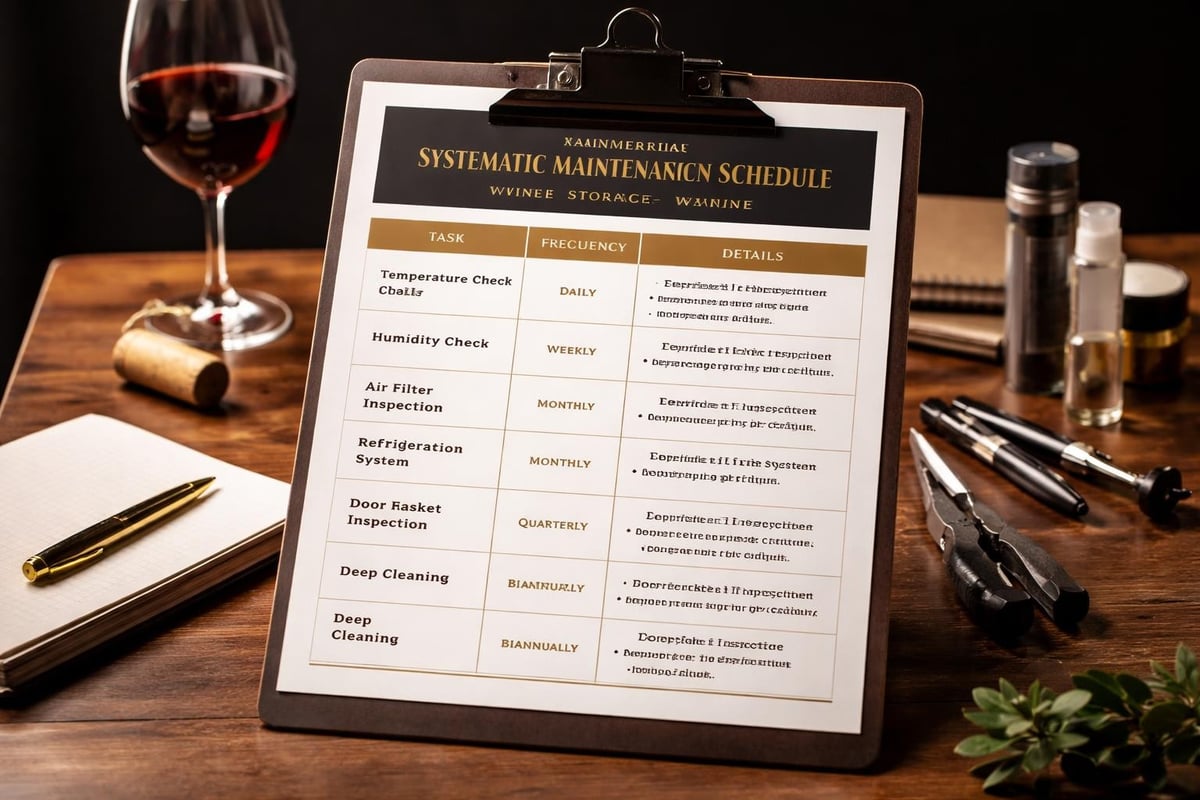
Essential maintenance activities include:
Monthly temperature and humidity logging with trend analysis
Quarterly filter changes maintaining air quality and system efficiency
Semi-annual professional inspections evaluating all system components
Annual deep cleaning of racking, glass, and display elements
Calibration checks ensuring sensors report accurate readings
Wine cellar maintenance services provide the specialized expertise commercial operations require. Technicians familiar with high-end installations understand the unique requirements of commercial environments.
Emergency Preparedness and Backup Systems
Houston's weather patterns create specific risks commercial wine storage installations must address. Hurricane season, summer power grid strain, and severe thunderstorms can all threaten climate control systems.
Critical backup considerations:
Generator connections for automatic power transfer
Battery backup for monitoring systems and alarms
Remote monitoring with mobile alerts for condition changes
Emergency response protocols for after-hours situations
Redundant cooling capacity preventing total system failure
The investment in backup systems proves minimal compared to potential losses. A single power outage during Houston's summer heat can raise cellar temperatures into dangerous ranges within hours.
Cost Considerations and Return on Investment
Understanding the financial dynamics of commercial wine storage Houston projects helps businesses make informed decisions about design scope, system specifications, and timing. These installations represent significant capital investments with measurable operational returns.
Budget Components and Pricing Factors
Commercial wine cellar costs vary dramatically based on size, finishes, and technical requirements. A basic 500-bottle restaurant cellar might start around $30,000, while elaborate hotel installations can exceed $500,000.
Major cost drivers include:
Racking materials: Wood species, metal fabrication, custom versus modular systems
Glass specifications: Thickness, insulation values, frameless versus framed designs
Climate control sophistication: Residential-grade versus commercial-rated systems
Lighting design: Basic illumination versus theatrical display lighting
Architectural detailing: Standard finishes versus custom millwork and stone
Requesting detailed proposals from experienced designers helps establish realistic budgets. Many businesses discover that phasing projects over multiple budget cycles creates more flexibility than compromising on critical components.
Operational Benefits and Revenue Enhancement
Beyond collection protection, commercial wine storage Houston installations deliver measurable business benefits that justify investment costs. Smart operators view these projects as revenue-generating assets rather than mere expenses.
Quantifiable returns include:
Increased wine sales from improved presentation and selection depth
Higher check averages when guests engage with impressive displays
Event booking advantages as cellars become unique venue features
Brand differentiation in competitive hospitality markets
Inventory optimization through better organization and rotation
Many restaurants report wine sales increases of 20-40% following cellar installations that showcase their programs effectively. The payback period for well-designed systems often falls within 2-3 years through enhanced revenue alone.
Selecting the Right Commercial Wine Storage Houston Partner
The success of your wine storage project depends heavily on choosing experienced professionals who understand both technical requirements and business realities. Houston's market includes various providers with dramatically different capabilities and approaches.
Evaluating Design and Installation Expertise
Not all wine cellar companies possess equal commercial experience. Residential specialists may lack the engineering knowledge, project management capabilities, or commercial construction experience your project demands.
When evaluating potential partners, investigate:
Commercial portfolio depth with projects similar to your scope and style
In-house engineering capabilities rather than reliance on subcontractors
Project management systems ensuring timeline and budget accountability
Post-installation service including maintenance and emergency support
Industry certifications and manufacturer partnerships indicating expertise
Reviewing completed projects through portfolio galleries provides insight into design capabilities and quality standards. Pay particular attention to projects in Houston and surrounding areas where installers understand regional climate challenges.
Questions to Ask Prospective Wine Cellar Designers
Thorough vetting of commercial wine storage Houston providers prevents costly mistakes and ensures successful outcomes. Prepare comprehensive questions addressing all project phases.
Critical discussion topics:
How do you handle heat load calculations for Houston's extreme climate?
What cooling system brands do you recommend and why?
Can you provide references from similar commercial clients?
What warranty coverage applies to different system components?
How do you manage projects in operating commercial facilities?
What maintenance programs do you offer post-installation?
Professional firms welcome detailed questions and provide transparent, specific answers. Vague responses or reluctance to discuss technical details should raise concerns.
Regional Considerations for Houston-Area Installations
Commercial wine storage Houston projects benefit from understanding regional factors that influence design decisions, costs, and operational considerations. Local market dynamics create unique opportunities and constraints.
Building Code and Permitting Requirements
Houston's permitting landscape requires careful navigation, particularly for commercial applications in historic districts or high-rise buildings. Wine cellars often trigger multiple review processes.
Installations typically require:
Building permits for structural modifications and electrical work
Mechanical permits for cooling system installation
Health department approvals for restaurant applications
Fire marshal reviews particularly for glass-enclosed designs
HOA or building management approvals in mixed-use properties
Working with experienced Texas-based designers familiar with local regulations streamlines approval processes and prevents delays. They maintain relationships with inspectors and understand jurisdiction-specific requirements.
Neighborhood-Specific Opportunities
Houston's diverse neighborhoods each present distinct opportunities for commercial wine storage installations. Understanding these market segments helps businesses position their wine programs effectively.
River Oaks and Memorial locations serve affluent clientele expecting sophisticated presentations. River Oaks wine cellars often feature dramatic glass walls and premium finishes reflecting neighborhood aesthetics.
Galleria and Uptown commercial districts prioritize space efficiency and contemporary design. Modern materials and compact layouts maximize limited square footage while creating visual impact.
The Woodlands and Sugar Land suburban markets blend residential comfort with commercial sophistication. These installations often incorporate transitional design elements appealing to diverse customer bases.
According to UOVO Wine's Houston facility, the greater Houston region demonstrates growing sophistication in wine storage expectations. Both commercial operators and private collectors increasingly demand museum-quality climate control and presentation.
Technology Integration for Modern Wine Storage
Contemporary commercial wine storage Houston installations increasingly incorporate technology enhancing operational efficiency, inventory management, and guest experiences. These systems transform cellars from passive storage into active business tools.
Inventory Management and Tracking Systems
Digital wine management platforms revolutionize commercial operations. Instead of manual logs and spreadsheets, sophisticated software tracks every bottle from acquisition through service.
Advanced systems provide:
Real-time inventory visibility across multiple storage locations
Automated reordering based on consumption patterns
Cost tracking and profitability analysis by label
Integration with POS systems for seamless service
Vintage and provenance documentation for rare bottles
For multi-location operators, cloud-based platforms enable centralized inventory management while maintaining site-specific controls. Managers access complete wine program data from any device, improving purchasing decisions and reducing shrinkage.
Climate Monitoring and Alert Systems
Modern commercial wine storage Houston installations include sophisticated monitoring preventing environmental disasters. Remote sensors track conditions continuously, alerting managers to problems before damage occurs.
Critical monitoring capabilities:
Temperature and humidity sensors with cloud data logging
Mobile alert systems notifying managers of condition changes
Historical trending identifying patterns before failures
Power outage detection triggering emergency protocols
Door access logging for security and accountability
These systems prove particularly valuable for after-hours protection. When a cooling system fails at 2 AM on Sunday, immediate alerts enable quick response preventing inventory losses.
Commercial wine storage Houston solutions demand the sophisticated integration of climate engineering, architectural design, and operational understanding that protects valuable collections while enhancing brand positioning. Whether you're planning a restaurant wine display, hotel showcase, or private club facility, success requires partnering with specialists who grasp both technical requirements and business realities. Prestige Wine Cellars brings decades of commercial installation experience to Houston-area projects, delivering turnkey solutions that transform wine storage from operational necessity into revenue-generating showcase.
Your Dream Wine Cellar Starts Here
Let our design team craft a cellar that matches your taste, space, and your collection — built for beauty, function, and prestige.

Email us at
Serving Austin, Dallas–Fort Worth, Houston & San Antonio