
Modern Glass Wine Cellars Austin: Design Guide 2026
Discover modern glass wine cellars Austin homeowners love. Expert design tips, climate control solutions, and luxury installation ideas for 2026.
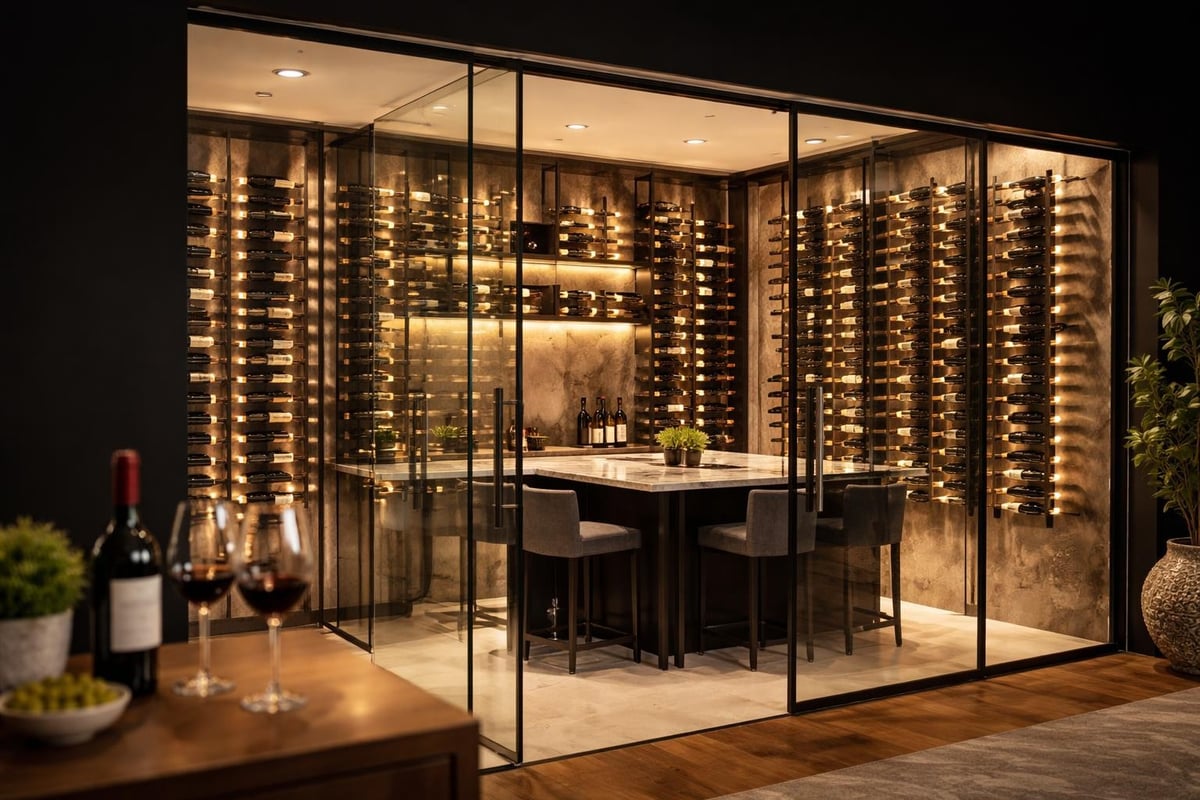
Austin homeowners are redefining luxury wine storage in 2026, moving beyond traditional hidden cellars to embrace transparency, light, and architectural drama. Modern glass wine cellars Austin residents commission today serve as both functional climate-controlled environments and stunning focal points that celebrate their collections. Whether nestled under a staircase in Tarrytown, anchoring a dining room in West Lake Hills, or transforming a commercial space downtown, these glass-enclosed sanctuaries represent the intersection of engineering precision and artistic vision. The capital city's design-forward culture makes it the perfect backdrop for wine storage that doesn't hide in the basement but takes center stage in everyday life.
The Rising Demand for Glass Wine Cellars in Austin
Austin's architectural landscape has evolved dramatically over the past decade. Contemporary homes with open floor plans, floor-to-ceiling windows, and minimalist interiors now dominate neighborhoods from downtown high-rises to Hill Country estates. These spaces demand wine storage solutions that complement rather than contrast with their design language.
Glass wine cellars answer this call by offering complete visibility while maintaining the controlled environment essential for proper wine preservation. Unlike traditional enclosed cellars that feel separate from living spaces, modern glass wine cellars Austin designers create become interactive art installations. They invite conversation, showcase prized bottles, and transform wine collecting from a private pursuit into a shared experience.
The city's thriving culinary scene has also fueled demand. Austin restaurants, boutique hotels, and private clubs increasingly feature prominent glass-enclosed wine rooms that demonstrate their commitment to wine excellence. Homeowners have followed suit, recognizing that a well-designed cellar adds both functionality and resale value to their properties.
Why Austin Homeowners Choose Glass Enclosures
Several factors drive the preference for transparent wine storage in Austin:
Natural light integration that works with Texas's abundant sunshine rather than against it
Space optimization in urban properties where square footage commands premium pricing
Design continuity that flows seamlessly with contemporary interior aesthetics
Entertainment value during gatherings and dinner parties
Collection accessibility that makes selection easier and more enjoyable
Essential Design Elements for Modern Glass Wine Cellars Austin
Creating a successful glass wine cellar requires balancing aesthetics with the technical demands of wine preservation. Temperature stability, humidity control, and protection from UV exposure remain non-negotiable, regardless of how stunning the space appears.
Glass Selection and Performance
Not all glass performs equally in wine cellar applications. Modern installations demand specialized materials that protect collections while maintaining visual clarity. Double or triple-pane insulated glass units provide the thermal barrier necessary to maintain consistent temperatures. Low-E coatings reduce UV transmission without affecting transparency, while tinting options offer additional protection for particularly light-sensitive collections.
Frameless glass systems have become the gold standard for contemporary wine cellar designs, creating uninterrupted sight lines that maximize visual impact. These systems use minimal hardware, often just floor channels and ceiling mounts, to support substantial glass panels. The result feels almost magical-bottles appear to float in space, unencumbered by visible structural elements.
Glass Type | Insulation Value | UV Protection | Visual Clarity | Best Application |
|---|---|---|---|---|
Single Pane | Poor | Minimal | Excellent | Display only (non-climate controlled) |
Double Pane Low-E | Good | High | Excellent | Most residential cellars |
Triple Pane | Excellent | Very High | Very Good | Large collections, extreme climate demands |
Laminated Safety | Varies | Medium | Good | Commercial applications, high-traffic areas |
Racking Systems That Complement Glass Architecture
The racking inside modern glass wine cellars Austin homeowners commission must be as carefully considered as the enclosure itself. Traditional wooden racks, while beautiful, can feel heavy in glass-enclosed spaces. Contemporary alternatives include:
Metal racking systems in powder-coated black, bronze, or brushed nickel finishes
Floating label-forward displays that showcase bottles as individual artworks
Minimalist peg systems mounted to walls or glass panels themselves
Acrylic or glass shelving that maintains transparency throughout the space
Hybrid designs combining wood accents with metal frames for transitional aesthetics
Modern design approaches increasingly favor flexibility. Modular racking systems allow collectors to reconfigure storage as their collection evolves, accommodating different bottle sizes and display priorities without requiring major reconstruction.
Climate Control Considerations for Glass-Enclosed Spaces
Temperature and humidity management become more complex when working with glass enclosures. The thermal properties of glass, even with high-performance coatings, differ significantly from insulated walls. This reality demands sophisticated climate control solutions specifically engineered for modern glass wine cellars Austin builders install.
Calculating Heat Load Requirements
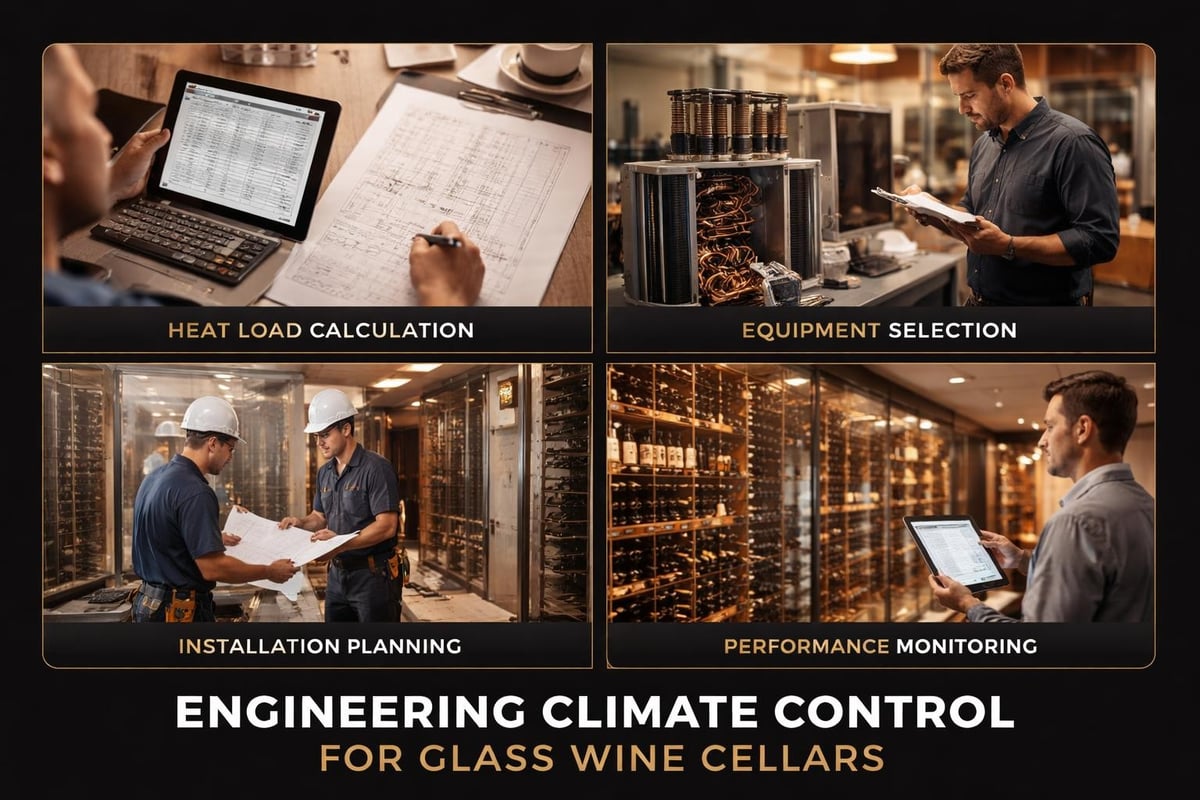
Proper climate control begins with accurate heat load calculations. Glass surfaces, lighting systems, and the cellar's location within the home all contribute to thermal challenges. A south-facing glass cellar in direct afternoon sun faces entirely different demands than a north-facing installation or one located in an interior room.
Professional heat load assessment considers ambient temperature, insulation values, glass specifications, lighting heat generation, and desired internal conditions. These calculations determine the cooling capacity required to maintain stable temperatures year-round, typically between 55-58°F for long-term wine storage.
Austin's climate presents unique challenges. Summer temperatures regularly exceed 100°F, placing significant stress on cooling systems. Quality installations account for peak summer performance while avoiding over-cooling during milder months. This balance requires precision equipment sizing and, often, variable-speed compressors that adjust output based on current conditions.
Recommended Climate Control Solutions
Several approaches work well for glass-enclosed wine cellars:
Dedicated through-wall cooling units designed specifically for wine cellar applications
Split systems with indoor evaporator units and outdoor condensers
Ducted HVAC integration using dedicated zones with precise temperature control
Refrigeration systems for larger commercial installations requiring industrial-grade performance
Humidity management often gets overlooked but proves equally critical. Austin's variable humidity levels mean cooling systems must incorporate humidification during dry periods and dehumidification when moisture levels rise. Target humidity ranges between 60-70% prevent cork drying while avoiding mold growth and label damage.
Lighting Design That Enhances Without Damaging
Lighting transforms modern glass wine cellars Austin designers create from simple storage into captivating displays. However, improper lighting can accelerate wine degradation through heat generation and light exposure. The challenge lies in creating drama while protecting the collection.
LED Technology Advantages
LED lighting has revolutionized wine cellar illumination. These systems generate minimal heat compared to incandescent or halogen alternatives, reducing cooling demands while protecting wine. Modern LED strips, puck lights, and linear systems offer:
Color temperature options from warm amber (2700K) to cool white (4000K)
Dimming capabilities for mood adjustment and energy conservation
RGB color-changing features for entertainment settings
Long lifespans exceeding 50,000 hours with minimal maintenance
Low UV emission protecting wine and labels from light damage
Strategic placement matters as much as technology selection. Uplighting from toe-kick areas creates ambient glow without direct bottle exposure. Downlighting from ceilings highlights architectural elements and guides movement through larger cellars. Integrated racking illumination, when properly shielded, showcases individual bottles while minimizing direct light contact.
Creating Layered Lighting Schemes
Professional wine cellar designs incorporate multiple lighting layers:
Ambient lighting establishing overall visibility and mood
Task lighting illuminating bottle labels for selection
Accent lighting highlighting architectural features, display bottles, or artwork
External lighting in adjacent spaces that showcases the cellar from outside the glass enclosure
Control systems allow independent operation of each layer. Entertaining might call for dramatic accent lighting with dimmed ambient levels, while serious selection sessions require brighter task illumination. Automated systems can program lighting scenes, adjust based on time of day, and integrate with whole-home control platforms.
Integration With Austin Architectural Styles
Modern glass wine cellars Austin homeowners commission must harmonize with the city's diverse architectural vocabulary. From sleek downtown condominiums to sprawling Hill Country ranches, each context demands thoughtful design responses.
Contemporary Urban Residences
Downtown and central Austin properties often feature industrial-inspired aesthetics with exposed concrete, steel beams, and polished concrete floors. Glass wine cellars in these settings embrace minimalism through:
Frameless glass systems with nearly invisible hardware
Metal racking in matte black or raw steel finishes
Concrete or polished aggregate flooring continuous with surrounding spaces
Minimalist door hardware and track systems
Integrated technology including automated climate control and lighting
These installations become sculptural elements within open-plan living areas. A glass wine wall separating kitchen from dining room serves practical function while maintaining visual connection. Under-stair cellars maximize unused vertical space without sacrificing square footage.
Hill Country and Suburban Estates
Larger properties in Westlake, Barton Creek, and surrounding areas offer opportunities for more expansive glass wine cellars. These projects often incorporate:
Dedicated wine rooms functioning as destination spaces within the home
Connection to outdoor living areas with glass walls opening to terraces or courtyards
Tasting areas integrated into the cellar design with seating and preparation surfaces
Display features for decanters, glassware, and wine accessories
Wood elements in flooring, ceiling treatments, or accent walls balancing glass transparency
The glass-enclosed showpiece approach works beautifully in these settings, creating museum-quality installations that anchor entertaining spaces while maintaining controlled storage conditions.
Commercial Applications in Austin's Hospitality Scene
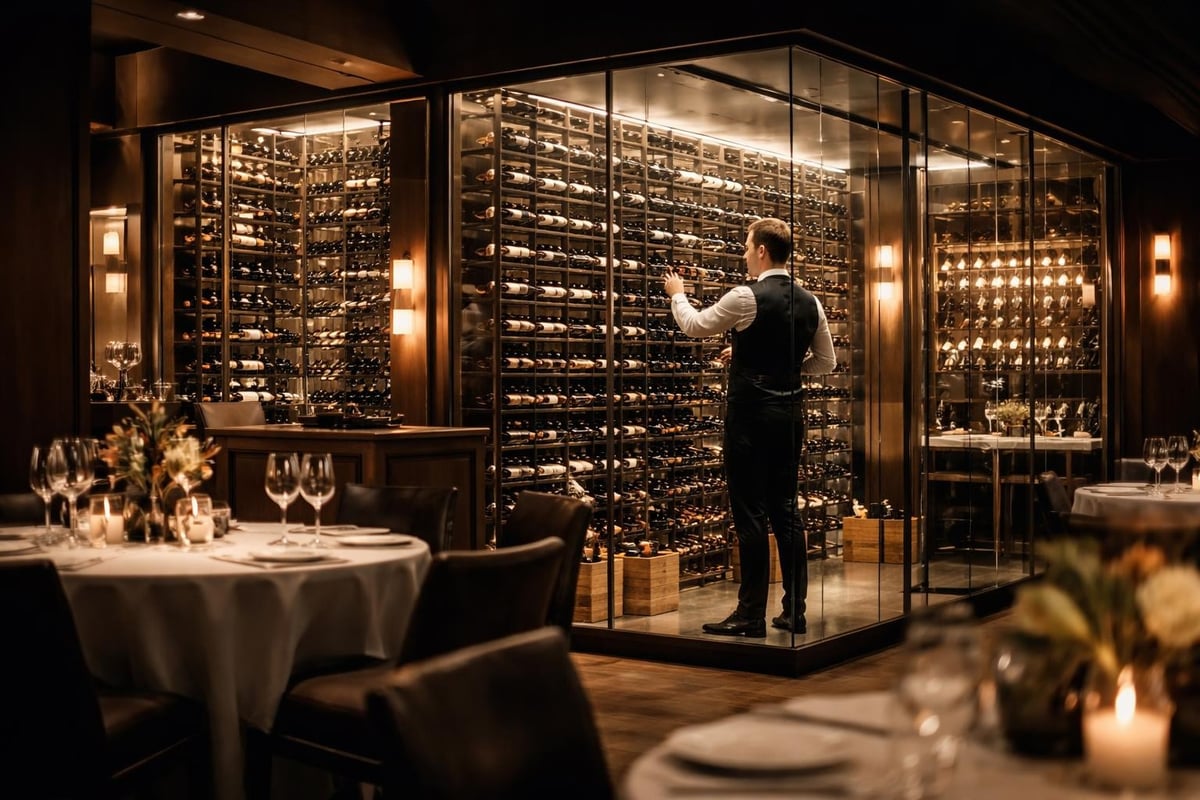
Restaurants, hotels, and private clubs throughout Austin have embraced glass wine cellars as both functional storage and powerful marketing tools. These installations communicate quality, transparency, and expertise to guests while creating memorable visual experiences.
Restaurant Wine Walls
Prominent glass-enclosed wine displays have become signature elements in Austin's top dining establishments. These installations serve multiple purposes simultaneously:
Demonstrating wine program depth and quality to diners
Creating architectural focal points in dining rooms
Providing sommelier-accessible storage during service
Functioning as conversation starters and social media moments
Justifying premium wine list pricing through visible quality presentation
Design considerations for commercial modern glass wine cellars Austin restaurants commission differ from residential applications. Accessibility during service hours matters enormously-sommeliers need efficient bottle retrieval without disrupting dining room ambiance. Lighting must accommodate varying occupancy levels and times of day. Security features often include lockable glass doors and sometimes surveillance integration.
Hotel and Resort Installations
Boutique hotels and resorts use wine cellars as differentiating amenities. A stunning glass-enclosed cellar visible from a lobby or restaurant entrance immediately communicates sophistication. Some properties offer:
Private tasting experiences within the cellar space for guests
Cellar tours explaining wine storage and collection curation
Sommelier consultations in intimate, collection-surrounded settings
Event hosting in or adjacent to the cellar for special occasions
These applications require larger-scale climate control, often commercial-grade refrigeration systems handling substantially higher bottle counts and public access patterns.
Material Selections Beyond Glass
While glass provides the defining characteristic of modern glass wine cellars Austin designers create, supporting materials significantly impact overall aesthetics and performance. Thoughtful material coordination elevates installations from merely functional to genuinely exceptional.
Flooring Options
Floor selection must balance visual appeal with practical demands. Wine cellars experience foot traffic, potential spills, and temperature fluctuations that not all materials handle well. Popular choices include:
Material | Durability | Moisture Resistance | Temperature Stability | Aesthetic Range |
|---|---|---|---|---|
Polished Concrete | Excellent | Excellent | Excellent | Industrial to refined |
Porcelain Tile | Excellent | Excellent | Very Good | Contemporary to traditional |
Natural Stone | Very Good | Good | Good | Luxury, varied textures |
Engineered Hardwood | Good | Fair | Fair | Warm, residential feel |
Luxury Vinyl Plank | Good | Excellent | Very Good | Wide style range |
Concrete floors work particularly well in modern settings, offering seamless transitions between cellar and adjacent spaces. Staining, polishing, or scoring can add visual interest while maintaining the material's inherent durability. Radiant heating systems integrate easily into concrete substrates, providing gentle warmth in cellars where temperatures might otherwise feel uncomfortably cool.
Wall and Ceiling Treatments
Non-glass walls in modern wine cellars demand careful consideration. Many designs incorporate:
Textured concrete or plaster finishes adding tactile contrast to smooth glass
Accent walls in reclaimed wood, metal panels, or natural stone
Integrated racking walls where wine storage becomes the wall surface itself
Neutral paint colors in grays, whites, or blacks maintaining focus on bottles
Decorative panels in perforated metal, backlit acrylic, or artistic installations
Ceilings often feature recessed lighting, floating panels, or exposed structural elements painted to coordinate with overall design direction. In taller installations, coffered ceilings add architectural interest while potentially concealing climate control ductwork or electrical runs.
Size and Capacity Planning
Modern glass wine cellars Austin homeowners build range from compact under-stair installations holding 200 bottles to expansive rooms accommodating thousands. Capacity planning requires honest assessment of current collection size, anticipated growth, and collecting habits.
Right-Sizing Your Cellar
Several factors influence appropriate cellar sizing:
Current bottle count and acquisition rate
Collecting focus (everyday drinking versus investment bottles requiring longer aging)
Available space and budget constraints
Entertaining frequency and style
Resale considerations if planning to move within several years
Many collectors underestimate their growth trajectory. A serious wine enthusiast purchasing just one case monthly will add 144 bottles annually. Without regular consumption, collections expand quickly. Building 30-50% excess capacity provides room for growth without requiring expansion projects.
For smaller urban properties, vertical space utilization becomes critical. Floor-to-ceiling racking maximizes bottle count within limited footprints. Rolling library ladders provide access to upper storage while adding visual interest and functional charm.
Display Versus Storage Balance
Not all bottles deserve prominent display positioning. Strategic cellar design allocates prime, eye-level positions for prized bottles worth showcasing while relegating everyday wines to less prominent storage. This approach creates visual hierarchy while ensuring practical accessibility.
Featured display zones might include:
Illuminated sections for special bottles or recent acquisitions
Horizontal presentation for bottles you want guests to notice
Case storage areas for larger quantities of the same wine
Bulk storage for wines awaiting proper aging before consumption
The ratio of display to utilitarian storage depends on collecting style and cellar purpose. Entertaining-focused cellars might allocate 60-70% to visible display, while serious collectors prioritizing long-term aging often prefer 30-40% display with majority storage.
Maintenance and Long-Term Performance
Even beautifully designed modern glass wine cellars Austin builders install require ongoing maintenance for optimal performance. Climate control systems, lighting, and glass surfaces all demand periodic attention.
Climate System Maintenance
Preventive maintenance protects both equipment and wine collections. Recommended practices include:
Filter replacement every 3-6 months depending on system type and environmental conditions
Annual professional servicing including refrigerant level checks and compressor inspection
Condensate drain line cleaning to prevent clogs and water damage
Temperature and humidity monitoring with data logging to identify performance trends
Backup cooling system consideration for irreplaceable collections
Professional maintenance programs provide peace of mind through regular inspections, priority service response, and equipment replacement planning before failures occur. For serious collectors, maintenance contracts represent inexpensive insurance against catastrophic losses.
Glass and Hardware Care
Glass panels require periodic cleaning to maintain clarity and visual impact. Proper technique matters:
Use microfiber cloths with appropriate glass cleaners avoiding ammonia-based products
Clean both interior and exterior surfaces for maximum transparency
Inspect door seals and gaskets for wear or gaps compromising climate control
Lubricate hardware and tracks on doors and sliding glass panels
Check for condensation patterns indicating potential thermal performance issues
Hardware finishes, particularly on frameless systems, benefit from gentle cleaning with manufacturer-approved products. Harsh chemicals can damage powder coating or metallic finishes, diminishing aesthetic quality over time.
Design Trends Shaping 2026 Installations
The evolution of modern glass wine cellars Austin designers create continues accelerating. Several trends are particularly influential in 2026:
Technology Integration
Smart home integration has become standard rather than optional. Contemporary cellars incorporate:
Automated climate control with remote monitoring and adjustment
Inventory management systems tracking bottle location, provenance, and optimal drinking windows
Voice control integration with Alexa, Google Assistant, or Apple HomeKit
Security cameras with night vision and motion detection
Motorized glass doors and lighting controlled through centralized platforms
Some systems now offer AI-powered recommendations, suggesting wines from your collection based on meal pairings, weather, or even your calendar showing upcoming dinner parties.
Biophilic Design Elements
Current design trends incorporate natural elements creating sensory-rich environments. This includes:
Living plant walls adjacent to glass cellars (carefully sealed to prevent humidity transfer)
Natural stone accent walls in limestone, slate, or marble
Water features creating ambient sound and visual interest
Natural wood elements in reclaimed or sustainably sourced materials
Organic sculptural elements complementing bottle displays
These elements soften the sometimes stark quality of pure glass-and-metal designs while maintaining contemporary aesthetics.
Flexible Multi-Function Spaces
Space constraints in urban Austin properties drive creative multi-use designs. Glass wine cellars increasingly incorporate:
Tasting areas with built-in seating, preparation surfaces, and glassware storage
Display shelving for wine books, decanters, and accessories
Artwork integration with sculptures, paintings, or photography within or adjacent to the cellar
Workspace elements for collectors who enjoy researching and cataloging their holdings
This approach maximizes the value extracted from every square foot dedicated to wine storage, transforming cellars from single-purpose spaces into genuine lifestyle amenities.
Working With Professional Designers and Builders
Creating exceptional modern glass wine cellars Austin homeowners treasure requires expertise spanning architecture, engineering, and specialized construction. While DIY approaches might work for simple projects, glass-enclosed climate-controlled environments demand professional execution.
Selecting the Right Design Partner
Experience with glass wine cellars specifically matters enormously. General contractors, even skilled ones, often lack the specialized knowledge required for successful installations. When evaluating potential design and construction partners, consider:
Portfolio demonstrating similar projects in style, scale, and complexity
In-house capabilities versus subcontracted services
Engineering expertise including heat load calculations and climate system design
Material sourcing relationships ensuring access to quality components
Project management approach and communication practices
Warranty coverage and post-installation support
References from previous clients with comparable projects
Specialized wine cellar companies bring focused expertise that general contractors simply cannot match. Their experience prevents costly mistakes and ensures performance meeting the exacting standards wine preservation demands.
The Design and Construction Process
Professional installations typically follow this sequence:
Initial consultation exploring vision, collection characteristics, and spatial constraints
Site assessment including structural evaluation and climate control feasibility
Conceptual design presenting layout options, material selections, and capacity planning
Engineering phase with detailed heat load calculations and system specifications
Final design approval including 3D renderings and material samples
Permitting if required by local building codes
Construction with milestone inspections ensuring quality standards
System commissioning verifying climate control performance before bottle installation
Final walkthrough and owner education on system operation and maintenance
Quality projects typically require 8-16 weeks from design approval to completion, depending on complexity, material availability, and construction challenges. Realistic timeline expectations prevent frustration and allow proper attention to critical details.
Investment Considerations
Modern glass wine cellars Austin homeowners commission represent significant investments, with costs varying widely based on size, materials, and systems complexity. Budget expectations should include:
Component | Percentage of Total Budget | Variables Affecting Cost |
|---|---|---|
Glass enclosure | 20-30% | Glass type, framing system, door configuration |
Climate control | 20-25% | Cooling capacity, system type, installation complexity |
Racking | 15-25% | Material, capacity, customization level |
Lighting | 5-10% | System sophistication, control integration |
Flooring/finishes | 10-15% | Material selection, area coverage |
Installation labor | 15-20% | Project complexity, timeline, site access |
Quality installations deliver lasting value through superior performance, aesthetic impact, and minimal maintenance requirements. Attempting to minimize investment through cheaper materials or less experienced builders often results in higher long-term costs through system failures, inadequate climate control, or premature replacement needs.
Viewing a cellar as both functional amenity and investment in property value helps justify appropriate budget allocation. Well-executed modern glass wine cellars Austin real estate professionals recognize as significant selling features, often returning substantial portions of their cost during property sales.
Modern glass wine cellars represent the convergence of art, engineering, and passion for wine that defines luxury living in Austin. From conceptual design through daily enjoyment, these installations transform wine storage into architectural statements that enhance both collections and living spaces. If you're ready to explore how a custom glass wine cellar could elevate your home or commercial property, Prestige Wine Cellars brings the expertise, craftsmanship, and innovative vision to create a cellar as unique as your collection. Their comprehensive approach ensures every detail, from climate engineering to aesthetic refinement, receives the attention your investment deserves.
Your Dream Wine Cellar Starts Here
Let our design team craft a cellar that matches your taste, space, and your collection — built for beauty, function, and prestige.

Email us at
Serving Austin, Dallas–Fort Worth, Houston & San Antonio