
How To Design Wine Wall Racks In Texas
Discover how wine wall racks transform spaces with style and function. Expert tips on materials, placement, capacity, and custom designs for 2026.
Wine wall racks have become the cornerstone of modern wine storage, offering an elegant solution that transforms bottles into art while maximizing space efficiency. Whether you're designing a compact urban wine room or planning a grand display for a resort, these versatile systems blend functionality with visual impact. The right wall-mounted solution can elevate your collection from hidden storage to architectural statement, creating conversation-worthy installations that showcase your passion for wine while preserving each bottle under optimal conditions.
Understanding the Evolution of Wine Wall Storage
The transition from traditional cellar storage to wall-mounted systems represents more than just an aesthetic shift. It reflects how we interact with our collections in 2026. Modern wine wall racks prioritize accessibility, visibility, and spatial efficiency without compromising the fundamental principles of proper wine storage.
Traditional wine cellars typically featured horizontal racking that required considerable floor space and often concealed labels. Today's wall-mounted systems flip this paradigm entirely. They create dramatic vertical displays that turn entire walls into curated galleries of your finest vintages.
The engineering behind contemporary wine wall racks has evolved significantly. Advanced materials and installation techniques now support substantial weight loads while maintaining sleek, minimalist profiles. This evolution has opened new possibilities for homeowners, designers, and commercial establishments seeking to make bold statements with their wine storage.
Material Selection and Structural Integrity
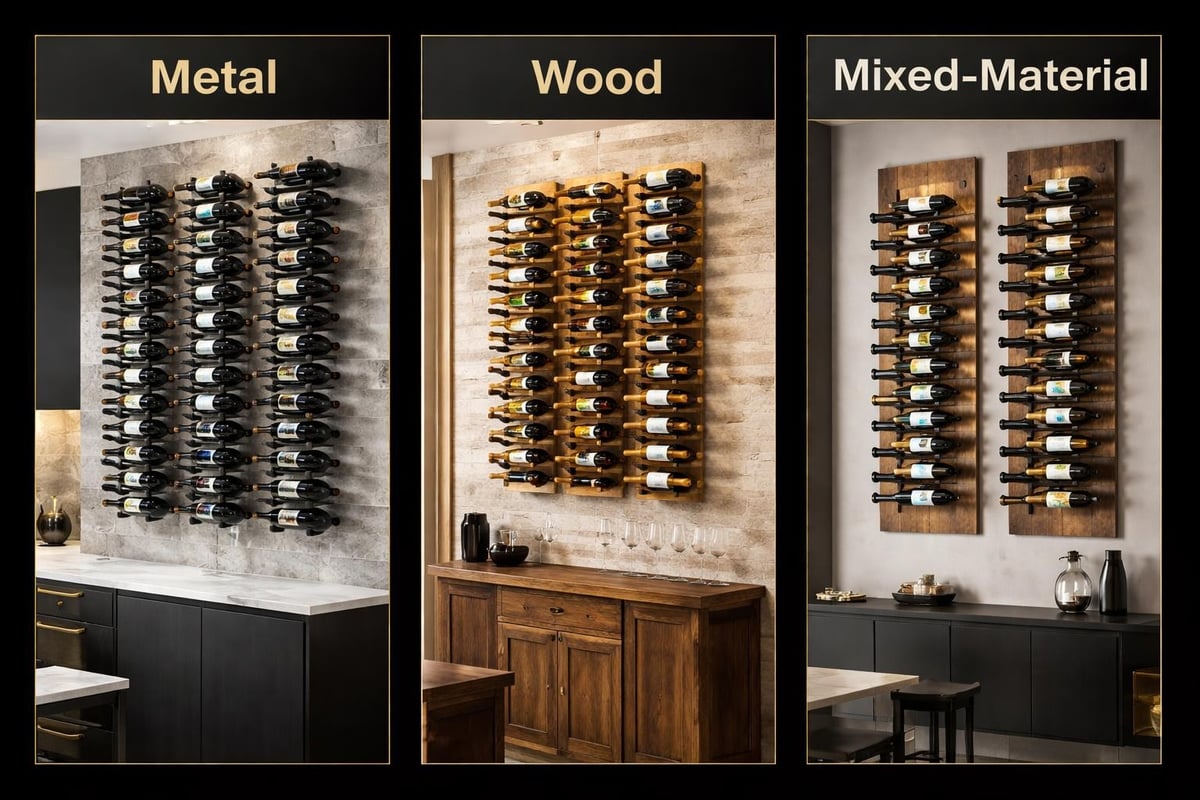
Choosing the right materials for wine wall racks determines both longevity and aesthetic coherence within your space. Each material brings distinct advantages and design implications.
Material | Weight Capacity | Aesthetic | Maintenance | Best Applications |
|---|---|---|---|---|
Metal (Steel/Aluminum) | High (300+ bottles) | Modern, industrial | Low | Contemporary spaces, commercial venues |
Wood (Mahogany/Redwood) | Medium (150-250 bottles) | Traditional, warm | Medium | Classic cellars, residential projects |
Acrylic/Glass | Medium (100-200 bottles) | Ultra-modern, transparent | High | Minimalist designs, display walls |
Mixed Materials | Variable | Customizable | Variable | Bespoke installations, transitional spaces |
Metal systems have gained particular prominence in luxury installations. Label-forward metal wine racks offer exceptional durability while creating floating bottle displays that emphasize your collection's diversity. The powder-coated finishes available in 2026 provide both corrosion resistance and color customization to match any design palette.
Wood remains timeless for those seeking traditional warmth. When properly treated and sealed, hardwoods like mahogany create stunning visual depth while offering excellent structural support. The key consideration with wooden wine wall racks lies in ensuring the wood itself doesn't interfere with climate control systems or introduce unwanted humidity absorption.
Design Configurations for Maximum Impact
The configuration of your wine wall racks should reflect both your collection size and your spatial constraints. Smart planning during the design phase prevents costly modifications later while ensuring your system grows with your collection.
Single-Column Versus Multi-Column Layouts
Single-column systems excel in narrow spaces or when flanking architectural features. They create vertical emphasis and work beautifully in:
Hallway galleries
Alongside staircases
Between windows or doorways
As room dividers in open-concept spaces
Multi-column installations make dramatic statements and accommodate larger collections. The modular wine wall systems available today allow for seamless expansion, letting you add columns as your collection grows without compromising the overall design integrity.
Consider bottle orientation carefully. Label-forward displays create immediate visual impact and facilitate selection. Traditional neck-forward storage maximizes capacity but conceals labels. Many sophisticated installations at Prestige Wine Cellars' portfolio projects combine both orientations strategically, placing prized bottles label-forward while using traditional racking for everyday selections.
Calculating Capacity and Spatial Requirements
Proper capacity planning prevents the frustration of outgrowing your system prematurely. Standard wine wall racks accommodate bottles in various configurations:
Calculate your current collection and add 30-50% for anticipated growth over five years
Measure your wall dimensions precisely, accounting for architectural features, outlets, and switches
Determine bottle spacing based on your collection (Bordeaux bottles require different spacing than Champagne)
Plan for accessibility ensuring you can reach all bottles comfortably without step stools
A typical 8-foot wall section can accommodate 90-120 standard bottles when using efficient racking systems. However, working with experts in custom wine cellar design ensures you maximize every inch while maintaining proper clearances and aesthetic balance.
Integration with Climate Control Systems
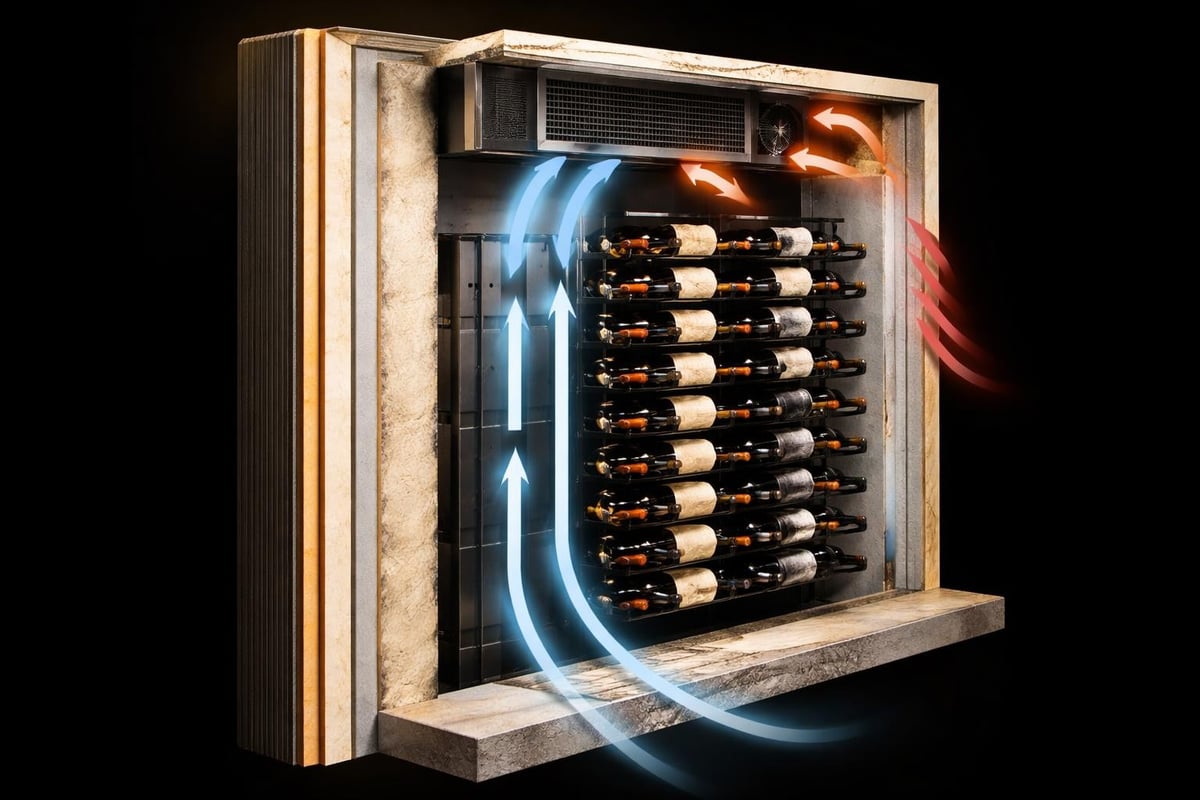
Wine wall racks cannot function in isolation from environmental management. The most beautiful installation fails if temperature and humidity fluctuate beyond acceptable ranges. Your racking system must work harmoniously with climate control infrastructure.
Key integration considerations include:
Air circulation pathways between bottles and around racking
Sensor placement for accurate temperature monitoring
Insulation requirements behind and around wall-mounted systems
Clearances for cooling unit vents and returns
Modern glass-enclosed wine cellars present unique climate control challenges. The dramatic visual impact of floor-to-ceiling glass requires sophisticated engineering to maintain stable conditions while showcasing your wine wall racks. These installations demand precise calculations of heat load and cooling capacity.
Installation Techniques and Structural Considerations
Professional installation separates successful wine wall racks from potential disasters. The structural demands of supporting hundreds of bottles against vertical surfaces require expertise beyond typical home improvement projects.
Wall Assessment and Preparation
Not all walls can support wine wall racks without reinforcement. A comprehensive structural assessment examines:
Stud location and spacing (16-inch versus 24-inch centers)
Wall composition (drywall over studs, concrete, brick, or masonry)
Load-bearing capacity of existing framing
Hidden obstacles like electrical, plumbing, or HVAC components
Concrete and masonry walls offer superior load-bearing capacity but require specialized mounting hardware. Anchor systems must penetrate deep enough to engage solid material while avoiding cracking or spalling. Standard drywall installations almost always require backing boards or French cleat systems that distribute weight across multiple studs.
Mounting Systems and Weight Distribution
The variety of wall-mounted wine racks available in 2026 employ different mounting philosophies. Understanding these approaches helps you make informed decisions:
Direct stud mounting attaches individual rack components directly to wall framing
Backer board systems create continuous mounting surfaces for flexible rack placement
French cleat installations allow for easy adjustment and redistribution of weight
Floating shelf approaches conceal mounting hardware for seamless aesthetics
Weight distribution becomes critical with larger installations. A fully loaded wine wall rack section weighing 400-600 pounds creates significant shear forces. Professional installers calculate these loads and engineer appropriate mounting solutions, often incorporating steel reinforcement within wall cavities.
Style Integration Across Architectural Contexts
Wine wall racks must complement your existing architecture rather than compete with it. The most successful installations feel inevitable, as though the space was always meant to showcase wine in exactly this manner.
Contemporary and Modern Spaces
Sleek metal wine wall racks harmonize beautifully with contemporary architecture. Their minimal profiles and industrial materials echo the clean lines and honest materials found in modern design. Consider these approaches:
Matte black powder-coated systems against white walls create striking contrast
Brushed stainless steel complements commercial-grade kitchen appliances
Cable-suspended systems add literal and visual lightness
The modern wine cellar portfolio showcases how wine wall racks integrate with glass, concrete, and steel elements to create cohesive contemporary environments. These spaces often feature integrated LED lighting that transforms the installation into sculptural artwork after dark.
Traditional and Transitional Environments
Wood wine wall racks bring warmth and traditional elegance to classic interiors. When selecting wooden systems for traditional spaces, match wood species and finish to existing millwork, cabinetry, and trim.
Transitional design offers the most flexibility, blending contemporary function with traditional warmth. Mixed-material wine wall racks featuring wood frames with metal inserts bridge these worlds elegantly. Transitional wine cellars demonstrate how thoughtful material selection creates timeless appeal that transcends fleeting trends.
Commercial Applications
Restaurants, hotels, and tasting rooms demand wine wall racks that withstand higher traffic while making powerful first impressions. Commercial installations require:
Enhanced durability to withstand frequent bottle handling
ADA compliance for accessible bottle heights
Security features including lockable sections for premium bottles
Brand integration through custom finishes and configurations
The commercial wine storage systems implemented in high-end hospitality venues balance operational efficiency with visual drama. These installations often feature modular sections that facilitate inventory rotation while maintaining impeccable presentation.
Customization Options and Personal Expression
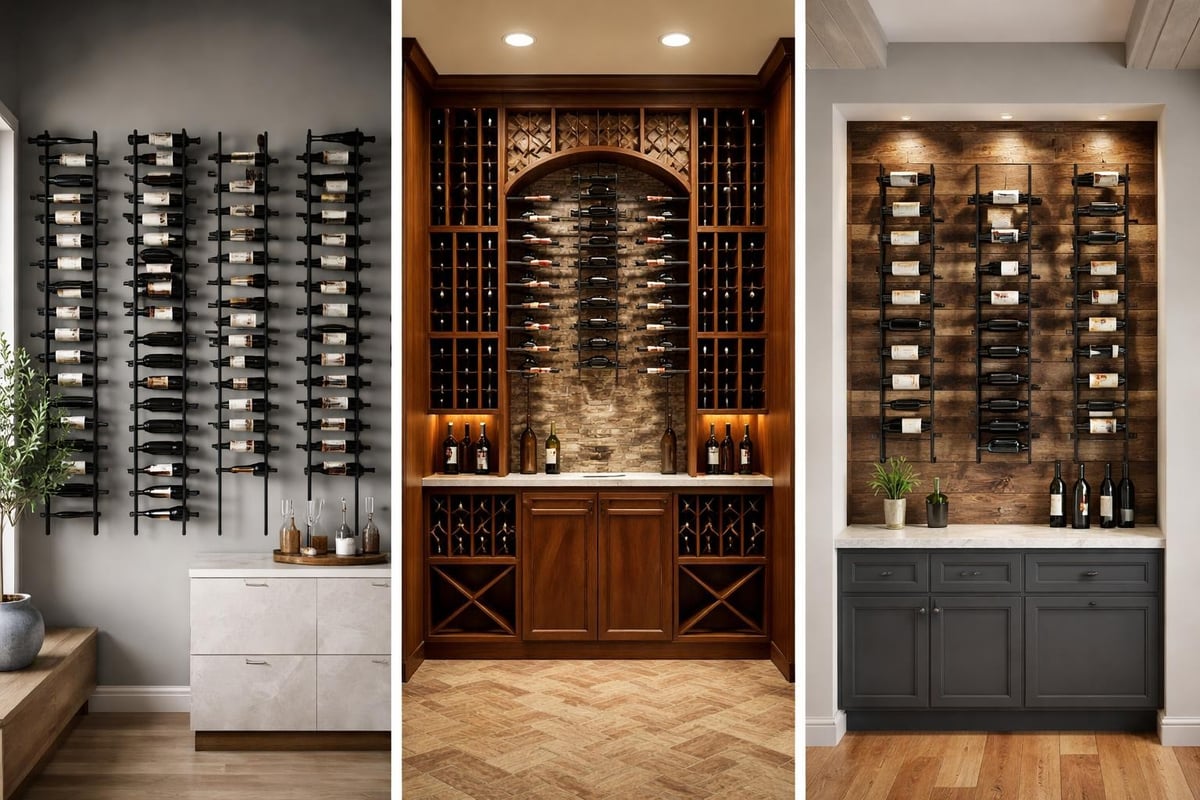
Standard wine wall racks provide excellent foundations, but customization transforms storage into personal expression. The bespoke approach allows you to address unique spatial challenges while incorporating meaningful design elements.
Dimensional Customization
Every collection differs in composition. If you favor Burgundy, Champagne, or oversized format bottles, standard spacing may not accommodate your needs. Custom wine wall racks can be engineered with:
Variable depth sections for different bottle sizes
Adjustable shelving that adapts as your collection evolves
Specialized cradles for magnums, splits, and unusual formats
Display niches for decanters, accessories, and wine-related art
Finish and Color Personalization
The wine cellar materials selected for your wine wall racks establish the emotional tone of your space. Beyond structural choices, finishes offer remarkable creative latitude:
Metal finishes in 2026 extend far beyond basic powder coating. Consider:
Antiqued bronze for Old World elegance
Polished brass for Art Deco glamour
Patinated copper that evolves over time
Custom color-matching to brand standards or interior palettes
Wood staining and treatment allows precise coordination with existing woodwork. Sample matching ensures your wine wall racks feel original to the space rather than retrofitted additions.
Lighting Integration
Integrated lighting transforms wine wall racks from storage into theater. LED technology has revolutionized what's possible:
Backlit acrylic panels create ethereal glows behind bottles
Puck lights spotlight individual bottles or sections
Linear LED strips outline rack perimeters for architectural emphasis
Color-changing systems adapt to occasions or moods
Smart lighting controls allow programming scenes for entertaining, everyday use, or dramatic presentation. Temperature-monitoring systems can even trigger color changes when conditions drift outside ideal ranges.
Maintenance and Long-Term Care
Wine wall racks require ongoing attention to maintain both function and beauty. Establishing maintenance routines protects your investment while ensuring optimal storage conditions.
Regular Cleaning Protocols
Different materials demand specific care approaches:
Metal racks require periodic dusting and occasional cleaning with pH-neutral solutions to prevent finish degradation
Wood systems benefit from annual conditioning with appropriate oils or waxes depending on the finish type
Glass and acrylic components need streak-free cleaning to maintain transparency and visual impact
Bottle removal during cleaning provides opportunity to inventory your collection, check for signs of seepage, and rotate bottles if any aren't stored perfectly horizontally.
Structural Inspections
Annual structural assessments identify potential issues before they become serious:
Check mounting hardware for looseness or corrosion
Examine wall surfaces for cracks or movement
Verify that weight distribution remains appropriate as bottles are added
Confirm that climate control systems maintain stable conditions
Professional maintenance services, including those offered through wine cellar maintenance programs, provide peace of mind and often catch minor issues before they escalate into costly repairs.
Space Planning for Optimal Functionality
Successful wine wall rack installations balance storage density with practical accessibility. The most efficient systems waste no space yet allow effortless bottle selection without disturbing adjacent vintages.
Vertical Zoning Strategies
Organize wine wall racks vertically based on access frequency and aging timelines:
Upper sections (above 6 feet):
Long-term aging bottles requiring infrequent access
Investment-grade wines
Large format bottles
Middle sections (3-6 feet):
Ready-to-drink selections
Frequently accessed wines
Display-worthy bottles with beautiful labels
Lower sections (below 3 feet):
Everyday drinking wines
Backup bottles of house favorites
Convenient access for restocking
This zoning approach, commonly implemented in compact urban wine cellars, maximizes efficiency while reducing physical strain during bottle selection.
Adjacency Planning
Consider what spaces border your wine wall racks. Ideal adjacencies include:
Living and entertaining areas for convenient access during gatherings
Dining rooms for seamless service during meals
Home offices creating sophisticated backdrops for video calls
Bars and tasting areas supporting the complete wine experience
Avoid locating wine wall racks adjacent to heat sources like fireplaces, exterior walls receiving direct sun, or appliances generating thermal loads. These placements compromise climate stability regardless of cooling system capacity.
Investment Considerations and Value Proposition
Wine wall racks represent significant investments that deliver multiple forms of return. Understanding both initial costs and long-term value helps frame appropriate budget expectations.
Cost Factors and Budget Ranges
Wine wall rack pricing varies enormously based on:
Factor | Budget Impact | Considerations |
|---|---|---|
Materials | High | Metal systems typically cost more upfront but require less maintenance |
Capacity | Very High | Price increases geometrically with bottle count, not linearly |
Customization | High | Bespoke dimensions, finishes, and features add 40-100% to base costs |
Installation complexity | Medium | Structural reinforcement and professional installation essential |
Lighting and technology | Medium | Integrated systems increase sophistication and cost |
Quality wine wall racks from reputable manufacturers start around $15-25 per bottle capacity for basic systems. Premium installations with custom features can reach $150 - $300 per bottle. The comprehensive wine rack collections available in 2026 span this full spectrum.
Return on Investment
Beyond monetary considerations, wine wall racks deliver substantial intangible returns:
Property value enhancement, particularly in luxury markets where wine storage is expected
Collection protection, preventing premature aging or spoilage of valuable bottles
Space optimization, converting unused vertical surfaces into functional storage
Aesthetic elevation, transforming utilitarian storage into architectural features
For commercial applications, wine wall racks generate direct revenue by encouraging higher-value bottle selections and creating Instagram-worthy backdrops that drive social media marketing.
Working with Design Professionals
While DIY wine wall rack installation appeals to some homeowners, professional collaboration typically produces superior results. The complexity of integrating structural, climate control, and aesthetic elements benefits from specialized expertise.
What Professionals Bring to Projects
Experienced wine cellar designers contribute:
Spatial analysis identifying opportunities you might overlook
Engineering expertise ensuring structural adequacy and code compliance
Material knowledge recommending appropriate systems for your conditions
Vendor relationships accessing better products at preferential pricing
Project management coordinating multiple trades seamlessly
The turnkey design-build approach streamlines complex projects by consolidating responsibility under one expert team. This integration eliminates coordination headaches while ensuring all elements work together harmoniously.
Questions to Ask During Consultations
Evaluate potential wine cellar partners by asking:
How many wine wall rack installations have you completed in the past year?
Can you provide references from similar projects?
What warranties cover materials, installation, and climate systems?
How do you handle unexpected structural challenges discovered during installation?
What maintenance support do you offer after project completion?
Review portfolios critically, looking for completed projects that resonate with your aesthetic preferences and match your project scope. The best designers listen more than they talk, drawing out your vision rather than imposing their preferred approaches.
Regional Considerations for Texas Installations
Texas presents unique challenges and opportunities for wine wall racks. The state's climate, architectural traditions, and spatial characteristics influence design decisions.
Climate Adaptation Strategies
Texas heat and humidity require robust climate control integration. Wine wall racks in Texas homes must work within systems capable of:
Maintaining 55-58°F regardless of outdoor temperatures exceeding 100°F
Managing humidity levels despite dramatic seasonal swings
Recovering quickly after door openings during summer months
Installations in Houston face different challenges than those in Dallas. Coastal humidity versus dry heat influences material selection, with metal wine wall racks sometimes preferred in humid environments for their resistance to moisture-related degradation.
Architectural Compatibility
Texas architecture ranges from Spanish Colonial to ultra-modern glass boxes. Wine wall racks must adapt to:
Hill Country contemporary homes featuring stone, steel, and expansive glass
Traditional estates with formal millwork and classic proportions
Urban high-rises where space efficiency is paramount
Ranch-style properties blending rustic and refined elements
Understanding regional architectural vernacular ensures wine wall racks enhance rather than clash with existing design languages. The diverse wine storage styles implemented across Texas reflect this architectural variety.
Wine wall racks represent the intersection of practical storage and artistic expression, transforming collections into living displays while preserving each bottle under optimal conditions. Whether you're planning a intimate home installation or a dramatic commercial showcase, thoughtful design and expert execution ensure results that exceed expectations for decades. Prestige Wine Cellars brings unparalleled expertise to wine wall rack projects throughout Texas and beyond, offering comprehensive design, engineering, and installation services that transform your vision into reality while protecting your cherished collection.
Your Dream Wine Cellar Starts Here
Let our design team craft a cellar that matches your taste, space, and your collection — built for beauty, function, and prestige.

Email us at
Serving Austin, Dallas–Fort Worth, Houston & San Antonio