
Wine Cabinets: Expert Guide to Luxury Storage Solutions
Discover how wine cabinets elevate your collection with precision climate control, elegant design, and expert craftsmanship for homes and commercial spaces.
The art of wine collecting demands more than passion and discernment. It requires the perfect environment where your precious bottles can mature gracefully, protected from the elements that threaten their integrity. Wine cabinets have evolved from simple storage units into sophisticated pieces that marry functionality with breathtaking design, offering collectors a solution that preserves their investment while enhancing their living spaces. Whether you're curating a growing personal collection in your home or showcasing premium vintages in a restaurant, understanding the nuances of quality wine storage transforms how you experience and protect your wines.
Understanding Wine Cabinet Fundamentals
Wine cabinets serve as dedicated climate-controlled environments designed specifically to maintain the precise conditions bottles require for optimal aging and preservation. Unlike standard refrigeration, these specialized units create microclimates that replicate the ideal underground cellar conditions wines have thrived in for centuries.
The science behind proper wine storage centers on four critical factors:
Temperature stability between 55-58°F for long-term aging
Humidity levels maintained at 60-70% to preserve cork integrity
Protection from UV light exposure that degrades wine compounds
Minimal vibration to prevent sediment disturbance
Understanding the anatomy of a refrigerated wine cabinet reveals how professional-grade units achieve these conditions through specialized insulation, vapor barriers, and advanced cooling systems. The difference between a quality cabinet and a basic wine cooler lies in the engineering precision and material choices that ensure consistent performance year after year.
Historical Evolution and Modern Innovation
The journey from traditional cellarettes to contemporary wine cabinets reflects centuries of refinement in wine storage methodology. These early furniture pieces, popular in the 18th and 19th centuries, represented society's recognition that wine required special accommodation. Today's cabinets honor that legacy while incorporating cutting-edge technology.
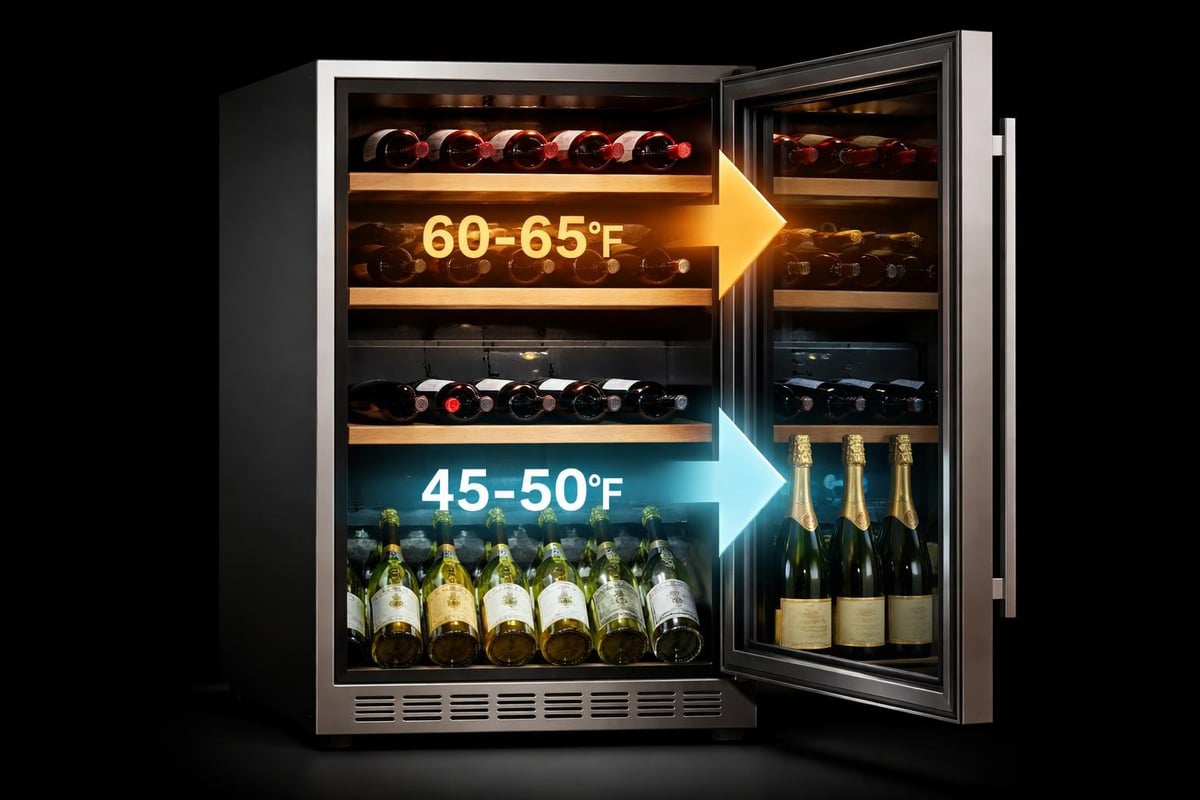
Modern innovations include dual-zone temperature controls for serving both reds and whites simultaneously, LED lighting systems that eliminate heat and UV damage, and smartphone connectivity for remote monitoring. The best units feature compressor-based cooling rather than thermoelectric systems, ensuring reliable performance even in challenging ambient conditions.
Selecting the Right Cabinet for Your Collection
Choosing wine cabinets that align with your specific needs requires evaluating several key considerations beyond aesthetic appeal. The decision impacts not only how well your wines age but also how seamlessly the cabinet integrates into your space and lifestyle.
Capacity and Configuration Planning
Your collection size and growth trajectory should dictate capacity choices:
Small collections (50-100 bottles): Freestanding single-zone units offer flexibility and portability
Medium collections (100-300 bottles): Built-in or modular systems maximize space efficiency
Large collections (300+ bottles): Custom wine cellar designs provide unlimited scalability
Consider bottle formats beyond standard Bordeaux shapes. Many collectors discover too late that their cabinet racking cannot accommodate Champagne, Burgundy, or large-format bottles. This represents one of the common mistakes when buying a wine cabinet that savvy buyers avoid through careful planning.
Bottle Format | Width Requirement | Special Racking Needed |
|---|---|---|
Standard Bordeaux | 3" | Standard |
Burgundy/Pinot | 3.5" | Wide slots |
Champagne | 3.75" | Deep pockets |
Magnum (1.5L) | 4.5" | Oversized shelves |
Double Magnum (3L) | 5.5" | Custom configuration |
Climate Control Technology
The heart of any wine cabinet lies in its ability to maintain precise environmental conditions regardless of external temperature fluctuations. This becomes especially critical in regions like Texas, where summer temperatures can soar.
Premium cooling systems feature:
Compressor-based refrigeration for consistent performance
Independent temperature and humidity controls
Automatic defrost cycles that prevent frost buildup
Insulated glass doors with thermal breaks
Backup battery systems for power outage protection
When choosing a good wine cabinet, verify the unit's BTU rating matches your space requirements. Undersized cooling capacity leads to constant cycling, increased energy costs, and premature equipment failure. Professional heat load calculations account for ambient temperature, insulation values, and door openings to ensure optimal performance.
Design Integration and Aesthetic Considerations
Wine cabinets have transcended their utilitarian origins to become statement pieces that anchor interior design schemes. The most successful installations balance preservation requirements with visual impact, creating displays that celebrate wine while protecting it.
Architectural Styles and Materials
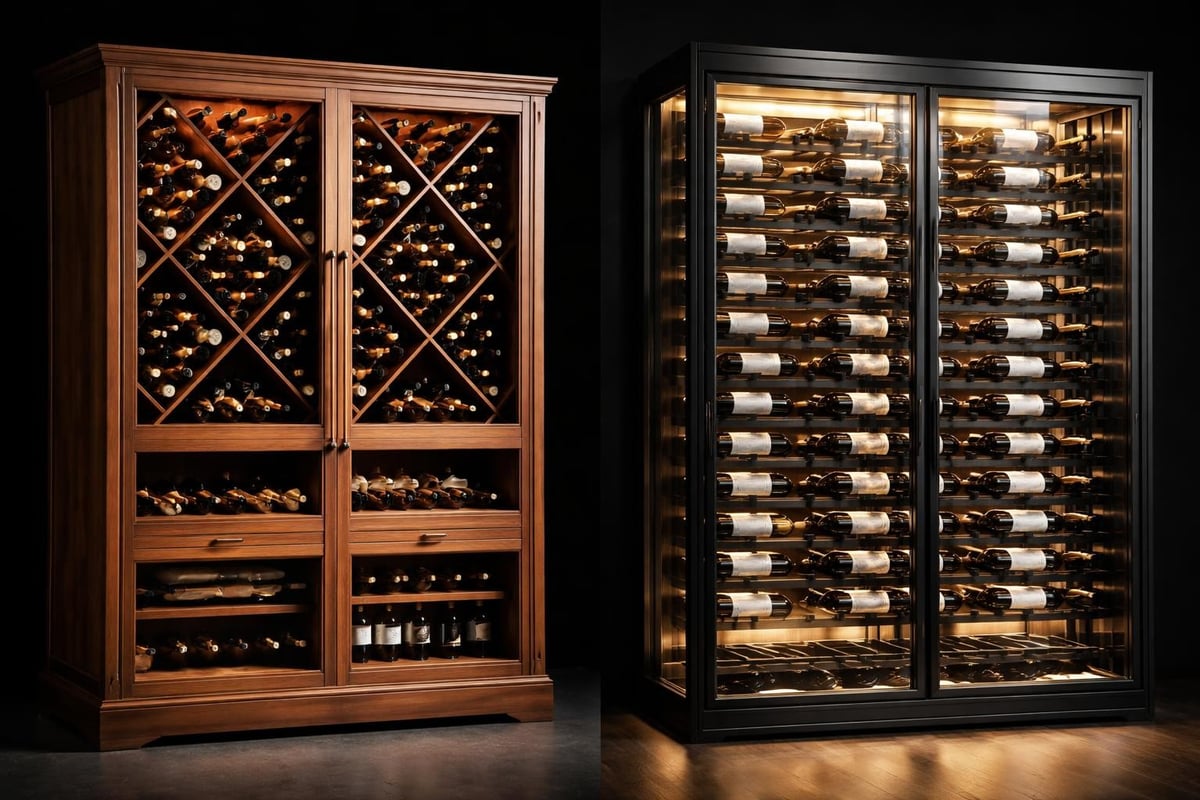
Your cabinet choice should harmonize with your overall design aesthetic while reflecting your personal style. The range spans from traditional wood craftsmanship to ultra-modern glass and metal compositions.
Popular design approaches include:
Traditional: Rich mahogany or walnut with ornate millwork details
Transitional: Clean-lined wood frames with glass panel inserts
Modern: All-glass construction with minimalist metal framing
Industrial: Exposed metal and concrete with raw wood accents
The traditional wine cellar aesthetic remains timelessly elegant, featuring hand-selected woods that develop character over time. Meanwhile, glass-enclosed showpiece designs create dramatic focal points in open-concept living spaces and commercial venues.
Material selection extends beyond aesthetics to functional performance. Solid wood offers superior insulation and aging character, while metal and glass provide contemporary appeal with easier maintenance. Many luxury installations combine materials, using wood for structural racking within climate-controlled glass enclosures.
Lighting Strategy and Display
Strategic illumination transforms wine cabinets from storage units into captivating displays. However, lighting must enhance visibility without compromising wine quality through heat or UV exposure.
LED technology has revolutionized wine cabinet lighting by providing brilliant illumination with negligible heat output and zero UV radiation. The best systems incorporate:
Adjustable color temperature controls (2700K-3500K warm white)
Dimming capabilities for ambient versus task lighting
Motion sensors that activate only when accessing bottles
Strategic placement to highlight labels without direct bottle exposure
Many collectors working with custom wine cellar materials integrate lighting into racking systems themselves, creating subtle backlighting effects that showcase bottles while maintaining protective low-light conditions.
Commercial Applications and Hospitality Solutions
Wine cabinets serve distinct purposes in commercial environments, where they must balance preservation with presentation while withstanding heavy use. Restaurants, hotels, and private clubs require robust solutions that enhance guest experience while protecting valuable inventory.
Restaurant and Steakhouse Installations
High-end dining establishments increasingly feature dramatic wine displays as architectural centerpieces. These installations serve multiple functions simultaneously: storage, display, and theater that elevates the dining experience.
Commercial wine cabinet specifications differ from residential units:
Heavy-duty hinges and locks for security
Commercial-grade compressors rated for continuous operation
Removable racking for inventory rotation
Integrated point-of-sale systems for tracking
ADA-compliant lower storage sections
The Cambria Waco Hotel wine cellar exemplifies how custom installations create memorable guest experiences while providing functional wine program support. Glass walls allow diners to appreciate the collection while climate control maintains perfect conditions.
Residential Use | Commercial Use |
|---|---|
Occasional access | Daily high-traffic |
Personal collection | Revenue-generating inventory |
Single user preference | Multiple staff members |
Aesthetic priority | Security + presentation |
Standard warranty | Commercial-grade coverage |
Hotel and Resort Wine Programs
Luxury hospitality venues utilize wine cabinets to showcase their commitment to excellence while offering guests access to premium selections. These installations often incorporate tasting areas, private dining nooks, and sommelier workstations.
Dual-zone systems prove especially valuable in hospitality settings, allowing establishments to store extensive collections at cellar temperature while maintaining serving inventory at optimal drinking temperatures. This eliminates wait times and ensures every bottle reaches the guest in perfect condition.
Installation Considerations and Spatial Planning
Proper installation separates exceptional wine storage from problematic experiments. Even the finest wine cabinets fail when incorrectly integrated into their surroundings, making professional assessment and installation critical.
Location and Environmental Factors
Ideal wine cabinet placement avoids:
Direct sunlight exposure through windows
Heat sources like ovens, fireplaces, or HVAC vents
High-humidity areas prone to condensation
Uninsulated exterior walls in extreme climates
High-traffic zones with constant door openings
In Texas markets like Houston and Dallas, where summer temperatures regularly exceed 100°F, location becomes even more critical. Placing cabinets against well-insulated interior walls reduces cooling loads and energy consumption.
Freestanding units require adequate clearance for ventilation, typically 2-3 inches on all sides and top. Built-in models need dedicated electrical circuits and potentially modified cabinetry to accommodate equipment depth and service access.
Professional Installation vs. DIY Approaches
While homeowners can successfully install basic freestanding wine cabinets, custom built-in systems and climate-controlled rooms demand professional expertise. The complexity escalates when integrating advanced features or working within existing architecture.
Professional installers provide:
Accurate load calculations for cooling requirements
Proper electrical work meeting code requirements
Vapor barrier installation preventing moisture intrusion
Structural reinforcement for heavy bottle loads
Warranty protection through authorized installation
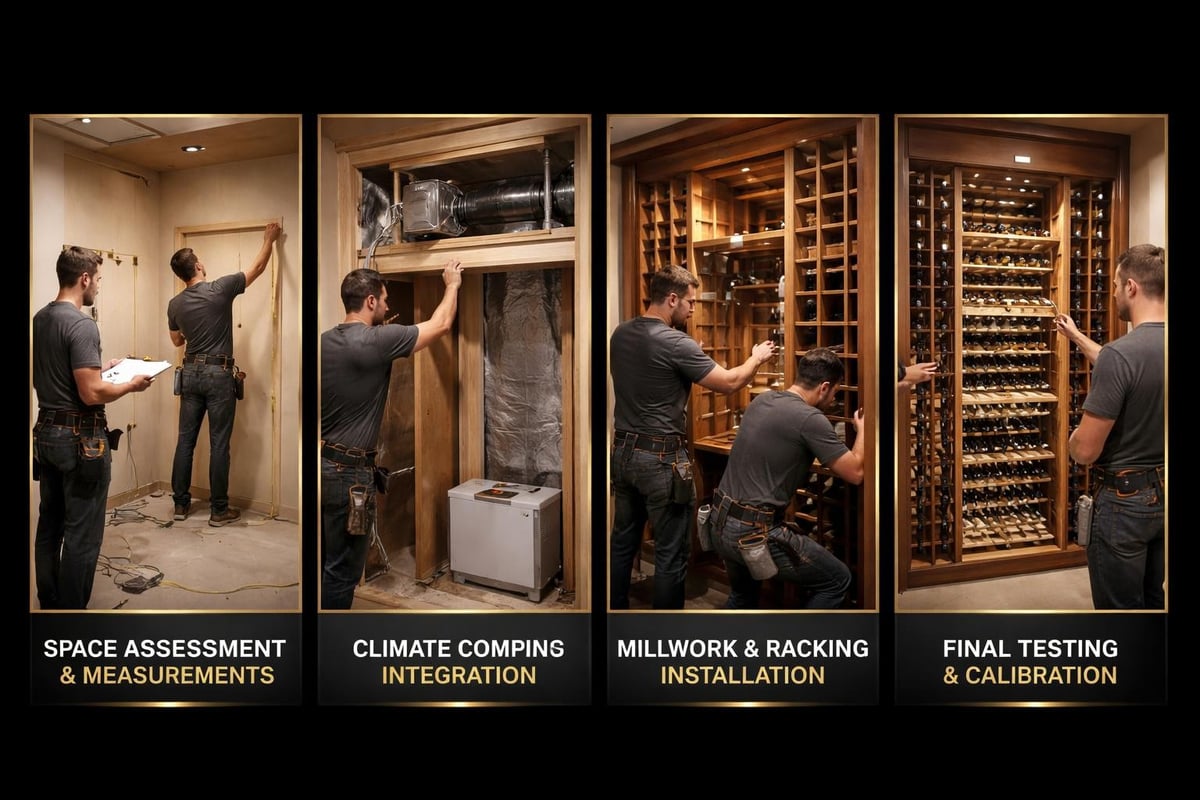
Working with specialists who offer turnkey wine cellar design-build services ensures every element coordinates seamlessly, from initial concept through final commissioning. This integrated approach eliminates the coordination challenges that plague projects involving multiple contractors.
Maintenance and Long-Term Performance
Wine cabinets represent significant investments that reward proper care with decades of reliable service. Establishing maintenance routines prevents minor issues from escalating into costly repairs or, worse, wine damage from climate control failures.
Routine Care and Cleaning
Monthly maintenance tasks include:
Inspecting door seals for cracks or gaps
Cleaning condenser coils to maintain efficiency
Checking temperature and humidity accuracy
Wiping interior surfaces with appropriate cleaners
Testing door alignment and latch function
Quarterly deep cleaning should address any dust accumulation on cooling components and verify that drainage systems remain clear. Many collectors schedule professional wine cellar maintenance visits annually to catch potential issues before they impact wine quality.
Avoid using harsh chemical cleaners that can leave residual odors affecting wine. Simple solutions of mild soap and water prove most effective for interior surfaces, while specialized stainless steel cleaners maintain exterior finishes.
Troubleshooting Common Issues
Even well-maintained wine cabinets occasionally experience performance variations. Recognizing early warning signs allows prompt intervention before wine suffers damage.
Symptom | Possible Cause | Solution |
|---|---|---|
Temperature fluctuation | Dirty condenser coils | Clean coils, check fan operation |
Excessive condensation | Humidity too high | Adjust settings, check door seal |
Loud operation | Failing compressor | Schedule professional service |
Frost buildup | Defrost cycle malfunction | Reset system, verify sensor function |
Warm interior | Cooling system failure | Immediate professional assessment |
Temperature consistency matters more than absolute accuracy. A cabinet maintaining steady 57°F outperforms one fluctuating between 54-58°F, even though both fall within acceptable ranges. Monitor your unit with independent thermometers to verify built-in sensors remain accurate over time.
Customization and Personalization Options
Generic wine cabinets serve basic storage needs, but collectors with specific requirements or aesthetic visions benefit from customized solutions. Personalization transforms functional storage into expressions of individual taste and collecting philosophy.
Racking Configurations and Bottle Management
Standard diamond bin racking maximizes capacity but limits accessibility and display potential. Custom configurations address specific collection characteristics and usage patterns.
Specialized racking options include:
Label-forward display racking for showcasing prized bottles
Bulk storage bins for case quantities
Presentation shelves for magnums and special formats
Pull-out shelving for easier access to rear bottles
Locking sections for rare or valuable wines
Many serious collectors organize cabinets by region, producer, or aging timeline rather than generic bottle count. This approach requires thoughtful racking design that accommodates logical groupings while maintaining proper capacity.
The modern wine cellar aesthetic often incorporates mixed racking styles within single installations, using traditional bins for everyday drinking wines while featuring showcase displays for special bottles. This layered approach provides both practical storage and visual interest.
Technology Integration and Smart Features
Contemporary wine cabinets increasingly incorporate connected technologies that enhance convenience and provide peace of mind. Smart features range from simple monitoring to sophisticated inventory management systems.
Advanced technology options include:
Smartphone apps for remote temperature monitoring
Automated alerts for temperature or humidity deviations
Inventory management systems with barcode scanning
Integration with home automation platforms
Security cameras for collection monitoring
While technology enhances functionality, ensure any connected features include backup manual controls. Complete dependence on apps or Wi-Fi connectivity can prove problematic during network outages or when technology becomes obsolete.
Market Trends and Future Directions
The wine cabinet industry continues evolving, responding to changing consumer preferences, environmental concerns, and technological capabilities. Understanding these trends helps collectors make future-proof investment decisions.
Sustainability and Energy Efficiency
Environmental consciousness drives increasing demand for energy-efficient wine cabinets that minimize carbon footprint without compromising performance. Modern units consume significantly less energy than older models while providing superior climate control.
Eco-friendly features gaining popularity include:
Variable-speed compressors that adjust output to demand
Enhanced insulation reducing cooling requirements
LED lighting eliminating heat gain
Refrigerants with lower global warming potential
Recycled and sustainably sourced materials
Energy Star certification provides baseline efficiency standards, but premium manufacturers exceed these minimums significantly. Over a cabinet's 20-year lifespan, energy savings from efficient models often offset higher initial costs.
Market Growth and Consumer Preferences
According to recent wine cabinet market analysis, the industry continues expanding as wine collecting becomes more accessible and home entertaining gains popularity. This growth fuels innovation in design, features, and price points.
Consumers increasingly seek cabinets that serve multiple purposes, incorporating bar storage, glassware display, and entertaining features beyond basic bottle storage. This reflects the broader trend toward experiential wine enjoyment rather than mere collecting.
The rise of compact urban living drives demand for space-efficient solutions. Compact urban wine cellars demonstrate how thoughtful design maximizes storage within limited footprints, making serious collecting viable even in smaller homes.
Expert Buying Strategies
Navigating the wine cabinet marketplace requires understanding what separates exceptional value from marketing hype. Armed with knowledge, collectors make informed decisions that serve them well for decades.
Evaluating Quality and Value
Price alone doesn't determine wine cabinet quality. Understanding construction details and component specifications reveals true value beyond surface aesthetics.
Quality indicators to assess include:
Insulation R-value of 21 or higher for walls and doors
Compressor brand and warranty coverage
Racking material (solid wood versus wire or plastic)
Door seal quality and replacement availability
Cabinet liner materials (cedar, stainless, or coated)
Comprehensive buying guides for wine cabinets detail specifications worth prioritizing based on budget and requirements. Focus investment on climate control components and structural integrity rather than decorative elements that don't impact wine preservation.
Warranty coverage reveals manufacturer confidence in their product. Look for minimum five-year compressor warranties and three-year comprehensive coverage. Extended warranty options provide additional protection for significant investments.
Working with Design Professionals
Complex installations benefit enormously from professional design expertise. Specialists bring technical knowledge and creative vision that elevate projects beyond what catalogs and showrooms offer.
Professional designers consider factors DIY planners often overlook: structural load requirements, acoustic concerns, future expansion potential, and how installations interact with HVAC and electrical systems. They also navigate permitting requirements and code compliance issues that vary by jurisdiction.
Exploring the portfolio of completed projects provides inspiration while demonstrating a firm's capabilities across different styles and scales. Look for designers who ask detailed questions about your collection, entertaining habits, and long-term goals rather than pushing particular products.
Wine cabinets represent the intersection of preservation science, craftsmanship, and personal expression, transforming how collectors protect and enjoy their wines. Whether you're planning a compact residential installation or a dramatic commercial showcase, success lies in balancing technical requirements with aesthetic vision while investing in quality that endures. For collectors throughout Texas and beyond seeking to create truly exceptional wine storage environments, Prestige Wine Cellars brings decades of expertise in designing and building custom solutions that honor your collection while enhancing your space.
Your Dream Wine Cellar Starts Here
Let our design team craft a cellar that matches your taste, space, and your collection — built for beauty, function, and prestige.

Email us at
Serving Austin, Dallas–Fort Worth, Houston & San Antonio