
Wine Cellar Cooling System Installation in Texas
Expert guide to wine cellar cooling system installation in Texas. Learn climate control, sizing, installation methods, and maintenance tips.
Building a proper wine cellar in Texas means confronting one of the most challenging climates in the country. With scorching summers that regularly exceed 100 degrees and fluctuating humidity levels, your collection demands more than standard refrigeration. A professional wine cellar cooling system installation Texas collectors trust becomes the foundation of preservation, transforming an ordinary space into a climate-controlled sanctuary where bottles age gracefully regardless of what's happening outside. Understanding the specific requirements, installation methods, and long-term maintenance ensures your investment protects wines valued at thousands or even millions of dollars.
Understanding Texas Climate Challenges for Wine Storage
The Lone Star State presents unique obstacles that make proper climate control absolutely essential. Texas experiences extreme temperature swings, intense summer heat, and varying humidity levels depending on region.
Coastal areas near Houston and Galveston battle high humidity and heat, while central regions like Austin face dry heat and temperature extremes. North Texas locations including Dallas experience broader seasonal variations with cold winters and blazing summers.
Your cooling system must compensate for these environmental factors while maintaining the ideal wine storage conditions:
Temperature: 55-58°F consistently
Humidity: 60-70% relative humidity
Stability: Minimal fluctuation throughout the year
Ventilation: Proper air circulation without vibration
When planning a wine cellar cooling system installation Texas homeowners must account for the external load their HVAC system already handles. Your wine cellar becomes an additional challenge for climate control, requiring dedicated equipment that operates independently from your home's primary system.
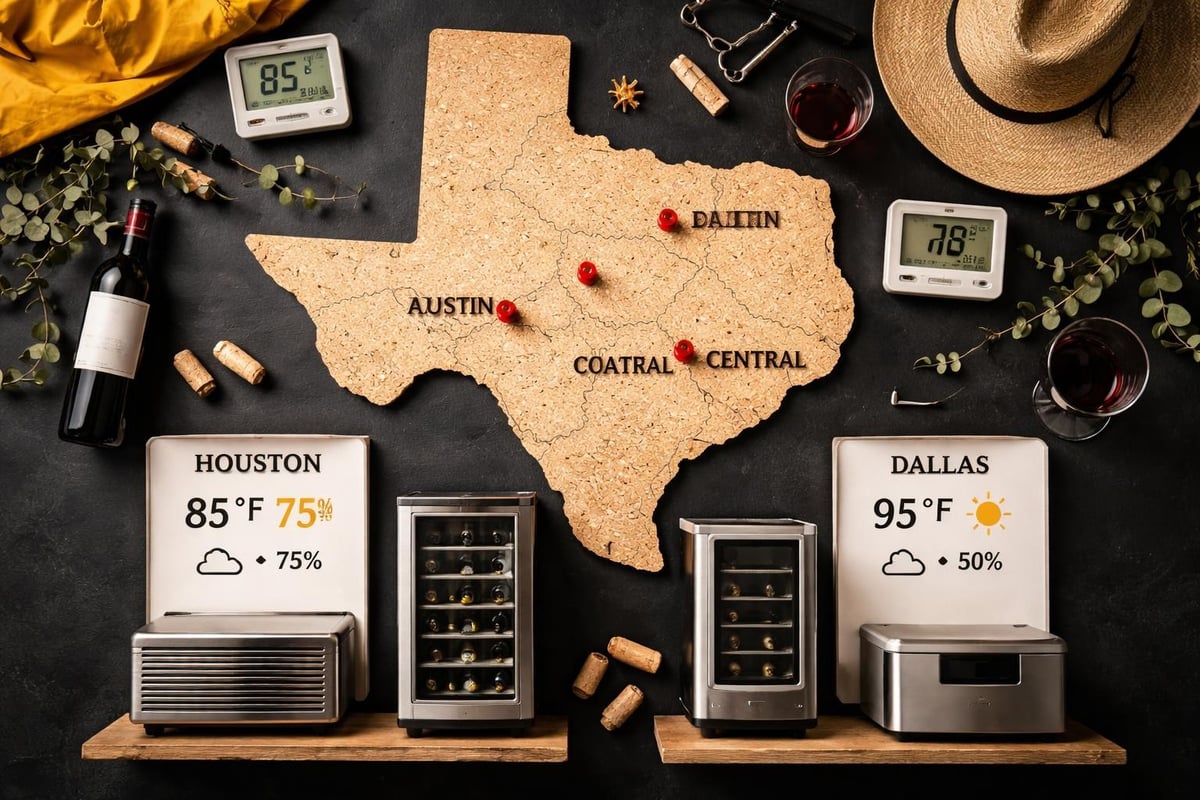
The heat load calculation determines the precise BTU capacity your cooling unit requires. This assessment considers room dimensions, insulation quality, glass exposure, ambient temperature, and bottle capacity. A miscalculated system either runs continuously (wasting energy and shortening equipment life) or fails to maintain proper conditions.
Regional Considerations Across Texas
Different metropolitan areas require tailored approaches. Custom wine cellars in Houston demand robust dehumidification due to coastal moisture, while Dallas wine cellars need systems that handle dramatic seasonal shifts.
Austin-area installations benefit from our local expertise at Prestige Wine Cellars, where we've spent years perfecting solutions for Hill Country estates and urban wine rooms alike. Each region presents specific installation challenges that experienced professionals navigate efficiently.
Types of Wine Cellar Cooling Systems for Texas Installations
Selecting the right equipment type fundamentally shapes your installation process, budget, and long-term satisfaction. The types of wine cellar cooling systems available today offer distinct advantages depending on your space configuration and aesthetic preferences.
Self-Contained (Through-Wall) Units
These compact systems install directly through an exterior cellar wall, exhausting heat into an adjacent space. They're the most straightforward option for wine cellar cooling system installation Texas contractors recommend for smaller collections.
Advantages | Disadvantages |
|---|---|
Lower installation cost | Visible unit on cellar wall |
Simpler installation process | Requires adjacent exhaust space |
Accessible for maintenance | Limited capacity (up to 2,000 bottles typically) |
Faster project timeline | Can produce noise and vibration |
Self-contained units work beautifully for compact urban wine cellars where space efficiency matters. However, they require an adjacent room, closet, or garage for heat dissipation-something that isn't always available in finished homes.
Split Systems (Ducted and Ductless)
Split systems separate the evaporator (inside the cellar) from the condenser (remotely located), offering superior aesthetics and performance. This approach dominates high-end wine cellar cooling system installation Texas luxury homeowners prefer.
Ducted split systems hide all components, with only discreet vents visible inside your cellar. The evaporator mounts in an attic, mechanical room, or closet, connected to the condenser outside via refrigerant lines.
Ductless split systems feature a wall-mounted or recessed evaporator inside the cellar, offering easier installation than ducted versions while maintaining the quiet operation and remote condenser placement.
Split systems provide:
Whisper-quiet operation inside the cellar
Greater capacity for large collections
Complete design flexibility
Professional appearance suitable for entertaining spaces
Ability to place condenser 50+ feet from cellar
The installation methods for wine cellar cooling units vary significantly between self-contained and split configurations, affecting both timeline and complexity.
Specialized Systems for Unique Applications
Whole-room cooling systems integrate with your home's HVAC, though they rarely achieve the precision wine requires. Wine cabinet coolers serve individual storage pieces rather than entire rooms. Custom engineered solutions address unusual architectural challenges or extreme collection sizes.
For glass-enclosed showpiece wine cellars that serve as dramatic focal points, we often specify oversized split systems that compensate for the additional thermal load glass creates.
Pre-Installation Requirements and Preparation
Proper preparation separates successful installations from problematic ones. Before any wine cellar cooling system installation Texas projects begin, several critical elements must be in place.
Insulation and Vapor Barrier Standards
Your cellar envelope must meet commercial refrigeration standards, not just residential insulation codes. This means:
R-19 minimum in walls (R-30 preferred in Texas)
R-30 minimum in ceilings (R-38 preferred)
Continuous vapor barrier on the warm side of insulation
Sealed penetrations for electrical, plumbing, and HVAC
Insulated, weather-stripped door with proper threshold seal
Without exceptional insulation, your cooling system battles constant heat infiltration, running continuously and failing prematurely. The investment in proper insulation typically costs less than upgrading to a larger cooling unit while delivering better long-term results.
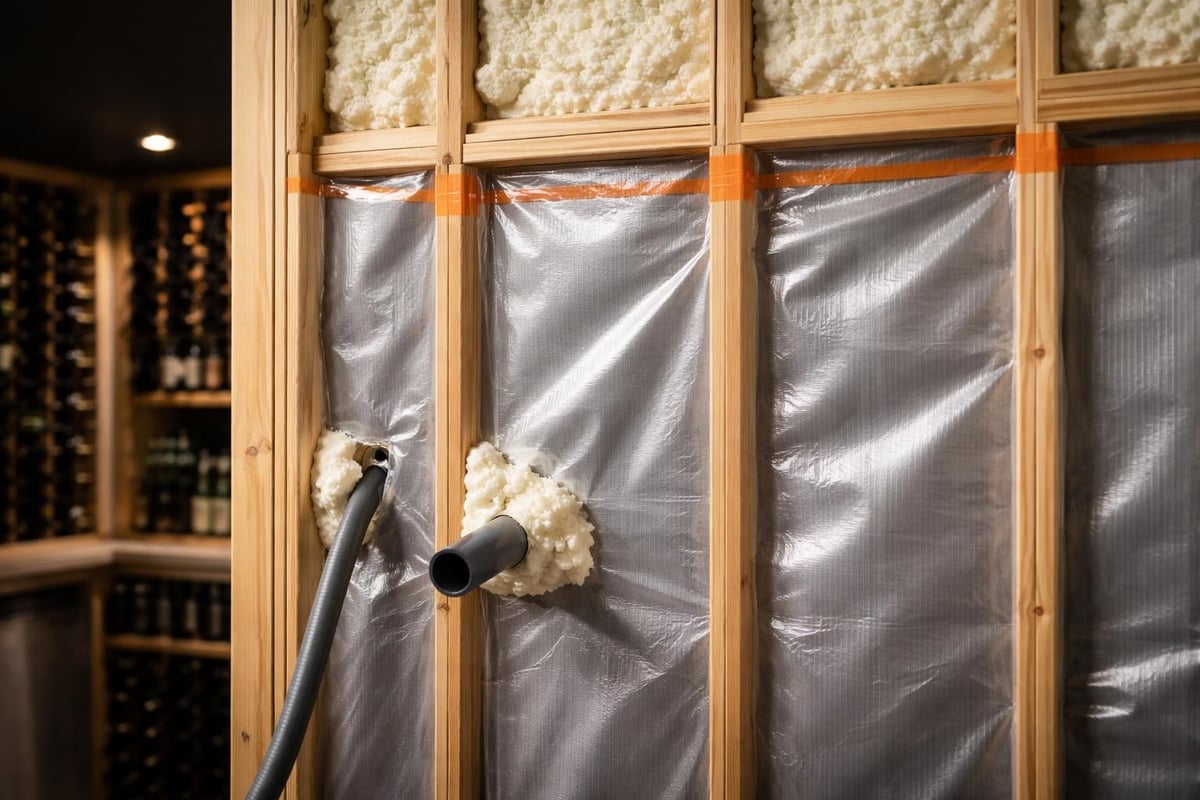
The climate control considerations for wine cellars we've documented over hundreds of projects emphasize that insulation quality directly determines cooling system efficiency and longevity.
Electrical and Mechanical Infrastructure
Cooling systems require dedicated electrical circuits, proper voltage supply, and sometimes specialized wiring. A typical residential wine cellar cooling system installation Texas electricians handle requires:
Dedicated 120V or 240V circuit (depending on unit size)
Disconnect switch within sight of equipment
Proper amperage based on unit specifications
GFCI protection where required by code
Control wiring between components for split systems
Larger systems may need three-phase power or specialized electrical panels. Planning these requirements during the design phase prevents costly modifications later.
Exhaust Space and Condensate Drainage
Self-contained units need adequate exhaust space-typically a minimum of 750 cubic feet with proper ventilation. The room receiving expelled heat must handle the thermal load without becoming uncomfortably warm.
Split systems require:
Exterior condenser pad with adequate clearances
Refrigerant line routing through walls or attic
Condensate drainage to appropriate disposal point
Electrical service at condenser location
Every cooling unit produces condensate as it dehumidifies. This water requires proper drainage to a floor drain, condensate pump, or exterior location. Neglecting drainage planning creates water damage and maintenance headaches.
The Installation Process: What to Expect
Professional wine cellar cooling system installation Texas experts follow systematic processes that ensure optimal performance and reliability. Understanding these steps helps you prepare appropriately and evaluate potential contractors.
Initial Assessment and System Sizing
The process begins with thorough space evaluation. Experienced installers measure your cellar precisely, assess insulation quality, evaluate glass exposure, and calculate heat load using industry-standard formulas.
Undersized systems never achieve proper temperature or humidity. Oversized systems short-cycle, failing to remove adequate moisture and wearing out components prematurely. The wine cooling installation FAQ addresses common sizing concerns that impact installation success.
Equipment Selection and Engineering
Based on heat load calculations and aesthetic requirements, we specify appropriate equipment. This selection considers:
BTU capacity with appropriate buffer
Brand reliability and service availability
Noise levels and vibration characteristics
Energy efficiency ratings
Integration with cellar design
Budget parameters
For traditional wine cellars featuring rich woodwork, we often recommend fully ducted systems that preserve classic aesthetics. Modern wine cellars might showcase sleek ductless units as intentional design elements.
Installation Timeline and Sequence
Professional installations follow a logical sequence coordinated with overall cellar construction:
Week 1-2: Preparation Phase
Verify insulation and vapor barrier completion
Confirm electrical infrastructure
Prepare equipment locations
Order long-lead items if necessary
Week 2-3: Mechanical Installation
Mount evaporator unit or air handler
Install condenser unit
Run refrigerant lines and electrical
Install controls and sensors
Create ductwork if applicable
Week 3-4: Commissioning and Testing
Evacuate and charge refrigerant system
Test all electrical connections
Verify temperature and humidity readings
Program controls
Conduct 72-hour burn-in test
Train owner on operation
The actual hands-on installation for a typical wine cellar cooling system installation Texas projects require takes 2-5 days depending on system complexity. However, proper coordination with other trades extends the overall timeline.
Installation Best Practices and Common Pitfalls
Years of experience reveal patterns that separate exceptional installations from adequate ones. Attention to specific details during your wine cellar cooling system installation Texas projects prevents future problems.
Critical Success Factors
Proper refrigerant line installation makes the difference between efficient operation and chronic problems. Lines must be:
Correctly sized for distance and capacity
Properly insulated to prevent condensation
Protected from physical damage
Pitched appropriately for oil return
Brazed (not soldered) at all connections
Evacuated to remove moisture and air before charging
Airflow optimization ensures even temperature distribution throughout your cellar. This requires strategic placement of supply and return vents, adequate circulation volume, and elimination of dead spots where warm air accumulates.
Control calibration sets the foundation for long-term performance. Digital controllers should be calibrated against precision thermometers, humidity sensors verified, and setpoints programmed for optimal wine storage conditions rather than generic refrigeration targets.
Common Installation Mistakes to Avoid
Even experienced contractors sometimes make errors that compromise system performance:
Mistake | Consequence | Solution |
|---|---|---|
Inadequate exhaust ventilation | Overheating and failure | Calculate and provide proper cubic footage |
Skipping vapor barrier | Moisture infiltration, ice buildup | Install continuous barrier on warm side |
Improper refrigerant charge | Poor cooling, high energy use | Weigh charge precisely per specifications |
Undersized electrical circuit | Breaker trips, voltage drop | Install dedicated, properly sized circuit |
Poor condensate drainage | Water damage, system shutdown | Plan reliable gravity or pumped drainage |
The comprehensive wine cellar cooling unit installation guide from industry experts reinforces these critical considerations that impact every installation.
Working with Professional Installers
While some enthusiasts explore DIY wine cellar cooling installation, the complexity of refrigeration systems, electrical requirements, and potential for costly mistakes typically favor professional installation. Licensed HVAC contractors bring expertise, specialized tools, and warranty protection that justify their fees.
When evaluating contractors for wine cellar cooling system installation Texas homeowners should verify:
Valid HVAC and refrigeration licenses
Specific wine cellar experience
References from similar projects
Manufacturer certifications for equipment they install
Insurance coverage for property damage
Written warranties on labor and materials
Maintenance and Long-Term Performance
Installation marks the beginning, not the end, of your relationship with your cooling system. Proper maintenance extends equipment life, prevents failures, and protects your wine investment.
Routine Maintenance Schedule
Establishing a regular maintenance rhythm prevents most cooling system problems:
Monthly tasks:
Inspect condensate drain for clogs
Check temperature and humidity readings
Listen for unusual sounds or vibrations
Verify door seals remain tight
Quarterly tasks:
Clean condenser coils (exterior unit)
Replace or clean air filters
Inspect refrigerant lines for frost or damage
Test backup temperature alarms if installed
Annual professional service:
Complete system inspection
Refrigerant pressure verification
Electrical connection tightening
Motor and fan bearing lubrication
Control calibration check
Evaporator coil cleaning
The wine cellar maintenance services we provide include comprehensive system checks that catch small issues before they become expensive failures.
Troubleshooting Common Issues
Understanding typical problems helps you respond appropriately when issues arise:
System runs constantly but temperature rises: Usually indicates insufficient capacity, refrigerant loss, or insulation failure. Check for obvious insulation gaps first, then contact a professional for refrigerant and capacity assessment.
Excessive humidity despite cooling: Suggests oversized unit that short-cycles, inadequate dehumidification capacity, or air infiltration. Verify door seals and vapor barrier integrity.
Temperature fluctuations: Points to thermostat calibration issues, poor air circulation, or cycling problems. Recalibrate controls and verify airflow patterns.
Ice buildup on evaporator: Indicates restricted airflow, low refrigerant, or drainage problems. Clear any obstructions and ensure condensate drains freely.
Professional wine cellar cooling system installation Texas technicians diagnose complex issues using specialized gauges, leak detectors, and system knowledge that homeowners typically lack.
System Longevity and Replacement Planning
Quality cooling systems properly maintained deliver 15-20 years of reliable service in residential applications. Commercial installations with heavier use cycles might see 10-15 years.
Planning for eventual replacement means:
Keeping installation documentation and equipment specifications
Noting first installation date for age tracking
Budgeting for replacement in years 12-15
Monitoring repair frequency (multiple repairs yearly signals replacement need)
Watching for obsolete refrigerants that increase service costs
Technology improvements mean replacement units typically offer better efficiency, quieter operation, and improved controls compared to systems installed a decade earlier.
Cost Considerations and Budget Planning
Understanding the investment required for wine cellar cooling system installation Texas collectors undertake helps establish realistic budgets and make informed decisions.
Equipment and Installation Cost Ranges
Pricing varies significantly based on system type, capacity, and installation complexity:
Self-contained units: $2,000-$5,000 equipment plus $500-$1,500 installation for straightforward applications. These suit smaller cellars (up to 1,500 bottles) with adjacent exhaust space.
Split systems: $5,500-$15,000 equipment plus $2,000-$8,500 installation depending on distance between components, ductwork requirements, and architectural challenges. Large capacity systems for extensive collections can exceed $25,000 total.
Custom engineered systems: $10,000-$30,000+ for unique applications requiring specialized engineering, multiple zones, or integration with building automation systems.
These ranges reflect quality equipment from reputable manufacturers. Bargain systems often fail within 3-5 years, ultimately costing more through replacement and potential wine damage.
Hidden Costs and Additional Expenses
Beyond equipment and basic installation, budget for:
Electrical upgrades: $500-$2,500 for dedicated circuits, panel upgrades, or service increases
Structural modifications: $300-$3,000 for wall penetrations, condensate drainage routing, or ventilation improvements
Insulation improvements: $1,000-$5,000 if existing insulation proves inadequate during pre-installation assessment
Backup systems: $1,500-$4,000 for redundant cooling or temperature monitoring systems
Extended warranties: $1,000-$3,500 for coverage beyond standard manufacturer warranties
The most comprehensive turnkey wine cellar design and build services we provide incorporate all these elements into coordinated project budgets that prevent surprise expenses.
Return on Investment Perspective
While wine cellar cooling represents significant investment, consider it against your collection's value. A modest 300-bottle cellar at $50 average bottle value holds $15,000 in wine. Serious collectors easily accumulate $50,000-$500,000+ in bottles.
Proper climate control protects this investment from:
Heat damage that ruins wine permanently
Cork deterioration from improper humidity
Premature oxidation destroying aging potential
Label damage reducing resale value
Investment loss from spoiled rare vintages
In this context, a $6,000-$12,000 cooling system installation provides insurance for assets worth many times more. The peace of mind knowing your collection remains perfectly preserved justifies the expense for serious collectors.
Successful wine cellar cooling system installation Texas requires careful planning, quality equipment selection, professional installation, and ongoing maintenance commitment. From understanding regional climate challenges to choosing between system types, sizing equipment accurately, and maintaining peak performance, each decision impacts your collection's long-term preservation. Whether you're building a rustic estate wine cellar in the Hill Country or a sleek glass wine wall in downtown Houston, Prestige Wine Cellars brings decades of combined experience designing, engineering, and installing climate control solutions that protect your investment while creating stunning spaces you'll enjoy for years to come.
Your Dream Wine Cellar Starts Here
Let our design team craft a cellar that matches your taste, space, and your collection — built for beauty, function, and prestige.

Email us at
Serving Austin, Dallas–Fort Worth, Houston & San Antonio