
Westlake Hills Wine Cellar Installation Guide 2026
Expert guide to westlake hills wine cellar installation. Discover design considerations, climate control, materials, and custom solutions.
Westlake Hills stands as one of Austin's most prestigious communities, where sprawling estates and architectural masterpieces dot the rolling Texas landscape. For discerning collectors in this exclusive enclave, a Westlake hills wine cellar installation represents far more than storage-it's an investment in preserving priceless bottles while creating a stunning focal point that elevates the entire home. The unique climate challenges of Central Texas, combined with the sophisticated design expectations of Westlake Hills homeowners, require expertise that blends engineering precision with artistic vision. Whether you're planning a climate-controlled wine room beneath your estate or a dramatic glass-enclosed showcase, understanding the nuances of professional installation ensures your collection receives the protection it deserves.
Understanding the Westlake Hills Environment
The Texas Hill Country presents distinctive challenges that make professional guidance essential for any Westlake hills wine cellar installation. Summer temperatures regularly soar above 100 degrees, while humidity levels fluctuate dramatically throughout the year. These conditions demand robust climate control systems specifically engineered for the region.
Key environmental factors include:
Extreme temperature swings between seasons
High ambient humidity during spring and summer months
Limestone-rich soil affecting foundation considerations
Seismic stability requiring specialized structural assessment
Unlike coastal or northern climates where basement installations offer natural insulation, Westlake Hills properties often require creative spatial solutions. Many estates incorporate wine cellars into ground-level rooms, under staircases, or as freestanding climate-controlled pavilions that maximize both function and visual impact.
Site Selection and Structural Assessment
The first critical decision in any Westlake hills wine cellar installation involves choosing the optimal location within your home. Proper site selection influences everything from construction costs to long-term energy efficiency. Interior rooms away from exterior walls naturally maintain more stable temperatures, reducing the workload on your cooling system.
For Westlake Hills properties, several location options merit consideration:
Converted interior rooms on ground level or below grade
Under-staircase installations maximizing underutilized space
Climate-controlled wine walls serving as architectural dividers
Dedicated wine pavilions as standalone structures
Renovated garage spaces offering expansion flexibility
Each option carries distinct advantages depending on your collection size, budget, and aesthetic preferences. A structural engineer should evaluate load-bearing capacity, especially for multi-story installations where bottle weight becomes significant. Texas limestone foundations often provide excellent stability, though waterproofing remains essential even for above-grade installations due to occasional heavy rainfall.
Design Considerations for Hill Country Elegance
Westlake Hills homeowners expect cellars that reflect both personal style and the region's sophisticated aesthetic. The design phase of your westlake hills wine cellar installation should harmonize with your home's existing architecture while incorporating elements that showcase your collection.
Architectural Styles and Material Choices
Design Style | Signature Materials | Best Suited For | Typical Capacity |
|---|---|---|---|
Traditional | Mahogany, redwood, wrought iron | Classic estates, formal homes | 1,500-3,000 bottles |
Modern | Metal, glass, acrylic, LED lighting | Contemporary properties | 500-2,000 bottles |
Transitional | Mixed wood tones, frameless glass | Versatile spaces | 1,000-2,500 bottles |
Rustic | Reclaimed wood, stone accents, timber beams | Hill Country ranches | 2,000-5,000 bottles |
The selection of wine cellar materials dramatically influences both aesthetics and performance. Redwood and mahogany offer natural rot resistance and timeless beauty, while powder-coated metal racking provides sleek, contemporary lines with exceptional durability.
Glass enclosures have become increasingly popular in Westlake Hills installations, transforming wine storage into living art. Frameless glass wine walls create dramatic visual separation between living spaces while maintaining sight lines and architectural flow. When properly designed with dual-pane, thermally broken glass systems, these showcases maintain precise climate control while adding museum-quality presentation.
Capacity Planning and Bottle Storage Systems
Accurate capacity planning prevents the frustration of outgrowing your cellar within a few years. Most serious collectors find their holdings expand significantly once proper storage becomes available. A thoughtful westlake hills wine cellar installation anticipates future growth while accommodating current needs.
Consider these storage configurations:
Individual bottle racking for collections emphasizing variety
Case storage bins for investment-grade wines purchased by the case
Display rows featuring label-forward presentation for prized bottles
Magnum and large-format storage with appropriately sized openings
Tabletop and tasting areas for enjoying your collection in situ
Working with experienced custom wine cellar designers ensures your layout maximizes every square foot while maintaining easy access to frequently enjoyed bottles. Diamond bins, waterfall edges, and curved corners add visual interest while optimizing storage density.
Climate Control: The Heart of Preservation
No aspect of a westlake hills wine cellar installation matters more than proper climate control. Wine demands consistent temperatures between 55-58°F and humidity levels around 60-70% to age gracefully. Even minor fluctuations accelerate chemical reactions that degrade complex flavor compounds.
Cooling System Selection and Sizing
Undersized cooling units run constantly, wear out prematurely, and struggle during Texas summers. Oversized systems short-cycle, creating temperature swings and humidity issues. Precision sizing requires calculating your cellar's heat load based on multiple factors.
Critical heat load variables include:
Total interior square footage and ceiling height
Insulation R-values for walls, ceiling, and flooring
Glass surface area and thermal properties
Ambient temperature in adjacent spaces
Desired interior temperature differential
Lighting heat generation
Traffic patterns and door openings
Professional installers use specialized software to model these variables accurately. The heat load calculator accounts for Westlake Hills' specific climate data, ensuring your system handles peak summer conditions without strain.
Insulation and Vapor Barrier Integration
Even the finest cooling system fails without proper insulation and vapor barriers. Texas humidity drives moisture toward cooler surfaces, and without protection, condensation damages walls, promotes mold growth, and compromises structural integrity.
Professional installations incorporate:
Closed-cell spray foam insulation (R-19 minimum for walls, R-30+ for ceilings)
Six-mil polyethylene vapor barriers on the warm side of insulation
Sealed penetrations for electrical, HVAC, and plumbing
Properly rated doors with magnetic weather stripping
Threshold seals preventing air infiltration at floor level
The comprehensive approach to wine cellar construction recognizes these elements work together as a system. Skimping on insulation to save a few hundred dollars often costs thousands in additional cooling capacity and energy bills over time.
Installation Process and Timeline
Understanding the installation timeline helps homeowners plan appropriately and set realistic expectations. A typical westlake hills wine cellar installation unfolds across several distinct phases, each requiring specialized expertise.
Phase-by-Phase Construction
Phase | Duration | Key Activities | Considerations |
|---|---|---|---|
Design & Planning | 1-2 weeks | Measurements, renderings, material selection | Most revisions happen here |
Permits & Approvals | 1-3 weeks | Building permits, HOA approval if applicable | Varies by jurisdiction |
Demolition & Prep | 1-3 days | Removing existing finishes, framing adjustments | Dust control essential |
Mechanical Rough-In | 3-5 days | Electrical, HVAC, insulation, vapor barrier | Critical for performance |
Racking Installation | 1-2 weeks | Custom millwork, hardware, finishing | Longest visible phase |
Cooling & Testing | 2-3 days | System installation, commissioning, calibration | Fine-tuning required |
A complete turnkey wine cellar installation typically requires six to ten weeks from contract signing to final walk-through. Complex projects featuring extensive millwork, glass wine walls, or integrated tasting rooms may extend to twelve weeks or more.
Working with Westlake Hills Building Requirements
Westlake Hills maintains specific building codes and permitting processes designed to preserve the community's character. Professional installers familiar with local requirements navigate approvals efficiently, avoiding delays and costly corrections.
Most wine cellar projects require electrical permits for dedicated circuits and cooling system connections. Structural modifications involving load-bearing walls need engineering approval. If your property falls within a homeowners association, architectural review committee approval may be necessary before construction begins.
Experienced teams handle these administrative details seamlessly, allowing you to focus on exciting design decisions rather than bureaucratic processes. Their established relationships with local inspectors often expedite approvals and ensure compliance with current codes.
Showcase Lighting and Display Elements
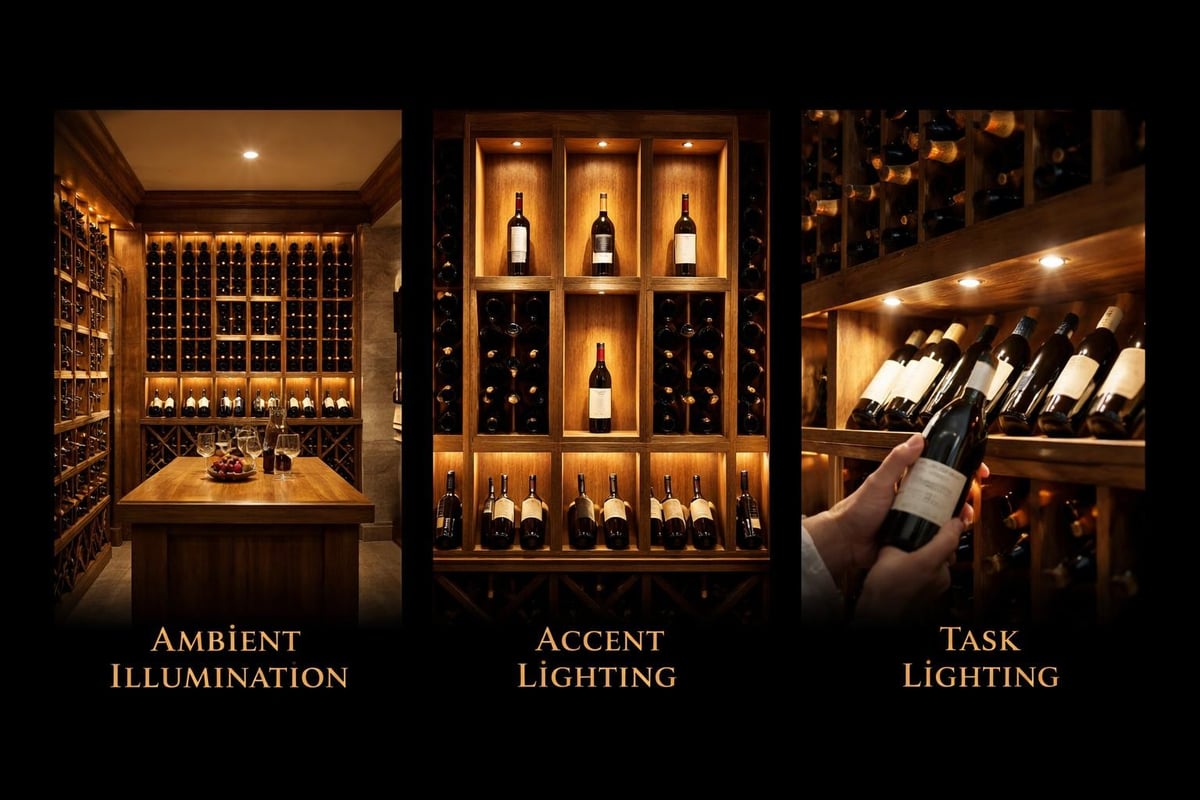
Strategic lighting transforms a functional storage space into a captivating showcase worthy of Westlake Hills' architectural standards. A thoughtful westlake hills wine cellar installation balances ambient, accent, and task lighting to highlight your collection while minimizing heat generation.
LED technology has revolutionized wine cellar illumination by providing brilliant, color-accurate light with minimal thermal output. Unlike incandescent or halogen bulbs that add significant heat load, quality LED fixtures operate cool enough to integrate directly into racking systems.
Consider these lighting approaches:
Soffit lighting washing across bottle labels from above
Toe-kick illumination creating floating racking effects
Display niche backlighting highlighting featured bottles
Glass wine wall edge lighting for dramatic evening presentation
Dimmable controls adjusting ambiance for different occasions
Lighting design should account for both occupied and unoccupied states. Motion sensors can illuminate the space when you enter while keeping lights off most of the time, reducing unnecessary heat and extending LED lifespan well beyond twenty years.
Investment Considerations and Value Addition
Determining whether you need a wine cellar involves evaluating both tangible and intangible benefits. For Westlake Hills homeowners, the equation often tilts favorably given the community's luxury market positioning and resident demographics.
Cost Breakdown and Budget Planning
Professional westlake hills wine cellar installation costs vary widely based on size, finishes, and complexity. Understanding typical investment ranges helps establish realistic budgets aligned with your vision.
Entry-level installations (150-500 bottles): $40,000-$100,000
Mid-range projects (500-1,500 bottles): $100,000-$175,000
Luxury showcases (1,500-3,000 bottles): $175,000-$250,000
Estate-level masterpieces (3,000+ bottles): $250,000-$750,000+
These ranges encompass design, materials, climate control, installation labor, and finishing. Glass wine walls, exotic woods, and custom millwork command premium pricing but deliver unmatched visual impact. Many Westlake Hills homeowners find the investment worthwhile given their property values and entertaining lifestyles.
Return on Investment and Market Appeal
Luxury wine cellars enhance property appeal among qualified buyers, though direct ROI calculations prove elusive. Unlike kitchen or bathroom remodels with more predictable returns, wine cellars appeal to a specific buyer subset, one that overlaps substantially with Westlake Hills' target demographic.
Real estate professionals report that distinctive amenities help properties stand out in competitive luxury markets. In today's market, it is estimated that 1 out of every 3 custom home's in Texas now has a wine cellar. In fact, Zillows recent study of 4 million homes sold in 2025, showed that listings with the term "wine cellar" sold for 35% more than anticipated!
A professionally designed cellar signals attention to detail and sophisticated taste, attributes that resonate with discerning buyers. When designed to complement the home's overall aesthetic, cellars contribute to the property's unique story and perceived value.
For collectors, the true value lies in proper wine preservation and daily enjoyment. A $50,000 cellar protecting a $100,000 collection provides obvious practical benefits beyond resale considerations. The ability to age wines optimally, organize extensive holdings, and share treasured bottles in an elegant setting justifies the investment regardless of market trends.
Maintenance and Long-Term Performance
Proper maintenance extends your cellar's lifespan and ensures consistent performance for decades. A well-executed westlake hills wine cellar installation requires surprisingly little ongoing attention when initially built to exacting standards.
Annual Service and Monitoring
Cooling system maintenance follows a straightforward schedule:
Clean or replace filters every 3-6 months
Inspect condensate drains quarterly
Professional service call annually
Refrigerant pressure check during service visit
Compressor and fan motor inspection
Many homeowners opt for wine cellar maintenance contracts providing scheduled service, priority response, and peace of mind. These agreements typically cost $300-$600 annually and prevent minor issues from escalating into expensive repairs.
Digital monitoring systems add another layer of protection by alerting you immediately to temperature or humidity fluctuations. Cellular-connected sensors provide real-time data accessible from anywhere, enabling quick response if systems malfunction during travel or extended absences.
Wood Care and Finish Preservation
Quality wood racking develops character over time, though occasional attention maintains its beauty. Most finishes require only periodic dusting with microfiber cloths and very occasional treatment with appropriate wood conditioners.
Avoid these common maintenance mistakes:
Never use harsh cleaners or polishes containing silicone
Don't introduce excessive moisture during cleaning
Resist the urge to refinish surfaces unnecessarily
Keep the cellar door closed except during bottle access
Address any cooling system issues immediately
Natural woods like redwood and mahogany actually benefit from the stable humidity maintained in properly functioning cellars. The environment that preserves your wines simultaneously protects the cabinetry housing them.
Integration with Smart Home Systems
Modern westlake hills wine cellar installation increasingly incorporates smart home integration, allowing seamless control alongside lighting, security, and HVAC systems. Advanced homeowners appreciate managing all environmental systems through unified interfaces.
Smart cellar features include:
Remote temperature and humidity monitoring
Automatic alerts for out-of-range conditions
Lighting control and scheduling
Access logging and security integration
Inventory management through dedicated software
Several specialized wine cellar management applications track your collection, record tasting notes, suggest optimal drinking windows, and maintain purchase documentation for insurance purposes. When integrated with your cellar's environmental monitoring, these platforms provide comprehensive oversight of both your wines and their storage environment.
Voice control through popular smart home ecosystems enables hands-free lighting adjustments and temperature checks. Imagine asking your home assistant for current cellar conditions while preparing for a dinner party or reviewing which bottles have reached peak maturity based on automated inventory tracking.
A successful westlake hills wine cellar installation delivers decades of preservation, enjoyment, and architectural distinction when executed with professional expertise and attention to detail. From navigating Texas climate challenges to selecting materials that complement your home's aesthetic, every decision contributes to creating a space that honors both your collection and your investment. Prestige Wine Cellars brings over a decade of experience crafting bespoke wine storage solutions throughout the Austin area, combining engineering precision with artistic vision to transform your wine storage dreams into reality. Whether you're envisioning an intimate wine room or a grand showcase cellar, their comprehensive approach ensures every detail exceeds your expectations.
Your Dream Wine Cellar Starts Here
Let our design team craft a cellar that matches your taste, space, and your collection — built for beauty, function, and prestige.

Email us at
Visit our office