
Wine Cellar and Bar: Luxury Design for Home & Hospitality
Discover expert insights on integrating a wine cellar and bar into your luxury space. Design tips, material choices, and climate control essentials.
The marriage of a wine cellar and bar represents the ultimate expression of refined entertaining and serious collecting. Whether you're designing a private estate, boutique hotel, or upscale steakhouse, this integrated approach transforms how you store, display, and enjoy your collection. More than simply adjacent spaces, a thoughtfully designed wine cellar and bar creates a destination within your property, where climate-controlled preservation meets the art of hospitality. The question isn't whether to combine these elements, but how to do so in a way that honors both your investment in fine wines and your commitment to memorable guest experiences.
Planning Your Integrated Wine Cellar and Bar
Creating a successful wine cellar and bar begins with understanding how these two spaces serve different yet complementary functions. Your cellar maintains the precise environmental conditions that protect your investment, while your bar provides the social setting where those bottles come to life.
Location is everything. Basement locations naturally offer cooler temperatures and minimal light exposure, making them ideal for extensive collections. However, modern climate control technology now allows for wine cellar placement throughout your home, opening possibilities for dramatic glass-enclosed designs that become architectural focal points.
Key considerations for integrated planning include:
Traffic flow patterns between storage and service areas
Accessibility for both daily enjoyment and long-term aging
Visual connection that allows guests to admire the collection
Climate zones that separate temperature-sensitive storage from ambient entertaining space
Service logistics including ice makers, refrigeration, and glassware storage
The most successful projects we see incorporate custom wine cellar design from the earliest planning stages. This ensures that structural requirements, electrical needs, and spatial relationships work together seamlessly rather than competing for resources or compromising performance.
Establishing Climate Boundaries
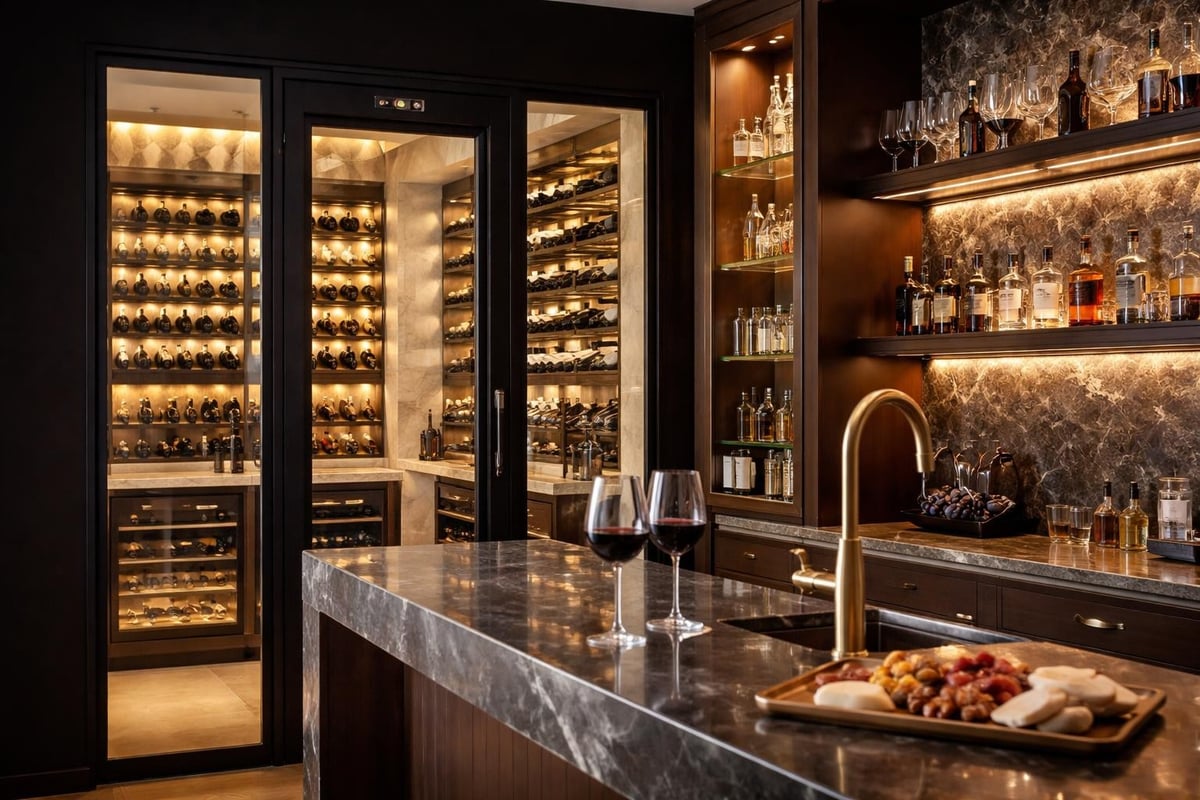
The technical heart of any wine cellar and bar lies in managing temperature differentials. Your cellar needs consistent conditions between 55-58°F with 60-70% humidity. Your bar operates at comfortable ambient temperatures, typically 68-72°F.
This thermal boundary requires careful engineering. Proper insulation and vapor barriers become non-negotiable, particularly where the two spaces meet. Wine cellar construction techniques emphasize that even small gaps in the thermal envelope compromise both energy efficiency and wine preservation.
Design Styles That Elevate Both Spaces
Your aesthetic choices should create visual harmony while respecting the distinct purposes of each area. The wine cellar and bar combination offers exceptional opportunities for dramatic design statements.
Traditional Elegance
Traditional wine cellars featuring rich mahogany or walnut racking pair beautifully with classic bar designs. Think substantial wood countertops, brass fixtures, and leather seating. This approach creates timeless sophistication that appeals to collectors who appreciate Old World aesthetics.
The key is consistency in material selection. When your cellar features hand-crafted wood racking, extend that same craftsmanship into your bar cabinetry. Matching wood species and finish techniques creates continuity that reads as intentional luxury rather than afterthought coordination.
Modern Minimalism
Glass-enclosed cellars represent the modern approach to the wine cellar and bar concept. Floor-to-ceiling glass walls transform your collection into living art, visible from the bar and surrounding spaces. Modern wine cellar designs often incorporate LED lighting, metal accents, and clean lines that align perfectly with contemporary bar aesthetics.
Design Element | Traditional Approach | Modern Approach |
|---|---|---|
Racking Material | Solid wood with ornate details | Metal and acrylic with minimal profiles |
Lighting | Warm ambient with vintage fixtures | LED strips and programmable systems |
Doors | Solid wood with iron hardware | Frameless glass with hidden mechanisms |
Bar Countertop | Granite or marble with edge detail | Waterfall quartz or concrete |
Color Palette | Deep woods, burgundy, forest green | Charcoal, white, metallic accents |
Transitional Flexibility
Transitional wine cellars offer the middle path, blending traditional warmth with contemporary clean lines. This style works exceptionally well for wine cellar and bar combinations because it allows you to honor classic entertaining traditions while embracing modern convenience and technology.
Functional Bar Design Within Wine Environments
The bar component of your wine cellar and bar deserves the same attention to detail as the storage area. Home bar ideas span everything from compact wine stations to full-service entertainment venues, but integration with serious wine storage adds specific requirements.
Essential bar elements for wine-focused entertaining:
Dual-zone wine refrigeration for serving reds and whites at proper temperatures
Stemware storage that protects delicate glasses while keeping them accessible
Decanting station with adequate counter space and lighting
Small refrigerator for mixers, garnishes, and champagne
Ice maker sized appropriately for your entertaining volume
Sink with adequate depth for rinsing decanters and barware
Your bar becomes the transition zone between preservation and presentation. While your main cellar maintains perfect aging conditions, the bar area provides the tools and environment for enjoying those bottles at their peak.
Counter Space and Work Zones
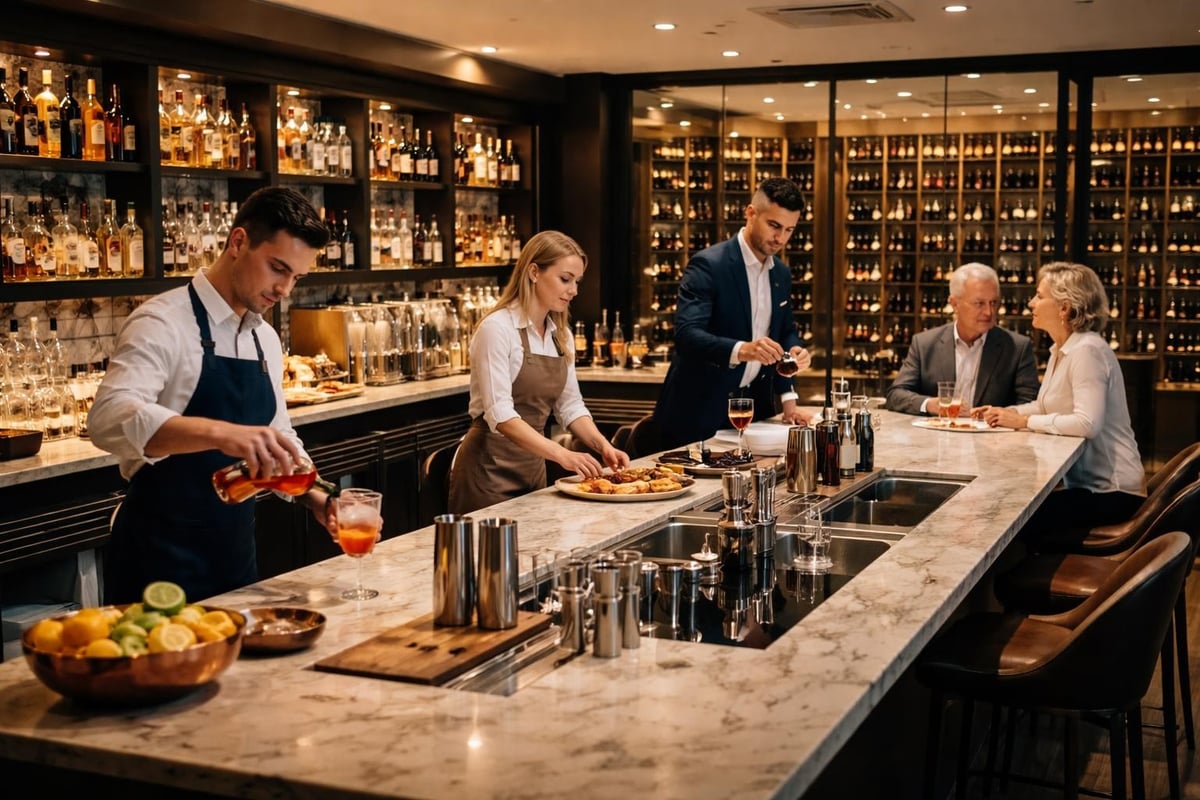
Professional bartenders think in terms of zones: preparation, service, and cleanup. Your wine cellar and bar should accommodate these same considerations, even in residential applications.
Allocate at least 24 inches of counter depth for comfortable working space. If you're incorporating seating at the bar, extend the counter to 30 inches on the guest side. This creates a natural boundary between service and social areas while providing elbow room for everyone.
Lighting Strategies
Lighting serves different masters in a wine cellar versus a bar. Your cellar requires minimal illumination to protect wines from light damage, typically using LED systems that produce no heat. Your bar needs ambient, task, and accent lighting to create atmosphere and functional visibility.
The solution lies in layered, controllable systems. Under-cabinet LEDs illuminate bar work surfaces. Recessed spots highlight architectural features or displayed bottles. Dimmable ambient fixtures set the overall mood. Each system operates independently, allowing you to adjust as activities shift from afternoon tastings to evening cocktails.
Consider how celebrity home bars like Kaley Cuoco's design use lighting to create drama while maintaining functionality. The principle applies equally whether you're designing for a private residence or a boutique hotel.
Material Selection for Durability and Beauty
The materials you choose for your wine cellar and bar must withstand both climate-controlled environments and the wear of active entertaining. Wine cellar materials require resistance to humidity and temperature fluctuations while maintaining their beauty over decades.
Racking and Storage Systems
Wood remains the gold standard for wine racking, combining aesthetic warmth with functional performance. Redwood and mahogany naturally resist moisture damage while accepting stains beautifully. Metal racking in powder-coated finishes offers contemporary aesthetics with excellent durability.
Your racking system should accommodate various bottle sizes and formats. Standard Bordeaux bottles represent the baseline, but plan for magnums, champagne bottles, and irregular formats. Individual bottle storage provides maximum flexibility, while case storage offers efficiency for restaurants and hotels with high turnover.
Bar Surfaces
Countertops in the bar area face different challenges than cellar components. They must resist staining from wine, spirits, and citrus while maintaining their finish despite frequent cleaning. Quartzite and engineered quartz deliver both durability and luxury appearance. Natural stone like granite or marble offers timeless beauty but requires more maintenance.
Comparison of popular bar countertop materials:
Material | Durability | Maintenance | Aesthetic | Price Point |
|---|---|---|---|---|
Engineered Quartz | Excellent | Low | Contemporary | $$$ |
Quartzite | Excellent | Medium | Luxurious | $$$$ |
Granite | Very Good | Medium | Classic | $$ |
Marble | Good | High | Elegant | $$$ |
Butcher Block | Fair | High | Warm | $$ |
Glass Applications
Glass plays a starring role in modern wine cellar and bar designs. From frameless cellar doors that showcase your collection to mirrored backsplashes that amplify bar elegance, glass adds sophistication and visual space.
Glass-enclosed showpiece wine cellars have become increasingly popular, particularly in open-concept homes where the cellar becomes a focal point visible from multiple rooms. The technical challenge lies in maintaining thermal efficiency while maximizing transparency. Low-E glass coatings and proper sealing details make this achievable without compromising wine preservation.
Climate Control: The Technical Foundation
No discussion of wine cellar and bar design can ignore the engineering that makes it all work. Proper climate control separates a beautiful display from a functional preservation environment.
Cooling System Selection
Your cooling unit selection depends on cellar volume, ambient conditions, and desired noise levels. Through-wall units offer simplicity and economy for smaller spaces. Split systems separate the compressor from the evaporator, reducing noise in entertaining areas. Ducted systems provide the quietest operation by locating mechanical components remotely.
Climate control considerations extend beyond simple tonnage calculations. Insulation quality, glass surface area, door frequency, and ambient temperature all affect system sizing. Under-sizing leads to temperature fluctuations and premature equipment failure. Over-sizing causes short cycling that fails to control humidity properly.
Professional load calculations account for every variable specific to your project. The investment in proper engineering pays dividends in wine preservation, energy efficiency, and system longevity.
Humidity Management
Maintaining 60-70% relative humidity prevents corks from drying while avoiding mold growth. Most quality cooling units include humidity controls, but extreme climates may require supplemental humidification or dehumidification.
In Texas, where Prestige Wine Cellars completes many projects throughout the state, summer humidity often exceeds ideal levels. Proper vapor barriers and cooling system selection address these regional challenges.
Integrating Technology and Smart Systems
Modern wine cellar and bar designs increasingly incorporate technology that enhances both preservation and entertaining. Smart systems provide peace of mind while adding convenience.
Technology integration opportunities:
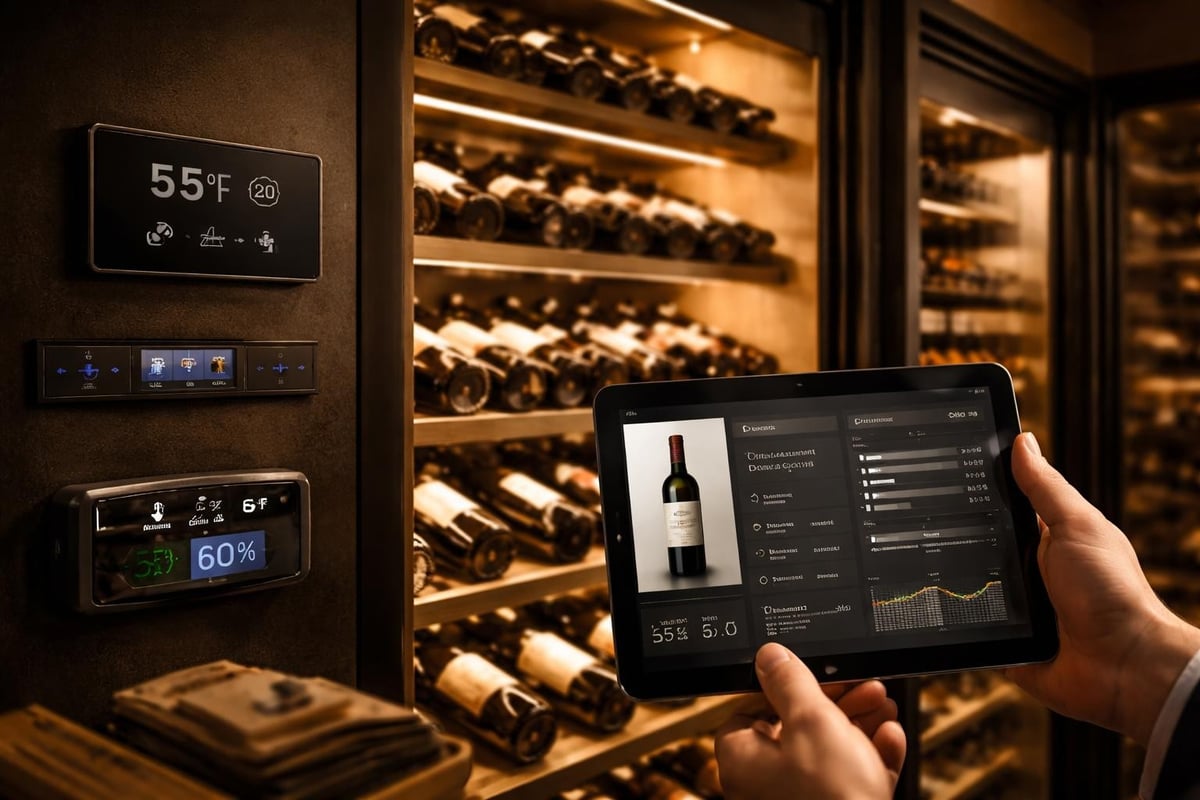
Remote temperature and humidity monitoring via smartphone apps
Automated alerts for system malfunctions or power outages
Digital inventory management tracking bottles by vintage, varietal, and location
Programmable lighting scenes for different occasions
Climate data logging for insurance and collection management
These systems don't require visible intrusion into your design. Sensors integrate discreetly into racking. Control panels recess into walls or disappear entirely with app-based interfaces. The goal is seamless functionality that serves your collection without announcing its presence.
Space Planning for Different Applications
The wine cellar and bar concept scales beautifully across various property types and sizes. Each application brings specific requirements and opportunities.
Private Residences
Homeowners typically prioritize the personal enjoyment and display aspects of their wine cellar and bar. The space becomes a retreat for unwinding with a special bottle or hosting intimate gatherings with fellow enthusiasts.
Compact urban wine cellars demonstrate how even limited square footage can deliver outsized impact. A 6x8 foot cellar holding 300-500 bottles, paired with a sleek bar counter, transforms a basement corner or under-stair area into a luxury amenity.
Larger estates allow for dedicated wine rooms that rival commercial installations. We've designed traditional wine cellars in Lakeway that encompass 500+ square feet, incorporating temperature-controlled storage, tasting areas, and full bar facilities.
Hospitality Applications
Restaurants, hotels, and resorts use their wine cellar and bar differently than homeowners. The collection represents inventory and revenue rather than personal passion (though the two often overlap). Display becomes marketing, showcasing depth and quality to guests making selections.
The Cambria Waco Hotel wine cellar exemplifies hospitality design that balances operational efficiency with guest experience. Visible from the dining area, it creates destination appeal while providing organized storage that supports service staff.
Maintenance and Long-Term Care
A properly designed wine cellar and bar requires surprisingly little maintenance, but what it does require matters critically to performance and longevity.
Cooling System Service
Annual professional service keeps cooling systems running efficiently. This includes cleaning condenser coils, checking refrigerant levels, verifying temperature accuracy, and inspecting electrical connections. Wine cellar maintenance prevents the small issues that become expensive failures when ignored.
Racking and Finish Care
Wood racking benefits from occasional cleaning with a slightly damp cloth to remove dust. Avoid harsh chemicals that might damage finishes or leave residues. Bar surfaces require regular sealing or conditioning depending on material choice.
Metal components need only occasional wiping to maintain their appearance. Glass surfaces show fingerprints readily but clean easily with standard glass cleaners.
Investment Considerations and Value
The question of whether a wine cellar adds home value appears regularly in real estate discussions. Kiplinger's analysis notes that while cellars may not return their full cost at resale, they significantly enhance property appeal to the right buyers.
A wine cellar and bar combination offers advantages beyond pure financial ROI:
Lifestyle enhancement through daily enjoyment and entertaining capability
Collection protection preserving value of fine wines
Architectural distinction creating memorable spaces that elevate the entire property
Emotional value providing a personal sanctuary and expression of refined taste
For commercial properties, the calculation differs. A thoughtfully designed wine cellar and bar can become a signature amenity that commands premium pricing and occupancy rates. Restaurants find that impressive wine programs drive both reputation and revenue.
Design Process and Professional Collaboration
Creating an exceptional wine cellar and bar requires expertise across multiple disciplines. Architecture, engineering, millwork, and climate control must work in concert.
Turnkey wine cellar design-build services streamline this complexity by coordinating all trades under unified project management. A single point of accountability ensures that aesthetic vision and technical requirements align from concept through completion.
The process typically follows these phases:
Discovery and programming to understand collection size, growth plans, and design preferences
Conceptual design exploring layouts, materials, and stylistic direction
Engineering for structural, climate control, and electrical systems
Detailed design specifying exact materials, finishes, and equipment
Construction with careful sequencing of insulation, cooling, and millwork
Installation and commissioning ensuring all systems perform as designed
Throughout this process, experienced designers help you navigate decisions about racking capacity, door styles, lighting, and the countless details that distinguish a good project from an exceptional one. You can explore various approaches through a portfolio of completed designs that demonstrate different solutions to common challenges.
Regional Considerations for Texas Projects
Designing a wine cellar and bar in Texas presents specific challenges and opportunities related to climate, architecture, and lifestyle. The state's hot summers and variable humidity require robust climate control and exceptional insulation.
Texas homes, particularly in areas like Houston and Dallas, often feature open floor plans that lend themselves beautifully to glass-enclosed wine cellars visible from living and dining areas. This architectural preference aligns perfectly with contemporary wine cellar and bar design.
The state's strong entertaining culture makes the bar component particularly important. Texans appreciate generous hospitality, and spaces that facilitate gathering naturally see heavy use. Sizing your bar area appropriately for your typical guest count ensures it serves your lifestyle rather than constraining it.
Material selection should account for regional conditions. Heat and humidity affect how certain woods perform. Professional designers familiar with Texas conditions select species and finishes that maintain their beauty despite environmental stress.
Designing a wine cellar and bar that achieves both technical excellence and aesthetic distinction requires balancing multiple priorities while maintaining a clear vision. The most successful projects emerge when preservation science meets sophisticated entertaining in spaces that feel both purposeful and inspiring. Prestige Wine Cellars brings decades of experience to every project, whether you're creating an intimate residential retreat or a show-stopping hospitality installation. From initial concept through final commissioning, our team ensures your wine cellar and bar becomes a timeless expression of refined living.
Your Dream Wine Cellar Starts Here
Let our design team craft a cellar that matches your taste, space, and your collection — built for beauty, function, and prestige.

Email us at
Serving Austin, Dallas–Fort Worth, Houston & San Antonio