
Wood Wine Cabinets: A Timeless Guide to Luxury Storage
Discover how wood wine cabinets combine beauty with function. Expert insights on wood types, design, and custom storage solutions for collectors.
The marriage of wood and wine is as old as civilization itself. From ancient cellarettes in European estates to today's climate-controlled masterpieces, wood wine cabinets have remained the gold standard for serious collectors who understand that proper storage is both a science and an art. These handcrafted pieces do more than house bottles; they create environments where wine matures gracefully, protect investments worth thousands of dollars, and transform ordinary spaces into sophisticated showcases that speak to your refined taste and commitment to excellence.
The Enduring Appeal of Wood Wine Cabinets
Wood brings warmth, character, and timeless elegance to wine storage in ways synthetic materials simply cannot replicate. The natural grain patterns, rich tones, and organic textures create visual depth that complements fine wine collections while enhancing interior design schemes from traditional to contemporary.
Beyond aesthetics, wood serves critical functional purposes. It naturally regulates humidity fluctuations, provides superior insulation against temperature swings, and creates stable microenvironments essential for long-term wine preservation. These properties make wood wine cabinets particularly valuable in Texas climates where air conditioning cycles create challenging storage conditions.
The benefits extend across multiple dimensions:
Natural humidity buffering that protects cork integrity
Thermal mass that minimizes temperature fluctuations
Acoustic dampening that reduces vibration transfer
Aging characteristics that add patina and value over time
Customization potential limited only by imagination
Investment quality that appreciates alongside your collection
Quality wood wine cabinets represent heirloom pieces that can be passed down through generations. Unlike mass-produced metal or plastic alternatives, properly maintained wooden cabinets often increase in value, particularly when crafted from premium hardwoods with distinctive grain patterns.
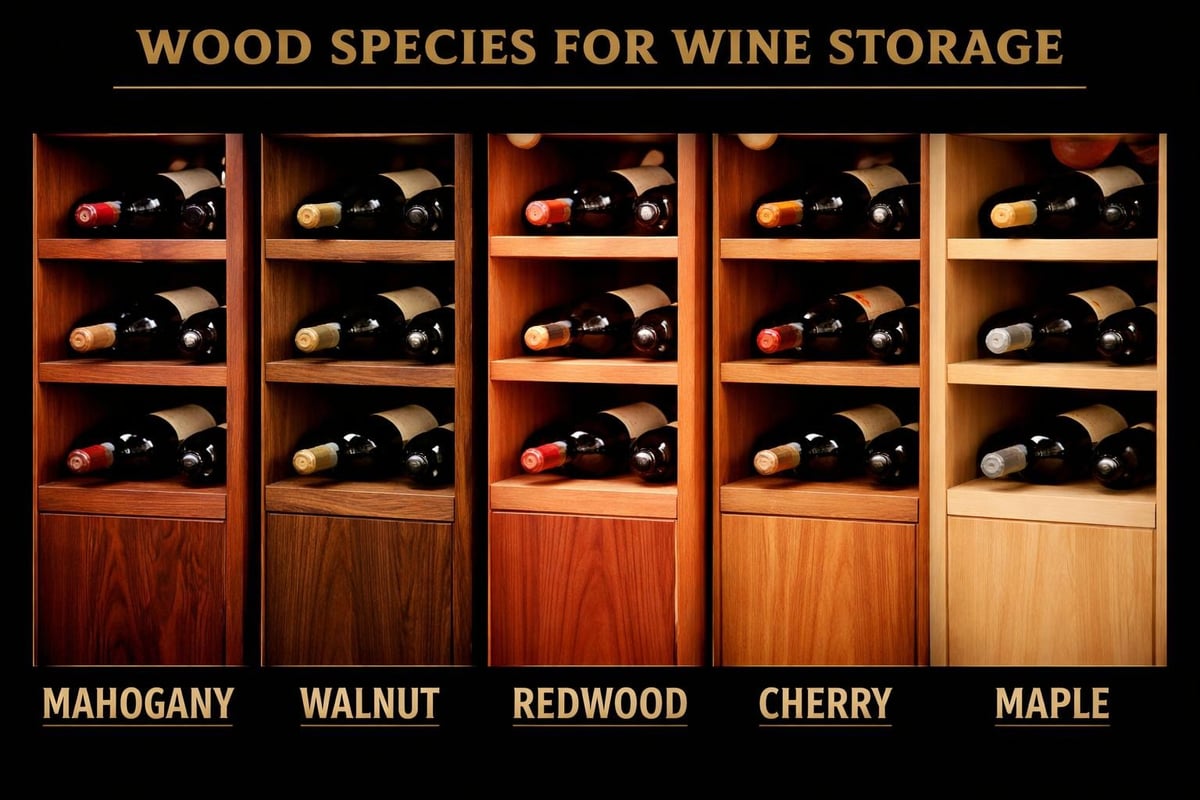
Choosing the Right Wood Species for Your Cabinet
Not all woods perform equally in wine storage applications. The ideal species balances aesthetic appeal with practical properties like dimensional stability, moisture resistance, and workability. Your choice should reflect both your design vision and the environmental conditions where the cabinet will live.
Premium Hardwoods for Discerning Collectors
Mahogany stands as perhaps the most prestigious choice for wood wine cabinets. Its tight grain structure resists moisture absorption, while its natural oils repel insects and prevent warping. The rich reddish-brown hues deepen beautifully over decades, creating stunning visual drama in traditional wine cellars.
Walnut offers contemporary collectors a sophisticated alternative with its chocolate-brown tones and dramatic grain patterns. American black walnut provides exceptional stability and works particularly well in transitional designs that bridge classic and modern aesthetics.
Wood Species | Moisture Resistance | Color Range | Ideal Style | Price Point |
|---|---|---|---|---|
Mahogany | Excellent | Rich red-brown | Traditional | Premium |
Walnut | Very Good | Dark chocolate | Transitional | Premium |
Cherry | Good | Warm amber | Classic | Moderate-High |
Maple | Very Good | Pale blonde | Modern | Moderate |
Redwood | Excellent | Rustic red | Rustic/Traditional | High |
Cherry wood delivers unmatched warmth with its honey-amber tones that darken to deep russet over time. This living quality makes cherry wine cabinets increasingly beautiful with age, though proper climate control prevents excessive color shifts.
Alternative Wood Options Worth Considering
Maple provides budget-conscious collectors with excellent performance in a clean, contemporary package. Its light color serves as an ideal backdrop for wine labels and can be stained to achieve various finishes. The tight grain structure offers good moisture resistance and dimensional stability.
Redwood excels in high-humidity environments, making it particularly suitable for underground installations or coastal properties. Its natural tannins resist decay and insect damage while providing distinctive rustic character that suits wine country aesthetics.
White oak brings historical authenticity to wine storage, echoing the barrel-aging tradition. Its pronounced grain adds texture and visual interest, while its density provides superior durability for heavily-used cabinets in restaurant or hospitality settings.
Design Considerations for Maximum Impact
The most successful wood wine cabinets seamlessly integrate storage functionality with architectural presence. Whether you're planning a standalone furniture piece or built-in installation, thoughtful design decisions ensure your cabinet enhances rather than overwhelms its setting.
Start by assessing these fundamental parameters:
Available space dimensions including ceiling height and floor area
Bottle capacity requirements both current and anticipated growth
Access patterns for daily drinking versus long-term storage
Viewing angles that maximize display impact
Integration points with existing cabinetry and architectural details
Cabinet depth typically ranges from 14 inches for single-bottle depth to 24 inches for double-depth storage. Consider whether you prefer to view labels (requiring single-depth racking) or maximize capacity through deeper configurations.
Racking Configurations That Showcase Your Collection
Individual bottle storage creates the most flexible system, allowing you to rearrange bottles as your collection evolves. This approach works beautifully for collectors who enjoy curating displays by region, vintage, or varietal.
Bin storage offers higher capacity for case quantities of the same wine. Restaurant clients and serious collectors often incorporate bin sections for backup bottles while dedicating premium display space to rare or significant vintages.
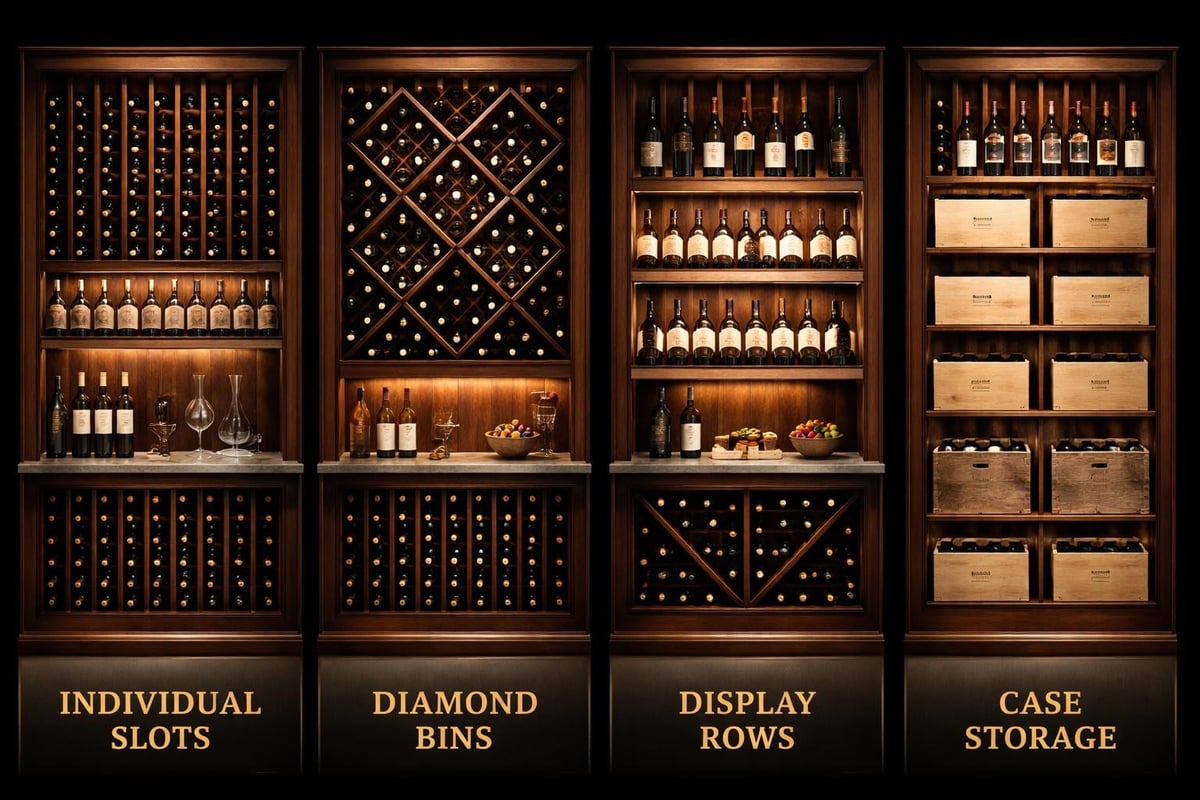
Display rows positioned at eye level transform wood wine cabinets into focal points. These horizontal presentations showcase special bottles while maintaining easy access to frequently enjoyed selections. Many of our portfolio designs incorporate dramatic display elements that celebrate signature bottles.
Lighting Strategies for Wood Cabinets
Proper illumination elevates wood wine cabinets from storage to art installation. LED technology allows you to highlight grain patterns and bottle displays without generating heat that compromises wine quality.
Under-shelf lighting creates ambient glow that emphasizes wood tones while illuminating labels. This subtle approach works particularly well in traditional wine cellars where warm, inviting atmosphere takes precedence over drama.
Accent lighting targets specific display areas or architectural features. Consider uplighting to emphasize crown molding, backlighting for glass-front cabinets, or focused spots that draw attention to trophy bottles in your collection.
Climate Control Integration for Wood Cabinets
Wood wine cabinets require precise environmental management to protect both the wood structure and wine contents. The ideal storage environment maintains 55-58°F temperature and 60-70% relative humidity year-round, regardless of external conditions.
Understanding Wood Movement and Humidity
Wood expands and contracts in response to humidity changes. This natural behavior requires accommodation in cabinet design through proper joinery techniques and allowances for seasonal movement. Expert craftsmen utilize floating panel construction and avoid rigid connections that crack under stress.
Excessive dryness causes wood to shrink, creating gaps in door panels and drawer faces. More critically, low humidity dries wine corks, allowing oxygen infiltration that ruins your investment. Texas air conditioning systems often create desert-like conditions unless properly managed.
Conversely, excessive humidity swells wood components, potentially binding doors and drawers. More dangerous, humidity above 70% encourages mold growth on labels and corks while promoting wood rot in structural elements.
Climate control solutions for wood wine cabinets include:
Self-contained cooling units for standalone cabinets
Through-wall systems for larger installations
Ducted split systems for whole-room applications
Passive conditioning for climate-controlled homes
Humidity injection systems in arid climates
Dehumidification in coastal or basement locations
The services we provide encompass complete climate control engineering sized specifically for your cabinet's volume, insulation values, and installation environment. Generic solutions often fail because they ignore the unique thermal characteristics of wood construction.
Insulation and Vapor Barriers
Quality wood wine cabinets incorporate insulation within door and wall panels to maintain stable internal temperatures. Minimum R-10 insulation values prevent cold loss while reducing cooling system runtime and energy costs.
Vapor barriers prevent moisture migration through wood components. These critical membranes stop condensation formation that damages wood finishes and promotes mold growth. Professional installation ensures barriers remain continuous at all penetrations and joints.
Freestanding Versus Built-In Wood Wine Cabinets
Your choice between freestanding furniture and built-in installations depends on flexibility requirements, budget parameters, and architectural context. Each approach offers distinct advantages for different collecting situations.
Freestanding Cabinet Advantages
Freestanding wood wine cabinets function as furniture pieces you can relocate when moving or remodeling. This flexibility appeals to collectors in temporary residences or those who anticipate future home changes. Handcrafted designs often feature finished backs and decorative details on all sides.
These self-contained units typically include integrated cooling systems, making installation as simple as providing electrical power. No construction or permanent modifications to your home are required, preserving resale value and avoiding landlord complications.
Quality freestanding cabinets appreciate as collectible furniture. Exceptional pieces from renowned makers command premium prices in antique and specialty markets, particularly when crafted from rare woods with distinctive figuring.
Built-In Installation Benefits
Custom built-in wood wine cabinets integrate seamlessly with architectural millwork, creating cohesive designs that appear original to the home. This approach maximizes space efficiency by utilizing odd corners, under-stair areas, or awkward alcoves unsuitable for freestanding furniture.
Built-ins accommodate larger collections through floor-to-ceiling designs that leverage vertical space. Our custom wine cellar design process creates installations scaled precisely to available dimensions while incorporating structural support for heavy wine loads.
Feature | Freestanding | Built-In |
|---|---|---|
Installation Time | Hours | Weeks |
Relocation | Portable | Permanent |
Capacity | 50-300 bottles | Unlimited |
Cost Range | $2,000-$15,000 | $10,000-$100,000+ |
Customization | Limited | Unlimited |
Home Value Impact | Minimal | Significant |
The turnkey design-build approach we employ handles every aspect from concept through completion, ensuring built-in wood wine cabinets integrate flawlessly with existing architecture while meeting all performance requirements.
Finishing and Maintenance for Longevity
The finish applied to wood wine cabinets dramatically affects both appearance and durability. Select finishes that enhance natural wood beauty while providing protection against moisture, staining, and wear from regular use.
Finishing Options for Different Aesthetics
Oil-based finishes penetrate wood fibers, creating warm, natural appearances that showcase grain patterns. These traditional treatments require periodic reapplication but offer easy repair of scratches and water marks without professional refinishing.
Polyurethane coatings provide durable, moisture-resistant surfaces ideal for high-use environments like restaurant wine displays. Modern water-based formulations minimize yellowing while delivering protection comparable to solvent-based products.
Lacquer finishes create smooth, glass-like surfaces with exceptional clarity. Though more fragile than polyurethane, lacquer allows easy spot repairs and can be rubbed to various sheens from high gloss to satin.
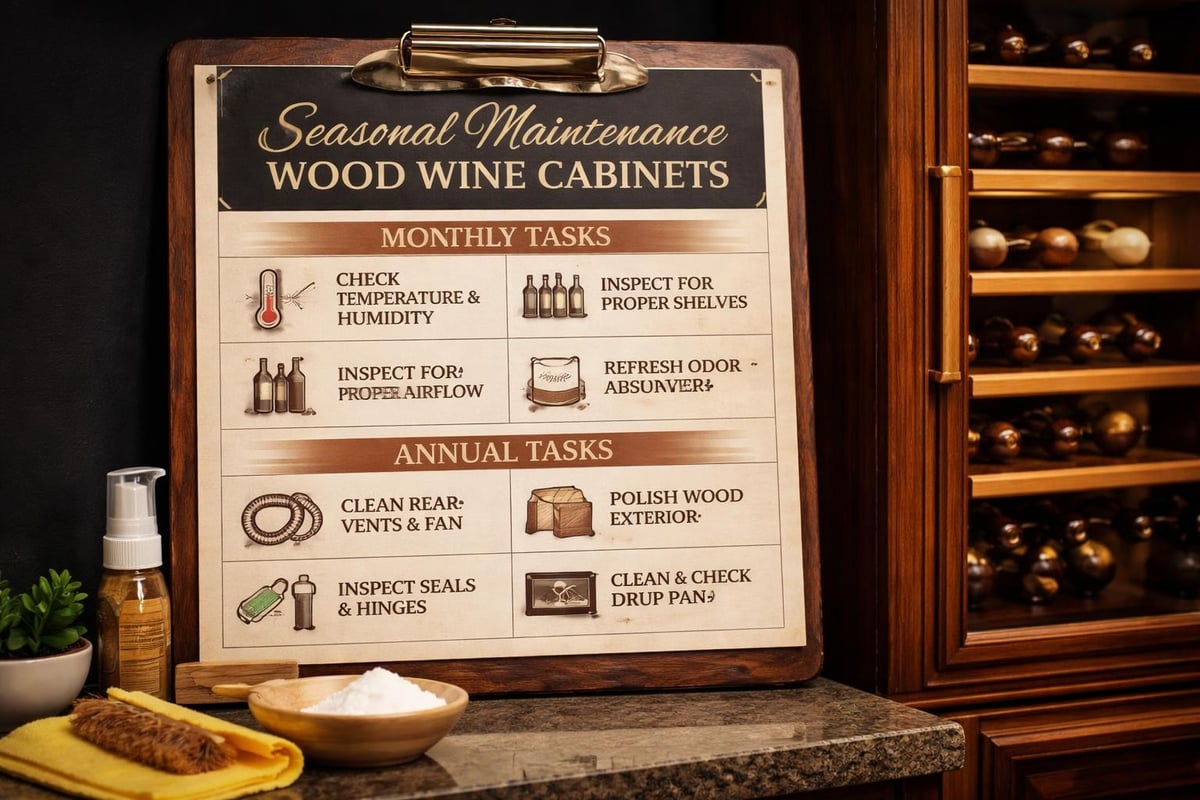
For maintaining wood wine cabinets in peak condition:
Dust weekly with microfiber cloths to prevent particle buildup
Clean spills immediately before moisture penetrates finish
Apply furniture wax or oil annually to nourish wood
Inspect door seals and adjust hinges to maintain tight closure
Monitor humidity levels and adjust conditioning as needed
Schedule professional maintenance every 2-3 years
The maintenance services we offer include refinishing worn areas, adjusting racking components, servicing climate systems, and updating lighting to current LED technology as your needs evolve.
Cost Considerations and Investment Value
Wood wine cabinets span enormous price ranges based on size, wood species, craftsmanship level, and feature complexity. Understanding these variables helps you allocate budget appropriately while ensuring you receive lasting value.
Price Drivers in Custom Wood Cabinets
Premium hardwoods like mahogany and walnut cost substantially more than oak or maple, particularly when sourced in wide, clear boards without knots or defects. Exotic species with limited availability command even higher premiums.
Joinery quality separates heirloom pieces from disposable furniture. Dovetailed drawers, mortise-and-tenon construction, and hand-fitted doors require master craftsmen whose expertise commands appropriate compensation. These traditional techniques ensure cabinets remain square and functional for generations.
Capacity directly influences cost, with larger installations requiring more materials, labor, and engineering. However, per-bottle costs often decrease as cabinet size increases, making larger projects more economical than multiple small units.
Climate control systems represent significant investment, typically ranging from $1,500 for small self-contained units to $10,000+ for whole-room conditioning. The materials we specify balance initial cost with long-term reliability and energy efficiency.
Return on Investment Perspectives
Quality wood wine cabinets protect wine collections worth tens or hundreds of thousands of dollars. Proper storage prevents premature aging, oxidation, and heat damage that destroy value in improperly stored bottles. Even modest 500-bottle collections represent $15,000-$50,000 in wine value requiring protection.
Premium installations increase home resale values, particularly in luxury markets where wine amenities appeal to discerning buyers. Portfolio projects in areas like River Oaks and Highland Park demonstrate how exceptional wine cellars become signature selling features.
For commercial clients, wood wine cabinets create ambiance that elevates dining experiences and justifies premium wine pricing. The visual impact and psychological association with quality storage helps restaurants increase wine sales 20-40% compared to standard storage.
Modern Innovations in Traditional Wood Cabinets
Contemporary wood wine cabinets incorporate technologies that enhance functionality while respecting traditional aesthetics. These innovations deliver performance improvements without compromising the classic elegance collectors expect.
Smart Climate Monitoring Systems
Wireless sensors continuously track temperature and humidity, alerting you to conditions outside optimal ranges before damage occurs. These systems integrate with home automation platforms, allowing remote monitoring from anywhere in the world.
Data logging provides historical trends that reveal seasonal patterns or equipment degradation. This information enables proactive maintenance rather than reactive repairs after expensive wine damage occurs.
Advanced Racking Innovations
Label-forward racking systems display bottles at optimal viewing angles while maintaining proper horizontal storage position. These clever mechanisms maximize visual impact in display-focused installations like modern wine cellars.
Pullout shelving brings deep storage within easy reach, eliminating the need to move forward bottles when accessing back rows. This convenience proves particularly valuable for collectors with limited mobility or in commercial applications where staff efficiency matters.
Modular racking components allow configuration changes as collecting patterns evolve. You might start with predominantly Bordeaux storage and later reconfigure for Burgundy or Champagne as your preferences shift.
Selecting Your Perfect Wood Wine Cabinet
The journey to your ideal wood wine cabinet begins with honest assessment of your current needs and future aspirations. Consider not just today's collection but where your passion for wine will lead you over the next decade.
Ask yourself these essential questions:
How many bottles do I currently own and what growth do I anticipate?
Which wines require long-term aging versus near-term consumption?
Do I prefer concealed storage or display-focused presentation?
What architectural style should the cabinet complement?
Will this be permanent installation or potentially relocatable?
What budget feels appropriate for protecting my collection?
If you're exploring options for fully assembled wood cabinets, examine construction details carefully. Dovetail joints, solid wood panels, and quality hardware indicate pieces built for longevity rather than quick sale.
For custom installations, partner with designers who understand both wine requirements and fine woodworking. The integration of these disciplines produces cabinets that function flawlessly while achieving museum-quality aesthetics. Our design portfolio showcases how thoughtful planning creates installations perfectly tailored to individual spaces and collections.
Working With Professional Designers
Professional wine cellar designers bring expertise that prevents costly mistakes while optimizing every aspect of your investment. They understand structural requirements for heavy wine loads, proper door swing clearances, and climate control integration that amateurs often overlook.
Expert designers also navigate building codes and permit requirements for installations requiring electrical work, refrigeration systems, or structural modifications. This regulatory knowledge ensures your beautiful wood wine cabinet remains legally compliant and properly insured.
The collaborative design process typically begins with site evaluation, continues through concept development with renderings, and concludes with detailed construction drawings. This thoroughness eliminates surprises during installation while ensuring the finished product matches your vision exactly.
Wood wine cabinets represent the intersection of functional necessity and artistic expression, protecting your collection while enriching your living environment with natural beauty and crafted excellence. Whether you choose a freestanding furniture piece or commission a custom built-in installation, the right wood cabinet becomes a treasured element of your home that grows more meaningful with each vintage stored and special bottle shared. Prestige Wine Cellars brings decades of experience designing and building luxury wine storage throughout Texas, creating bespoke wood cellars that reflect your unique vision while ensuring optimal preservation for your most prized bottles.
Your Dream Wine Cellar Starts Here
Let our design team craft a cellar that matches your taste, space, and your collection — built for beauty, function, and prestige.

Email us at
Serving Austin, Dallas–Fort Worth, Houston & San Antonio