
Custom Wine Cellar Southlake: Design & Build Guide
Discover how to create a custom wine cellar Southlake homeowners trust. Expert guidance on design, climate control, and luxury craftsmanship.
In Southlake's prestigious neighborhoods, where architectural excellence meets Texas luxury living, discerning homeowners are discovering that a custom wine cellar Southlake designers create represents far more than storage. These meticulously crafted spaces serve as personal galleries, climate-controlled sanctuaries, and sophisticated entertainment venues that enhance both lifestyle and property value. Whether you're planning a showcase installation in a new construction estate or transforming an existing space in your established home, understanding the nuances of custom wine cellar design ensures your investment delivers lasting beauty and functionality.
Why Southlake Estates Demand Exceptional Wine Cellars
Southlake's distinctive character as one of North Texas's most affluent communities creates specific expectations for luxury home amenities. The area's architectural diversity ranges from traditional estates to contemporary masterpieces, each requiring thoughtful integration of wine storage solutions.
Climate considerations in Southlake present unique challenges that make professional design essential. North Texas experiences temperature swings from humid summers exceeding 100 degrees to occasional winter freezes, creating demanding conditions for maintaining the precise 55-57°F and 60-70% humidity your collection requires.
The local real estate market rewards well-executed luxury amenities. Custom wine cellars can enhance property value, particularly in markets like Southlake where buyers expect sophisticated entertaining spaces and distinctive architectural features. A thoughtfully designed wine cellar communicates taste, investment acumen, and commitment to excellence.
Architectural Harmony in Southlake Homes
Your wine cellar should feel like an organic extension of your home's existing design language rather than an afterthought. Southlake estates often feature:
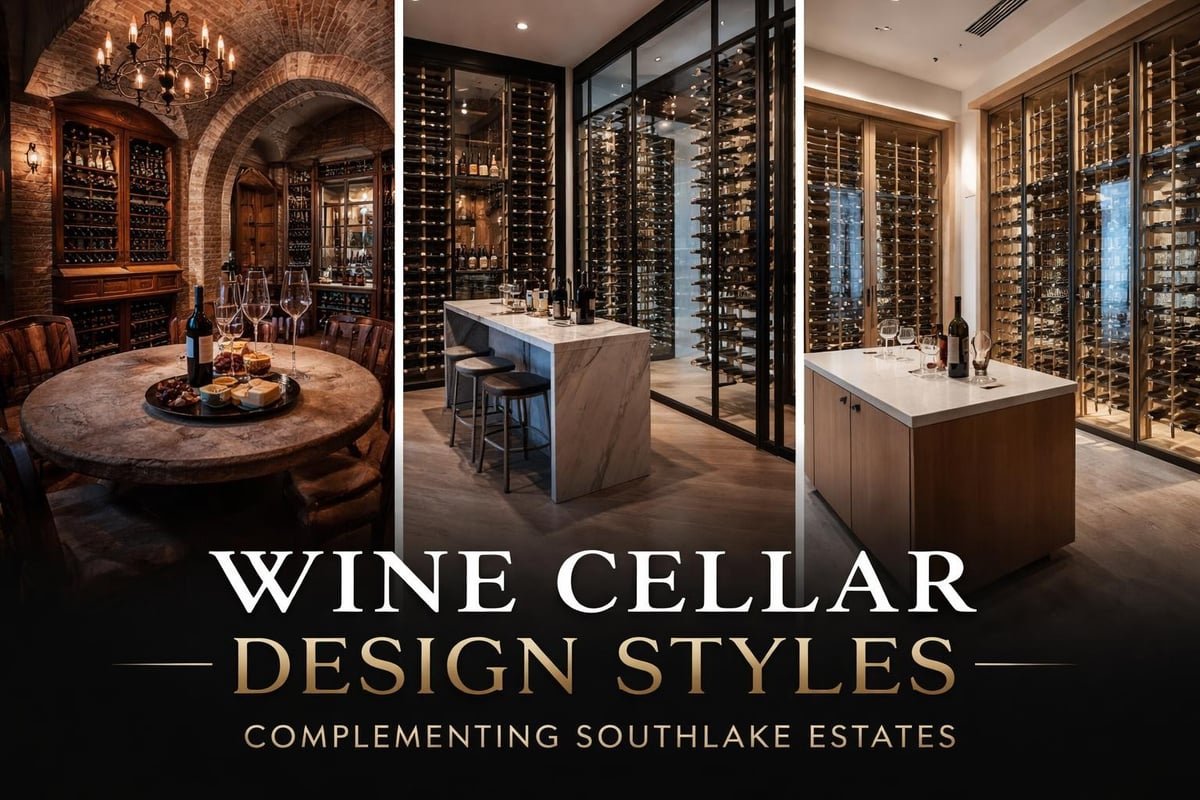
Traditional elegance: Ornate millwork, rich mahogany, and classic proportions
Modern sophistication: Clean lines, glass enclosures, and minimalist hardware
Transitional style: Balanced combinations of contemporary and classical elements
Rustic luxury: Reclaimed wood, stone accents, and old-world craftsmanship
Each approach requires different materials, finishes, and spatial planning. A custom wine cellar design process begins with understanding your home's architectural DNA and your personal aesthetic preferences.
Essential Planning for Your Custom Wine Cellar Southlake Project
Successful wine cellar projects begin months before construction starts. The planning phase establishes the foundation for everything that follows, from structural modifications to final finishes.
Location Selection and Space Assessment
Where you position your cellar dramatically affects both construction complexity and long-term performance. Basement locations offer natural insulation and temperature stability, though Southlake homes may have slab foundations requiring above-grade installations. Interior locations away from exterior walls minimize thermal load, while showcase positions near dining or entertaining areas maximize visual impact.
When evaluating potential spaces, consider:
Proximity to entertaining areas for convenient access during dinner parties
Structural load capacity if you're planning extensive racking systems
Distance from HVAC equipment that could compromise climate control
Accessibility for deliveries and collection growth over time
Visibility opportunities for glass-enclosed showpiece installations
Location Type | Advantages | Considerations |
|---|---|---|
Basement | Natural insulation, stable temps | May require waterproofing, limited in slab homes |
Under Stairs | Efficient space use, central location | Limited capacity, complex geometry |
Converting Closets | Accessible, cost-effective | Size constraints, HVAC challenges |
Dedicated Rooms | Maximum flexibility, impressive scale | Higher investment, requires proper location |
Building Codes and Permit Requirements
Southlake maintains rigorous building standards that protect both homeowners and property values. Before breaking ground, familiarize yourself with local building codes governing structural modifications, electrical work, and HVAC installations.
Professional designers navigate these requirements seamlessly, ensuring your project proceeds without delays or compliance issues. Permits typically cover electrical systems for climate control units, structural changes affecting load-bearing elements, and any modifications to your home's building envelope.
Climate Control Engineering: The Heart of Wine Preservation
No element matters more to your collection's longevity than precise environmental control. Wine demands consistency above all-temperature fluctuations of just a few degrees accelerate aging, while humidity variations can damage corks and labels.
Understanding Cooling System Options
A custom wine cellar Southlake homeowners rely on requires cooling systems designed specifically for wine storage, not standard air conditioning. Specialized services for wine cellar construction include engineering climate control that maintains unwavering precision regardless of external conditions.
Cooling capacity depends on multiple factors:
Total cubic footage of the cellar space
Insulation quality in walls, ceiling, and flooring
Glass area and exposure to exterior walls
Ambient temperature outside the cellar
Frequency of door openings and traffic patterns
Self-contained systems mount through walls, offering straightforward installation with visible exterior components. Ducted systems provide silent, invisible operation by positioning equipment in remote locations like attics or mechanical rooms. Split systems combine the best of both approaches with separate evaporator and condenser units connected by refrigerant lines.
Insulation and Vapor Barrier Installation
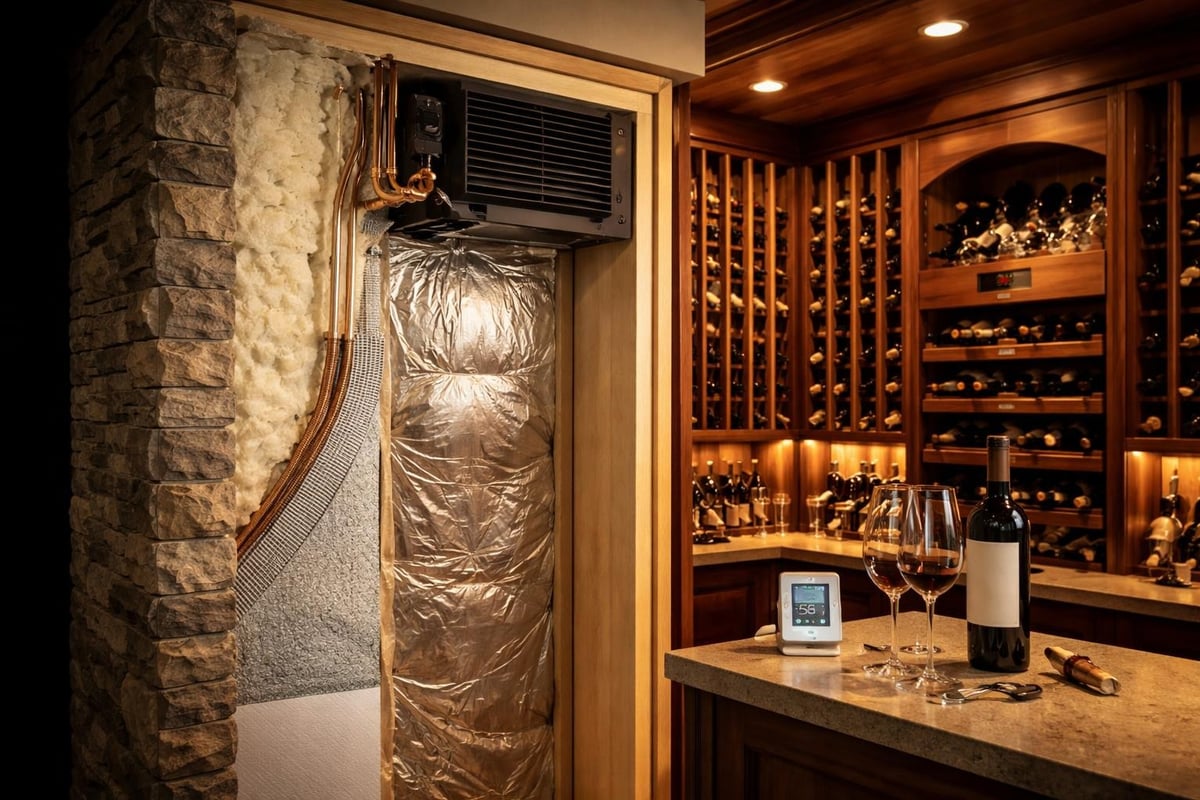
Creating a true thermal envelope requires professional-grade insulation exceeding standard building practices. Proper cellar design emphasizes complete encapsulation of the conditioned space with continuous insulation and vapor barriers on all six sides-walls, ceiling, and floor.
Specifications for optimal performance:
R-19 minimum insulation value in walls
R-30 or higher in ceiling applications
6-mil polyethylene vapor barrier on warm side of insulation
Spray foam insulation for irregular spaces and maximum air sealing
Insulated door with weather stripping and proper threshold seals
Shortcuts in this phase create problems that become expensive to remedy later. Condensation within wall cavities leads to mold growth, while thermal bridging increases cooling loads and energy costs.
Design Styles That Define Southlake Luxury
Your wine cellar should tell your story while honoring timeless design principles. The most successful installations balance personal expression with classical proportions and expert craftsmanship.
Traditional Wood Cellars
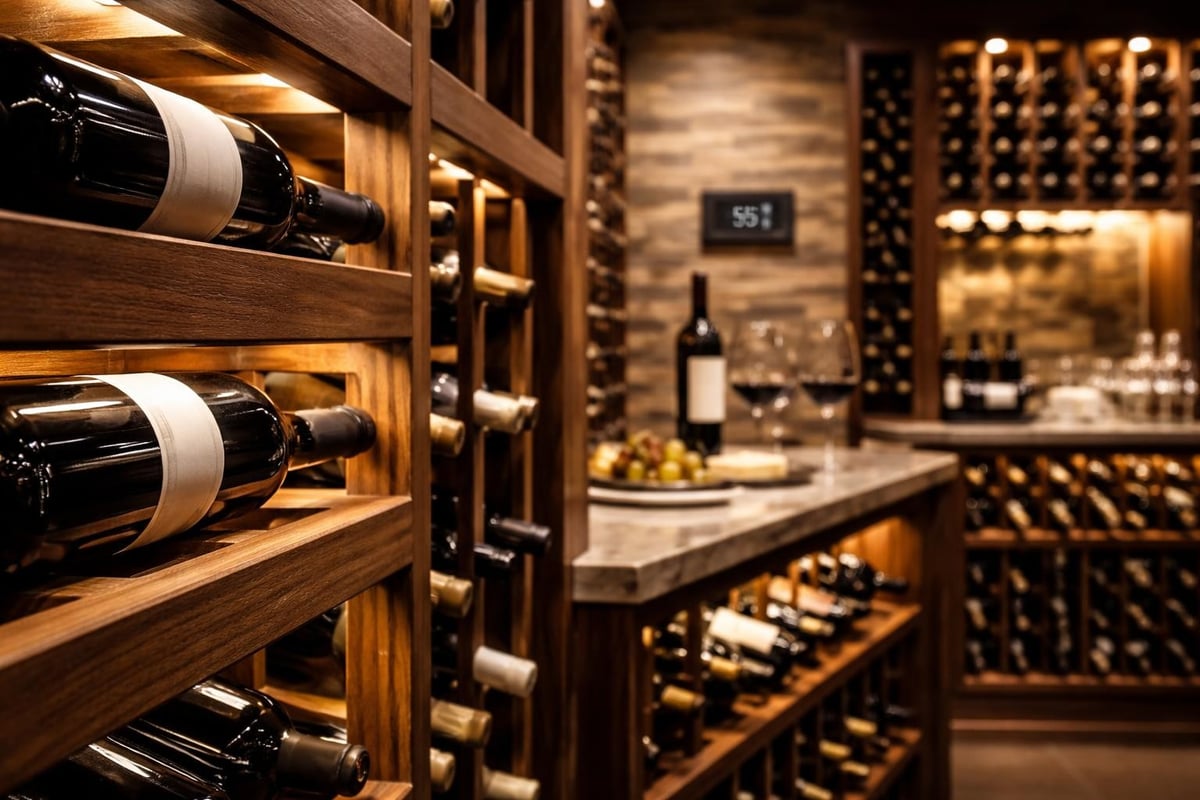
Rich, warm, and unmistakably elegant, traditional wine cellars feature premium hardwoods in all-heart redwood, mahogany, or walnut. These materials age beautifully, developing character and patina over decades while providing natural moisture management properties.
Design elements include:
Individual bottle storage with proper angles and support
Display rows for horizontally presenting special bottles
Case storage for unopened purchases and bulk storage
Tasting table or island for evaluating selections
LED lighting that enhances ambiance without UV damage
Glass-Enclosed Modern Installations
Contemporary Southlake homes increasingly feature glass wine walls that transform collections into living art. Modern wine cellars employ frameless glass, metal accents, and dramatic lighting to create museum-quality displays visible from adjacent living spaces.
Design considerations for glass wine cellars extend beyond aesthetics to thermal performance. Low-E glass minimizes heat transfer while maintaining crystal clarity, and proper sealing ensures climate integrity despite large glass areas.
Transitional and Hybrid Approaches
Many Southlake homeowners appreciate transitional designs that blend traditional warmth with contemporary refinement. These spaces might feature wood racking with metal accents, glass doors within classic millwork, or modern lighting in traditionally proportioned rooms.
This flexibility allows your cellar to bridge different areas of your home, connecting formal dining spaces with casual family rooms while maintaining sophisticated appeal throughout.
Material Selection and Craftsmanship Standards
The materials you choose determine your cellar's performance, appearance, and longevity. Professional wine cellar materials extend far beyond simple lumber selection to encompass finish quality, hardware durability, and long-term stability.
Racking Systems and Storage Solutions
Material | Characteristics | Best Applications |
|---|---|---|
All-Heart Redwood | Natural beauty, rot resistance, stability | Traditional cellars, humid conditions |
Mahogany | Rich color, fine grain, premium appearance | Luxury installations, formal spaces |
Metal (Aluminum/Steel) | Modern aesthetic, precision engineering, maintenance-free | Contemporary designs, commercial projects |
Acrylic | Transparency, contemporary look, custom fabrication | Modern showcases, artistic installations |
Custom fabrication allows precise accommodation of irregular spaces, unique bottle sizes, and special storage requirements. Label-forward display rows showcase prized bottles, while diamond bins provide efficient bulk storage. Case storage areas accommodate unopened purchases, and presentation shelving highlights decanters and accessories.
Lighting Design for Beauty and Protection
Wine's greatest enemy after temperature fluctuation is ultraviolet light, which degrades complex compounds and accelerates aging. Your lighting design must balance dramatic presentation with preservation requirements.
LED technology revolutionizes wine cellar illumination by eliminating heat output and UV emissions while providing exceptional color rendering and flexibility. Specifications should include:
Color temperature between 2700K and 3000K for warm, inviting ambiance
Dimmable controls for adjusting intensity
Accent lighting highlighting architectural features
In-racking illumination creating depth and dimension
Motion sensors reducing unnecessary exposure
Strategic placement creates visual hierarchy, drawing the eye to focal points while ensuring even illumination throughout the space.
The Design and Construction Process
Creating a custom wine cellar Southlake residents treasure requires orchestrating multiple trades and specialized expertise. Understanding the process helps you make informed decisions and maintain realistic timelines.
Initial Consultation and Concept Development
Your project begins with comprehensive discussion of your vision, collection size, growth projections, and budget parameters. Professional designers ask detailed questions about:
Current collection size and storage needs (number of bottles, formats, special sizes)
Growth expectations over five and ten-year horizons
Usage patterns (daily access, entertaining frequency, tasting events)
Aesthetic preferences and design inspirations
Budget allocation across design, construction, and climate control
This discovery phase establishes project scope and identifies potential challenges before they become expensive surprises. Tips for designing your perfect cellar emphasize honest assessment of your needs rather than creating unnecessarily large or complex spaces.
Engineering and Technical Documentation
With concept approval, detailed engineering transforms ideas into buildable reality. Technical drawings specify:
Structural modifications including framing, load calculations, and foundation work
Mechanical systems with equipment specifications, ductwork routing, and control integration
Electrical layouts covering dedicated circuits, lighting positions, and control wiring
Millwork details showing racking dimensions, joinery methods, and finish specifications
Material schedules documenting every component from insulation to hardware
This documentation serves multiple purposes: guiding construction crews, securing permits, ordering materials, and creating a permanent record of your installation for future reference or modifications.
Construction and Installation Timeline
Typical timelines for custom wine cellar Southlake projects span eight to sixteen weeks depending on complexity, though this varies based on scope and existing conditions.
Phase breakdown:
Phase | Duration | Key Activities |
|---|---|---|
Design & Permitting | 2-4 weeks | Concepts, engineering, approvals |
Demolition & Framing | 1-2 weeks | Removing existing finishes, structural modifications |
Mechanical & Electrical | 1-2 weeks | Climate control, wiring, rough-ins |
Insulation & Barriers | 3-5 days | Thermal envelope creation |
Millwork Installation | 2-4 weeks | Racking, doors, trim, finishes |
Final Systems | 1 week | Lighting, climate control commissioning, testing |
Turnkey design-build services streamline this process by coordinating all trades under single-source responsibility, eliminating finger-pointing and ensuring accountability.
Maximizing Your Investment's Long-Term Value
A properly designed and maintained wine cellar serves your family for generations while enhancing your property's appeal and value. Several factors determine long-term success.
Professional Maintenance and Monitoring
Regular wine cellar maintenance protects both your installation and collection. Annual service visits should include:
Climate system inspection checking refrigerant levels, electrical connections, and performance
Humidity management evaluating and servicing humidification equipment
Seal and gasket inspection ensuring door integrity
Racking assessment identifying wear or needed adjustments
Cleaning and care of wood surfaces, glass, and hardware
Monitoring systems provide peace of mind through continuous temperature and humidity tracking with smartphone alerts if conditions drift outside acceptable parameters. These systems proved invaluable during Texas's February 2021 power outages, alerting owners to quickly implement backup cooling solutions.
Flexibility for Collection Evolution
Your collecting interests will evolve over decades of enjoyment. Various design styles accommodate change through modular racking systems allowing reconfiguration as your focus shifts from Bordeaux to Burgundy, or as you discover passion for large-format bottles requiring different storage dimensions.
Smart initial planning includes:
Electrical infrastructure supporting future technology additions
Racking systems accepting different bottle sizes and configurations
Capacity exceeding immediate needs by 25-30%
Space for furniture additions like tasting tables or seating
Display flexibility for rotating featured bottles or collections
Choosing the Right Partner for Your Southlake Project
The difference between satisfactory and exceptional results lies in selecting craftsmen who understand both wine preservation science and luxury design execution. When building a luxury wine room, partnering with experienced professionals ensures technical precision and aesthetic excellence.
Evaluating Design and Construction Expertise
Key qualifications distinguish exceptional wine cellar builders:
Documented experience with climate control engineering specific to wine storage
Portfolio demonstrating diverse design styles and approaches
Understanding of local building codes and permit processes
In-house capabilities versus subcontractor coordination
Warranty coverage for both materials and installation
Client references from similar luxury residential projects
Reviewing a firm's completed portfolio reveals not just aesthetic capabilities but attention to detail in joinery, finish quality, and integration with surrounding architecture. Look for crisp reveals, consistent grain matching, and thoughtful material transitions.
Regional Expertise in North Texas
Working with designers familiar with Texas locations provides advantages beyond proximity. Regional specialists understand local climate challenges, building practices, material availability, and architectural preferences unique to communities like Southlake, Westlake, and Colleyville.
This knowledge translates to more accurate budgeting, realistic timelines, and solutions proven effective in North Texas conditions. Established relationships with local trades and suppliers often mean priority scheduling and preferential pricing that benefits your project.
Investment Considerations and Budget Planning
Custom wine cellars represent significant investments warranting careful financial planning. Understanding cost drivers helps you make informed decisions aligning budget with priorities.
Cost Variables and Budget Ranges
Multiple factors influence total investment:
Size and capacity (larger spaces require proportionally more materials and climate control)
Material quality (premium hardwoods versus standard options, custom versus stock components)
Climate control sophistication (basic through-wall units versus ducted systems with remote equipment)
Glass area (floor-to-ceiling installations cost more than traditional enclosed cellars)
Finish details (custom millwork, specialty lighting, architectural enhancements)
Site complexity (challenging access, structural modifications, utility relocations)
Southlake projects typically range from mid-five-figures for compact traditional cellars to six-figures for showcase installations with extensive glass, exotic materials, and sophisticated systems. Understanding services involved in cellar construction helps you allocate budget across design, construction, and equipment.
Return on Investment and Property Value
Wine cellars appeal strongly to luxury home buyers, particularly in markets like Southlake where wine culture and sophisticated entertaining are lifestyle priorities. While you shouldn't expect dollar-for-dollar returns, well-executed installations enhance your home's marketability and can justify premium pricing.
Value considerations extend beyond resale:
Protecting valuable collections from degradation
Creating entertaining venues that enrich your lifestyle
Establishing unique architectural features distinguishing your property
Demonstrating commitment to quality and craftsmanship throughout your home
Regional Context: Wine Culture in North Texas
Southlake's wine cellar renaissance reflects broader trends in North Texas luxury living. The region's growing restaurant scene, wine bar culture, and collector community create appreciation for proper storage and display.
Complementary Communities and Regional Trends
Southlake shares wine cellar enthusiasm with neighboring luxury markets including Highland Park, University Park, and Trophy Club. These communities embrace wine as both investment and lifestyle element, driving demand for sophisticated storage solutions.
Regional characteristics influencing design:
Open floor plans benefiting from glass wine walls as architectural features
Large-scale entertaining spaces where cellars become conversation centerpieces
Home theaters and game rooms incorporating wine storage as complementary amenities
Outdoor living areas connecting to climate-controlled wine rooms through glass doors
Understanding these regional preferences helps designers create cellars that feel authentically connected to North Texas luxury living rather than generic transplanted concepts.
Creating a custom wine cellar Southlake homeowners treasure requires balancing technical precision with artistic vision, ensuring your collection enjoys optimal preservation while enhancing your home's beauty and value. From initial concept through decades of enjoyment, success depends on partnering with craftsmen who understand both the science of wine storage and the art of luxury design. Prestige Wine Cellars brings decades of experience transforming Texas estates with bespoke wine cellars that reflect each client's unique vision, combining meticulous engineering with timeless craftsmanship to create spaces worthy of your collection and your home.
Your Dream Wine Cellar Starts Here
Let our design team craft a cellar that matches your taste, space, and your collection — built for beauty, function, and prestige.

Email us at
Visit our office