
Custom Wine Cellar San Antonio: #1 Guide
Discover expert insights on building a custom wine cellar San Antonio collectors trust. From climate control to design, create your luxury wine space.
San Antonio's rich culinary heritage and growing appreciation for fine wines have created a unique demand for sophisticated wine storage solutions. Whether you're a seasoned collector with hundreds of bottles or a restaurateur seeking to showcase your wine program, a custom wine cellar San Antonio homeowners and businesses commission represents far more than simple storage. It's an investment in preservation, a statement of refinement, and a functional work of art that enhances both your collection and your property value. The right design seamlessly blends climate precision with architectural beauty, creating a space that honors each bottle while reflecting your personal aesthetic.
Understanding San Antonio's Climate Challenges
The Alamo City's distinctive weather patterns create specific challenges for wine preservation that demand expert attention. Summer temperatures regularly exceed 95°F, while humidity levels fluctuate dramatically between seasons. These extremes make professional climate control absolutely non-negotiable.
Wine thrives in consistency. Temperature swings, even within a finished home, can accelerate aging and damage delicate flavors. Proper climate control systems maintain the ideal 55-58°F range year-round, protecting your investment from San Antonio's challenging conditions.
The Science Behind Temperature Stability
Every bottle in your collection represents a living ecosystem where complex chemical reactions continue evolving over time. Heat accelerates these processes unpredictably, while cold temperatures slow them beyond optimal development. Fluctuations cause corks to expand and contract, compromising their seal and allowing oxygen intrusion.
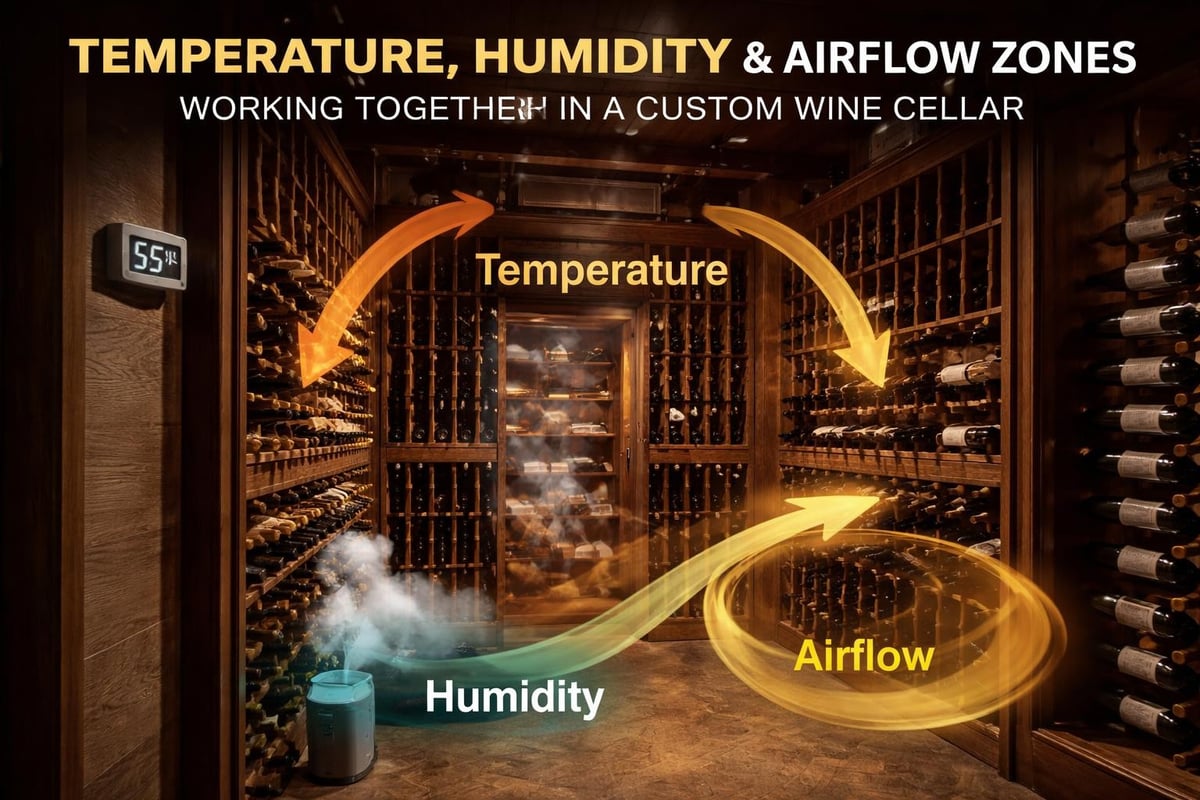
Critical climate parameters include:
Temperature range: 55-58°F for long-term aging
Humidity level: 60-70% to prevent cork drying
Air circulation: Gentle movement without vibration
UV protection: Complete darkness or filtered lighting
A custom wine cellar San Antonio collectors invest in must address each parameter through professional-grade equipment specifically designed for wine preservation, not repurposed residential HVAC systems.
Design Approaches for Every Space and Style
San Antonio homes range from historic estates in Monte Vista to contemporary masterpieces in The Dominion, each requiring a thoughtfully tailored approach. Your wine cellar should feel like a natural extension of your home's character while meeting stringent storage requirements.
Traditional wood cellars featuring rich mahogany or walnut racking bring old-world elegance perfect for Spanish Colonial or Mediterranean architecture. These designs incorporate hand-carved details, wrought-iron accents, and stone flooring that echo San Antonio's heritage.
Modern aesthetics favor clean lines and dramatic materials. Glass-enclosed showpiece designs create stunning focal points visible from living areas, transforming wine storage into living sculpture. These installations work beautifully in open-concept homes throughout Alamo Heights and Terrell Hills.
Maximizing Unconventional Spaces
Not every home offers a dedicated basement or ground-floor room. San Antonio's largely slab-foundation construction often requires creative solutions that make the most of available square footage.
Space Type | Capacity Range | Design Considerations | Best Style Match |
|---|---|---|---|
Under-stair closet | 200-500 bottles | Vertical emphasis, compact racking | Modern metal or transitional |
Converted bedroom | 1,000-3,000 bottles | Full design freedom, multiple zones | Any style, often traditional |
Kitchen adjacency | 300-800 bottles | Glass walls, display lighting | Contemporary showcase |
Climate-controlled closet | 100-400 bottles | Efficient layout, premium materials | Compact luxury |
Compact urban wine cellars prove that limited square footage need not compromise storage quality or aesthetic impact. Smart racking systems, precise climate zones, and strategic lighting transform even modest spaces into extraordinary wine environments.
Material Selection and Construction Excellence
The materials comprising your wine cellar determine both its longevity and its ability to maintain stable conditions. Every component, from insulation to racking hardware, plays a crucial role in preservation performance.
Insulation and Vapor Barriers
Proper insulation creates the thermal envelope essential for climate stability. San Antonio's extreme heat requires higher R-values than cooler climates, typically R-19 in walls and R-30 in ceilings. Wine cellar materials must include closed-cell foam or spray foam insulation that resists moisture infiltration.
Vapor barriers prevent humidity from migrating through walls, causing mold growth and insulation failure. Professional installation places barriers on the warm side of insulation, with sealed seams and penetrations that maintain integrity over decades.
Essential construction components:
Sealed door systems with weather stripping and threshold sweeps
Climate-appropriate glass if incorporating windows or display panels
Dedicated electrical circuits for cooling units and lighting
Proper drainage for condensate removal from cooling systems
Structural support for heavy racking systems when fully loaded
Racking Systems and Storage Configuration
The racking system represents your cellar's functional backbone and most visible design element. Wood species, metal finishes, and configuration styles should align with both aesthetic preferences and practical needs.
Premium hardwoods like mahogany and walnut offer natural beauty and durability. Metal racking systems provide contemporary appeal with powder-coated finishes in bronze, black, or stainless steel. Many custom wine cellar San Antonio projects blend materials, creating visual interest through contrasting textures.
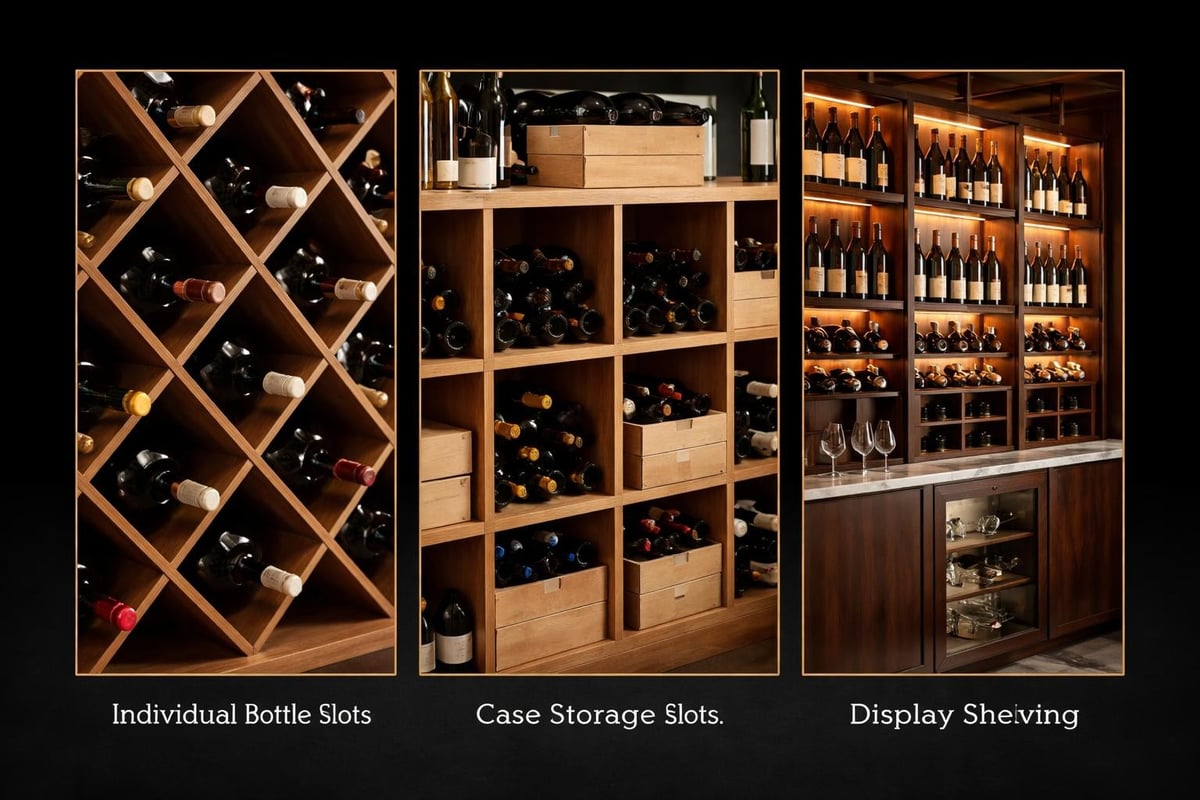
Storage configuration depends on your collection profile. Serious collectors need individual bottle slots for precise organization. Those with case quantities prefer bulk storage bins. Display rows at eye level showcase prized bottles, while upper and lower zones efficiently store everyday selections.
Climate Control Systems That Perform
Your cooling system represents the most critical mechanical component in the entire cellar. Temperature and humidity control must operate flawlessly, maintaining precise conditions regardless of external weather.
Through-wall systems offer compact installation and straightforward maintenance, ideal for smaller cellars up to 1,000 bottles. Ducted split systems provide quiet operation and greater capacity for larger collections, with components hidden in attic or mechanical spaces.
Calculating Cooling Requirements
Professional load calculations account for multiple factors beyond simple square footage. Insulation quality, glass area, ambient temperature differential, and even lighting heat all influence cooling capacity requirements.
San Antonio's 100°F summer temperatures create significant differential when maintaining 55°F cellar conditions. This 45-degree difference demands robust equipment properly sized for peak load conditions, not average temperatures.
Cooling calculation factors:
Cellar interior cubic footage
Insulation R-value throughout envelope
Glass square footage and type
Ambient temperature in adjacent spaces
Heat generated by lighting fixtures
Door opening frequency and duration
Professional design services include precise load calculations ensuring your cooling system operates efficiently without constant cycling or inadequate capacity during extreme weather.
Lighting Design for Function and Drama
Proper illumination enhances your cellar's beauty while protecting wine from harmful UV radiation. All lighting should use LED fixtures that generate minimal heat and contain no ultraviolet spectrum components.
Layered lighting creates depth and visual interest. Ambient fixtures provide general illumination for browsing and selection. Accent lighting highlights architectural details and prized bottles. Task lighting illuminates label reading and work surfaces.
Control Systems and Automation
Modern control systems allow precise management of lighting scenes, temperature monitoring, and humidity tracking from smartphone apps. Automated schedules ensure lights turn off when the cellar is unoccupied, eliminating unnecessary heat and potential wine damage.
Motion sensors provide convenience while supporting energy efficiency. Enter your cellar and lights gradually illuminate, then dim to ambient levels after a set period. Advanced systems integrate with whole-home automation platforms for seamless control.
Avoiding Common Wine Storage Mistakes
Even well-intentioned collectors often make fundamental storage errors that compromise their collections. Understanding these pitfalls helps you avoid costly mistakes when planning your custom wine cellar San Antonio space.
Most common mistakes include:
Installing inadequate cooling capacity to save initial costs
Using residential air conditioning instead of wine-specific systems
Neglecting proper insulation and vapor barrier installation
Choosing aesthetic materials that don't support climate stability
Failing to plan for collection growth and future expansion
Professional consultation during the planning phase prevents these issues. Turnkey design-build services ensure every component works harmoniously, from structural preparation through final commissioning.
Commercial Wine Cellar Applications
San Antonio's thriving restaurant scene increasingly features impressive wine programs that demand professional storage and display. From intimate bistros to grand steakhouses, visible wine storage creates ambiance while demonstrating commitment to quality.
Commercial applications require heightened capacity and accessibility. Restaurant cellars must allow staff to locate and retrieve bottles quickly during service while maintaining museum-quality storage conditions. Glass walls showcase inventory to diners, transforming wine storage into experiential marketing.
Hotel and Resort Wine Storage
Boutique hotels and luxury resorts throughout San Antonio increasingly incorporate wine experiences into their guest amenities. Wine storage ranges from small tasting rooms to extensive cellars supporting multiple restaurant concepts.
These installations balance guest access with security and preservation. Climate-controlled tasting areas adjoin larger storage spaces, allowing sommeliers to curate experiences while protecting bulk inventory in optimal conditions.
Investment Value and Return Considerations
Adding a custom wine cellar to your San Antonio property represents both functional improvement and financial investment. While exact ROI varies by neighborhood and execution quality, professionally designed cellars typically recover 50-70% of construction costs in increased home value.
Luxury markets like Terrell Hills, Olmos Park, and The Dominion see stronger returns, as buyers in these areas actively seek refined amenities. A stunning wine cellar differentiates your property from comparable listings, often shortening time on market significantly.
Beyond resale value, consider the preservation of your wine collection itself. Proper storage prevents spoilage and allows bottles to develop as vintners intended. A $50,000 collection stored in ideal conditions maintains and potentially increases its value, while the same bottles in a garage or closet may become undrinkable.
Maintenance and Long-Term Care
Professional wine cellar maintenance ensures your investment continues performing flawlessly for decades. Annual service visits include cooling system inspection, humidity calibration, seal integrity checks, and lighting evaluation.
Recommended maintenance schedule:
Monthly: Check temperature and humidity readings for consistency
Quarterly: Inspect door seals and weather stripping for gaps
Biannually: Clean cooling unit filters and condensate drains
Annually: Professional system service and calibration
As needed: Address any mechanical issues immediately
San Antonio's dust and seasonal pollen require regular filter cleaning beyond typical maintenance intervals. Keeping cooling units operating efficiently prevents system strain and extends equipment lifespan.
Working With Design-Build Professionals
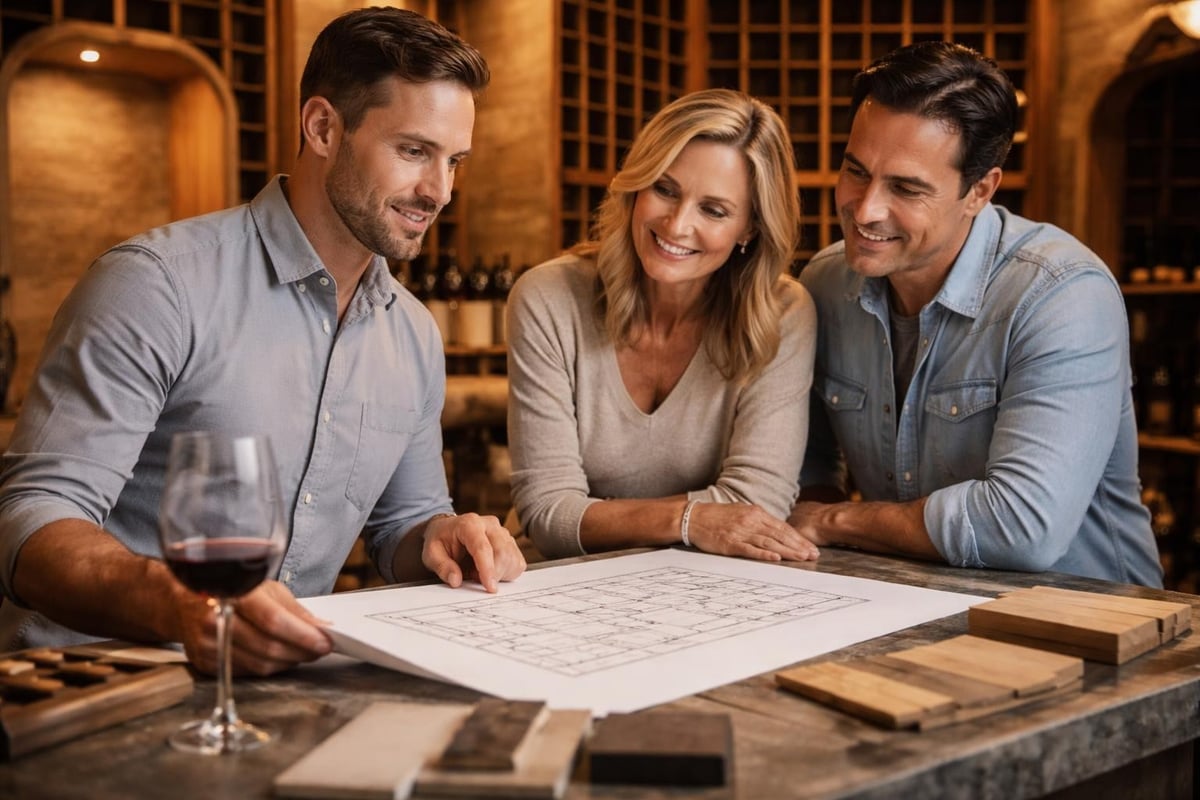
Successful wine cellar projects require expertise spanning architecture, engineering, climate science, and fine woodworking. Comprehensive services streamline the process from initial concept through final installation, ensuring every detail receives proper attention.
The design phase begins with understanding your collection, growth plans, aesthetic preferences, and available space. Site assessment evaluates structural conditions, HVAC access, and electrical capacity. This information informs detailed planning that balances beauty with performance.
The Construction Process
Professional installation follows a systematic sequence ensuring quality at every stage. Structural preparation creates the insulated envelope. Climate control equipment installation establishes cooling capacity. Millwork and racking installation brings the design vision to life.
Throughout construction, coordination prevents conflicts and maintains schedule integrity. Experienced project managers communicate progress, address questions promptly, and ensure worksite cleanliness and safety.
Regional Considerations for San Antonio Projects
Building a custom wine cellar San Antonio homeowners trust requires understanding local conditions beyond just climate. Foundation types, building codes, and regional construction practices all influence project planning and execution.
Most San Antonio homes sit on slab foundations without basements. This eliminates the traditional below-grade cellar option, requiring creative approaches to temperature-stable locations. Interior closets, under-stair spaces, and converted rooms become prime candidates.
Texas building codes and local permitting requirements vary by jurisdiction. Professional design-build teams navigate these requirements seamlessly, ensuring compliance while maintaining project timelines. Proper permitting protects your investment and ensures insurance coverage remains valid.
Understanding Texas Wine Culture
San Antonio's position between Texas Hill Country wine regions and the Gulf Coast creates a unique appreciation for both local vintages and international selections. Your cellar design might emphasize Texas wines through dedicated display sections, while maintaining optimal storage for Bordeaux, Burgundy, and Napa Valley treasures.
Local wine events, collector clubs, and tasting societies influence how residents think about wine storage. Many collectors host intimate tastings, making cellar accessibility and guest experience important design considerations beyond pure storage function.
Exploring Design Inspiration
Viewing completed projects helps crystallize your vision and identify elements that resonate with your aesthetic. Portfolio galleries showcase diverse approaches from traditional to contemporary, small-scale to grand.
Pay attention to details that enhance the experience. Seating areas for tasting and contemplation. Decanting stations with proper lighting. Display shelving for favorite bottles or wine-related art. These touches transform functional storage into immersive wine sanctuaries.
Consider how different signature styles might complement your home's existing architecture. Transitional designs bridge traditional and modern aesthetics, offering versatility for evolving tastes. Rustic estate cellars embrace natural materials and organic textures perfect for ranch properties throughout the San Antonio region.
Creating a custom wine cellar San Antonio collectors and wine enthusiasts can trust requires balancing aesthetic vision with technical precision, ensuring your investment protects and showcases your collection beautifully for decades. Whether you're planning an intimate tasting room or an expansive collector's vault, professional expertise transforms raw space into extraordinary wine environments. Prestige Wine Cellars brings comprehensive design-build services to San Antonio and throughout Texas, crafting bespoke wine storage solutions that honor your collection while reflecting your unique vision and lifestyle.
Your Dream Wine Cellar Starts Here
Let our design team craft a cellar that matches your taste, space, and your collection — built for beauty, function, and prestige.

Email us at
Visit our office