
Custom Wine Cellar Fredericksburg: Expert Design Guide
Discover how to create a custom wine cellar in Fredericksburg that preserves your collection with expert design, climate control, and timeless style.
Fredericksburg's rich wine culture and Hill Country charm create the perfect backdrop for discerning collectors seeking a custom wine cellar. Whether you're situated near the historic downtown district, nestled among the vineyards, or enjoying a private estate on the outskirts, a thoughtfully designed cellar elevates both your collection and your property. The region's unique climate demands specialized attention to temperature regulation and humidity control, making professional design essential for long-term wine preservation. For homeowners who appreciate the intersection of functionality and beauty, a custom wine cellar Fredericksburg solution transforms an ordinary space into a sanctuary for your treasured bottles.
Understanding Fredericksburg's Climate Challenges for Wine Storage
The Texas Hill Country presents distinct environmental considerations that directly impact wine cellar design. Summer temperatures regularly exceed 95°F, while winter lows can dip into the 20s, creating significant temperature fluctuations that threaten wine stability.
Key climate factors affecting wine storage in Fredericksburg:
Temperature extremes ranging from 20°F to 100°F annually
Humidity variations between 30% and 80% depending on season
Intense UV exposure from high-altitude sunlight
Limestone bedrock affecting basement construction options
These conditions make proper climate control systems absolutely critical for any custom wine cellar Fredericksburg project. Without dedicated cooling and humidity regulation, even a beautifully designed space will fail to protect your investment.
Temperature Stability Requirements
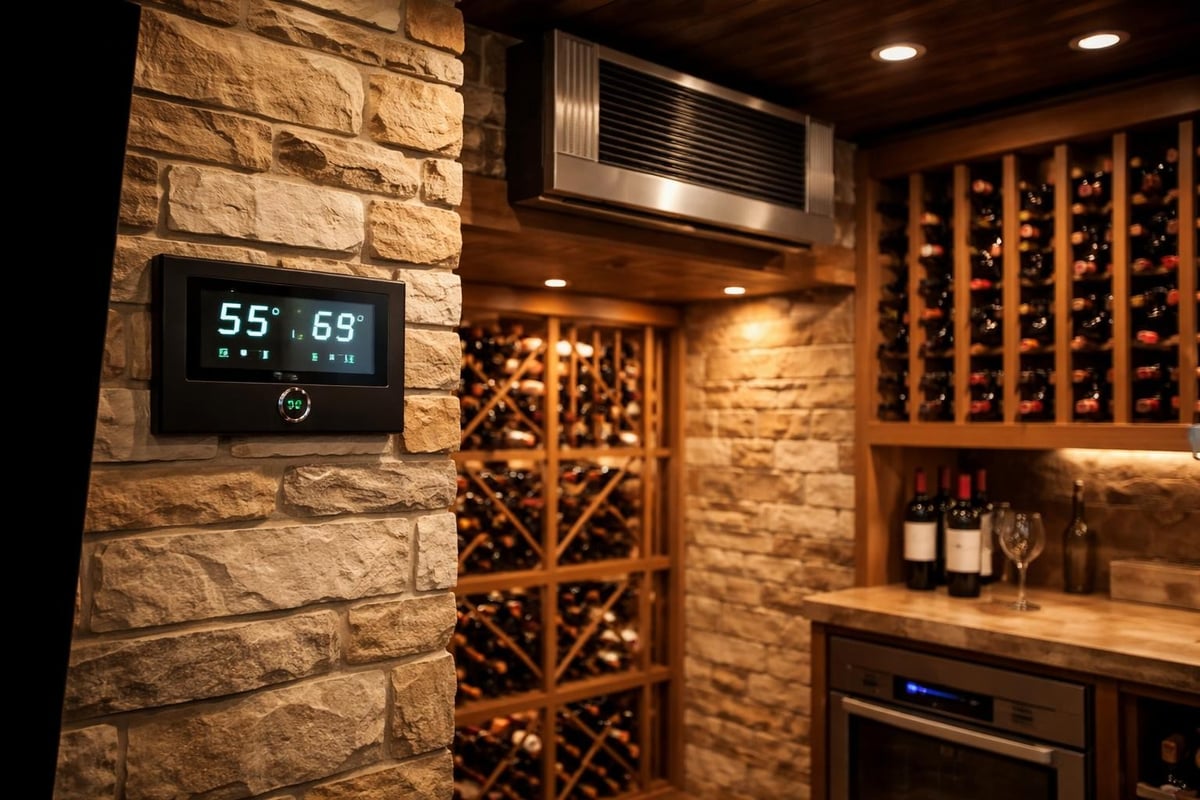
Wine demands consistency above all else. The ideal storage temperature sits between 55°F and 58°F, with minimal fluctuation throughout the year. Even a few degrees of variation can accelerate aging or, worse, damage the wine permanently.
For Fredericksburg locations, this means investing in commercial-grade cooling systems designed specifically for wine storage. Standard HVAC systems simply cannot maintain the precision required. Understanding the fundamentals of wine storage helps homeowners appreciate why professional-grade equipment represents a worthwhile investment rather than an unnecessary expense.
Design Approaches for Hill Country Aesthetics
A custom wine cellar Fredericksburg installation should reflect the region's distinctive character. The Hill Country aesthetic combines rustic warmth with refined elegance, an approach that translates beautifully to wine cellar design.
Rustic Estate Style
This design direction embraces natural materials and craftsmanship. Reclaimed wood beams, limestone accents, and wrought iron details create an authentic Hill Country atmosphere. Rustic estate wine cellars pair exceptionally well with Fredericksburg's architectural heritage.
Material selections for rustic elegance:
Aged oak or mesquite racking systems
Texas limestone feature walls
Hand-forged iron hardware
Exposed beam ceiling treatments
Antique brick flooring or wide-plank hardwood
The beauty of this approach lies in its timelessness. A well-executed rustic design never feels dated, instead developing character and patina over the years.
Modern Integration
Not every Fredericksburg home follows traditional Hill Country design. Contemporary residences benefit from sleek, minimalist wine cellar solutions that emphasize clean lines and transparency. Glass-enclosed showpiece wine cellars transform wine storage into living art.
Design Element | Rustic Approach | Modern Approach |
|---|---|---|
Primary Material | Reclaimed wood, limestone | Glass, metal, concrete |
Lighting Style | Warm, ambient Edison bulbs | LED strips, backlit displays |
Racking System | Traditional wooden bins | Floating metal displays |
Door Treatment | Solid wood with iron accents | Frameless glass panels |
Color Palette | Earth tones, natural finishes | Monochromatic, bold accents |
Space Planning for Fredericksburg Properties
The architecture of Fredericksburg homes varies from historic Main Street cottages to sprawling ranch estates. Each property type presents unique opportunities and constraints for custom wine cellar integration.
Basement Conversions
While basements remain relatively rare in this limestone-rich region, homes that include them offer ideal conditions. Underground spaces naturally maintain cooler temperatures and experience less fluctuation. However, humidity management becomes paramount due to the porous nature of Hill Country bedrock.
Professional waterproofing and vapor barrier installation prevent moisture intrusion. These preparatory steps protect both your wine and the structural integrity of the space.
Ground-Level Installations
Most custom wine cellar Fredericksburg projects utilize ground-level rooms or purpose-built additions. Interior closets, under-staircase areas, or converted guest rooms all present viable options. The key lies in proper insulation and climate control capacity.
Essential space requirements:
Minimum 6-foot ceiling height for comfortable access
Adequate electrical service for cooling equipment
Proper drainage for cooling unit condensation
Sufficient wall thickness for insulation (minimum R-19 rating)
Concrete or tile flooring to prevent moisture absorption
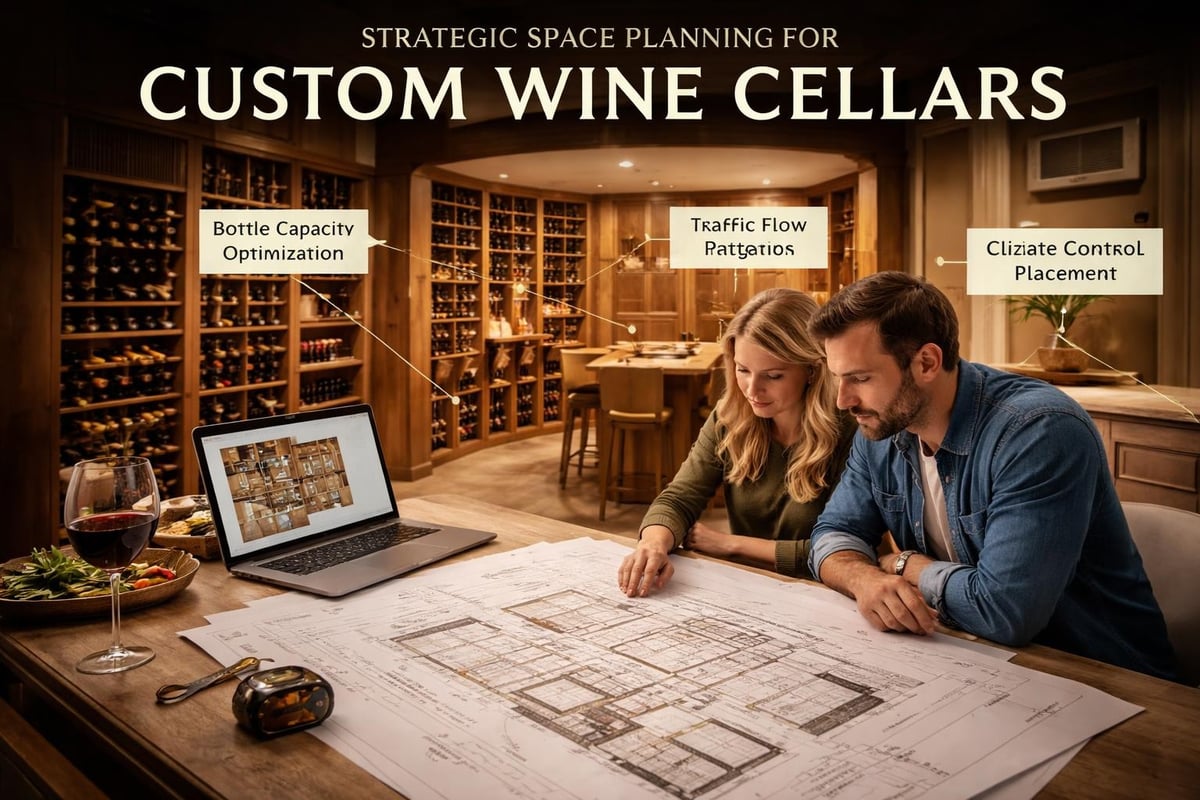
When working with professional designers, homeowners discover creative solutions for even the most challenging spaces. The goal centers on maximizing bottle capacity while maintaining elegance and accessibility.
Climate Control Engineering Specifics
No element matters more to wine preservation than environmental control. A custom wine cellar Fredericksburg installation requires engineering precision that accounts for local conditions and usage patterns.
Calculating Cooling Capacity
The cooling system must accommodate several heat load factors: ambient temperature, cellar size, insulation quality, glass surface area, lighting heat output, and traffic frequency. Professional calculations prevent undersized systems that run constantly or oversized units that cycle inefficiently.
Fredericksburg's extreme summer heat demands units with higher BTU capacity than moderate climates. A 500-bottle cellar in a well-insulated space typically requires a 2,000-3,000 BTU cooling unit, but this varies based on specific conditions.
Humidity Management
Maintaining 60-70% relative humidity prevents cork drying while avoiding mold growth. Too dry, and corks shrink, allowing oxygen ingress. Too humid, and labels deteriorate while mold threatens.
Modern climate control systems integrate both cooling and humidification functions. For Fredericksburg's variable conditions, these dual-function units prove essential rather than optional.
Common climate control mistakes to avoid:
Using residential HVAC systems instead of wine-specific cooling
Inadequate insulation thickness (minimum R-19 walls, R-30 ceiling)
Missing or improperly installed vapor barriers
Insufficient ventilation for cooling unit heat exhaust
Neglecting backup systems or monitoring alerts
Material Selection and Craftsmanship
The materials comprising your custom wine cellar Fredericksburg project impact both aesthetics and functionality. Quality craftsmanship ensures decades of reliable performance.
Racking Systems
Wine racking represents the cellar's foundation. Three primary material options dominate the market, each offering distinct advantages:
Wood racking provides classic beauty and flexibility. Premium hardwoods like mahogany, walnut, or redwood resist warping in controlled environments. Custom configurations accommodate bottle sizes from standard Bordeaux to large-format magnums. Understanding wine cellar materials helps collectors make informed decisions.
Metal racking delivers contemporary elegance with minimal visual weight. Powder-coated steel or brushed aluminum creates floating displays that showcase bottles as sculptural elements. These systems excel in modern designs where transparency and light flow matter.
Acrylic and glass systems push boundaries with translucent storage solutions. LED backlighting transforms wine bottles into glowing artwork. While more expensive, these installations create unforgettable visual impact.
Door and Entry Design
The cellar entrance establishes the experience. Solid wood doors with proper weatherstripping maintain climate boundaries while projecting traditional elegance. Glass doors create transparency but require specialized thermal glazing to prevent heat transfer.
Door Type | Insulation Value | Aesthetic Impact | Cost Range |
|---|---|---|---|
Solid Wood with Iron | Excellent (R-5+) | Rustic, substantial | $$$ |
Insulated Glass | Good (R-3 to R-4) | Modern, transparent | $$$$ |
Wood/Glass Combo | Very Good (R-4+) | Transitional elegance | $$$$ |
Custom Wrought Iron | Moderate (R-2 to R-3) | Dramatic, artisanal | $$$$$ |
Integration with Fredericksburg Lifestyle
A thoughtfully designed custom wine cellar Fredericksburg installation serves beyond mere storage. It becomes an entertainment venue, a tasting sanctuary, and a gathering place that reflects the region's celebrated wine culture.
Tasting Areas and Seating
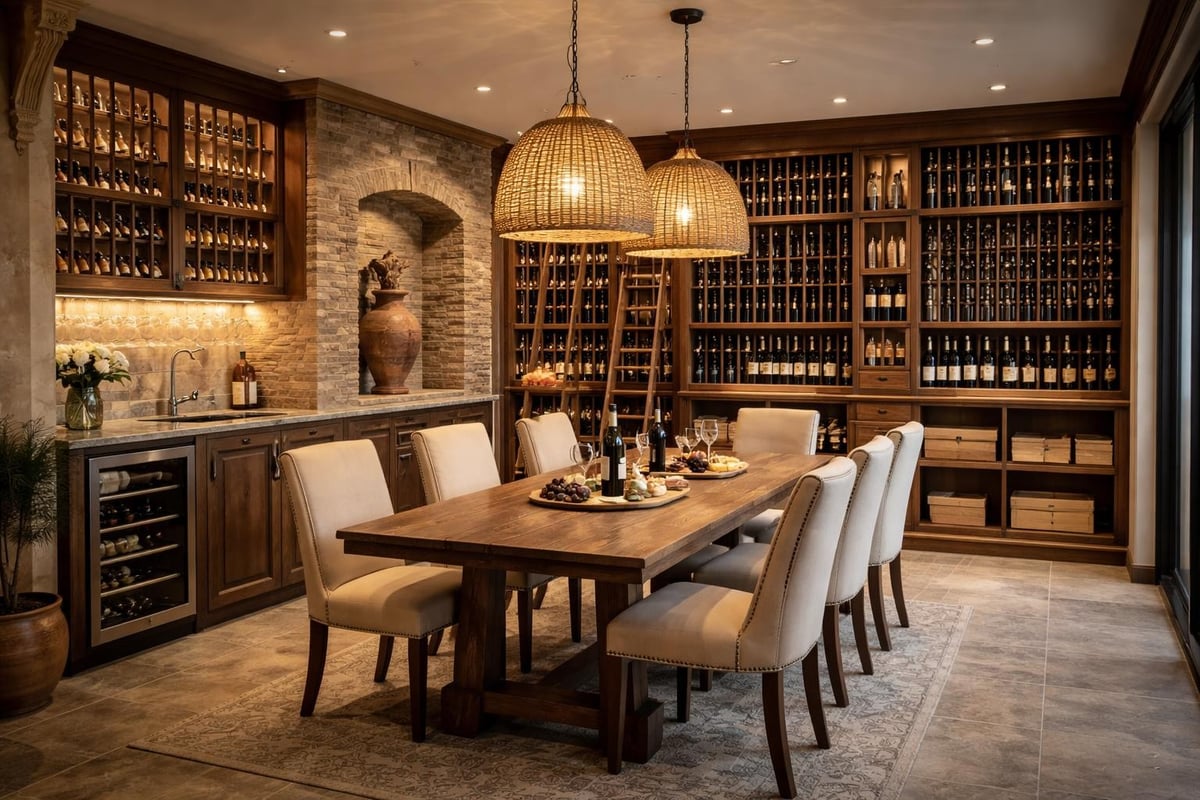
Dedicated tasting spaces within or adjacent to the cellar enhance the collection experience. A small table with comfortable seating, proper stemware storage, and adequate lighting transforms the cellar into a private tasting room.
Consider these enhancements:
Built-in decanters and aerator storage
Temperature-controlled stemware cabinets
Tasting journals and collection inventory systems
Small-format wine fridges for bottles at drinking temperature
Artwork featuring wine country landscapes or vineyard maps
The proximity to Fredericksburg's renowned wine trail makes a dedicated tasting area particularly valuable. After touring local vineyards, returning home to evaluate new acquisitions in your personal cellar creates continuity between the public wine experience and private enjoyment.
Display and Collection Management
Serious collectors require organizational systems that track provenance, optimal drinking windows, and bottle locations. Modern custom wine cellar Fredericksburg projects incorporate technology alongside traditional craftsmanship.
Digital inventory systems sync with smartphone apps, allowing real-time collection management. Barcode scanning, purchase tracking, and automated drinking window alerts remove guesswork from collection curation. These systems integrate seamlessly with traditional label-forward racking that displays bottles for easy visual selection.
Showcase displays highlight prized acquisitions or rare vintages. Backlit niches, individual bottle pedestals, or dedicated cabinet sections draw attention to special bottles. This approach works particularly well for collectors who acquire limited releases from local Fredericksburg wineries or prestigious international producers.
Investment Value and Property Enhancement
Beyond the pleasure of proper wine storage, a custom wine cellar Fredericksburg installation represents a tangible real estate investment. The return on investment for custom wine cellars depends on execution quality, design sophistication, and market positioning.
Market Appeal Factors
Fredericksburg's strong luxury property market responds favorably to well-executed wine cellars. Buyers seeking Hill Country estates often collect wine themselves or aspire to develop collections. A professionally designed cellar signals sophistication and attention to detail throughout the property.
Properties with custom wine cellars typically achieve higher per-square-foot valuations in comparable markets. The premium increases when the cellar demonstrates professional engineering, quality materials, and design harmony with the home's overall aesthetic.
Long-Term Value Protection
Unlike many home improvements that depreciate, properly maintained wine cellars often appreciate alongside the property. The combination of functional utility and timeless design creates lasting value. Exploring turnkey design-build approaches ensures professional execution that maximizes investment protection.
Value-preserving maintenance practices:
Annual cooling system service and filter replacement
Humidity sensor calibration checks
Door seal and weatherstripping inspection
Wood racking treatment and conditioning
Lighting system updates to current LED technology
Regular maintenance protocols prevent small issues from escalating into costly repairs. Professional service contracts provide peace of mind while protecting the installation's long-term value.
Working with Design Professionals
The complexity of custom wine cellar Fredericksburg projects demands expertise across multiple disciplines: architecture, engineering, climate control, carpentry, and wine storage science. Attempting DIY installations risks costly mistakes that compromise both wine safety and property value.
The Design Process
Professional cellar design begins with understanding your collection, growth projections, and aesthetic preferences. Initial consultations explore bottle capacity requirements, style direction, and budget parameters. From there, designers develop concepts that balance form and function.
Typical project timeline:
Initial consultation and site evaluation (1-2 weeks)
Conceptual design and material selection (2-3 weeks)
Engineering drawings and permits (2-4 weeks)
Construction and installation (4-8 weeks)
System calibration and final adjustments (1 week)
The best outcomes emerge from collaborative relationships between homeowners and designers. Clear communication about expectations, budget considerations, and timeline requirements prevents misunderstandings. Viewing a portfolio of completed projects provides inspiration and clarifies design preferences.
Avoiding Common Pitfalls
Even experienced homeowners encounter challenges when building wine cellars. Understanding common mistakes in wine storage helps prevent expensive errors. Professional guidance proves invaluable in navigating these complexities.
Frequent design mistakes:
Insufficient insulation leading to cooling system overwork
Inadequate bottle capacity for collection growth
Poor lighting that generates excessive heat
Inaccessible racking that makes bottle retrieval difficult
Vapor barrier errors causing moisture infiltration
Cooling unit placement creating noise issues
Working with firms that offer comprehensive services from design through maintenance ensures accountability and expertise at every project phase. This integrated approach eliminates coordination headaches between separate contractors.
Regional Considerations and Local Resources
Fredericksburg's position as a wine destination provides unique advantages for custom wine cellar owners. The proximity to more than 50 local wineries creates opportunities for direct-from-vineyard acquisitions and relationships with winemakers.
Supporting Local Wine Culture
A custom wine cellar Fredericksburg project naturally connects to the region's viticultural heritage. Many homeowners dedicate sections of their cellars to Texas wines, creating living archives of the state's evolving wine quality. Vertical collections of flagship vintages from nearby producers document the Hill Country's journey toward world-class winemaking.
This regional focus adds personal meaning beyond mere storage. Each bottle represents a tasting room visit, a conversation with a winemaker, or a special occasion celebrated among the vines. The cellar becomes a repository of memories alongside the wines themselves.
Climate-Specific Design Solutions
Local builders and designers familiar with Fredericksburg conditions bring invaluable regional knowledge. They understand limestone foundation challenges, local building codes, and the specific climate control demands of Hill Country properties. This expertise proves particularly valuable when working with historic properties or unique architectural styles.
For homeowners across Texas seeking similar solutions, firms with broad regional experience offer consistency in quality and approach. Exploring Texas-specific cellar options reveals how professionals adapt designs to different markets while maintaining excellence.
Creating a custom wine cellar in Fredericksburg requires balancing the region's unique climate demands with sophisticated design that honors both your collection and your home's character. When you're ready to transform your wine storage vision into reality, Prestige Wine Cellars brings the expertise, craftsmanship, and dedication to excellence that your collection deserves. From initial concept through final installation and ongoing maintenance, their comprehensive approach ensures your cellar becomes a timeless sanctuary for your treasured bottles.
Your Dream Wine Cellar Starts Here
Let our design team craft a cellar that matches your taste, space, and your collection — built for beauty, function, and prestige.

Email us at
Visit our office