
Modern Wine Cellar Design: Trends & Ideas for 2026
Discover modern wine cellar design trends for 2026. Expert insights on materials, layouts, climate control, and glass-enclosed displays.
The evolution of wine storage has transformed dramatically over the past decade, moving from hidden basement repositories to architectural showpieces that command attention in the most prestigious homes and restaurants. Modern wine cellar design represents a sophisticated fusion of function and artistry, where climate-controlled environments meet cutting-edge aesthetics. Whether you're a collector safeguarding investment-grade Bordeaux or a restaurateur creating an unforgettable dining atmosphere, today's wine cellars serve as both preservation systems and stunning focal points that elevate any space.
The Core Principles of Contemporary Wine Storage
Modern wine cellar design starts with understanding that form and function must work in perfect harmony. Unlike traditional cellars tucked away in basements, contemporary installations often occupy prominent positions within homes, requiring thoughtful integration with existing architecture and interior design schemes.
Climate control remains the foundation of any successful wine cellar, regardless of aesthetic choices. Modern systems maintain precise temperature ranges between 55-58°F with humidity levels around 60-70%, creating ideal conditions for aging bottles properly. Advanced cooling units now operate more quietly and efficiently than their predecessors, making them suitable for open-concept living spaces and dining areas.
The shift toward transparency has revolutionized how we think about wine storage. Glass-enclosed designs have become increasingly popular, allowing collections to become living art installations rather than hidden treasures. This approach requires meticulous attention to UV protection, with specialized coatings and films preventing light damage while maintaining crystal-clear visibility.
Material Selection for Modern Aesthetics
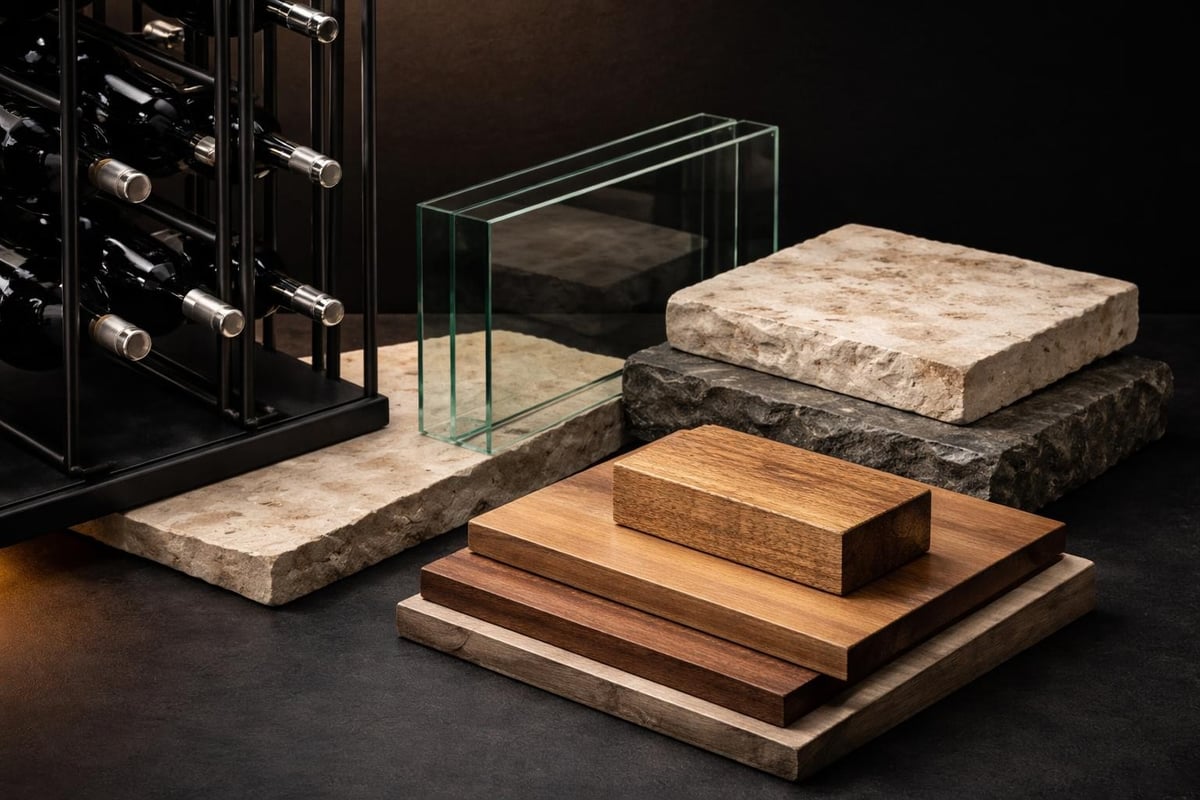
Choosing the right materials defines the character of your wine cellar. Contemporary designs typically favor clean lines and minimal ornamentation, letting materials speak through their inherent qualities:
Metal racking systems in brushed stainless steel, powder-coated aluminum, or matte black finishes
Acrylic and glass panels for floating wine displays with LED backlighting
Natural stone accents including marble, granite, or slate for flooring and feature walls
Engineered woods with seamless finishes in ebony, walnut, or blonde oak tones
Cable wine racks creating dramatic floating bottle presentations
The sustainable materials used in contemporary wine cellars extend beyond aesthetics to environmental responsibility. Reclaimed wood, recycled metal components, and low-VOC finishes contribute to healthier indoor environments while reducing ecological impact.
Architectural Integration and Spatial Planning
The most successful modern wine cellar designs don't exist in isolation. They become integral components of the home's architectural narrative, creating seamless transitions between living spaces and wine storage areas.
Strategic Placement Options
Location | Benefits | Considerations |
|---|---|---|
Kitchen adjacency | Convenient access, entertaining focal point | Requires additional insulation from cooking heat |
Under-stair installations | Maximizes unused space, dramatic angles | Custom racking needed for sloped ceilings |
Glass wine walls | Room dividers, visual transparency | Higher climate control costs |
Dining room showcases | Ultimate entertainment feature | Must accommodate foot traffic patterns |
Basement conversions | Natural cooling, larger capacity | May lack visibility, requires lighting design |
Space efficiency has become paramount in modern residential design, particularly in urban environments where square footage commands premium prices. Compact urban wine cellars demonstrate how thoughtful planning can accommodate substantial collections within limited footprints, often utilizing vertical space and innovative racking configurations.
The concept of wine as architecture has gained significant traction among designers and homeowners alike. Rather than treating wine storage as an afterthought, this philosophy positions the cellar as a defining architectural element from the earliest design phases.
Lighting Design for Drama and Protection
Modern wine cellars rely heavily on sophisticated lighting schemes that balance preservation requirements with visual impact:
LED strip lighting along shelving edges creates gentle ambient illumination
Recessed spotlights highlight specific bottles or architectural features
Color-changing systems adapt mood for different occasions
Motion-activated controls conserve energy while providing automatic illumination
Smart dimming technology adjusts intensity based on time of day
All lighting must emit minimal heat and UV radiation to protect wine integrity. The latest LED systems accomplish both requirements while offering decades of maintenance-free operation.
Glass Enclosures and Transparent Design
Perhaps no element defines modern wine cellar design more distinctly than the embrace of transparency. Glass-enclosed installations have evolved from occasional design flourishes into the dominant aesthetic for luxury wine storage, particularly in commercial settings and high-end residences.
Floor-to-ceiling glass wine walls serve multiple purposes beyond mere aesthetics. They create physical separation while maintaining visual connectivity, allow temperature-controlled zones within open floor plans, and transform wine collections into dynamic art installations that evolve as bottles are added or removed.
The engineering behind these transparent marvels has advanced considerably. Triple-pane glass with argon filling provides superior insulation values, while specialized coatings filter harmful UV wavelengths. Frameless systems using tempered glass panels and minimal hardware create almost invisible barriers between cellar and living space.
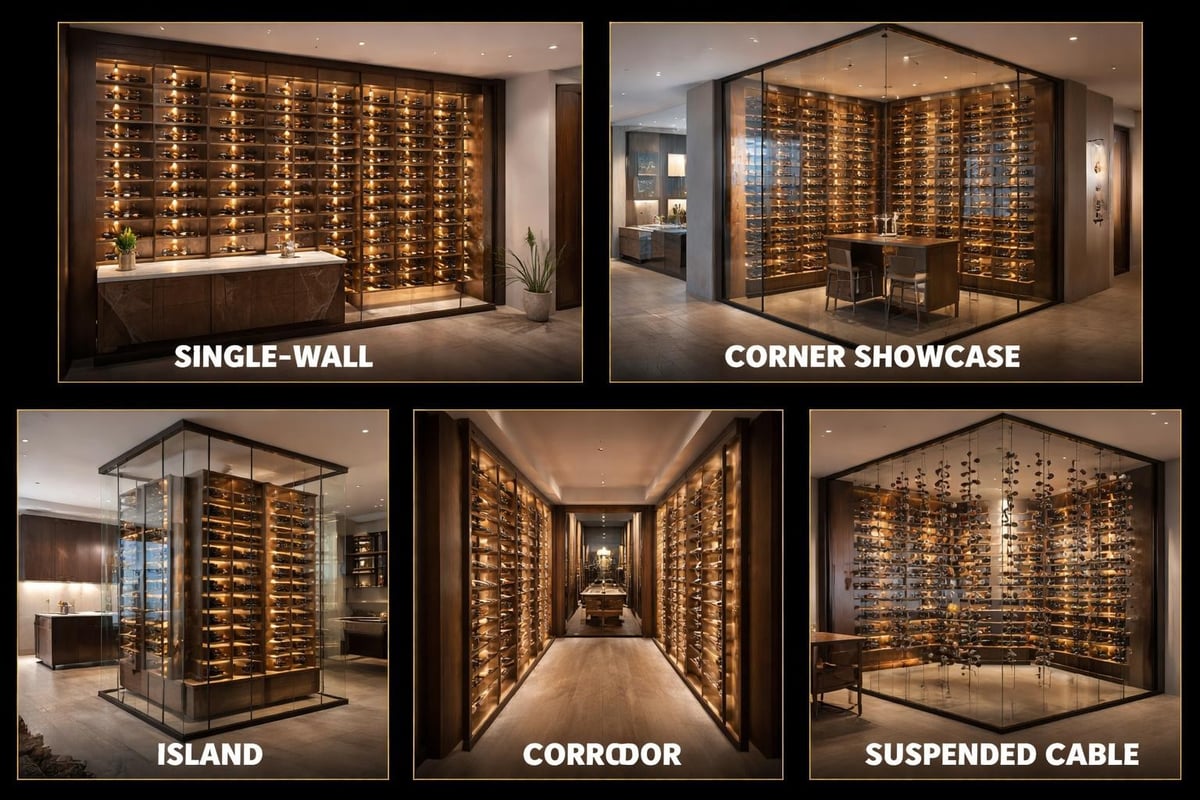
Popular Glass Design Configurations
Single-wall installations separating cellars from adjacent rooms
Corner showcases maximizing visibility from multiple angles
Island cellars creating 360-degree viewing experiences
Corridor installations transforming hallways into gallery-like passages
Suspended displays using cable systems for floating presentations
When considering whether incorporating a wine storage solution into your kitchen design makes sense, glass-enclosed options offer compelling advantages over traditional wine refrigerators, providing substantially greater capacity and superior aesthetic integration.
Racking Systems and Display Innovations
The functional heart of any wine cellar lies in its racking system, but modern wine cellar design has transformed these essential components into sculptural elements. Traditional wooden racks with individual bottle slots have given way to more diverse and visually striking alternatives.
Label-forward displays have become increasingly popular, allowing collectors to showcase their bottles' visual appeal rather than hiding labels. This presentation style works particularly well for collections emphasizing rare vintages or bottles with distinctive packaging design.
Racking Style | Capacity Efficiency | Visual Impact | Best Applications |
|---|---|---|---|
Metal peg systems | High | Minimalist | Modern residential |
Acrylic shelving | Medium | Transparent layers | Small showcases |
Cable wine racks | Medium | Dramatic floating | Feature walls |
Horizontal cradles | High | Organized rows | Large collections |
Bin storage | Very high | Utilitarian | Reserve inventory |
The signature modern wine cellar style often incorporates mixed racking types within a single installation, using label-forward displays for prized bottles while employing higher-density systems for everyday drinking wines.
Customization and Flexibility
Modern collectors increasingly demand adaptable storage solutions that accommodate changing collection profiles. Modular racking systems allow configuration adjustments without complete reconstruction, supporting:
Different bottle sizes from splits to magnums and larger formats
Mixed storage depths for Bordeaux, Burgundy, and Champagne bottles
Adjustable spacing as collections evolve
Expansion capabilities for growing inventories
Technology Integration and Smart Controls
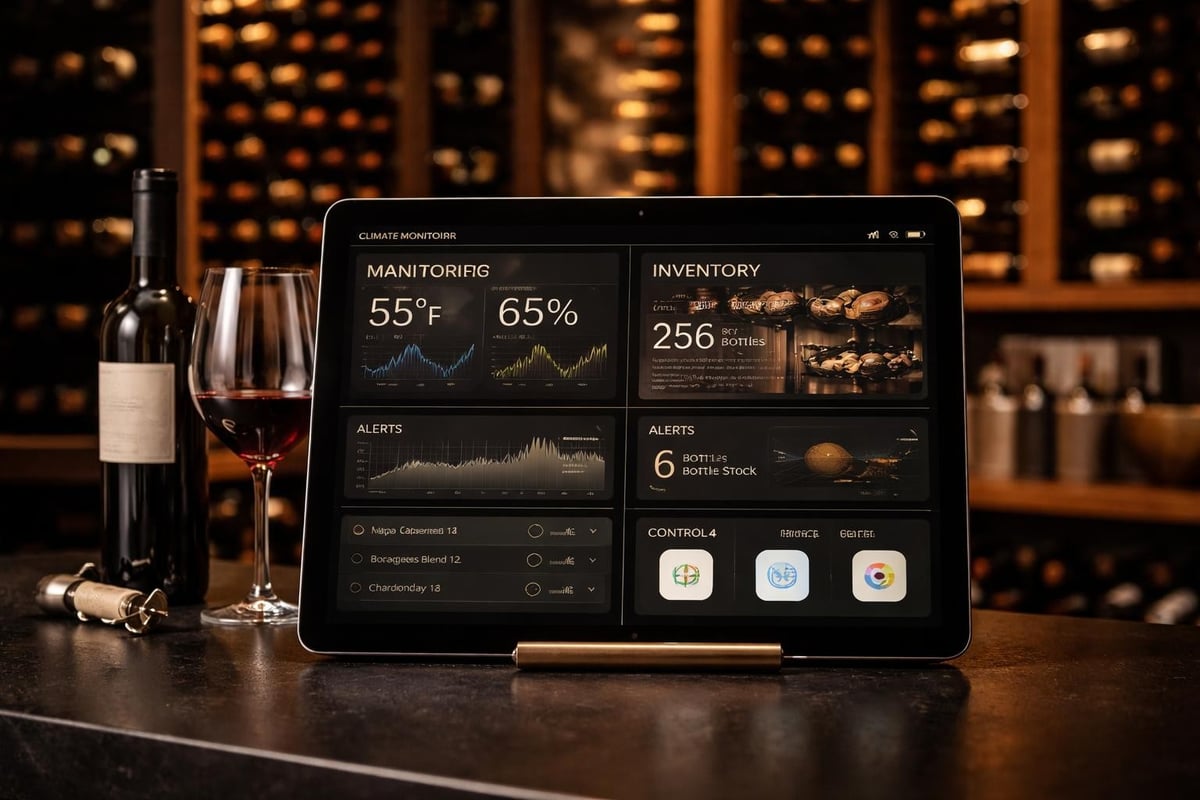
The intersection of wine storage and smart home technology has produced remarkable innovations over recent years. Modern wine cellar design now routinely incorporates digital systems that monitor, protect, and enhance the wine preservation environment.
Climate monitoring apps provide real-time temperature and humidity data accessible from anywhere, sending alerts when conditions drift outside acceptable parameters. These systems prove invaluable for collectors managing investment-grade wines where even brief temperature fluctuations can impact value.
Smart cellar management extends beyond environmental controls:
Digital inventory systems tracking purchase dates, drinking windows, and current values
Automated reordering notifications when specific bottles are consumed
Food pairing suggestions based on available inventory
Integration with home automation platforms for lighting and access control
Security cameras monitoring high-value collections
The advanced features available in modern wine storage solutions have migrated from small wine refrigerators into full-scale cellar installations, offering unprecedented control and convenience.
Commercial Applications and Restaurant Design
Modern wine cellar design principles apply equally to residential and commercial installations, though restaurants, hotels, and private clubs often amplify the theatrical aspects. These spaces recognize that wine storage can function as a powerful marketing tool, creating memorable experiences that differentiate establishments in competitive markets.
Glass-enclosed cellars positioned in high-visibility locations allow diners to appreciate extensive collections while creating aspirational atmospheres. Seeing thousands of bottles artfully displayed elevates perceived value and reinforces a restaurant's commitment to wine program excellence.
The Cambria Hotel wine cellar project in Waco demonstrates how modern design can transform a hotel's guest experience, creating an Instagram-worthy focal point that generates organic social media promotion while serving functional storage needs.
Design Considerations for Commercial Spaces
Commercial wine cellars require additional planning beyond residential projects:
Accessibility for staff during service hours without disrupting guest experiences
Security systems protecting valuable inventory from theft
Temperature zoning for wines at different service temperatures
Capacity planning accommodating both display bottles and reserve inventory
Maintenance access for cleaning and equipment servicing
Many successful commercial installations incorporate turnkey design-build approaches that streamline project timelines and ensure all systems work cohesively from day one.
Comparing Modern and Traditional Approaches
Understanding the distinction between contemporary and classic wine storage helps clarify design direction. While both approaches prioritize proper wine preservation, their aesthetic philosophies and spatial strategies differ significantly.
Modern versus traditional wine cellar designs present distinct choices in materials, racking systems, and overall ambiance. Modern installations emphasize:
Visual transparency and openness rather than enclosed, private spaces
Minimal ornamentation focusing on clean lines and geometric forms
Contemporary materials like metal, glass, and engineered products
Integrated technology making systems visible and accessible
Architectural showcase positioning cellars as design statements
Traditional cellars, conversely, often feature rich wood paneling, ornate millwork, lower lighting levels, and deliberately aged or rustic aesthetics. Neither approach is inherently superior; the choice depends on personal preference, existing architecture, and the overall design narrative of your home or establishment.
Transitional Design Solutions
Many homeowners find themselves drawn to elements from both camps. Transitional wine cellars bridge modern and traditional aesthetics, incorporating:
Wood racking with contemporary profiles and finishes
Glass enclosures combined with warm wood tones
Traditional stone flooring paired with modern lighting
Classic bottle orientation with minimalist hardware
This hybrid approach often proves ideal for homes mixing architectural periods or for collectors appreciating both old-world charm and contemporary convenience.
Climate Control Engineering
While aesthetics define the visual character of modern wine cellar design, climate control engineering determines whether the installation actually preserves wine properly. The most beautiful cellar fails its primary mission if environmental conditions fluctuate beyond acceptable ranges.
Properly sized cooling systems represent the single most critical investment in any wine cellar project. Undersized units run constantly, struggling to maintain temperatures while consuming excessive energy and experiencing premature failure. Oversized systems short-cycle, creating temperature swings and humidity problems.
Professional engineering calculations account for numerous variables:
Total glass surface area and insulation values
Adjacent room temperatures and heat transfer
Lighting heat loads and electrical systems
Bottle capacity and thermal mass
Door and access point infiltration rates
Geographic climate conditions
Custom wine cellar design services include comprehensive engineering analysis ensuring systems match specific project requirements rather than relying on generic sizing rules that rarely account for unique circumstances.
Insulation and Vapor Barriers
Modern cellars require complete thermal envelopes with proper insulation and vapor barriers preventing condensation problems. This proves particularly challenging in glass-enclosed installations where aesthetic desires for minimal framing conflict with thermal performance requirements.
Advanced solutions include:
Structural insulated panels providing superior R-values in minimal thickness
Spray foam applications creating seamless air barriers
Thermal breaks in metal framing systems preventing conductive heat transfer
Dehumidification systems managing moisture in humid climates
Strategic equipment placement positioning cooling units for optimal efficiency
Investment Considerations and Return Value
Prospective wine cellar owners frequently ask about financial implications, particularly regarding home value impacts. The answer depends on numerous factors including local market conditions, installation quality, and the overall luxury level of the residence.
According to analysis of wine cellar value propositions, well-executed installations in appropriate properties generally add value, though rarely dollar-for-dollar returns on construction costs. The real benefit often lies in accelerated sale timelines and competitive advantages in luxury markets where distinctive features differentiate properties.
Modern wine cellars tend to photograph exceptionally well, providing compelling visual content for real estate marketing. In today's digital-first property market, Instagram-worthy features generate significantly more showing requests and buyer interest than traditional amenities.
Budget Allocation Strategies
Successful projects require realistic budget planning across multiple categories:
Expense Category | Typical Percentage | Priority Level |
|---|---|---|
Climate control system | 25-30% | Critical |
Racking and displays | 20-25% | High |
Glass and enclosure | 15-20% | High (modern designs) |
Lighting and electrical | 10-15% | Medium-high |
Finishes and materials | 10-15% | Medium |
Installation labor | 15-20% | Critical |
Working with experienced professionals from initial planning through completion ensures budgets allocate appropriately across all necessary components while avoiding costly mistakes or remediation work.
Regional Design Trends and Climate Adaptation
Wine cellar design varies considerably by geographic region, influenced by local climate conditions, architectural traditions, and cultural preferences. Texas installations face different challenges and opportunities compared to cellars in moderate California climates or humid Gulf Coast locations.
The Texas climate demands robust cooling systems capable of handling extreme summer temperatures and significant day-to-night temperature swings. Projects in Houston, Dallas, and Austin require careful attention to humidity management and dehumidification capabilities.
Contemporary design trends popular in 2025 and continuing through 2026 include minimalist glass enclosures, integrated ambient lighting, and seamless architectural integration. These elements adapt to regional contexts while maintaining core modern aesthetic principles.
Maintenance and Longevity
Modern wine cellars require ongoing maintenance ensuring systems continue performing optimally over decades. Unlike traditional cellars with passive cooling, contemporary installations depend on mechanical systems needing regular service:
Annual refrigeration system inspections checking refrigerant levels and component function
Filter replacements maintaining air quality and system efficiency
Seal and gasket checks preventing air infiltration
Lighting component replacement as LEDs reach end-of-life
Racking adjustments as collections evolve
Professional maintenance services extend equipment lifespans while preventing small issues from becoming expensive failures. Establishing maintenance schedules from the beginning protects both wine collections and initial construction investments.
Personalizing Your Modern Wine Cellar
The most successful modern wine cellar designs reflect their owners' personalities, collecting habits, and lifestyle patterns. While contemporary aesthetics provide general frameworks, individualization transforms competent installations into truly exceptional spaces.
Consider how you actually interact with your collection when planning layout and features. Serious collectors who frequently access bottles require different configurations than those maintaining investment wines for long-term aging. Enthusiastic entertainers benefit from features highlighting prized bottles and facilitating guest interaction.
Personalization opportunities include:
Custom etched glass panels with family names, crests, or meaningful quotes
Specialized storage for oversized formats, half-bottles, or specific regions
Tasting areas within or adjacent to the cellar
Display niches for decanters, glassware, and wine accessories
Historical bottle preservation for milestone vintages
Reviewing a designer's portfolio of completed projects provides inspiration while demonstrating capabilities across different styles, scales, and applications.
Modern wine cellar design in 2026 represents the perfect marriage of preservation science and architectural artistry, creating spaces that protect valuable collections while serving as stunning focal points within homes and commercial establishments. Whether you're envisioning a glass-enclosed showpiece, a compact urban installation, or a sprawling collector's dream, the key lies in balancing aesthetic vision with engineering excellence and practical functionality. At Prestige Wine Cellars, we bring decades of specialized expertise to every project, transforming your wine storage aspirations into timeless reality through comprehensive design, engineering, and construction services tailored to your unique vision.
Your Dream Wine Cellar Starts Here
Let our design team craft a cellar that matches your taste, space, and your collection — built for beauty, function, and prestige.

Email us at
Serving Austin, Dallas–Fort Worth, Houston & San Antonio