
Wine Guardian DS050: Expert Guide to Climate Control
Discover why the Wine Guardian DS050 split system is the premier choice for luxury wine cellars. Expert insights on installation, specs & performance.
Selecting the right climate control system is perhaps the most critical decision you'll make when designing a luxury wine cellar. The wine guardian ds050 represents a sophisticated solution that has earned its place as a preferred choice among discerning collectors, high-end restaurants, and boutique hotels. This ducted split system delivers quiet, reliable performance while offering the flexibility to hide mechanical components away from your beautifully crafted display space. Whether you're planning a traditional wine room in your Texas estate or a sleek glass-enclosed showcase for your restaurant, understanding the capabilities and specifications of this system will help you make an informed investment in protecting your collection.
Understanding the Wine Guardian DS050 Split System Architecture
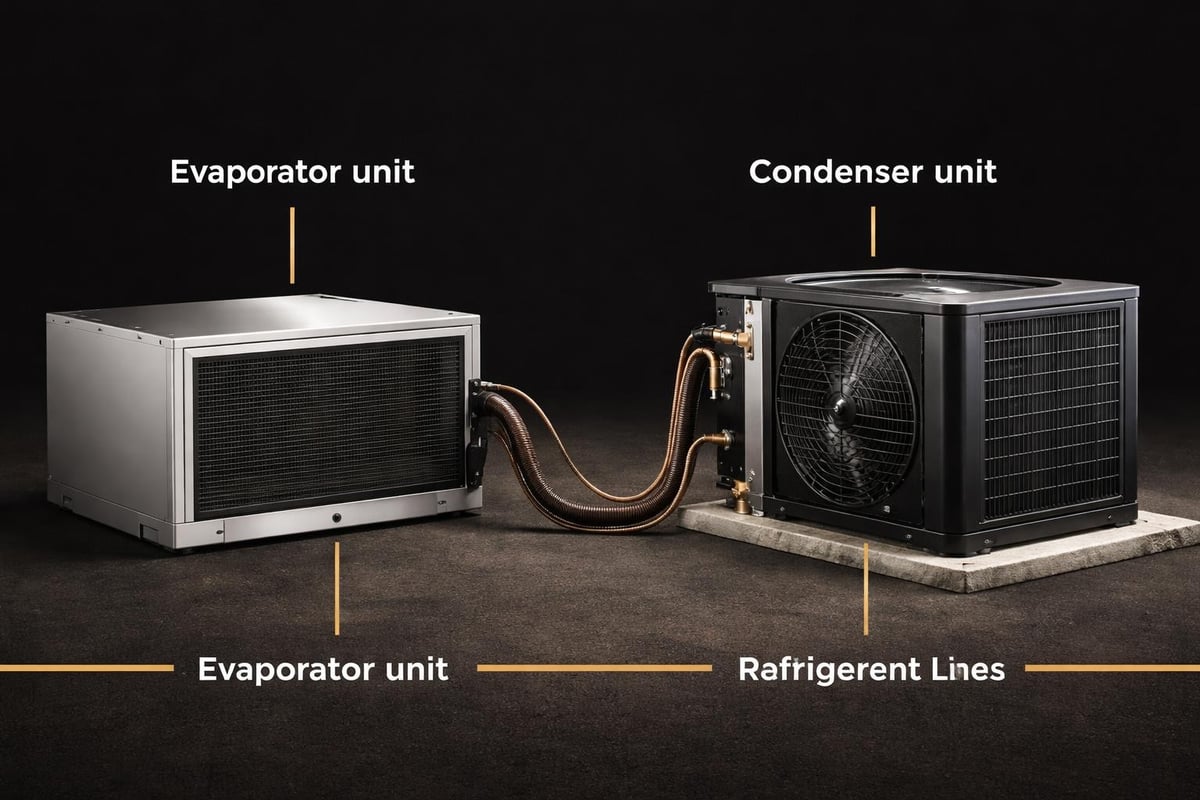
The wine guardian ds050 operates on a fundamental principle that separates it from through-wall units: it divides the cooling system into two distinct components. The evaporator unit installs inside or near your cellar, while the condenser unit can be positioned remotely, often in a garage, utility room, or even outdoors.
This split configuration offers several advantages that matter tremendously in luxury applications. Remote placement of the condenser means the noisiest component of your cooling system never interferes with the tranquil atmosphere of your wine room. The heat generated during the cooling process dissipates far from your living spaces, and you gain remarkable flexibility in custom wine cellar design without compromising wall space for bulky equipment.
Technical Specifications That Define Performance
The DS050 delivers 5,500 BTUs of cooling capacity, making it suitable for cellars ranging from approximately 500 to 1,000 cubic feet, depending on specific conditions. Wine Guardian's detailed specifications reveal the precision engineering behind this system.
Specification | DS050 Performance |
|---|---|
Cooling Capacity | 5,500 BTU/hr |
Voltage | 115V/60Hz |
Temperature Range | 50°F - 65°F |
Humidity Control | Optional integrated humidifier |
Refrigerant Type | R-410A |
Typical Cellar Size | 500-1,000 cubic feet |
The system maintains temperature stability within one degree, which is essential for long-term wine storage. This precision prevents the damaging temperature fluctuations that can accelerate aging and compromise cork integrity.
Installation Flexibility for Diverse Architectural Scenarios
One of the most compelling reasons designers and builders appreciate the wine guardian ds050 is its adaptability to challenging spaces. The evaporator and condenser can be positioned up to 50 feet apart with proper refrigerant line sizing, allowing creative solutions for locations where traditional cooling units simply won't work.
Common installation scenarios include:
Estate wine cellars where mechanical noise must be completely eliminated
Urban compact wine cellars with limited interior space
Restaurant wine displays requiring whisper-quiet operation
Historic buildings where exterior aesthetics must be preserved
Multi-level homes where the cellar sits far from suitable condenser locations
The ducted design means you can distribute conditioned air precisely where needed. Some installations incorporate discrete ceiling vents, while others use floor registers or concealed wall grilles. This flexibility proves invaluable when working with glass-enclosed showpiece wine cellars where visible equipment would detract from the visual impact.
Line Set and Electrical Requirements
Professional installation requires careful attention to refrigerant line routing. The DS050 uses pre-charged line sets that simplify installation while ensuring optimal performance. Lines must be properly insulated and pitched to prevent oil trapping.
Electrical requirements are straightforward for residential applications. The system operates on standard 115V power, though dedicated circuits are essential. Both the evaporator and condenser require separate electrical connections, and many jurisdictions require GFCI protection for the outdoor condenser unit.
Climate Control Precision for Different Collection Types
Not all wine collections have identical storage requirements, and the wine guardian ds050 accommodates varying needs through its sophisticated control system. The unit maintains temperature within a narrow band, but you'll want to set different parameters depending on what you're storing.
Storage strategy by wine type:
Long-term aging collections benefit from consistent 55°F temperatures with minimal fluctuations
Ready-to-drink inventory can be stored at slightly warmer temperatures (58-62°F) for optimal serving preparation
Mixed collections require balancing between preservation and accessibility at around 55-57°F
Sparkling wines often perform best at the cooler end of the spectrum (50-55°F)
The DS050's digital controller allows precise temperature setting in one-degree increments. This granular control matters when you're protecting bottles worth hundreds or thousands of dollars each.
Humidity Management Options
While the wine guardian ds050 provides inherent humidity control through its cooling process, some climates and installations benefit from enhanced humidity management. The Sentinel Series Integrated Humidifier integrates seamlessly with the DS050, adding active humidification when ambient conditions are particularly dry.
Texas climates present interesting challenges. While Houston's Gulf Coast humidity rarely requires supplemental moisture, Austin and Dallas can experience dry periods where humidification prevents cork shrinkage. The integrated approach means your humidity control works in concert with temperature management rather than fighting against it.
Comparing Split Systems to Alternative Cooling Solutions
Understanding where the wine guardian ds050 fits within the broader landscape of cellar cooling helps you make the right choice for your specific project. Each cooling system type brings distinct advantages and limitations.
System Type | Noise Level | Installation Complexity | Visual Impact | Cost Range |
|---|---|---|---|---|
Through-Wall | Moderate-High | Low | High (visible unit) | $ |
Ducted Split (DS050) | Very Low | Moderate | Minimal | $$ |
Self-Contained | High | Low | Very High | $ |
Packaged Systems | Low-Moderate | High | Minimal | $$$ |
The DS050 occupies the sweet spot for many luxury applications. It costs more than basic through-wall units but delivers dramatically better aesthetics and quieter operation. For traditional wine cellars and modern wine cellars alike, this balance of performance and investment makes sense.
When the DS050 excels:
Residential cellars from 200 to 800 bottles
Restaurant wine walls visible to diners
Hotel display cellars in public spaces
Retrofit projects in existing homes
Locations with accessible remote condenser placement
When to consider alternatives:
Very large commercial cellars (2,000+ bottles) requiring multiple units or larger systems
Extremely tight budgets prioritizing function over form
Locations where remote condenser placement is impossible
Temporary or portable cellar installations
Maintenance and Long-Term Performance Considerations
Investing in a wine guardian ds050 means committing to proper maintenance practices that ensure decades of reliable service. These systems are engineered for longevity, but they require attention to deliver on that promise.
Routine Maintenance Schedule
Monthly tasks:
Inspect and clean evaporator air filters
Verify temperature and humidity readings match settings
Check condensate drain line for clogs
Quarterly tasks:
Clean condenser coils of dust and debris
Inspect refrigerant line insulation for damage
Test system cycling and confirm proper operation
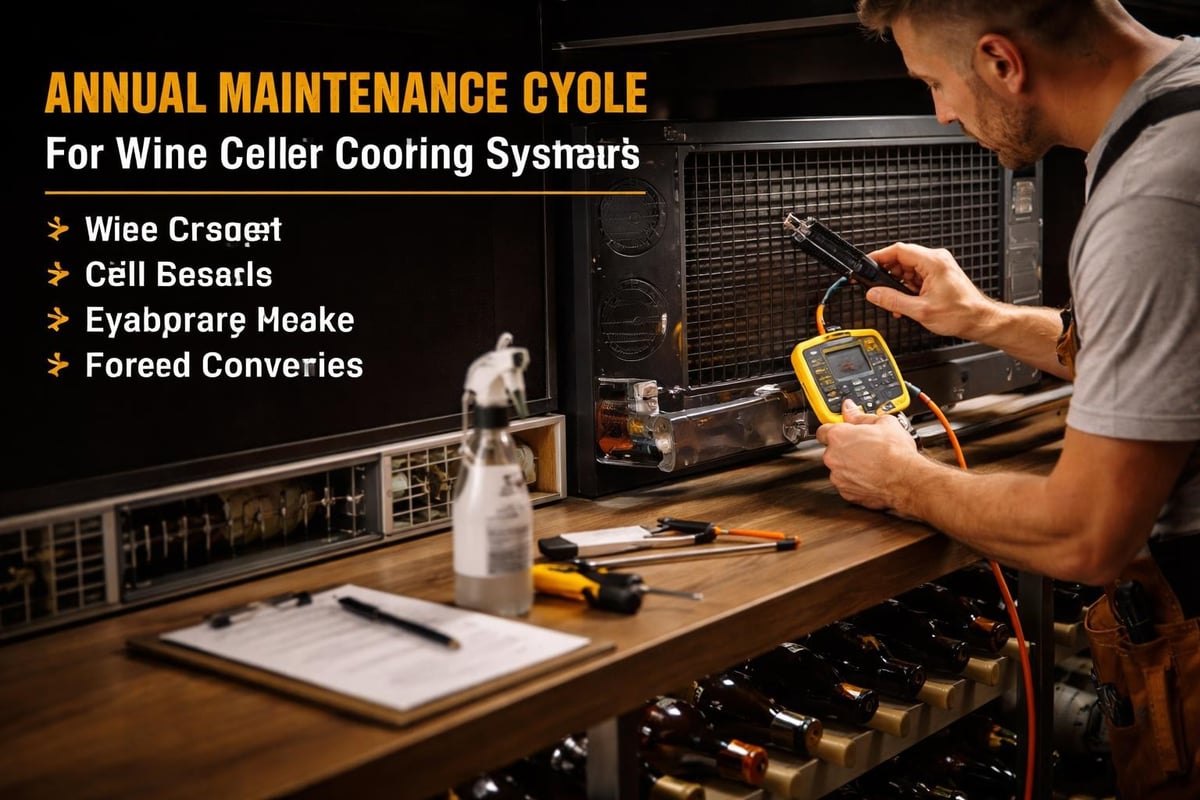
Annual professional service:
Comprehensive refrigerant pressure check
Electrical connection inspection and tightening
Fan motor lubrication and bearing inspection
Control system calibration verification
The annual service proves particularly important in Texas climates where temperature extremes stress cooling equipment. A qualified technician can identify small issues before they become expensive failures. Many wine cellar maintenance programs include this preventive service as part of comprehensive care packages.
Common Issues and Solutions
Even well-maintained systems occasionally require troubleshooting. Understanding typical DS050 issues helps you respond quickly when problems arise.
The most common concern involves insufficient cooling, usually traced to dirty filters or blocked condenser airflow. Regular filter changes prevent 80% of these calls. Humidity problems often stem from improper door sealing rather than equipment malfunction, especially in frequently accessed cellars.
Unusual noises merit immediate attention. While the wine guardian ds050 operates quietly under normal conditions, grinding or squealing sounds indicate fan motor issues that worsen rapidly if ignored. Addressing these promptly prevents expensive compressor damage.
Integration with Comprehensive Cellar Design
The wine guardian ds050 doesn't exist in isolation; it's one component within a carefully orchestrated system. Proper integration with your cellar's vapor barrier, insulation, door sealing, and ventilation determines whether your cooling system performs optimally or struggles constantly.
Critical integration points:
Vapor barrier installation prevents moisture migration that overworks the cooling system
Insulation specifications (R-19 minimum walls, R-30 ceiling) reduce cooling load
Door selection and sealing prevents temperature loss and humidity escape
Lighting choices minimize heat generation inside the cellar
Air distribution design ensures even temperature throughout all storage areas
A comprehensive design and installation approach accounts for these factors before equipment selection. You might discover that proper insulation allows the DS050 to cool a larger space than baseline specifications suggest, or conversely, that poor door sealing requires upgrading to a larger system.
Calculating Your Actual Cooling Load
While the wine guardian ds050 handles cellars up to 1,000 cubic feet under ideal conditions, real-world performance depends on your specific heat load. Multiple factors influence this calculation beyond simple volume.
Heat load variables:
Exterior wall exposure adds significant load in Texas summers
Glass area and type dramatically affects heat transfer
Access frequency introduces warm, humid air with each entry
Ambient temperature of surrounding spaces determines temperature differential
Lighting heat generation from fixtures operating inside the cellar
Using a professional heat load calculator prevents the expensive mistake of undersizing your cooling system. An overworked DS050 runs constantly, never achieving target temperature while consuming excessive energy and wearing components prematurely.
Real-World Applications Across Texas Installations
The versatility of the wine guardian ds050 becomes clear when examining actual installations across diverse settings. From intimate residential collections to impressive commercial displays, this system adapts to varied requirements while maintaining consistent performance standards.
Consider a recent Austin wine cellar project featuring a 600-bottle collection housed beneath a primary bedroom suite. The homeowners prioritized absolute silence during sleeping hours. The DS050's split configuration allowed the condenser to install 45 feet away in the garage, while the ducted evaporator supplied air through discrete ceiling vents. Result? Inaudible operation and perfect 55°F stability year-round.
Contrast this with a Lakeway installation where the wine cellar occupied space adjacent to a home theater. Here, the challenge involved cooling the cellar while preventing mechanical noise from disrupting movie viewing. Again, the DS050's split architecture provided the solution, with careful attention to vibration isolation and duct insulation ensuring peaceful coexistence of both spaces.
Commercial Applications Requiring Discrete Climate Control
Restaurant and hotel wine displays present unique demands. These collections must remain accessible while looking impeccable, and any mechanical noise disrupts the dining or guest experience.
The Wine Guardian ducted split systems excel in these environments. A recent boutique hotel installation in the Texas Hill Country showcased 400 bottles in a stunning glass enclosure visible from the lobby. The DS050 kept conditions perfect while remaining completely invisible and inaudible to guests. The remote condenser integrated into the hotel's mechanical systems, and the ducted supply air distributed through custom bronze grilles matching the hotel's design aesthetic.
Advanced Control and Monitoring Capabilities
Modern wine collectors expect more than simple thermostatic control. The wine guardian ds050 offers sophisticated monitoring options that provide peace of mind and early warning of potential issues.
Standard control features include:
Digital temperature display with 0.1-degree precision
Adjustable temperature set points from 50-65°F
Automatic defrost cycling to prevent frost buildup
High temperature alarm functionality
Service reminder indicators
Optional upgrades expand these capabilities significantly. Remote monitoring systems allow you to check your cellar conditions from anywhere via smartphone apps. This proves invaluable for collections worth $50,000 or more, where a cooling failure during a vacation could result in catastrophic losses.
Some installations integrate cellar climate control with comprehensive home automation systems. Your wine cellar conditions can appear on the same dashboard that controls lighting, security, and HVAC throughout your estate, providing unified management of your home's critical systems.
Energy Efficiency and Operating Costs
While protecting valuable wine justifies the initial investment in quality cooling equipment, ongoing operating costs matter over decades of ownership. The wine guardian ds050 delivers respectable efficiency for its class, though it won't match the performance of larger, more expensive packaged systems.
Typical energy consumption runs 400-600 kWh annually, depending on ambient conditions and cellar size. In Texas, where electricity averages $0.12-0.14 per kWh, this translates to approximately $50-85 in annual operating costs. Proper insulation and door sealing can reduce this by 20-30%, making the total cost of ownership quite reasonable for the performance delivered.
Compare this to the potential loss from a single case of premium wine damaged by improper storage, and the value proposition becomes clear. Reliable climate control isn't an expense but rather insurance protecting assets that appreciate over time.
Selecting Between DS050 and Related Wine Guardian Models
Wine Guardian's product line includes several models that might suit your project. Understanding when to select the DS050 versus stepping up to larger systems or stepping down to simpler units helps optimize your investment.
The DS050's 5,500 BTU capacity positions it perfectly for residential cellars storing 200-800 bottles. For smaller collections (under 200 bottles), the more compact units may suffice and cost less. Conversely, serious collectors housing 1,000+ bottles should consider the DS100 or larger models to ensure adequate cooling capacity with reserve.
Model | BTUs | Typical Bottle Capacity | Best Application |
|---|---|---|---|
DS025 | 2,500 | 100-300 | Small residential, wine cabinets |
DS050 | 5,500 | 200-800 | Medium residential, small commercial |
DS100 | 10,000 | 600-1,500 | Large residential, restaurants |
DS200 | 16,000 | 1,200-2,500 | Commercial, hotel displays |
The DS050 represents the most popular choice among our clients because it handles the size range where most serious collectors operate while maintaining reasonable equipment and installation costs. Upgrading to the DS100 might seem attractive for future expansion, but oversized equipment cycles inefficiently and may struggle with humidity control in smaller spaces.
Installation Best Practices From the Field
Fifteen years of installing wine guardian ds050 systems across Texas wine country has taught valuable lessons about what separates good installations from exceptional ones. These details rarely appear in specification sheets but dramatically impact long-term satisfaction.
Critical installation details:
Position the evaporator to ensure even air distribution across all bottle storage areas
Route supply ducts with minimal bends and adequate sizing (typically 6-inch diameter)
Install return air pathways that don't create dead spots or short-cycling
Slope refrigerant lines properly to prevent oil trapping in the compressor
Provide adequate condenser clearance (24 inches minimum on all sides)
Use vibration isolation pads beneath both evaporator and condenser units
Install condensate pumps where gravity drainage isn't possible
One detail that separates amateur from professional installations involves the condensate management system. Wine cellars in humid climates generate surprising amounts of water during cooling cycles. Proper drainage prevents water damage and ensures the system operates efficiently. Some installations require condensate pumps to lift water to remote drain locations, and these pumps need their own maintenance attention.
Avoiding Common Installation Mistakes
Several installation errors appear repeatedly in troubleshooting calls for struggling systems. Awareness prevents these costly mistakes.
Undersized ductwork is perhaps the most common issue. Contractors unfamiliar with wine cellar cooling sometimes use standard HVAC sizing methods, resulting in inadequate airflow and poor performance. The DS050 requires specific duct sizing based on run length and configuration, and shortcuts here compromise everything.
Inadequate condenser ventilation causes premature failure in hot Texas summers. The condenser must reject heat efficiently, and this requires generous clearance and unrestricted airflow. Installing a condenser in a tight attic space or enclosed patio area without proper ventilation guarantees problems.
Improper refrigerant line installation shows up months or years later as the system gradually loses cooling capacity. Lines must be properly insulated, supported without kinks, and protected from physical damage. Professional installation includes pressure testing and proper evacuation before charging, steps that DIY installations often skip.
The wine guardian ds050 represents a sophisticated approach to climate control that balances performance, aesthetics, and investment for discerning wine collectors and commercial applications. Its split system architecture, precise temperature control, and flexible installation options make it particularly well-suited for luxury environments where both your wine and your space deserve exceptional care. Whether you're planning a new cellar or upgrading an existing installation, Prestige Wine Cellars brings decades of expertise in designing and building custom wine storage solutions that seamlessly integrate the DS050 and other premium cooling systems into spaces that protect your collection while reflecting your personal style.
Your Dream Wine Cellar Starts Here
Let our design team craft a cellar that matches your taste, space, and your collection — built for beauty, function, and prestige.

Email us at
Visit our office