
Custom Built Wine Cellars: The Ultimate Guide (2026)
Discover how custom built wine cellars blend artistry and engineering to create the perfect environment for your collection. Expert insights inside.
The difference between storing wine and preserving a legacy lies in the details. Custom built wine cellars represent far more than temperature-controlled storage spaces. They are architectural statements, precision-engineered environments, and personal sanctuaries where artistry meets science. Whether you're a private collector safeguarding rare Bordeaux, a restaurateur showcasing premium vintages, or a hotelier creating an unforgettable guest experience, a thoughtfully designed wine cellar elevates both your space and your collection. As we move through 2026, the demand for bespoke wine storage solutions continues to grow among discerning homeowners and hospitality professionals who understand that exceptional wine deserves an exceptional home.
Why Custom Built Wine Cellars Outperform Standard Solutions
Off-the-shelf wine storage systems might seem convenient, but they rarely address the unique characteristics of your space, collection, or aesthetic vision. Custom built wine cellars begin with your specific needs, not generic specifications.
Precision Climate Engineering
Every location presents distinct challenges. A cellar in a Houston estate faces different humidity and temperature considerations than one in a Dallas high-rise. Custom solutions account for:
Regional climate variations affecting insulation requirements
Existing HVAC systems and their integration capabilities
Room orientation and exposure to external walls
Collection size and anticipated growth over decades
Bottle types requiring different racking configurations
Standard units assume average conditions. Custom engineering ensures your wine ages exactly as intended, regardless of external factors.
Architectural Integration
The most successful wine cellars feel like natural extensions of your home or establishment. Custom wine cellar design services transform awkward spaces into stunning focal points.
Consider these integration opportunities:
Location | Design Approach | Key Benefits |
|---|---|---|
Under-stair spaces | Glass-enclosed display | Maximizes unused square footage |
Former closets | Reach-in wine rooms | Converts wasted space into luxury |
Dining room walls | Transparent wine walls | Creates dramatic visual impact |
Basement rooms | Traditional cellars | Provides extensive storage capacity |
Restaurant entries | Showcase installations | Elevates guest first impressions |
Each approach demands different structural, electrical, and aesthetic considerations that generic solutions simply cannot accommodate.
The Five Pillars of Exceptional Wine Cellar Design
Creating a truly remarkable wine cellar requires balancing multiple disciplines. The most sophisticated installations consider these foundational elements from project inception.
Material Selection and Longevity
The materials you choose determine both immediate beauty and decades-long performance. Custom built wine cellars offer unlimited options beyond basic pine or metal racks.
Premium wood species each bring distinct characteristics:
Mahogany provides rich color and natural rot resistance
Redwood offers dimensional stability in humid conditions
Walnut delivers contemporary elegance with striking grain
White oak combines traditional appeal with durability
Metal and glass applications introduce modern sophistication. Powder-coated steel, brushed aluminum, and frameless glass create sleek, gallery-like presentations perfect for modern wine cellar aesthetics.
Beyond racking, consider wall treatments, flooring materials, and lighting fixtures. Stone floors provide thermal mass and luxury. LED systems highlight bottles without generating heat. Every material choice affects both function and ambiance.
Climate Control Systems Tailored to Your Collection
Temperature and humidity control represents the technical heart of any wine cellar. Generic cooling units operate on fixed parameters. Custom systems adapt to your specific requirements.
Cooling capacity must account for multiple variables. Room size provides just the starting point. Insulation quality, glass exposure, door frequency, and geographic location all influence heat load. A detailed heat load calculation ensures your system handles peak demand without running constantly.
System types serve different applications:
Through-wall units work well for smaller residential cellars with exterior access
Split systems offer quiet operation by locating compressors remotely
Ducted systems integrate with whole-home HVAC for seamless appearance
Glycol-cooled systems provide precise control for commercial applications
Professional installation prevents the costly mistakes that plague DIY cooling projects. Inadequate insulation, improper vapor barriers, and undersized equipment lead to temperature fluctuations that damage wine and waste energy.
Capacity Planning for Growth
Your collection in 2026 likely differs from what you'll own in 2036. Smart design accommodates evolution.
Bottle count projections should include comfortable growth margin. If you currently own 500 bottles, plan for 750-1,000 capacity. Mixed case purchases, cellar-worthy discoveries, and gift acquisitions fill space faster than anticipated.
Racking flexibility allows configuration changes. Modular systems adapt from standard bottles to magnums to splits. Display rows showcase special bottles while bulk storage maximizes capacity. Some collectors dedicate sections to specific regions, while others organize by varietal or vintage.

Design Styles That Define Your Personal Aesthetic
Custom built wine cellars span the full spectrum from Old World opulence to minimalist modernism. Your choice reflects personal taste and architectural context.
Traditional Elegance
Traditional wine cellars evoke European estates and Napa Valley châteaux. Rich wood tones, arched entries, wrought iron accents, and stone floors create timeless sophistication. These spaces pair beautifully with colonial, Mediterranean, and craftsman architecture.
Contemporary Minimalism
Clean lines, frameless glass, and neutral palettes define modern installations. LED edge-lighting, floating shelves, and metal accents create gallery-like environments. Glass-enclosed showpiece wine cellars work particularly well in open-concept homes and upscale restaurants where transparency enhances drama.
Transitional Sophistication
Many clients prefer the best of both worlds. Transitional wine cellars blend warm wood with sleek metal, traditional racking with contemporary glass, classic millwork with modern lighting. This approach suits homes mixing architectural styles or clients who appreciate both heritage and innovation.
Rustic Charm
Reclaimed wood, exposed brick, and industrial elements create casual yet refined spaces. Rustic estate wine cellars work beautifully in ranch properties, converted barns, and homes emphasizing natural materials. Distressed finishes and vintage hardware add character and warmth.
The Commercial Wine Cellar Advantage
Restaurants, hotels, and resorts face unique requirements beyond residential applications. Custom built wine cellars in commercial settings serve multiple functions simultaneously.
Revenue Generation Through Theater
A stunning wine display becomes a profit center. Guests dining at fine steakhouses expect impressive wine programs, and visible cellars communicate quality before the sommelier arrives. Floor-to-ceiling glass walls allow diners to browse thousands of bottles, driving higher-value selections and improving check averages.
Strategic placement maximizes impact:
Entry installations create memorable first impressions
Dining room walls serve as living artwork
Private dining room cellars add exclusivity
Bar-adjacent storage enables efficient service
Inventory Management and Accessibility
Commercial operations require efficient organization. Custom racking systems incorporate:
Varietal and region grouping for quick sommelier access
Bin labeling systems integrated into design
High-frequency storage at convenient heights
Reserve sections for allocated and rare bottles
Receiving areas separate from guest-facing displays
Temperature zones accommodate both ready-to-drink inventory and long-term aging stock. Dual-zone systems let restaurants maintain whites at 50°F while reds rest at 58°F, all within one cohesive design.
Brand Building and Marketing
Instagram-worthy wine cellars generate organic marketing. Guests photograph and share dramatic installations, extending your reach far beyond traditional advertising. Projects like the Cambria Waco Hotel wine cellar demonstrate how commercial cellars become signature features that define property identity.
Regional Considerations for Texas Wine Cellars
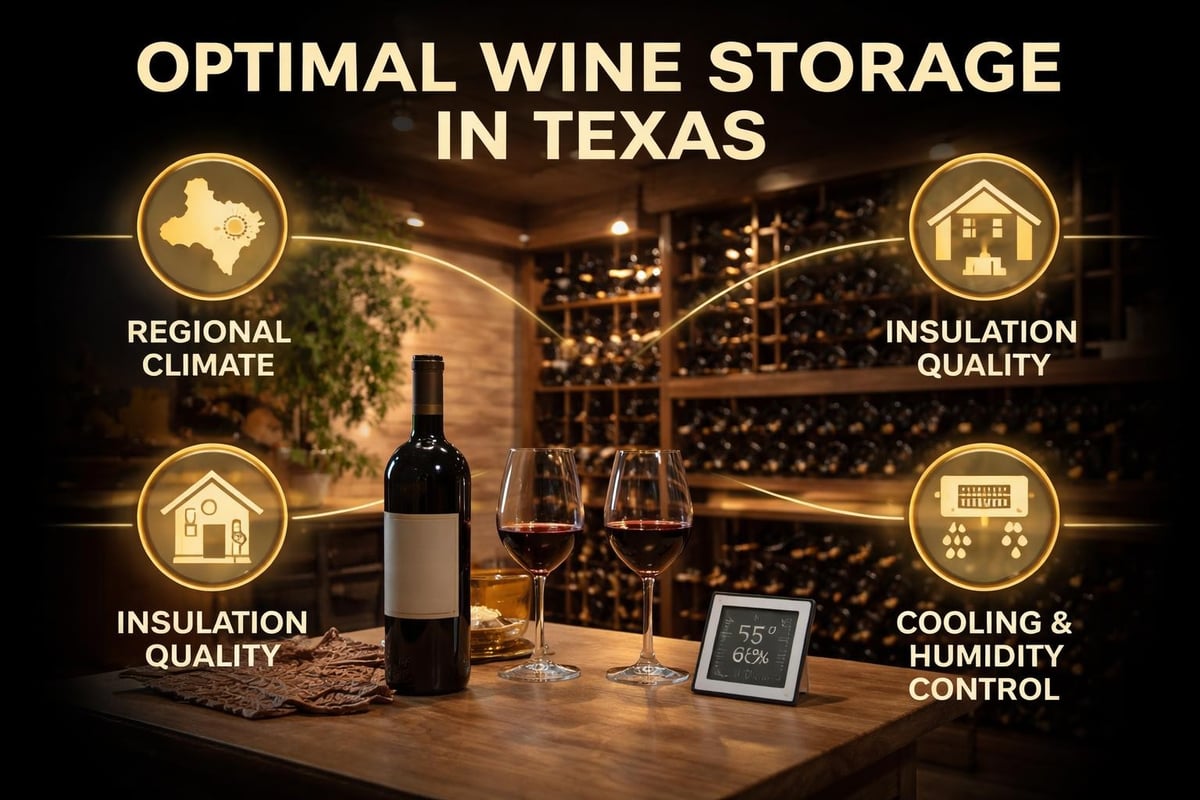
Texas presents specific challenges that influence custom wine cellar design. Heat, humidity, and climate variations demand thoughtful solutions.
Climate Adaptation Strategies
Summer temperatures regularly exceed 100°F across much of Texas. Enhanced insulation becomes mandatory rather than optional. Six-inch walls, closed-cell spray foam, and proper vapor barriers prevent external heat from overwhelming cooling systems.
Humidity management varies by region. Houston's Gulf Coast moisture requires robust dehumidification, while drier West Texas conditions need humidification support to prevent corks from drying. Custom systems account for these regional differences.
Architectural Compatibility
Texas homes range from Hill Country ranch estates to modern Austin townhomes to traditional Houston manors. Custom designs respect these diverse architectural languages:
Hill Country properties often incorporate native limestone, reclaimed barn wood, and wrought iron elements that echo ranch heritage while providing world-class storage.
Urban Dallas and Houston homes typically favor sleek glass wine walls and contemporary materials that complement modern interiors and maximize limited square footage.
Suburban estates across Southlake, The Woodlands, and Frisco often choose transitional designs that bridge traditional and contemporary aesthetics.

Installation Excellence and Project Management
Even brilliant designs fail without meticulous execution. Turnkey wine cellar design-build services ensure seamless project delivery from concept through completion.
The Comprehensive Build Process
Phase 1: Discovery and Design begins with understanding your vision, collection, space constraints, and budget. Designers create detailed renderings showing exactly how your finished cellar will appear.
Phase 2: Engineering and Specifications translates aesthetics into buildable plans. Engineers calculate cooling loads, specify insulation requirements, design electrical systems, and ensure code compliance.
Phase 3: Material Procurement sources premium components. Lead times for custom millwork, specialty glass, and high-end cooling equipment require advance planning.
Phase 4: Construction and Installation brings plans to reality. Skilled craftsmen build insulated enclosures, install climate systems, craft custom racking, apply finishes, and integrate lighting.
Phase 5: Testing and Commissioning verifies every system functions perfectly. Temperature and humidity monitoring confirms stable conditions before you move precious bottles.
Timeline and Coordination
Most residential custom built wine cellars require 8-16 weeks from design approval to completion. Commercial projects may extend longer depending on scope and complexity. Critical milestones include:
Design development (2-3 weeks)
Engineering and permitting (1-2 weeks)
Material lead times (4-8 weeks)
Construction (3-6 weeks)
System commissioning (1 week)
Experienced builders coordinate with general contractors, architects, electricians, and HVAC professionals to minimize disruption and ensure quality outcomes.
Investment Considerations and Long-Term Value
Custom built wine cellars represent significant investments. Understanding costs and returns helps you make informed decisions.
Budget Components
Design and engineering fees typically represent 10-15% of total project cost. This investment ensures systems function correctly and aesthetics exceed expectations.
Material costs vary dramatically based on selections. Basic wood racking costs less than exotic species, custom metalwork, or frameless glass installations. Expect quality materials to account for 30-40% of budgets.
Climate control systems range from several thousand dollars for small residential units to $20,000+ for large commercial installations. Proper sizing prevents both inadequate cooling and wasteful over-capacity.
Installation labor reflects the skill required for precision work. Experienced craftsmen command premium rates, but their expertise prevents costly mistakes and ensures longevity.
Total investment for residential projects typically ranges from $30,000 to $150,000+ depending on size, materials, and complexity. Commercial installations scale higher based on capacity and finishes.
Return on Investment
Beyond wine preservation, custom cellars deliver tangible returns:
Benefit Category | Residential Value | Commercial Value |
|---|---|---|
Home resale value | 50-100% cost recovery | N/A |
Wine preservation | Prevents $1000s in spoilage | Protects inventory investment |
Space utilization | Converts unused areas | Generates revenue per sq ft |
Aesthetic impact | Architectural focal point | Brand differentiation |
Guest experience | Entertainment value | Higher check averages |
Luxury homes with exceptional wine cellars attract serious collectors willing to pay premium prices. Restaurants with impressive installations command higher wine margins through enhanced perceived value.
Maintenance and Long-Term Care
Your investment deserves protection. Wine cellar maintenance services preserve both function and beauty for decades.
Regular System Checks
Quarterly inspections should verify:
Temperature and humidity stability within target ranges
Cooling system operation and refrigerant levels
Condensate drain function and cleanliness
Door seals maintaining proper closure
Lighting systems functioning correctly
Annual service includes deeper maintenance like coil cleaning, filter replacement, electrical connection inspection, and system calibration.
Wood Care and Preservation
Natural wood racking requires periodic attention. Dust accumulation, humidity variations, and normal wear affect appearance over time. Semi-annual cleaning with appropriate wood care products maintains finish quality. Re-oiling or refinishing every 5-10 years keeps wood looking fresh.
Technology Integration
Modern wine cellars increasingly incorporate smart monitoring systems. Sensors track temperature and humidity 24/7, sending alerts when conditions drift outside parameters. Remote access lets you verify cellar status from anywhere, providing peace of mind during vacations or extended absences.
Choosing Your Design Partner
The difference between adequate and exceptional comes down to expertise, creativity, and commitment. When evaluating wine cellar designers and builders, consider several critical factors.
Portfolio Diversity and Quality
Review completed projects across multiple styles, scales, and applications. Examining diverse portfolio examples reveals capability range and design sensibility. Look for projects similar to your vision and spaces comparable to yours.
Comprehensive Service Offering
The best outcomes come from single-source responsibility. Firms offering design, engineering, fabrication, installation, and maintenance eliminate coordination headaches and finger-pointing when issues arise. Integrated teams work more efficiently and deliver superior results.
Regional Experience
Local expertise matters tremendously. Builders familiar with Texas climate challenges, building codes, material suppliers, and architectural styles execute projects more smoothly. Companies serving Texas locations understand regional nuances that out-of-state designers miss.
Client Communication
Complex projects require ongoing dialogue. Responsive teams that explain technical concepts clearly, provide regular updates, and address concerns promptly make the process enjoyable rather than stressful. Clear contracts, detailed timelines, and transparent pricing prevent surprises.
Emerging Trends Shaping 2026 Wine Cellars
The wine cellar industry continues evolving as technology advances and aesthetic preferences shift. Several trends define cutting-edge installations this year.
Sustainable Design Practices
Environmentally conscious clients prioritize energy efficiency and sustainable materials. LED lighting, high-efficiency cooling systems, reclaimed wood, and locally sourced materials reduce environmental impact while maintaining luxury standards. Some installations incorporate solar power to offset energy consumption.
Smart Home Integration
Wine cellars now connect seamlessly with broader home automation systems. Voice commands adjust lighting, smartphone apps monitor conditions remotely, and AI-powered inventory management tracks every bottle's location, value, and optimal drinking window.
Multi-Functional Spaces
Beyond storage, modern wine cellars incorporate tasting areas, cigar lounges, and entertainment spaces. Hybrid rooms blend wine storage with comfortable seating, tasting counters, and audio-visual equipment, creating destinations rather than mere storage rooms.
Artistic Expression
Wine cellars increasingly feature custom art installations, sculptural elements, and dramatic lighting designs that transform functional spaces into gallery-quality environments. Backlit onyx panels, custom metalwork, and artistic glass treatments push boundaries beyond traditional racking.
Creating a wine cellar that truly enhances your collection and space requires marrying artistic vision with technical precision. The investment in custom design, quality materials, and expert installation pays dividends through decades of perfect wine storage, architectural beauty, and personal enjoyment. Whether you're envisioning an intimate residential cellar or a grand commercial showcase, Prestige Wine Cellars brings the expertise, creativity, and commitment to craft a space that exceeds your highest expectations and becomes a treasured part of your home or establishment for generations.
Your Dream Wine Cellar Starts Here
Let our design team craft a cellar that matches your taste, space, and your collection — built for beauty, function, and prestige.

Email us at
Serving Austin, Dallas–Fort Worth, Houston & San Antonio