
Mini Wine Cellars: Luxury Storage for Compact Spaces
Discover how mini wine cellars transform small spaces into elegant wine storage. Expert design tips, climate control, and bespoke solutions.
The luxury wine market has evolved beyond sprawling underground vaults and cavernous wine rooms. Today's discerning collectors are discovering that exceptional wine storage doesn't require vast square footage. Mini wine cellars represent a sophisticated solution for homeowners, restaurateurs, and designers who refuse to compromise on quality but work within spatial constraints. These carefully engineered spaces prove that elegance, proper preservation, and curated collections can thrive in compact footprints, from converted closets to under-stair alcoves. Whether you're building a new home in Austin or renovating an established property, understanding how to maximize limited space while maintaining museum-quality storage conditions is essential.
Understanding the Mini Wine Cellar Advantage
Space limitations no longer mean sacrificing your passion for wine. Mini wine cellars typically range from 25 to 100 square feet, accommodating collections from 100 to 500 bottles depending on racking configuration and design efficiency. This scale perfectly suits urban dwellings, condominiums, townhomes, and even boutique restaurants where every square foot carries premium value.
The benefits extend beyond simple space efficiency:
Lower initial construction costs compared to traditional cellars
Reduced ongoing climate control expenses
Faster installation timelines
Greater design flexibility within existing architecture
Ability to showcase collections as architectural focal points
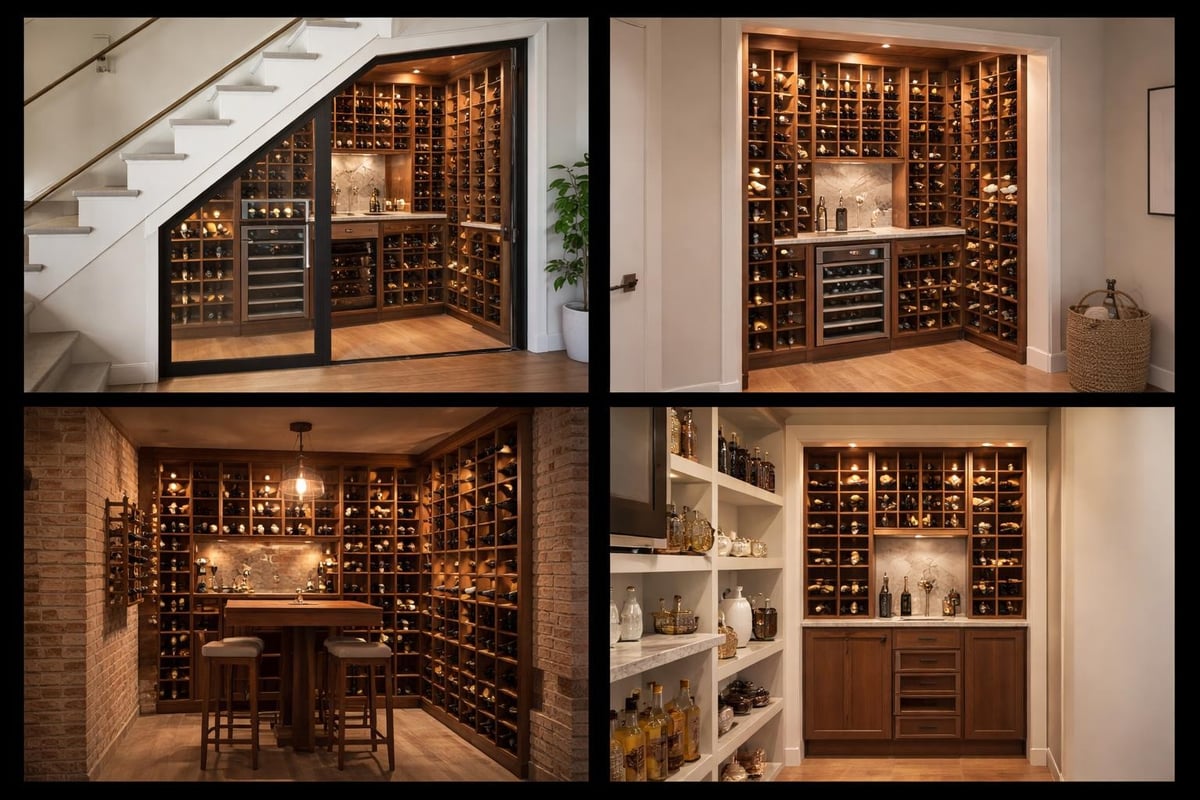
Many homeowners convert existing closets, pantries, or unused nooks into stunning wine displays. Small cellar solutions demonstrate how thoughtful design transforms forgotten spaces into conversation-starting installations. The key lies in treating these projects with the same engineering rigor and aesthetic consideration you would apply to larger cellars.
Location Selection for Maximum Impact
Choosing the right location determines both the functionality and visual impact of your mini wine cellar. Interior spaces offer natural protection from temperature fluctuations, while visibility locations create dramatic living features. Consider proximity to entertaining areas, structural support for glass walls, and accessibility for both daily enjoyment and maintenance.
Ideal locations include:
Walk-in closets adjacent to dining or living spaces
Under-stair areas that convert wasted vertical space
Butler's pantries for integrated kitchen access
Converted powder rooms with existing climate isolation
Corner alcoves in basements or wine rooms
The compact urban wine cellars approach emphasizes how location influences design style and material selection. External walls require additional insulation, while interior locations may permit glass enclosures that showcase your collection throughout the home.
Climate Control Engineering for Small Spaces
Maintaining optimal storage conditions becomes more critical in mini wine cellars where limited volume means temperature and humidity can fluctuate rapidly. Professional-grade climate control isn't optional; it's the foundation that protects your investment and ensures wines age gracefully.
Temperature stability matters more than absolute temperature. Most wines thrive between 55-58°F with humidity maintained at 60-70%. In compact spaces, selecting appropriately sized cooling units prevents the short-cycling that damages both equipment and wine. Oversized units create temperature swings, while undersized systems run continuously without achieving target conditions.
Cellar Size | Cooling Capacity | Recommended Unit Type | Humidity Control |
|---|---|---|---|
25-50 sq ft | 500-1000 BTU | Through-wall or split | Integrated or standalone |
50-75 sq ft | 1000-1500 BTU | Split system preferred | Integrated recommended |
75-100 sq ft | 1500-2000 BTU | Ducted split system | Integrated essential |
Understanding wine cellar temperature and humidity control reveals why proper equipment sizing requires professional heat load calculations. Wall insulation values, glass exposure, lighting heat, and ambient conditions all factor into selecting the right system.
Insulation and Vapor Barriers
Mini wine cellars demand meticulous attention to thermal envelope integrity. Even small gaps in insulation or vapor barriers compromise climate stability and increase energy costs dramatically. Walls should achieve minimum R-19 insulation, with R-30 preferred for exterior walls. The ceiling requires R-30 to R-38 insulation since heat rises naturally.
Vapor barriers on the warm side of insulation prevent moisture migration that leads to mold, wood rot, and insulation failure. This six-mil polyethylene layer often gets overlooked in DIY projects but proves essential for long-term cellar performance. Proper sealing around doors, penetrations, and transitions creates the airtight envelope that allows climate systems to maintain stable conditions efficiently.
Professional design services incorporate these engineering fundamentals from initial planning, ensuring your mini wine cellar performs flawlessly for decades. The investment in proper construction prevents costly remediation and protects valuable wine collections.
Design Strategies That Maximize Capacity
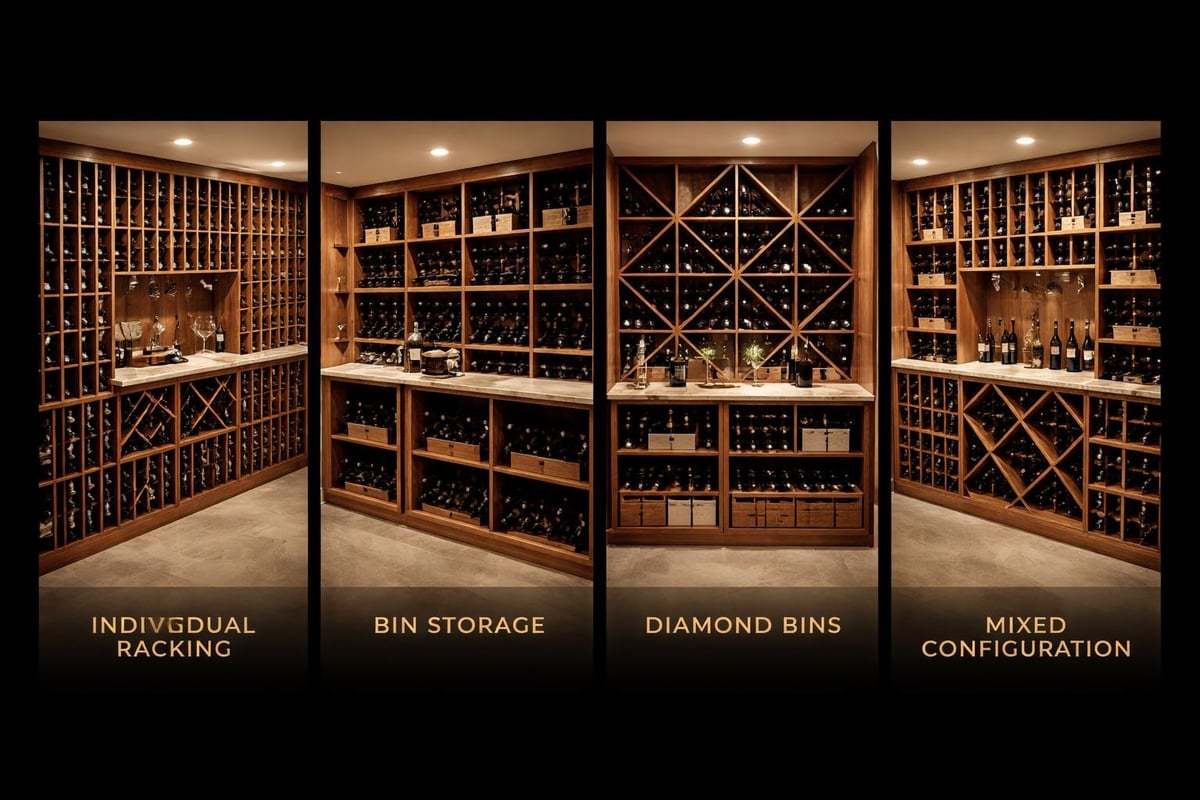
Strategic racking design determines how many bottles your mini wine cellar can accommodate while maintaining aesthetic appeal and accessibility. Standard 750ml bottles require 3.75 inches of width, but depth and height configurations offer flexibility. Single-depth racking (12 inches deep) shows every label, while double-depth systems (24 inches) maximize capacity at the cost of rear bottle visibility.
Racking options for compact spaces:
Individual bottle racking - Maximum flexibility, premium aesthetic, lower capacity
Bin storage - Highest density, ideal for case storage, requires inventory management
Display rows - Showcase special bottles at eye level
Diamond bins - Architectural interest while maintaining reasonable capacity
Case storage - Practical for wine purchased by the case
Vertical space becomes your greatest asset in mini wine cellars. Floor-to-ceiling racking utilizes every inch, though bottles stored above seven feet require step stools for access. Reserve these upper zones for long-term storage rather than frequently enjoyed wines.
The portfolio of completed projects demonstrates how custom racking configurations adapt to irregular spaces, incorporating columns, soffits, and architectural features rather than fighting against them.
Material Selection for Intimate Spaces
Material choices dramatically impact both the aesthetic character and functional performance of mini wine cellars. Wood species, finish treatments, and metal accents establish the design vocabulary that either complements or contrasts with surrounding architecture.
Popular material combinations include:
Material | Aesthetic | Maintenance | Climate Impact | Cost Range |
|---|---|---|---|---|
Mahogany | Traditional, rich | Medium | Stable | $$$ |
Walnut | Contemporary warmth | Medium | Stable | $$$$ |
Redwood | Rustic, casual | Low | Excellent | $$ |
Metal (iron/steel) | Modern, industrial | Low | Neutral | $$$ |
Acrylic/glass | Ultra-modern | High | Minimal | $$$$ |
Wine cellar materials extend beyond racking to encompass flooring, lighting fixtures, and architectural details. Stone or tile flooring resists moisture better than carpet, while LED lighting minimizes heat output compared to traditional incandescent fixtures.
Wood finishes require consideration of off-gassing and moisture resistance. Marine-grade or conversion varnishes protect wood while preventing chemical contamination of wines. Stains should be water-based and fully cured before introducing wine bottles.
Glass Enclosures and Visibility Design
Mini wine cellars often serve dual purposes as both functional storage and architectural features. Glass walls transform these compact spaces into living art installations visible from adjacent rooms. This transparency requires exceptional attention to both engineering and aesthetics since your collection remains constantly on display.
Tempered or laminated glass provides structural integrity while meeting building codes. Insulated glass units (dual-pane with argon fill) help maintain climate separation when the cellar borders conditioned living spaces. Frame materials range from minimalist aluminum to traditional wood, each creating distinct visual statements.
The glass-enclosed showpiece wine cellars approach emphasizes how lighting design becomes critical when collections remain visible 24/7. LED strips under shelves, puck lights highlighting architectural details, and adjustable spotlights for featured bottles create layered illumination that flatters wine displays without generating excessive heat.
Lighting Design That Enhances Without Damaging
Proper lighting balances visibility with wine preservation. UV radiation damages wine over time, breaking down compounds and causing premature aging. All cellar lighting should use LED technology with UV filtering, providing warm color temperatures (2700-3000K) that showcase labels and glass without harsh clinical brightness.
Lighting layers for mini wine cellars:
Ambient lighting - Overall soft illumination for navigation
Accent lighting - Highlight premium bottles or architectural features
Under-rack lighting - Subtle backlighting that defines depth
Display lighting - Adjustable spots for rotating featured selections
Motion sensors and dimmer controls reduce energy consumption while extending bulb life. Since mini wine cellars typically connect to living spaces, lighting integration with home automation systems allows scenes that adjust based on time of day or entertaining needs.
Construction Process and Timeline
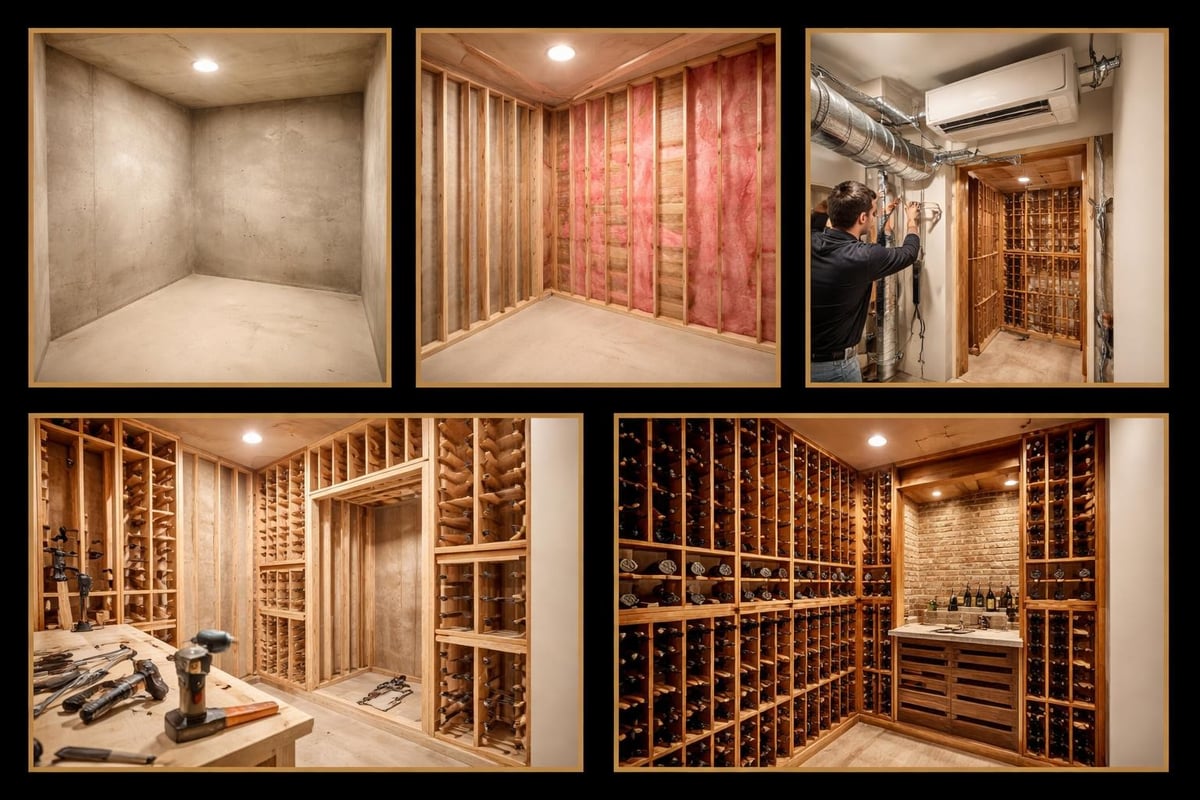
Building mini wine cellars follows distinct phases that ensure structural integrity and long-term performance. Understanding this process helps homeowners and designers set realistic expectations and coordinate with other renovation activities.
Typical construction sequence:
Design development and engineering (2-4 weeks)
Permits and approvals (1-3 weeks, location-dependent)
Demolition and rough framing (3-5 days)
Mechanical and electrical rough-in (2-3 days)
Insulation and vapor barrier installation (1-2 days)
Drywall, finishing, and door installation (5-7 days)
Climate system installation and testing (2-3 days)
Custom racking fabrication (3-6 weeks, often concurrent)
Racking installation and finishing (3-5 days)
Final commissioning and cellar stabilization (7-14 days)
Total timelines for mini wine cellars typically span 8-12 weeks from design approval to wine installation. Turnkey design-build services streamline coordination by managing all trades and ensuring seamless integration between structural, mechanical, and finish elements.
The final stabilization period proves critical. Climate systems should run for at least one week before introducing wine, allowing temperature and humidity to reach equilibrium. This patience prevents thermal shock to bottles and verifies system performance under actual conditions.
Integration with Home Automation and Security
Modern mini wine cellars increasingly connect to broader smart home ecosystems. Climate monitoring, security features, and inventory management transform wine storage from passive preservation to active collection curation.
Temperature and humidity sensors with smartphone connectivity provide real-time alerts if conditions drift from optimal ranges. This early warning system protects collections even when you're traveling, allowing immediate response to equipment failures or power outages.
Smart cellar features worth considering:
Remote climate monitoring and adjustment
Door sensors alerting to unauthorized access
Integrated security cameras (discrete placement)
Automated lighting scenes
Inventory management software integration
Environmental data logging for insurance documentation
Security takes on special importance for valuable collections. Discrete cameras, electronic locks with access logs, and vibration sensors all protect against theft while remaining invisible to guests. Just as professional home theater installations conceal technology for seamless aesthetics, wine cellar security should function invisibly.
Restaurant and Hospitality Applications
Mini wine cellars offer unique opportunities for restaurants, boutique hotels, and private clubs where space commands premium value. These installations serve both functional storage and marketing purposes, demonstrating wine program sophistication to guests.
The Cambria Waco hotel wine cellar showcases how hospitality projects balance capacity, accessibility, and visual impact. Glass walls allow guests to admire selections while sommeliers maintain climate-controlled preservation. Strategic placement near dining areas creates theater around wine service.
Restaurant mini wine cellars face additional considerations beyond residential projects. Health department regulations, ADA accessibility requirements, and commercial building codes all influence design and location. Higher bottle turnover rates may permit slightly relaxed climate specifications compared to long-term residential storage, though maintaining professional conditions demonstrates commitment to wine quality.
Commercial Climate System Selection
Commercial applications demand robust climate control with redundancy and serviceability. Split systems with remote condensers reduce noise in guest areas while simplifying maintenance access. Many operators specify dual systems with automatic failover, ensuring continuous protection even during equipment service or failure.
Humidity control gains importance in commercial settings where frequent door openings introduce moisture fluctuations. Dedicated humidification systems maintain ideal conditions despite higher traffic patterns. Commercial cooling system considerations address the unique demands of restaurant and hospitality environments.
Maintenance and Long-Term Care
Professional maintenance extends equipment life and protects wine investments. Mini wine cellars require less extensive upkeep than larger installations, but certain tasks demand consistent attention.
Annual maintenance checklist:
Climate system filter replacement (quarterly)
Condenser coil cleaning
Door seal inspection and adjustment
Humidity reservoir cleaning and refill
Racking stability verification
Lighting fixture inspection
Vapor barrier integrity check
Wood finish touch-up as needed
Professional maintenance services provide systematic care that prevents small issues from becoming expensive failures. Climate system warranties often require documented professional service, making maintenance investments protection for both equipment and wine.
Wood racking develops character over time, but extreme dryness can cause cracking while excessive humidity promotes mold. Maintaining target humidity levels prevents both extremes. Occasional wood conditioning with appropriate products preserves finish integrity without introducing contaminants.
Budget Considerations and Investment Value
Mini wine cellars represent significant investments that vary based on size, finishes, and system complexity. Understanding cost drivers helps establish realistic budgets aligned with quality expectations.
Component | Budget Range | Mid-Range | Luxury |
|---|---|---|---|
Climate control | $2,000-3,500 | $3,500-6,000 | $6,000-12,000 |
Insulation/framing | $1,500-3,000 | $3,000-5,000 | $5,000-8,000 |
Custom racking | $3,000-6,000 | $6,000-12,000 | $12,000-25,000 |
Glass enclosure | $2,500-5,000 | $5,000-9,000 | $9,000-18,000 |
Lighting/electrical | $800-1,500 | $1,500-3,000 | $3,000-6,000 |
Flooring/finishes | $1,000-2,000 | $2,000-4,000 | $4,000-8,000 |
Total project costs for professionally designed and installed mini wine cellars typically range from $15,000 to $75,000 depending on complexity and finish selections. This investment protects wine collections often worth substantially more while adding distinctive architectural value to properties.
Exploring construction tips and techniques helps identify where to invest for maximum impact versus where economies make sense. Door quality, climate control, and vapor barriers deserve premium investment, while decorative elements offer more budget flexibility.
Design Styles for Every Aesthetic
Mini wine cellars adapt to virtually any architectural style, from rustic wine country estates to sleek urban penthouses. Material selection, racking configuration, and lighting design establish the aesthetic vocabulary.
Popular design directions include:
Traditional - Rich wood species, individual bottle racking, warm lighting
Modern - Clean lines, metal accents, minimalist hardware, LED strips
Transitional - Blended elements bridging contemporary and classic
Rustic - Reclaimed wood, wrought iron, stone accents
Industrial - Exposed metal, concrete, utilitarian aesthetic
The portfolio of design styles demonstrates how these approaches translate to compact spaces. Even small cellars benefit from cohesive design thinking that extends architectural themes from adjacent rooms.
Transitional aesthetics often work particularly well for mini wine cellars since they bridge multiple design periods without demanding strict historical accuracy. This flexibility allows incorporating modern climate technology within traditional framing or vice versa.
Regional Considerations for Texas Installations
Texas presents unique challenges and opportunities for mini wine cellar installations. Climate extremes, building codes, and architectural traditions all influence design decisions, particularly across the Austin metropolitan area and Hill Country.
Summer temperatures regularly exceed 100°F, placing exceptional demands on climate systems. Proper insulation becomes non-negotiable, with many designers specifying R-values exceeding minimum requirements. Custom wine cellars in Austin and surrounding communities must account for extended cooling seasons and potential power interruptions during severe weather.
Building codes vary significantly between municipalities. Austin, Lakeway, Bee Cave, and surrounding jurisdictions each maintain specific requirements for electrical, plumbing, and structural modifications. Working with designers familiar with local regulations prevents costly revisions and delays.
Texas-specific design considerations:
Enhanced insulation for extreme heat
Backup power integration for weather events
Moisture management in humid coastal areas
Native stone and wood species for regional authenticity
Water damage protection in flood-prone areas
Hill Country properties often feature natural stone that creates stunning accent walls within mini wine cellars. This regional material connects cellars to the broader Texas landscape while providing thermal mass that helps stabilize temperatures.
Similar considerations apply whether you're planning installations in Houston, Dallas, or smaller communities throughout the state. Professional designers understand these regional nuances and engineer solutions that perform reliably in Texas conditions.
Creating Wellness Spaces Around Wine
Progressive homeowners increasingly view wine cellars as components of broader wellness ecosystems. The same dedication to craft, quality, and sensory experience that draws people to wine collecting often extends to other lifestyle elements.
Just as luxury saunas create dedicated spaces for relaxation and rejuvenation, mini wine cellars establish environments devoted to appreciation and enjoyment. Thoughtful adjacencies between wine storage and entertainment areas, tasting rooms, or meditation spaces create holistic environments supporting balanced lifestyles.
Consider how your mini wine cellar connects to broader living patterns. Direct access from kitchen or dining areas facilitates daily wine selection, while proximity to outdoor entertaining spaces supports alfresco gatherings. Some homeowners incorporate tasting counters or small seating areas adjacent to compact cellars, creating intimate venues for sharing special bottles with close friends.
Working with Professional Designers
The complexity of properly engineered mini wine cellars makes professional design services valuable investments rather than expenses. Experienced designers navigate building codes, optimize spatial efficiency, specify appropriate equipment, and coordinate trades to deliver turnkey installations.
Architectural Digest's wine cellar design guidance emphasizes common pitfalls including inadequate climate control, poor insulation, and mismatched aesthetic vision. Professional designers prevent these mistakes through systematic planning and proven construction methodologies.
Initial consultations establish collection size, growth expectations, budget parameters, and aesthetic preferences. These conversations inform conceptual designs that balance practical requirements with creative vision. Detailed construction drawings then guide contractors through precise implementation.
Professional design delivers:
Optimized capacity within space constraints
Properly sized climate control systems
Code-compliant construction methods
Coordinated material selections
Realistic budget projections
Quality assurance during construction
Warranty protection and ongoing support
The investment in professional expertise typically represents 10-15% of total project costs but prevents expensive mistakes and ensures results that exceed expectations. Learning more about the design process helps homeowners understand what to expect and how to prepare for successful collaborations.
Mini wine cellars prove that exceptional wine storage doesn't require sprawling square footage, just thoughtful engineering, quality materials, and attention to preservation fundamentals. Whether you're converting a closet in your Austin home or planning a boutique hotel showcase, these compact installations deliver museum-quality storage while creating architectural statements that enhance any space. Prestige Wine Cellars brings decades of expertise to every project, designing and building bespoke wine storage solutions that reflect your vision while protecting your collection for generations to come.
Your Dream Wine Cellar Starts Here
Let our design team craft a cellar that matches your taste, space, and your collection — built for beauty, function, and prestige.

Email us at
Serving Austin, Dallas–Fort Worth, Houston & San Antonio