
Cellar Build Essentials: Crafting a Luxury Wine Space
Discover the essential elements of a successful cellar build, from design and materials to climate control and installation for luxury wine storage.
A successful cellar build transforms a simple storage concept into a meticulously engineered sanctuary for your wine collection. Whether you're envisioning an intimate tasting room beneath your estate or a dramatic glass-enclosed showpiece in your restaurant, the journey from concept to completion demands careful planning, expert craftsmanship, and an understanding of how architecture, climate control, and aesthetics work together. The difference between a functional storage space and a true wine cellar lies in the details-the precision of temperature zones, the quality of materials, the seamless integration of form and function.
Understanding the Scope of Your Cellar Build
Every cellar build begins with a clear vision of what you want to achieve. The scope determines not just the budget and timeline, but the entire approach to design and construction.
Capacity planning forms the foundation of your project. Consider both your current collection and future growth. A 500-bottle cellar may seem generous today, but serious collectors often find themselves needing expansion within a few years. Smart planning accounts for this evolution.
Location choices fundamentally shape your build:
Basement conversions offer natural temperature stability and humidity control
Ground-level rooms provide convenient access but require more robust climate systems
Under-stair installations maximize unused space in compact homes
Commercial applications demand different engineering for high-traffic environments
The custom wine cellar design process should evaluate your space's existing conditions before making structural commitments.
Critical Technical Requirements
Temperature and humidity control represent the non-negotiable elements of any cellar build. Wine demands consistency-ideally 55-58°F with 60-70% humidity. Even minor fluctuations can compromise aging potential and quality.
Your technical envelope must include:
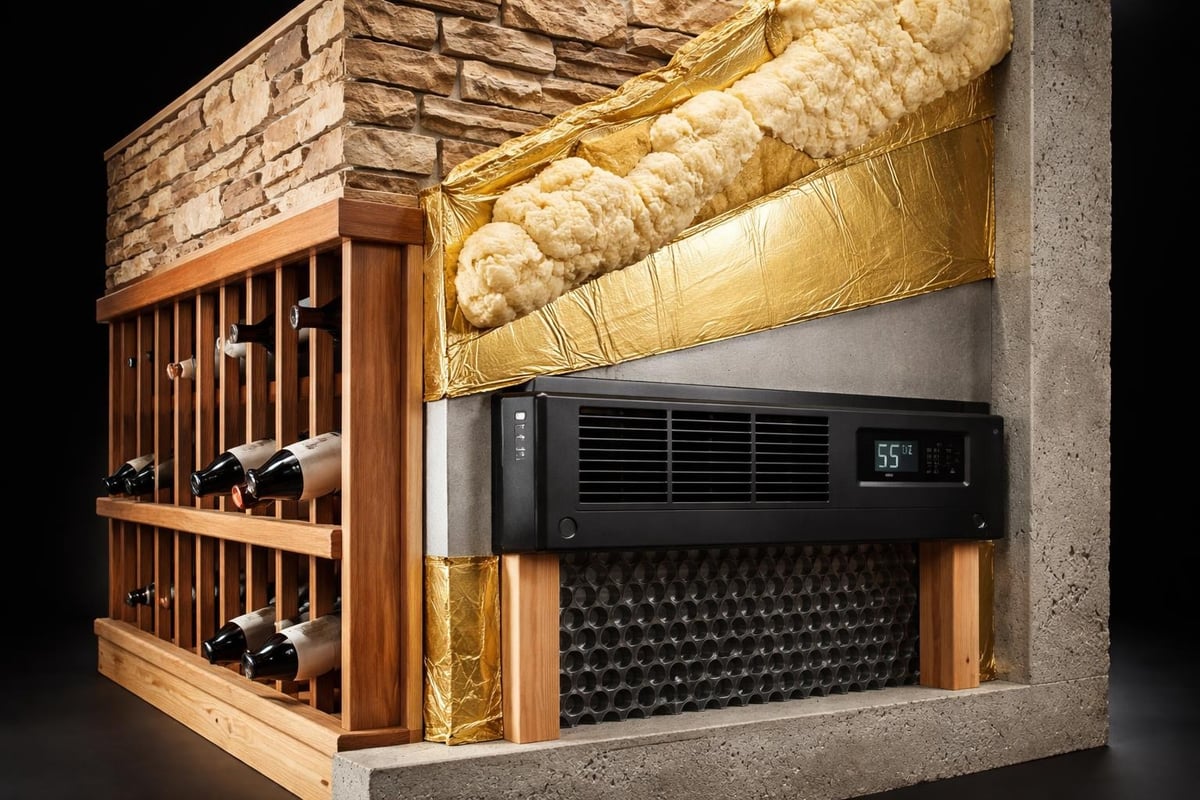
Proper insulation rated at minimum R-19 for walls and R-30 for ceilings
Complete vapor barriers on the warm side of insulation
Airtight construction preventing temperature exchange
Appropriately sized cooling systems matched to room volume and heat load
The building a wine cellar requirements extend beyond simple refrigeration. You're creating a controlled microclimate that protects investment-grade bottles for decades.
Material Selection and Construction Methods
Material choices define both the aesthetic character and long-term performance of your cellar build. The decision goes far beyond visual appeal-different materials respond uniquely to humidity, temperature fluctuations, and structural demands.
Wood remains the classic choice, but not all species perform equally:
Wood Type | Durability | Moisture Resistance | Aesthetic |
|---|---|---|---|
Mahogany | Excellent | Superior | Traditional, rich |
Redwood | Excellent | Superior | Rustic, natural |
Walnut | Very Good | Good | Contemporary, elegant |
Oak | Good | Good | Classic, versatile |
Modern wine cellar materials now include metal racking systems, acrylic panels, and glass walls that create stunning visual impact while maintaining structural integrity. Metal proves particularly valuable in commercial settings where durability matters as much as design.
Wall and Floor Construction
Your cellar build demands specific construction techniques that differ markedly from standard room finishing. Walls require framing that accommodates thick insulation while maintaining structural support for heavy racking systems.
Concrete floors offer excellent thermal mass, helping stabilize temperatures naturally. When finished properly, they complement both traditional and contemporary designs. Tile and stone alternatives work beautifully but require careful selection-some natural stones can affect humidity levels.
Climate-controlled spaces benefit enormously from wine cellar construction techniques that prioritize the technical envelope. The construction sequence matters: insulation, vapor barrier, interior finish. Reversing this order invites moisture problems and system failures.
If your cellar build involves structural modifications to your home, coordinating with experienced contractors becomes essential. For projects requiring roof work or structural support adjustments, partnering with specialists like Texcore Construction ensures the building envelope remains sound throughout the installation process.
Climate Control Systems and Engineering
The heart of any cellar build beats within its climate control system. This isn't simply about cooling-it's about creating stable conditions that allow wines to mature gracefully over years or decades.
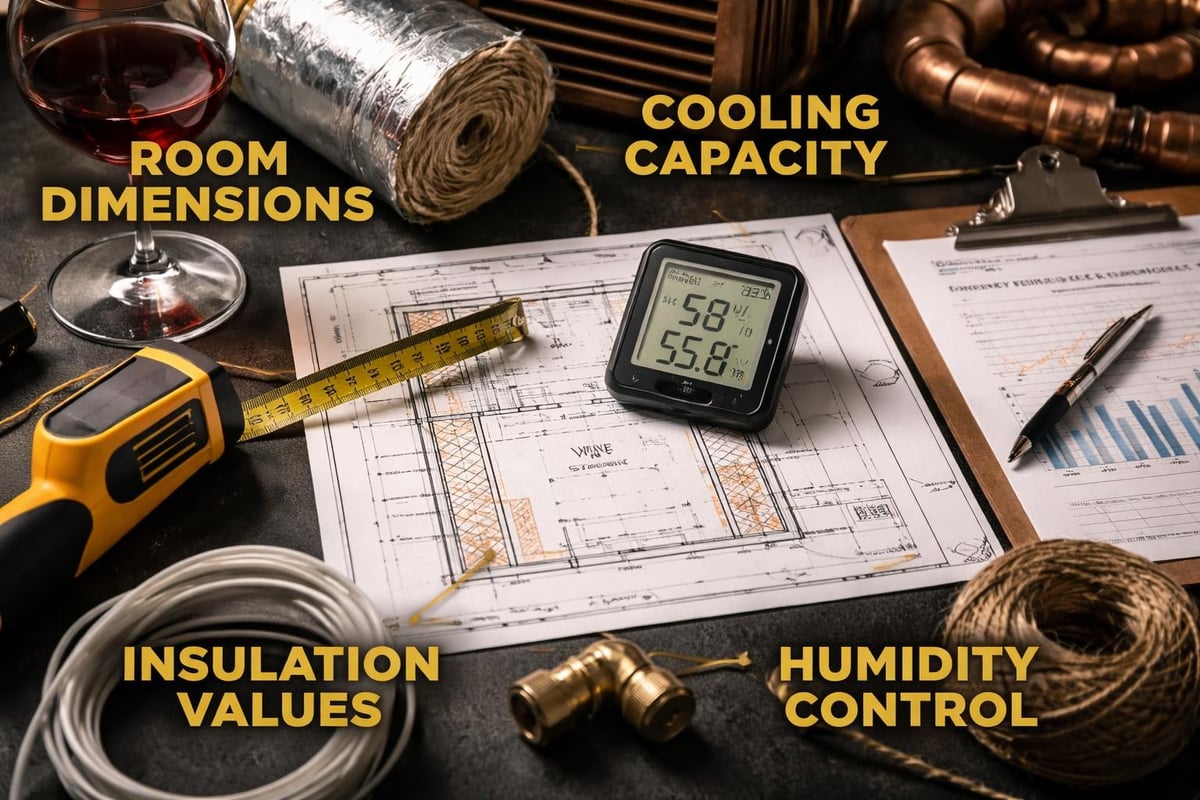
Cooling unit sizing requires precise calculation. Too small, and the system runs constantly, struggling to maintain temperature. Too large, and short cycling prevents proper humidity control. Professional heat load analysis considers:
Room volume and ceiling height
Insulation R-values
Adjacent room temperatures
Glass surface area
Lighting heat generation
Frequency of door opening
Through-wall units work well for smaller builds, while ducted systems offer flexibility for larger or multi-room installations. Split systems provide the quietest operation, placing noisy components outside the cellar space.
Humidity Management
Temperature control alone doesn't complete the equation. Humidity management prevents corks from drying, which would allow oxygen infiltration and wine oxidation.
Most cooling systems integrate humidification, but the design of wine cellars should account for local climate. Dry regions like West Texas demand more aggressive humidification than humid Gulf Coast locations.
Monitoring technology has evolved dramatically. Modern systems provide smartphone alerts when conditions drift outside parameters, offering peace of mind whether you're across town or across the country.
Design Integration and Aesthetic Considerations
A thoughtful cellar build balances technical requirements with visual impact. The most successful projects feel like natural extensions of the home's existing architecture while creating distinct, memorable spaces.
Lighting design deserves particular attention. Wine dislikes UV exposure, making LED systems with warm color temperatures the preferred choice. Strategic placement creates drama:
Uplighting behind bottles creates a warm glow
Display lighting highlights special vintages or labels
Ambient fixtures provide working illumination
Accent spots draw attention to architectural features
The signature styles you choose should reflect personal taste while respecting wine's storage needs. Traditional cellars with rich wood tones and classical details suit historic homes. Contemporary spaces featuring glass, metal, and minimalist racking complement modern architecture.
Racking Configuration
Racking represents where engineering meets artistry in a cellar build. Beyond holding bottles, quality racking systems should:
Support bottle weight safely (750ml bottles weigh approximately 2.65 pounds)
Allow air circulation around bottles
Provide easy access for selection and rotation
Accommodate different bottle sizes from splits to magnums
Create visual rhythm and architectural interest
Display rows at eye level showcase prized bottles, while bulk storage maximizes capacity in less visible areas. Pull-out shelving offers convenience for frequently accessed wines.
Installation Process and Project Timeline
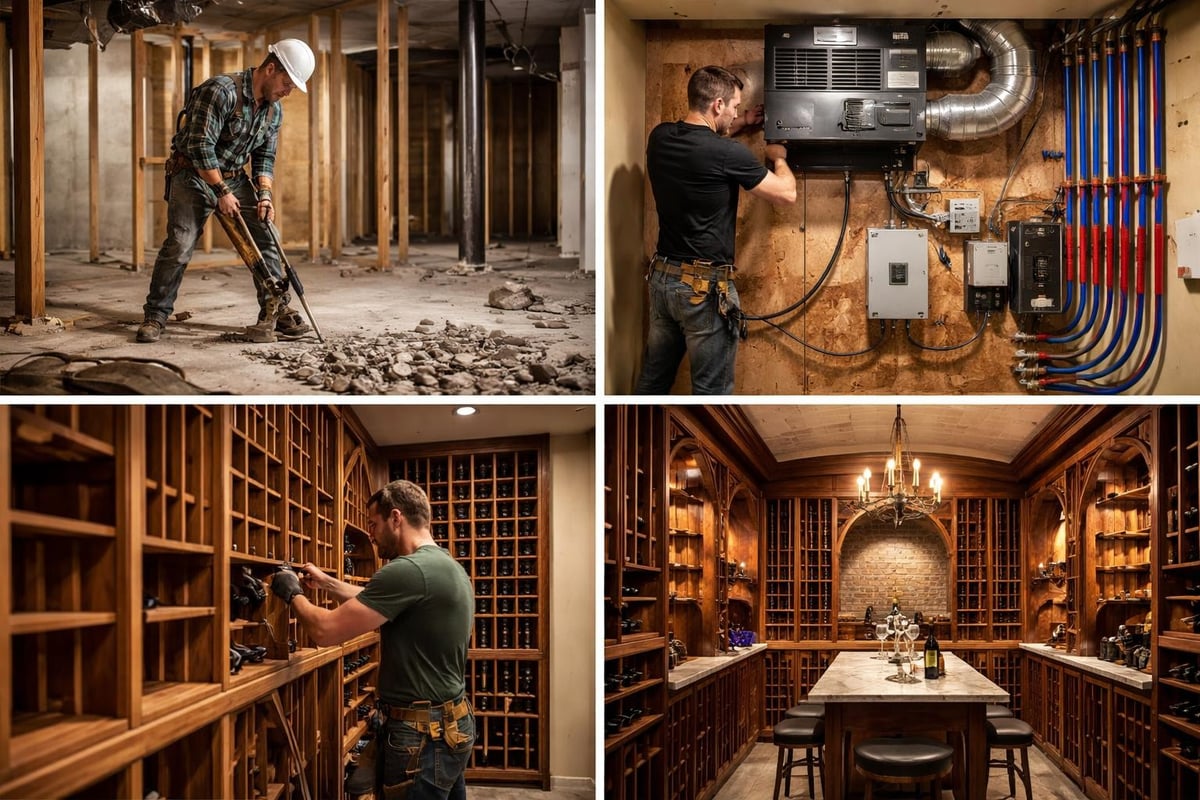
Understanding the cellar build timeline helps set realistic expectations. Most projects span 8-16 weeks from design approval to completion, though complexity and size affect duration.
Phase-by-phase breakdown:
Phase | Duration | Key Activities |
|---|---|---|
Design & Planning | 2-3 weeks | Concept development, technical drawings, approvals |
Site Preparation | 1-2 weeks | Demolition, framing, electrical rough-in |
Envelope Construction | 2-3 weeks | Insulation, vapor barrier, door installation |
Climate System | 1-2 weeks | Cooling unit installation, testing, calibration |
Finish Work | 3-4 weeks | Racking installation, lighting, final details |
Stabilization | 1 week | Temperature/humidity monitoring, adjustments |
The turnkey design-build approach streamlines coordination, placing accountability with a single team rather than juggling multiple contractors.
Quality Checkpoints
Professional cellar builds include verification steps ensuring long-term performance. After envelope construction, the space should undergo pressure testing to confirm airtightness. Climate systems require 48-72 hours of continuous operation before wine installation.
Final inspections verify proper function across all systems. Temperature sensors in multiple locations confirm even cooling. Humidity gauges validate moisture levels. Door seals undergo compression testing.
Working with experienced teams familiar with Texas wine cellar construction ensures your project accounts for regional climate challenges, from summer heat to winter temperature swings.
Advanced Features and Custom Elements
Elevating a cellar build from excellent to extraordinary often involves incorporating specialized features that enhance both function and experience.
Tasting areas transform wine storage into wine enjoyment. A small table with seating for 4-6 creates intimate gathering space. Consider adding:
Under-counter wine preservation systems
Glass storage and stemware racks
Small sink for rinsing
Decanting station with proper lighting
Technology integration brings modern convenience to traditional spaces. Inventory management systems track your collection, noting purchase dates, drinking windows, and cellar locations. Some collectors integrate these with smart home systems, checking stock before purchasing duplicates.
The ideal home wine cellar design often includes provisions for these enhanced experiences from the initial planning stages.
Display and Presentation Elements
Glass walls create architectural drama while showcasing your collection. Whether fully enclosing the space or forming a single dramatic wall, glass transforms storage into art. Climate control becomes more challenging with large glass expanses, requiring careful engineering and often more powerful cooling systems.
Artistic details personalize the space:
Custom millwork echoing architectural details elsewhere in the home
Barrel elements or wine country artifacts
Family crest or monogram metalwork
Unique hardware on drawers and doors
Stone or tile accent walls
Commercial Applications and Hospitality Projects
Restaurant and hotel cellar builds introduce different considerations than residential projects. Volume, accessibility, and presentation all shift in commercial contexts.
Guest-visible cellars serve dual purposes-proper storage and marketing theater. The commercial wine cellar installations we design for hospitality clients often become signature features that drive bookings and enhance dining experiences.
Commercial specifications typically require:
Higher capacity density (more bottles per square foot)
Easier staff access to frequently served wines
Dramatic lighting and presentation
Temperature zones for different wine types
Security systems protecting valuable inventory
Building codes for commercial spaces often mandate specific fire suppression systems, ventilation requirements, and accessibility features that residential builds don't face. Early consultation with local authorities prevents costly mid-project changes.
Restaurant-Specific Considerations
Active restaurant cellars need organization systems supporting quick service. Color-coded sections by wine type, digital inventory linked to POS systems, and staff training on proper handling all contribute to operational efficiency.
Climate systems in restaurants work harder than residential units. Kitchen heat, frequent door openings, and higher ambient temperatures demand robust engineering. The electrical requirements for wine cellar design become more complex in commercial settings.
Maintenance and Long-Term Performance
A well-executed cellar build should function flawlessly for decades, but longevity requires appropriate maintenance. Climate systems need annual service-filter changes, refrigerant checks, electrical connections verification.
Preventive maintenance schedules should include:
Monthly temperature and humidity log review
Quarterly door seal inspection
Bi-annual cooling system professional service
Annual comprehensive system evaluation
As-needed racking adjustment and repair
Most issues announce themselves gradually. Rising temperatures, humidity fluctuations, or unusual cooling unit sounds all signal developing problems. Addressing them promptly prevents wine damage and expensive emergency repairs.
The wine cellar maintenance services available from experienced builders provide peace of mind, ensuring expert attention when issues arise.
Monitoring Best Practices
Modern monitoring removes guesswork from cellar management. Wireless sensors transmit continuous data to cloud platforms, creating permanent records of environmental conditions. This documentation proves invaluable for insurance purposes and helps identify subtle trends before they become problems.
Investment protection justifies monitoring costs many times over. When a single case of fine Burgundy or aged Bordeaux represents thousands of dollars, knowing immediately about temperature excursions prevents devastating losses.
Budget Planning and Investment Value
Cellar build costs vary enormously based on size, materials, features, and location. A modest 500-bottle reach-in might start around $15,000-25,000, while elaborate custom installations can exceed $100,000.
Cost drivers include:
Square footage and ceiling height
Racking material and configuration
Climate system complexity
Glass enclosure area
Lighting sophistication
Custom millwork and finishes
The question of whether you really need a wine cellar depends on your collection's value and your commitment to wine. For serious collectors, proper storage isn't optional-it's essential protection for assets that appreciate over time.
Return on Investment
Quality cellar builds add measurable value to luxury homes. Real estate professionals note that wine enthusiasts specifically seek homes with proper cellars, often paying premiums for well-executed installations.
Beyond resale value, consider the financial benefit of buying wines young and aging them properly. A cellar build enables purchasing futures and young vintages at lower prices, realizing significant savings compared to buying mature bottles at auction or retail.
Regional Considerations for Texas Builds
Texas presents unique challenges for cellar construction. Summer temperatures routinely exceed 100°F, while winter can bring freezing conditions. This temperature swing demands robust climate systems and superior insulation.
Austin-area considerations include:
High cooling loads during extended summer heat
Limestone bedrock affecting basement excavation
Humidity variations between seasons
Local building codes and permit requirements
Projects in Austin, Lakeway, and surrounding Hill Country communities benefit from contractors familiar with regional construction practices and climate challenges.
Soil conditions in areas like Georgetown or Dripping Springs can affect foundation work and drainage for underground installations. Professional site assessment prevents surprises during construction.
The journey from initial concept to completed cellar build brings together architecture, engineering, and craftsmanship in service of wine preservation and presentation. Success requires balancing technical precision with aesthetic vision, creating spaces that protect your collection while enhancing your home or establishment. Whether you're planning an intimate residential installation or a dramatic commercial showcase, partnering with experienced professionals ensures your investment delivers lasting value and performance. Explore how Prestige Wine Cellars can transform your wine storage vision into reality with bespoke design and expert construction.
Your Dream Wine Cellar Starts Here
Let our design team craft a cellar that matches your taste, space, and your collection — built for beauty, function, and prestige.

Email us at
Serving Austin, Dallas–Fort Worth, Houston & San Antonio