
Luxury Home Wine Cellars Dallas: Design & Installation
Discover expert design trends, materials, and climate solutions for luxury home wine cellars Dallas estates demand. Elevate your collection today.
Dallas homeowners with discerning taste understand that a wine collection deserves more than a basement corner or repurposed closet. The demand for luxury home wine cellars Dallas estates feature has grown dramatically, transforming from simple storage solutions into architectural statements that rival any room in the residence. Whether you're building a new estate in Preston Hollow, renovating a historic University Park home, or creating a sophisticated entertainment space in Southlake, your cellar should reflect both the value of your collection and your personal aesthetic vision.
The Dallas Market for Custom Wine Cellars
Dallas represents a unique convergence of wealth, appreciation for fine living, and architectural diversity that creates exceptional opportunities for custom wine cellar design. The city's expansive estates, from the tree-lined streets of Highland Park to the contemporary mansions of Frisco, demand wine storage solutions that match their architectural grandeur.
Climate considerations in North Texas make professional cellar design non-negotiable. With summer temperatures regularly exceeding 100 degrees and humidity fluctuations throughout the year, protecting your investment requires sophisticated engineering beyond what standard HVAC systems provide.
The market has evolved significantly. Today's Dallas collectors expect:
Seamless integration with home architecture and interior design
Advanced climate control systems with redundancy features
Display capabilities that showcase bottles as art pieces
Smart technology for inventory management and remote monitoring
Materials and finishes that complement luxury home aesthetics
Understanding the Investment Value
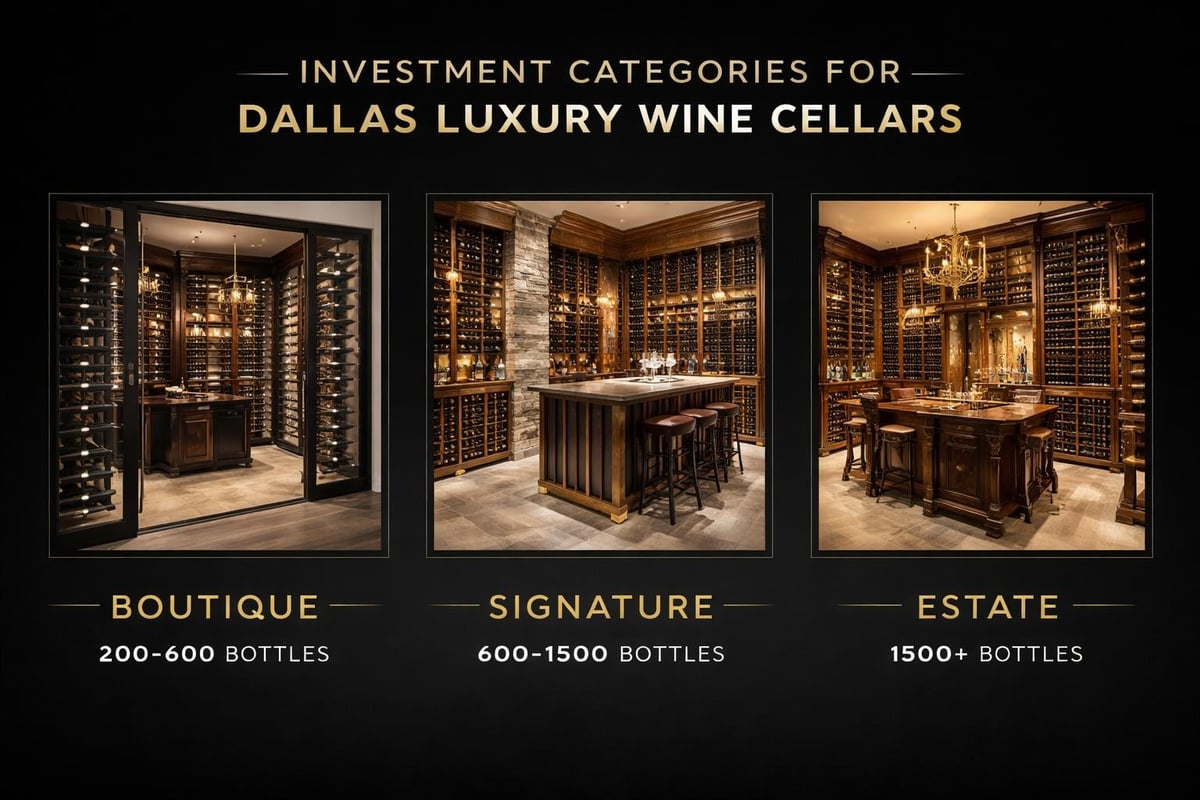
Creating luxury home wine cellars Dallas properties require represents a substantial investment, both financially and architecturally. Budget considerations typically range from $50,000 for compact, well-appointed spaces to $500,000 or more for expansive, museum-quality installations.
Return on investment extends beyond monetary value. A thoughtfully designed cellar enhances property appeal, provides optimal aging conditions that preserve wine value, and creates an entertainment focal point that elevates your lifestyle.
Investment Tier | Typical Capacity | Key Features | Price Range |
|---|---|---|---|
Boutique | 500-1,000 bottles | Custom racking, basic climate control, single-room design | $50,000-$100,000 |
Signature | 1,000-2,500 bottles | Glass enclosures, advanced cooling, tasting area | $100,000-$250,000 |
Estate | 2,500-5,000+ bottles | Multi-room layouts, museum lighting, dedicated sommelier spaces | $250,000-$500,000+ |
Design Trends Shaping Dallas Wine Cellars in 2026
The latest wine cellar design trends emphasize visibility, technology integration, and sustainability. Dallas homeowners are moving away from hidden basement cellars toward statement pieces that command attention as you enter the home.
Glass-enclosed showpiece designs dominate current projects. Floor-to-ceiling glass walls allow your collection to be visible from adjacent living spaces, dining rooms, or grand hallways. This transparency creates dramatic visual impact while maintaining the precise environmental conditions your wines demand.
Modern cellars in luxury home wine cellars Dallas designers create increasingly blend industrial elements with refined luxury. The fusion of industrial aesthetics with luxury materials produces striking results:
Steel framework with brushed or blackened finishes
Reclaimed wood combined with LED accent lighting
Concrete flooring paired with crystal chandeliers
Exposed brick walls contrasted against sleek glass racking
Material Selection and Craftsmanship
Material choices define both aesthetic character and functional performance. The most successful Dallas installations thoughtfully combine materials that honor the home's existing architecture while creating distinct cellar identity.
Traditional wood racking remains popular, particularly in classic Highland Park estates. Mahogany, walnut, and cherry provide warmth and timeless elegance. Modern interpretations often incorporate metal accents, integrated lighting channels, or glass shelving to lighten the visual weight.
Metal racking systems offer contemporary appeal and structural advantages. Powder-coated steel, brushed aluminum, and blackened iron create clean lines that complement modern architecture. These materials withstand humidity variations better than wood and allow for more dramatic cantilever designs.
For homeowners seeking sustainable wine cellar materials, reclaimed wood, recycled metals, and low-VOC finishes provide environmental responsibility without aesthetic compromise.
Assess your home's architectural style (traditional, modern, transitional)
Review material samples in your actual lighting conditions
Consider maintenance requirements for each material option
Verify compatibility with climate control requirements
Evaluate long-term durability in controlled humidity environments
Climate Control Engineering for Texas Conditions
Precise environmental control separates functional wine storage from true cellar excellence. Luxury home wine cellars Dallas climate demands require sophisticated cooling systems specifically designed for wine preservation, not adapted residential HVAC equipment.
Target parameters remain consistent regardless of cellar size:
Temperature: 55-58°F (optimal for both reds and whites)
Humidity: 60-70% (prevents cork drying while avoiding mold)
Minimal vibration (preserves sediment integrity)
Darkness or UV-filtered lighting (protects against light damage)
Selecting Appropriate Cooling Systems
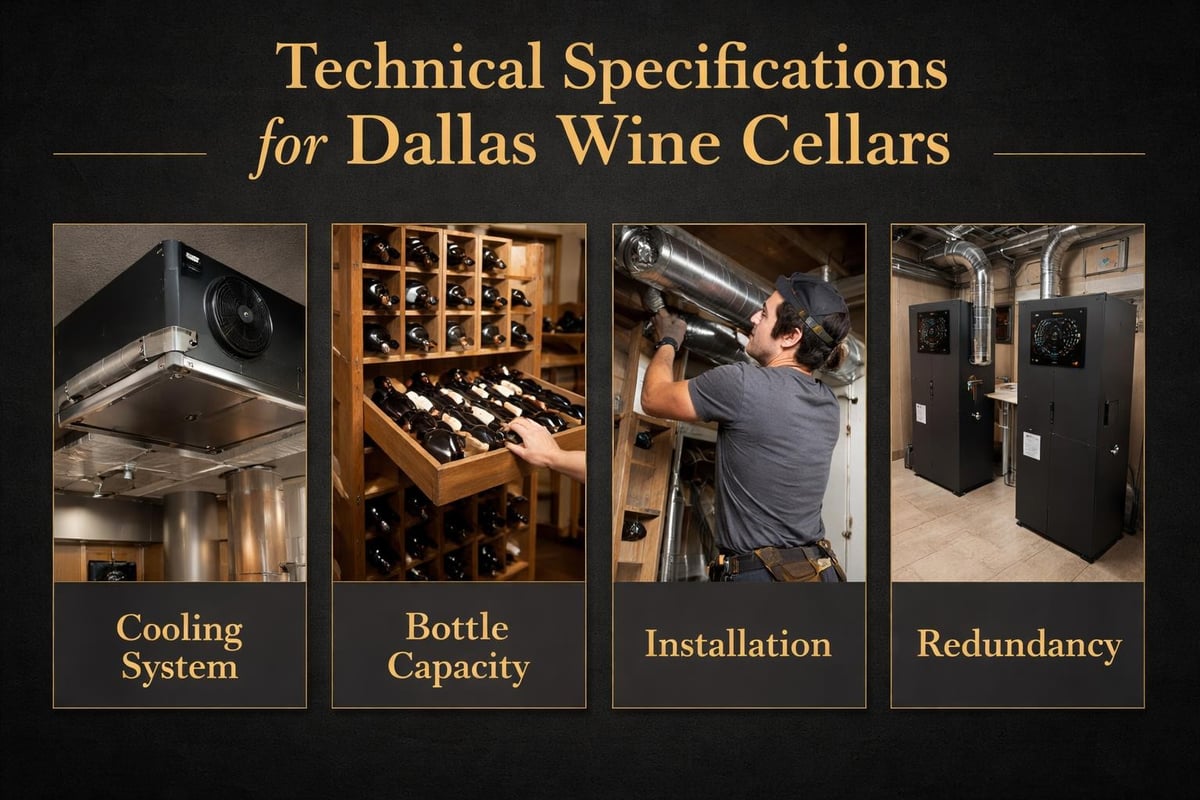
System selection depends on cellar volume, insulation quality, glass exposure, and redundancy requirements. Through-wall units work effectively for smaller installations where exterior wall access exists. Ducted split systems accommodate larger spaces and allow equipment placement away from living areas.
Backup systems provide essential insurance. Power outages, mechanical failures, or maintenance requirements shouldn't jeopardize decades of collecting. Many Dallas installations incorporate:
Dual cooling units with automatic failover
Battery backup for monitoring systems
Temperature alarms with cellular notification
Generator tie-ins for whole-home power continuity
System Type | Best For | Capacity Range | Installation Complexity |
|---|---|---|---|
Self-contained (through-wall) | Small to medium cellars, exterior wall access | Up to 1,500 bottles | Low to moderate |
Ducted split | Larger cellars, flexible equipment placement | 1,000-5,000+ bottles | Moderate to high |
Custom commercial | Estate collections, multiple rooms | 5,000+ bottles | High (requires dedicated mechanical room) |
Insulation requirements exceed standard building practices. Walls, ceilings, and floors require vapor barriers and R-values typically associated with cold storage facilities. Glass installations demand specialized insulated panels rated for the temperature differential between cellar interior and adjacent spaces.
Architectural Integration and Space Planning
The most successful luxury home wine cellars Dallas architects and designers create don't feel like afterthoughts. They're integral to the home's flow, often serving as transition spaces between public entertaining areas and private family zones.
Location selection dramatically impacts both construction costs and user experience. Ground-level installations provide easier access and more flexible design options but require more robust climate control. Below-grade spaces naturally maintain cooler temperatures but present waterproofing challenges in Dallas's clay soil conditions.
Consider how the cellar relates to your lifestyle patterns:
Proximity to kitchen for cooking wine selection
Access from dining room for dinner party bottle retrieval
Integration with home theater or game room for casual entertaining
Adjacent tasting room or lounge for serious wine enjoyment
Service entrance for delivery and collection management
Incorporating Tasting and Entertainment Spaces
Luxury wine room design trends increasingly blur the line between storage and experience. Many Dallas projects dedicate significant square footage to tasting environments that complement the wine storage area.
A dedicated tasting room allows you to:
Host intimate wine dinners without disrupting main living spaces
Conduct vertical tastings in controlled environments
Store serving equipment, glassware, and accessories
Display wine-related art, maps, and memorabilia
Create temperature-zoned spaces for different wine styles
Design elements that elevate tasting spaces include stone or wood tasting bars with integrated sinks, climate-controlled glass display cabinets for special bottles, custom lighting schemes that can dim for ambiance, and acoustic treatments for comfortable conversation.
Design Styles for Dallas Estates
The architectural diversity across Dallas neighborhoods supports equally diverse cellar aesthetics. Understanding which approach aligns with your home and personal taste ensures cohesive results.
Traditional and Classic Approaches
Traditional wine cellar designs honor Old World European aesthetics with rich wood tones, ornate millwork, and understated elegance. These cellars feel like natural extensions of formal homes in Highland Park, University Park, or Preston Hollow.
Characteristic elements include arched doorways with wrought iron gates, floor-to-ceiling wood racking in herringbone or diamond patterns, stone or brick accent walls, and antique-inspired lighting fixtures.
Traditional doesn't mean static. Contemporary interpretations incorporate LED lighting within traditional racking, glass-front climate-controlled display sections, and technology integration disguised within classic cabinetry.
Modern and Contemporary Solutions
Modern wine cellars emphasize clean lines, innovative materials, and architectural drama. Glass-enclosed designs, floating metal racking systems, and minimalist aesthetics complement contemporary Dallas homes from Frisco to Southlake.
Key modern characteristics:
Floor-to-ceiling glass walls with minimal framing
Monochromatic or limited color palettes
Integrated LED systems creating wall-washing effects
Label-forward display racking for visual bottle identification
Sculptural elements treating wine storage as art installation
The importance of architectural alignment cannot be overstated. Your cellar should feel like it was always part of the home's original vision, not an obviously added feature.
Transitional Designs Bridging Styles
Transitional wine cellars offer flexibility for homeowners who appreciate both traditional warmth and contemporary clarity. These designs might combine wood and metal racking, blend classic architectural details with modern glass enclosures, or pair antique furniture pieces with cutting-edge display technology.
This approach works exceptionally well in Dallas homes undergoing renovation, where matching existing architecture while introducing fresh design thinking creates cohesive yet updated environments.
Technology Integration and Smart Features
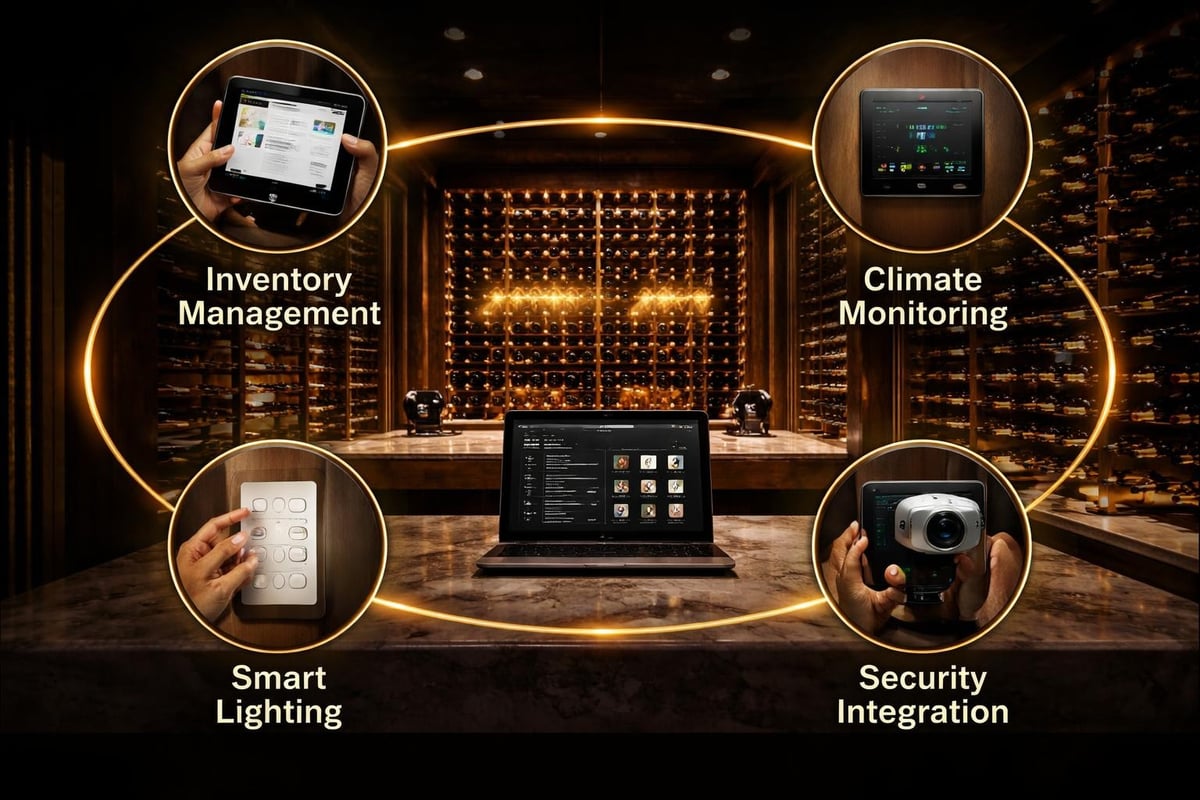
Modern luxury home wine cellars Dallas technology enables go far beyond basic temperature monitoring. Sophisticated systems provide comprehensive collection management, environmental oversight, and entertainment integration.
Inventory management software catalogs your collection with purchase information, optimal drinking windows, location tracking within the cellar, and tasting notes. Many systems integrate with smartphone apps for remote access and can suggest pairings based on menu planning.
Environmental monitoring has evolved to provide real-time data visualization, historical trending analysis, predictive maintenance alerts, and multi-zone tracking for cellars with varied temperature sections.
Smart features to consider:
Automated lighting that responds to entry and time of day
Electronic access controls with guest permissions
Integration with whole-home automation systems
Security cameras for high-value collection protection
Automated inventory updates via barcode or RFID scanning
Working with Design-Build Specialists
Creating exceptional luxury home wine cellars Dallas collectors deserve requires expertise spanning multiple disciplines. The most successful projects engage teams that provide comprehensive design and construction services under unified management.
The design-build approach streamlines communication, coordinates trades effectively, ensures accountability throughout the project, and typically delivers faster completion with fewer surprises.
The Design Process
Professional cellar design begins with understanding your collection, growth plans, and aesthetic preferences. Initial consultations should explore:
Current collection size and projected growth
Wine preferences (regions, styles, vintages)
How you'll use the space (personal enjoyment vs. entertaining)
Budget parameters and timeline expectations
Existing architectural constraints and opportunities
Design development translates these discussions into detailed renderings, material specifications, and technical drawings. This phase allows you to visualize the finished space and make refinements before construction begins.
Construction and Installation Excellence
The portfolio of completed projects from experienced cellar builders demonstrates their capability to execute complex installations. Review completed work in similar architectural styles, comparable scales, and with features you're considering.
Quality construction demands proper moisture barriers and vapor retarders, insulation exceeding standard building codes, commercial-grade cooling system installation, precision millwork and racking fabrication, and thorough testing before wine placement.
Project timelines for luxury home wine cellars Dallas craftsmen build typically range from 8-16 weeks depending on complexity, with custom millwork and specialized materials potentially extending schedules.
Maintenance and Long-term Performance
Even the most expertly designed cellar requires ongoing attention to maintain optimal performance. Establishing maintenance protocols from the outset protects both your wine investment and the cellar infrastructure.
Climate system maintenance should occur quarterly, including filter replacement, condenser coil cleaning, refrigerant level verification, humidity sensor calibration, and drain line inspection.
Annual comprehensive reviews should address:
Seal integrity around glass panels and doors
Wood racking condition and finish touch-ups
Lighting system functionality and bulb replacement
Technology system updates and security patches
Overall environmental performance review
Many cellar specialists offer ongoing maintenance programs that provide regular service visits, priority emergency response, system upgrade consultation, and performance guarantees.
Maintenance Task | Frequency | Typical Cost | DIY Possible? |
|---|---|---|---|
Filter replacement | Monthly | $20-50 | Yes |
System inspection | Quarterly | $150-300 | No |
Deep cleaning | Semi-annually | $300-500 | Partially |
Comprehensive service | Annually | $500-1,000 | No |
Regional Considerations for Dallas Projects
Dallas's unique geographic and cultural context influences cellar design decisions. Understanding local factors ensures your installation performs optimally within this specific environment.
Soil conditions across the Dallas-Fort Worth metroplex, particularly the expansive clay soils, present foundation and waterproofing challenges for below-grade cellars. Professional structural engineering and moisture management become critical for basement installations.
Building code compliance varies between municipalities. Highland Park, University Park, and other incorporated communities maintain distinct requirements beyond standard Dallas building codes. Working with specialists familiar with Texas wine cellar regulations ensures permitting proceeds smoothly.
Connecting with Local Wine Culture
Dallas's vibrant wine scene, with sophisticated restaurants, dedicated wine shops, and active collector community, provides inspiration and resources for cellar planning. Attending local wine events, visiting restaurant cellars, and connecting with other collectors offers valuable insights into what works well in North Texas environments.
The best luxury home wine cellars Dallas boasts often reflect owners who engage deeply with regional wine culture, allowing that knowledge to inform their design choices and collection development.
Budget Planning and Value Engineering
Establishing realistic budget parameters early prevents disappointment and allows designers to optimize value within your investment range. Understanding where money gets allocated helps prioritize spending on elements that matter most to you.
Typical cost distribution:
Climate control systems and electrical: 25-30%
Racking and millwork: 30-35%
Glass and architectural elements: 15-20%
Construction and installation labor: 20-25%
Design, engineering, and project management: 10-15%
Value engineering identifies opportunities to achieve your vision more efficiently without compromising quality. This might involve adjusting cellar dimensions to minimize custom glass sizing, selecting readily available materials with similar aesthetics to rare imports, or phasing technology integration to spread costs across time.
Many Dallas homeowners find exploring design portfolios helps calibrate expectations and identify which features justify premium investment for their specific priorities.
Creating Your Vision
The journey from concept to completion for luxury home wine cellars Dallas residents commission should be collaborative, exciting, and ultimately transformative. Your cellar becomes more than storage; it's a personal museum, an architectural achievement, and a gathering place for sharing exceptional wines with people you care about.
Success requires finding partners who understand that every collection has unique requirements, appreciate that aesthetic preferences vary widely, recognize that budget constraints demand creative solutions, and commit to delivering craftsmanship that endures for generations.
Designing a luxury wine cellar in Dallas combines technical precision with artistic vision, creating spaces that protect valuable collections while elevating your home's architectural presence. Whether you're planning a compact urban installation or an expansive estate cellar, the right design team transforms your vision into reality. Prestige Wine Cellars brings decades of experience crafting bespoke wine storage solutions throughout Texas, combining engineering excellence with design innovation to create cellars that reflect your unique aesthetic and preserve your collection for years to come.
Your Dream Wine Cellar Starts Here
Let our design team craft a cellar that matches your taste, space, and your collection — built for beauty, function, and prestige.

Email us at
Visit our office