
Custom Wine Cellar Barton Creek: Design Excellence
Discover how custom wine cellar Barton Creek homeowners create luxury wine storage. Expert insights on design, climate control, and materials.
The rolling hills of Barton Creek represent some of Austin's most prestigious addresses, where architectural excellence and refined living converge. Homeowners in this distinguished neighborhood understand that a wine collection deserves more than conventional storage. A custom wine cellar Barton Creek residence transforms wine storage into an artful experience, blending climate precision with design mastery. These bespoke spaces honor both the wines they protect and the homes they enhance, creating environments where collections flourish and memories are made.
Why Barton Creek Homes Demand Custom Wine Solutions
Barton Creek estates showcase architectural diversity, from Hill Country contemporary to Mediterranean revival. Each home possesses unique spatial characteristics and aesthetic signatures that standard wine storage simply cannot accommodate.
Custom cellars address specific challenges inherent to this area:
Texas climate extremes requiring sophisticated temperature regulation
Varied home footprints from sprawling ranch-style to multi-level estates
Integration with existing architectural elements and design languages
Collection sizes ranging from emerging enthusiasts to serious connoisseurs
Entertainment spaces that showcase wine as a lifestyle element
When planning a custom wine cellar design, Barton Creek homeowners benefit from working with specialists who understand local building conditions and design sensibilities. The limestone terrain, humidity fluctuations, and temperature swings characteristic of Central Texas demand engineering expertise beyond typical residential construction.
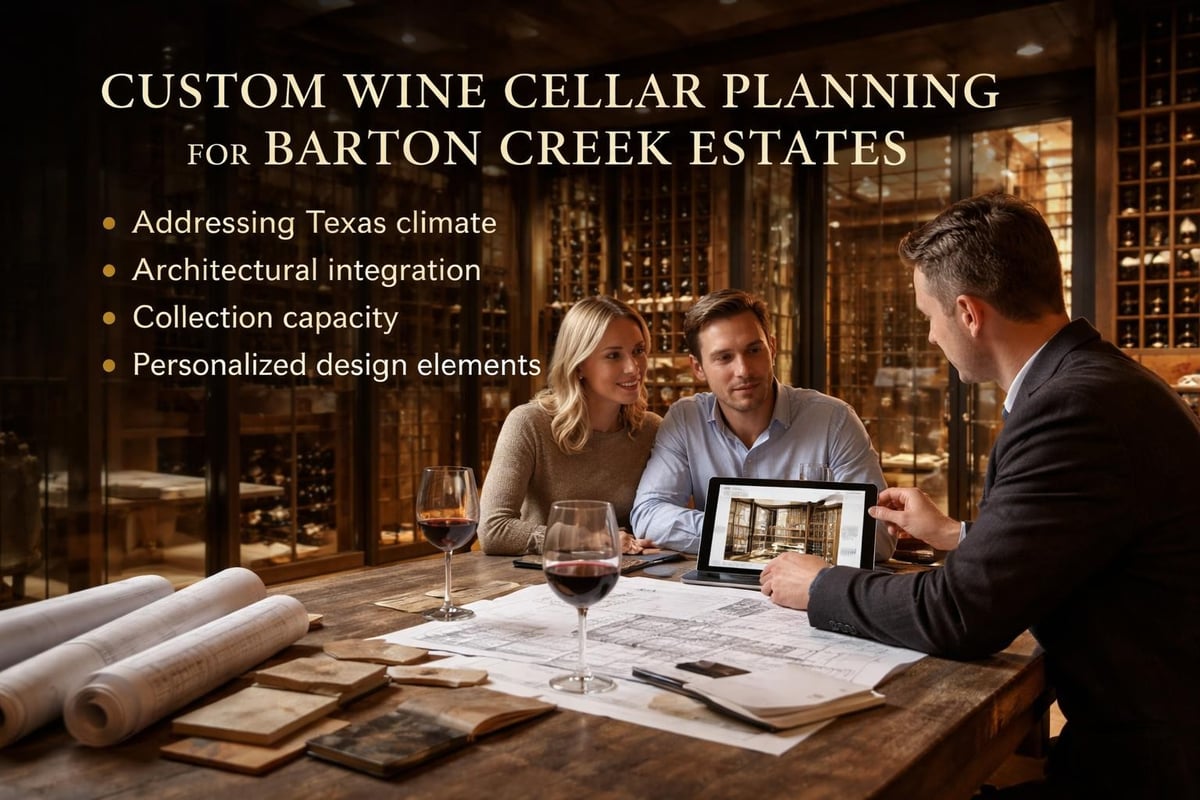
Location within the home dramatically influences design approach. Below-grade spaces offer natural temperature stability but require robust waterproofing and ventilation systems. First-floor locations provide convenient access and display opportunities while demanding enhanced climate control. The key considerations for building a custom wine cellar include evaluating structural capacity, proximity to kitchen and entertainment areas, and visual impact from adjacent rooms.
Climate Control Engineering for Central Texas
Texas heat challenges even the most advanced cooling systems. A custom wine cellar Barton Creek installation requires climate systems engineered for sustained performance under extreme conditions.
Climate Factor | Barton Creek Challenge | Solution Approach |
|---|---|---|
Summer temperatures | 100°F+ exterior heat | Commercial-grade cooling units with redundancy |
Humidity variation | 20-80% seasonal swings | Active humidification and dehumidification |
Temperature stability | Day/night fluctuations | Insulated envelope with vapor barrier |
System reliability | Year-round operation | Preventive maintenance programs |
Proper insulation forms the foundation of climate stability. Walls require R-19 minimum insulation values, while ceilings benefit from R-30 or higher. Vapor barriers prevent moisture migration that could compromise both wine conditions and structural integrity. These essential elements of wine cellar construction work in concert to create the stable 55-58°F environment that allows wine to age gracefully.
Design Styles That Complement Barton Creek Architecture
Barton Creek homes reflect diverse architectural influences. Your wine cellar should enhance rather than compete with your home's existing character.
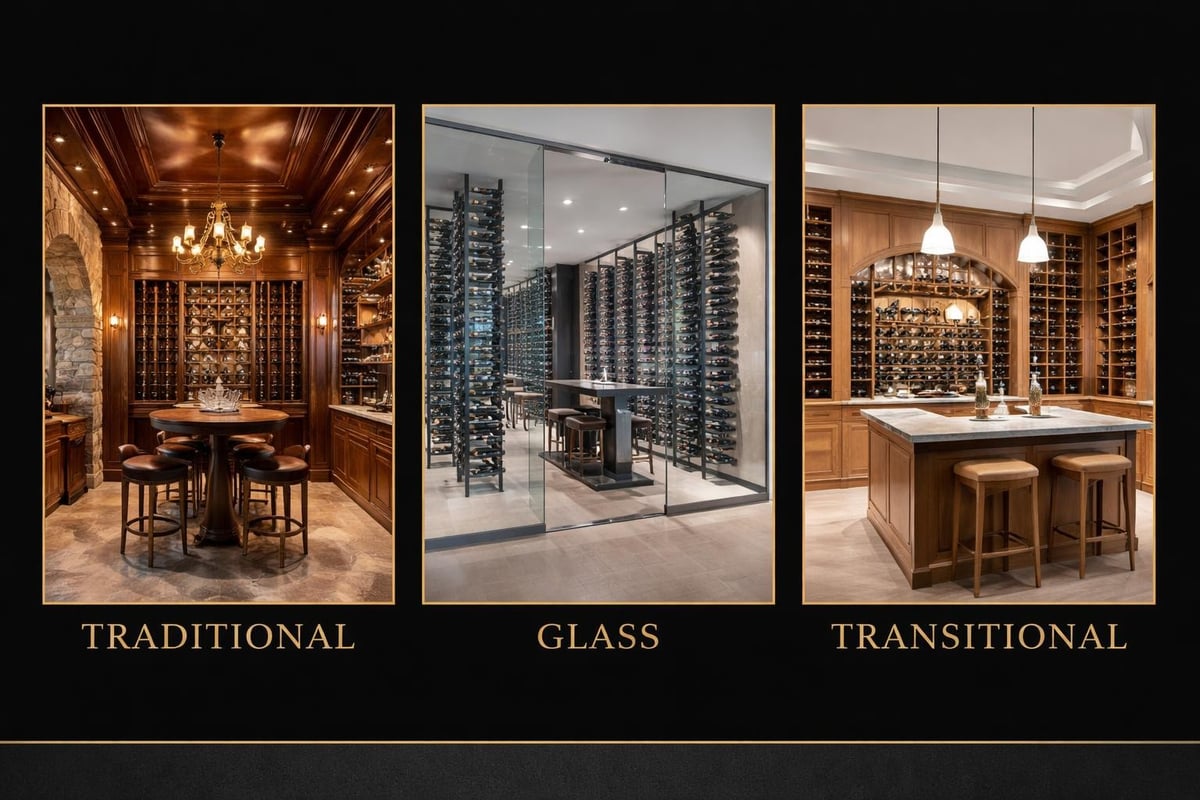
Traditional Wood Cellars
Mahogany, walnut, and cherry racking systems create timeless elegance. These materials develop rich patinas over years, adding depth and warmth to the space. Individual bottle displays, diamond bins, and case storage combine to accommodate various bottle formats while maintaining visual cohesion.
Traditional designs often incorporate:
Hand-selected wood grains matched throughout the installation
Crown molding and architectural details echoing the home's millwork
Wrought iron accents for Mediterranean-inspired residences
Stone or brick flooring that complements Hill Country aesthetics
Modern Glass-Enclosed Showcases
Contemporary Barton Creek homes embrace clean lines and visual transparency. Glass-enclosed wine cellars transform collections into living art, visible from dining areas, great rooms, or hallways.
Frameless glass systems maintain thermal integrity while creating dramatic sightlines. Metal racking in brushed nickel, oil-rubbed bronze, or matte black provides striking contrast against wine bottles. LED lighting systems highlight labels and create ambient glow that enhances evening entertaining.
The technical demands of glass cellars require specialized expertise. Understanding custom glass wine cellar design considerations ensures proper sealing, appropriate glass thickness, and climate system sizing that compensates for thermal transfer through transparent surfaces.
Transitional Designs
Many Barton Creek estates blend traditional architecture with contemporary interiors. Transitional wine cellars bridge these design languages through material mixing and refined detailing.
These spaces might combine:
Wood racking in updated profiles with cleaner lines
Glass doors or panels for visibility without full exposure
Metal accents that reference kitchen or bath finishes
Lighting that balances functional illumination with atmospheric warmth
Stone or tile elements connecting to other living spaces
Capacity Planning and Racking Configuration
Understanding your collection's current size and growth trajectory shapes every design decision. A custom wine cellar Barton Creek homeowner commissions should accommodate today's bottles while anticipating future acquisitions.
Realistic capacity assessment includes:
Current bottle count across all formats
Annual acquisition rate based on purchasing patterns
Special formats requiring custom accommodation (magnums, large-format bottles)
Cases held for aging versus ready-to-drink selections
Display priorities for prized bottles or verticals
Standard wine racking provides 9-inch depth for Bordeaux-style bottles. However, collectors with diverse holdings benefit from varied racking depths, adjustable shelving, and specialty storage for Champagne, Burgundy, and oversized formats. Designing your perfect custom wine cellar requires honest evaluation of these practical needs alongside aesthetic preferences.
Racking Layout Strategies
Efficient layouts maximize capacity while maintaining accessibility and visual appeal. Corner configurations utilize often-wasted space for bulk storage or case racks. Waterfall displays showcase special bottles at eye level. Presentation rows near the entrance create immediate impact for guests.
Racking Type | Capacity per Linear Foot | Best Application |
|---|---|---|
Individual bottle | 12-15 bottles | Primary storage, label-forward display |
Diamond bins | 18-24 bottles | Bulk storage, cases of same wine |
Case storage | 12 bottles per case | Unopened cases, long-term aging |
Display rows | 4-6 bottles | Featured selections, vertical collections |
Aisle width affects both usability and spatial efficiency. Minimum 30-inch aisles allow single-person access, while 42-48 inch widths accommodate two people comfortably. Barton Creek estates with generous square footage can prioritize comfort; tighter spaces benefit from strategic layout optimization.
Material Selection and Craftsmanship
Material quality directly impacts longevity, maintenance requirements, and aesthetic satisfaction. A custom wine cellar Barton Creek installation represents a significant investment deserving of premium materials and expert craftsmanship.
Wood species selection balances appearance, durability, and moisture resistance. Premium options include:
Mahogany: Rich color depth, excellent stability, traditional elegance
Walnut: Dramatic grain patterns, contemporary appeal, natural warmth
White Oak: Light tones, pronounced grain, versatile styling
Redwood: Natural rot resistance, California wine country associations
Cherry: Color evolution over time, fine grain, refined appearance
All wood receives moisture-resistant finishes protecting against humidity exposure. Multiple seal coats ensure dimensional stability across climate variations. Visible hardware, from label holders to door pulls, should reflect the overall design language. Wine cellar materials extend beyond racking to encompass flooring, wall finishes, and decorative elements that complete the environment.
Stone flooring provides thermal mass that aids temperature stability while offering timeless beauty. Travertine, slate, and limestone complement Hill Country aesthetics. Cork flooring delivers warmth underfoot, sound absorption, and sustainable credentials. Tile options range from classic terracotta to contemporary large-format porcelain.
Lighting Design for Function and Ambiance
Proper illumination serves dual purposes: facilitating wine selection and creating inviting atmosphere. Heat-generating incandescent bulbs compromise climate control, making LED systems essential for custom wine cellar Barton Creek installations.
Layered Lighting Approach
Effective lighting combines multiple sources:
Ambient lighting: Overall illumination from recessed fixtures or linear LED strips
Task lighting: Focused beams for reading labels and navigating racks
Accent lighting: Dramatic highlighting of featured bottles or architectural details
Display lighting: Backlighting for glass shelves or illuminated racking sections
Color temperature affects how wines and materials appear. Warm white (2700-3000K) creates inviting ambiance complementing wood tones. Neutral white (3500-4000K) provides accurate color rendering for label identification. Dimming capabilities allow adjustment based on usage, from practical selection during daytime to atmospheric glow during dinner parties.
The essential considerations for wine cellar design include lighting control systems that protect wines from UV exposure while providing necessary visibility. Quality LED systems emit virtually no UV radiation and generate minimal heat, preserving both wine quality and climate system efficiency.
Avoiding Common Design Mistakes
Even well-intentioned projects encounter pitfalls that compromise functionality or longevity. Understanding these challenges prevents costly corrections after installation.
Common wine cellar design mistakes include undersizing climate systems, inadequate insulation, poor door sealing, and insufficient electrical planning. A custom wine cellar Barton Creek residence requires detailed planning addressing each potential issue before construction begins.
Climate System Sizing Errors
Undersized cooling units struggle under Texas heat, running constantly and failing prematurely. Professional heat load calculations account for:
Cellar volume and surface area
Insulation values and construction methods
Glass surfaces and thermal transfer rates
Ambient temperature conditions outside the cellar
Internal heat sources from lighting systems
Reputable designers provide detailed engineering analysis rather than rules of thumb. Calculating heat load ensures system specifications match actual requirements with appropriate safety margins.
Inadequate Moisture Management
Texas humidity fluctuates dramatically between seasons. Winter heating systems dry indoor air while summer monsoons elevate moisture levels. Without active humidification and dehumidification, cork integrity and label condition suffer.
Optimal wine storage maintains 60-70% relative humidity. Active systems monitor conditions continuously and adjust automatically, protecting collections worth thousands or even millions of dollars.
Integration with Home Automation
Modern Barton Creek estates increasingly feature comprehensive home automation. Integrating your wine cellar with these systems enhances convenience while providing peace of mind.
Smart cellar capabilities include:
Remote temperature and humidity monitoring via smartphone
Automated alerts for system malfunctions or condition deviations
Lighting control through central automation platforms
Access logging for security and insurance purposes
Inventory management systems tracking collection value and drinking windows
These technologies protect investment while simplifying collection management. Some homeowners incorporate tasting areas within their cellars, requiring additional considerations for seating, countertops, and glassware storage.
The Prestige Wine Cellars Portfolio Advantage
Exploring completed projects provides inspiration and demonstrates design possibilities. The Prestige Wine Cellars portfolio showcases diverse approaches addressing varied architectural contexts and collector needs.
Each project reflects collaborative design processes where client vision combines with technical expertise. From traditional wine cellars emphasizing wood craftsmanship to modern installations featuring glass and metal, the range demonstrates adaptability across design preferences.
Local projects like the Lakeway traditional wine cellar illustrate solutions for nearby communities facing similar climate conditions and architectural styles. These examples provide tangible reference points for Barton Creek homeowners envisioning their own spaces.
Timeline and Process Expectations
Understanding the design and construction sequence helps homeowners plan appropriately. A custom wine cellar Barton Creek project typically follows this progression:
Initial consultation: Discussing collection, space, budget, and design preferences (1-2 hours)
Site assessment: Evaluating structural conditions, access, utilities, and constraints (on-site visit)
Concept development: Creating preliminary designs with 3D renderings (1-2 weeks)
Design refinement: Adjusting layouts, materials, and details based on feedback (1-2 weeks)
Engineering: Finalizing specifications for climate, electrical, and structural systems (1-2 weeks)
Permitting: Securing necessary approvals from local authorities (variable, 2-6 weeks)
Construction: Site preparation, insulation, climate installation, millwork (4-12 weeks)
Finishing: Final adjustments, cleaning, and system commissioning (1 week)
Total timeline from initial contact to completion typically spans three to six months depending on project complexity, material lead times, and permitting requirements. Turnkey wine cellar design-build services streamline this process through coordinated project management.
Investment Considerations and Value
Custom wine cellars represent significant financial commitments deserving careful consideration. Barton Creek homeowners understand that quality installations enhance both property value and daily living enjoyment.
Investment factors include:
Square footage and capacity requirements
Material selections and finish quality
Climate system specifications and redundancy
Architectural complexity and custom millwork
Glass elements and specialty features
Automation and monitoring systems
Projects range from $40,000 for modest conversions to $200,000+ for showcase installations with extensive glass, exotic materials, and large capacity. Per-bottle costs decrease with scale, making larger projects more economical than multiple smaller additions over time.
Quality installations appreciate alongside home values while providing immediate enjoyment. Unlike many luxury upgrades, wine cellars offer functional benefits protecting valuable collections while creating gathering spaces for family and friends.
Maintenance and Long-Term Care
Protecting your investment requires ongoing attention to systems and materials. Wine cellar maintenance programs ensure consistent performance and early problem detection.
Annual maintenance includes:
Climate system inspection and refrigerant level checks
Filter replacement and condenser coil cleaning
Humidity system calibration and reservoir cleaning
Door seal inspection and adjustment
Wood finish evaluation and touch-up as needed
Lighting system performance verification
Proactive maintenance prevents system failures that could compromise entire collections. Scheduled service visits identify minor issues before they escalate into expensive emergencies. Many homeowners establish service agreements providing priority response and regular inspections.
Wood finishes benefit from periodic evaluation. High-quality sealers protect against moisture absorption, but touch-ups maintain appearance and performance over decades. Stone flooring requires appropriate cleaning products avoiding acidic formulas that could etch surfaces.
Working with Design Professionals
Successful custom wine cellar Barton Creek projects result from collaborative partnerships between homeowners and experienced designers. Professional expertise addresses technical complexities while honoring personal preferences and lifestyle needs.
Understanding design styles helps communicate preferences effectively. Bringing reference images, describing favorite wine regions or estates, and articulating how you envision using the space provides designers with valuable direction.
Initial consultations establish rapport and assess compatibility. Designers should ask detailed questions about your collection, purchasing habits, entertaining frequency, and aesthetic preferences. They should also explain their process, timeline expectations, and how they handle challenges or changes during construction.
Reviewing completed projects and speaking with previous clients offers insight into working relationships and finished quality. Barton Creek represents a discerning clientele expecting excellence, and designers serving this market should demonstrate corresponding expertise and professionalism.
Creating a custom wine cellar Barton Creek residence deserves requires balancing aesthetic vision with technical precision, ensuring your collection receives optimal care while enhancing your home's beauty and value. These considerations, from climate engineering to material selection and layout optimization, transform wine storage into personalized sanctuaries. When you're ready to begin your project, Prestige Wine Cellars brings comprehensive expertise in luxury wine cellar design and construction, serving Austin's most distinguished estates with bespoke solutions that honor both your wines and your home.
Your Dream Wine Cellar Starts Here
Let our design team craft a cellar that matches your taste, space, and your collection — built for beauty, function, and prestige.

Email us at
Visit our office