
Commercial Wine Cellars: Expert Guide for 2026
Discover how commercial wine cellars elevate restaurants, hotels, and resorts. Expert insights on design, climate control, and storage solutions.
The landscape of hospitality and fine dining has evolved dramatically, with wine programs becoming central to guest experiences and brand differentiation. Whether you operate a steakhouse in downtown Dallas, manage a boutique hotel in Austin, or own a wine bar in Houston, your wine storage solution speaks volumes about your commitment to quality. Commercial wine cellars have transformed from simple storage rooms into breathtaking focal points that showcase collections while preserving their integrity through precision engineering and thoughtful design.
Why Businesses Invest in Commercial Wine Cellars
The decision to install a professional-grade wine storage system extends far beyond simple preservation. Restaurants, hotels, and private clubs recognize that a well designed cellar represents a significant competitive advantage in markets where discerning guests expect excellence.
Financial Returns and Inventory Management
A properly engineered commercial wine storage system protects valuable inventory while creating opportunities for revenue growth. Consider these tangible benefits:
Inventory protection: Climate-controlled environments prevent oxidation, cork degradation, and temperature fluctuations that can damage bottles worth thousands of dollars
Increased wine list profitability: Proper storage allows businesses to age wines and offer rare vintages at premium pricing
Reduced waste: Consistent conditions minimize spoilage and guarantee each bottle reaches guests in perfect condition
Space optimization: Custom racking systems maximize bottle capacity per square foot
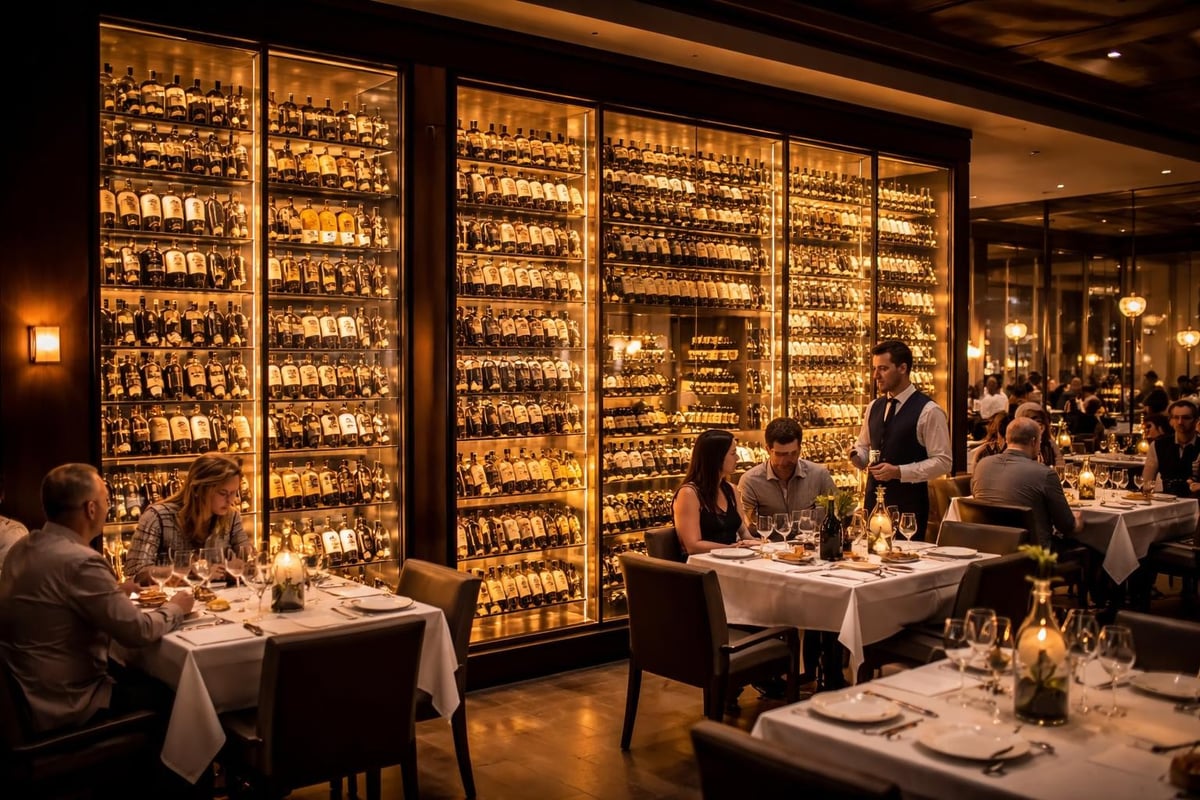
Beyond the numbers, commercial wine cellars serve as powerful marketing tools. Glass-enclosed showpiece wine cellars visible from dining rooms create theater and anticipation, drawing guests' attention to curated collections and driving wine sales through visual storytelling.
Operational Efficiency in High-Volume Settings
The demands placed on commercial installations differ substantially from residential applications. High-traffic environments require systems engineered for durability, accessibility, and seamless service flow.
Restaurant and hotel wine cellars must accommodate:
Frequent access: Multiple staff members retrieving bottles throughout service hours
Inventory rotation: First-in, first-out systems that preserve older vintages while making new arrivals accessible
Service speed: Logical organization that allows sommelier teams to locate specific bottles within seconds
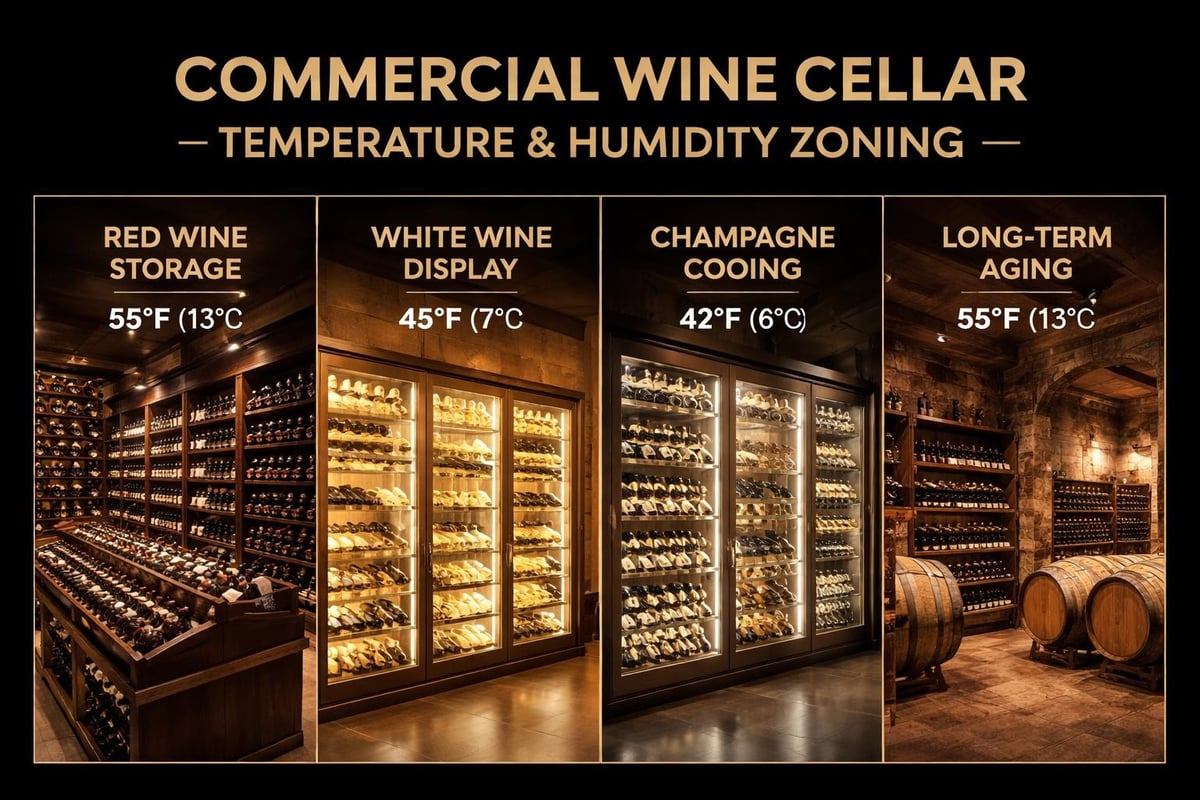
Temperature zoning: Separate climate zones for reds, whites, sparkling wines, and long-term storage
Understanding common mistakes to avoid in commercial wine cellar cooling installations ensures your investment performs reliably during peak service hours when system failures would prove most costly.
Design Considerations for Commercial Applications
Creating commercial wine cellars that balance aesthetics with functionality requires understanding how guests and staff will interact with the space. The most successful installations integrate seamlessly into their surroundings while meeting rigorous performance standards.
Location and Space Planning
Selecting a room for wine storage demands careful analysis of structural, mechanical, and operational factors. Temperature stability, humidity control, light exposure, and vibration all impact wine quality over time.
Location Factor | Ideal Conditions | Commercial Considerations |
|---|---|---|
Temperature | 55-58°F consistent | Adjacent to kitchens requires robust insulation |
Humidity | 60-70% relative | High-traffic areas need sealed construction |
Light | Minimal UV exposure | Display cellars require UV-filtering glass |
Vibration | Isolated from mechanical systems | Distance from HVAC, elevators, loading docks |
Access | Secure yet convenient | Service flow integration with FOH/BOH operations |
Urban restaurant locations often present unique challenges. Compact urban wine cellars demonstrate how creative design maximizes limited square footage without compromising storage capacity or visual impact.
Material Selection and Brand Expression
The materials comprising your wine cellar communicate your establishment's character and attention to detail. Wood species, metal finishes, glass treatments, and lighting design all contribute to the overall impression.
Traditional steakhouses often gravitate toward rich mahogany or walnut with wrought iron accents, creating warmth and timeless elegance. Contemporary hotels may prefer minimalist metal racking with LED accent lighting that emphasizes clean lines and modern sophistication.
Exploring various signature styles helps refine your vision and identify which aesthetic aligns with your brand identity. The materials you select should enhance your space while meeting commercial durability standards that withstand years of daily use.
Climate Control Engineering
The mechanical systems supporting commercial wine cellars represent the most critical investment in long-term collection preservation. Unlike residential units operating in controlled environments, commercial installations must overcome heat loads from adjacent kitchens, frequent door openings, and varying occupancy levels.
Proper system sizing accounts for:
Insulation R-values throughout walls, ceiling, and flooring
Glass surface area and UV transmission rates
Heat generation from lighting systems
Air exchange rates based on door access frequency
Ambient conditions in surrounding spaces
Tools like a heat load calculator help determine precise cooling requirements, ensuring systems maintain stable conditions without cycling inefficiently or failing during peak demand periods.
Installation Strategies for Different Commercial Spaces
The approach to building commercial wine cellars varies dramatically based on venue type, existing infrastructure, and operational requirements. Understanding these distinctions ensures your project delivers maximum value.
Restaurant Wine Walls and Display Cellars
High-visibility wine storage has become a hallmark of upscale dining establishments. Glass-enclosed wine walls transform bottles into living art while maintaining precise environmental conditions.
Successful restaurant installations require:
Seamless integration with architectural elements and sight lines
Acoustic considerations ensuring cooling systems don't disrupt dining experiences
Lighting design that highlights bottles without generating excessive heat
Security features protecting valuable inventory while maintaining visual transparency
Projects like the Cambria Waco Hotel wine cellar demonstrate how commercial installations can serve as signature design elements that define a property's character.
Hotel and Resort Wine Programs
Hospitality properties pursuing serious wine programs face distinct challenges. Multiple restaurants, banquet facilities, and room service operations may all draw from centralized storage, requiring sophisticated inventory management and climate control.
Luxury hotels benefit from:
Centralized storage with satellite service stations throughout the property
Security protocols including access controls and inventory tracking systems
Flexible capacity accommodating growing collections and special event requirements
Guest experience elements such as private tasting rooms adjacent to main storage
When exploring commercial wine installations, consider how systems can scale as your program matures and guest expectations evolve.
Private Clubs and Tasting Rooms
Member-focused venues require commercial wine cellars that balance communal display with individual storage options. Wine lockers allow members to store personal collections within temperature-controlled environments while maintaining privacy and security.
Feature | Restaurant Application | Hotel Application | Private Club Application |
|---|---|---|---|
Capacity | 500-2,000 bottles | 1,000-5,000+ bottles | 2,000-10,000+ bottles |
Access | Staff only | Multiple departments | Member + staff |
Display Priority | High visibility | Moderate visibility | Mixed (public + private) |
Security | Standard locks | Enhanced protocols | Individual lockers |
Zoning | 2-3 temperature zones | 3-5 temperature zones | Multiple zones + lockers |
Construction and Installation Process
Bringing commercial wine cellars from concept to reality requires coordination across multiple disciplines. The most successful projects follow structured processes that minimize disruption while ensuring exceptional results.
Design Development and Engineering
The journey begins with understanding your specific needs, constraints, and aspirations. Turnkey wine cellar design-build services streamline the process by integrating design, engineering, and construction under unified management.
Initial planning addresses:
Collection size and growth projections
Bottle storage vs. case storage ratios
Display bottles requiring special presentation
Staff access patterns and service workflows
Building code compliance and permitting requirements
Detailed drawings and 3D renderings ensure stakeholders visualize the finished space before construction begins, allowing refinements that prevent costly mid-project changes.
Climate System Installation
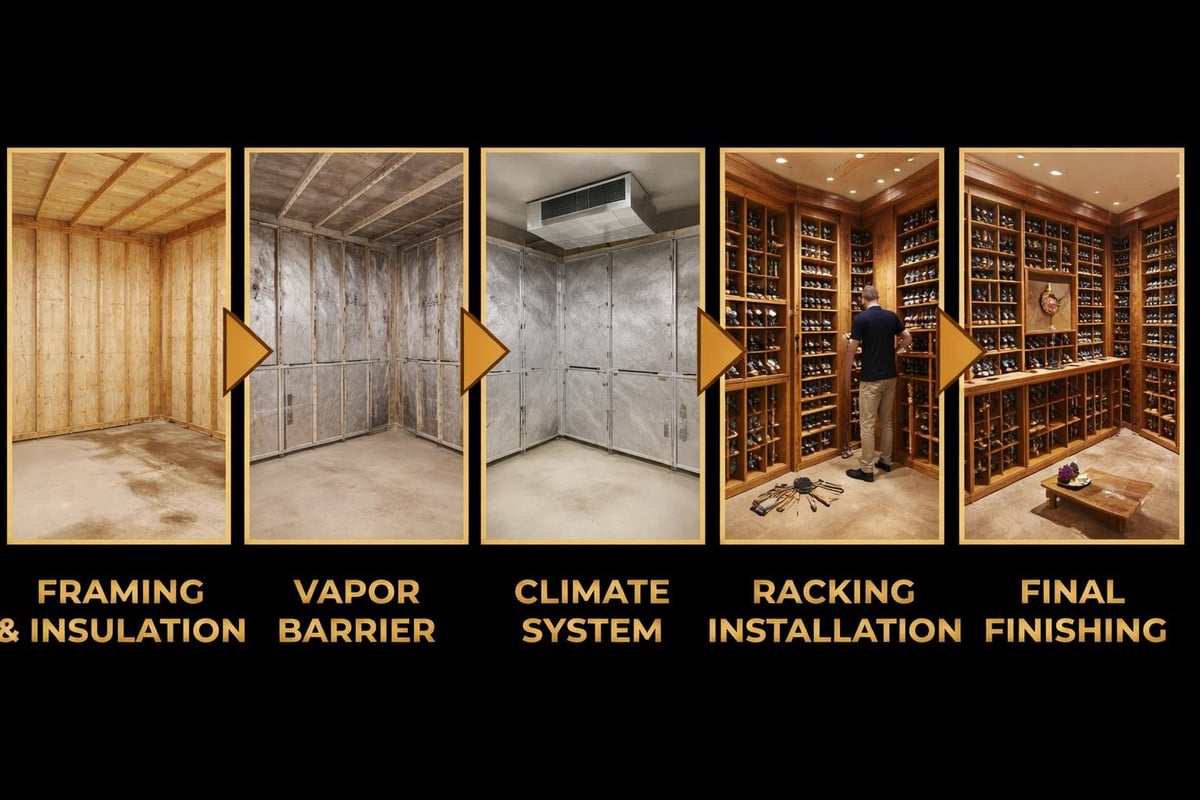
HVAC integration represents the most technically demanding aspect of commercial installations. Systems must maintain precise conditions while operating efficiently and reliably for decades.
Professional installation includes:
Vapor barrier installation preventing moisture infiltration
Insulation meeting commercial R-value requirements for all surfaces
Ductwork design minimizing temperature stratification
Redundant systems for mission-critical applications
Remote monitoring and alert systems flagging performance issues
Resources on innovative commercial wine storage highlight emerging technologies that improve efficiency while reducing long-term operating costs.
Racking and Finishing Installation
Once climate systems prove operational, attention shifts to racking installation and aesthetic finishing. Custom millwork transforms engineered spaces into showpieces that captivate guests and protect bottles.
Premium commercial installations feature:
Powder-coated metal systems offering modern aesthetics with commercial durability
Hardwood racking providing traditional warmth and timeless appeal
Acrylic or glass accents creating visual interest and bottle visibility
LED lighting systems highlighting collections while minimizing heat generation
Label-forward display allowing guests to browse selections easily
Reviewing portfolio examples provides inspiration and demonstrates how different design approaches suit various commercial applications.
Maintenance and Long-Term Performance
Commercial wine cellars demand ongoing attention to maintain optimal performance. Unlike residential installations serving single families, commercial systems operate continuously under demanding conditions.
Preventive Maintenance Protocols
Regular service intervals prevent minor issues from escalating into system failures that threaten inventory or disrupt operations.
Essential maintenance tasks include:
Monthly: Filter changes, condensate drain verification, temperature/humidity monitoring
Quarterly: Refrigerant level checks, electrical connection inspection, door seal evaluation
Annually: Complete system servicing, racking inspection, lighting system review, insulation assessment
Establishing wine cellar maintenance agreements with qualified specialists ensures trained technicians address issues before they compromise your collection or guest experience.
Performance Monitoring and Optimization
Modern commercial wine cellars incorporate monitoring systems that track conditions in real-time and alert management to deviations. Smart climate control provides peace of mind and documentation for insurance purposes.
Advanced systems offer:
Temperature and humidity logging creating permanent records of storage conditions
Remote access allowing managers to monitor cellars from anywhere
Automated alerts flagging temperature excursions, humidity changes, or equipment malfunctions
Energy consumption tracking identifying optimization opportunities
Regional Considerations for Texas Commercial Projects
Climate conditions across Texas present unique challenges for commercial wine storage. Understanding regional factors ensures systems perform reliably despite extreme weather.
Heat and Humidity Management
Texas summers test even the most robust cooling systems. Commercial installations in Houston, Dallas, and Austin must overcome significant temperature differentials between interior cellar conditions and surrounding spaces.
Gulf Coast locations face additional humidity challenges requiring enhanced dehumidification capacity and moisture management strategies. Projects in cities like Houston benefit from experienced designers understanding local conditions.
North Texas experiences temperature extremes in both directions, with brutal summers and occasional hard freezes demanding systems that maintain stability year-round. Commercial cellars serving Dallas establishments require careful attention to insulation and mechanical redundancy.
Building Code and Permitting
Commercial construction in Texas follows stringent codes governing everything from structural modifications to electrical systems and mechanical installations. Working with firms experienced in commercial space cellars ensures compliance and prevents delays.
Key permitting considerations:
Requirement | Impact on Project | Planning Approach |
|---|---|---|
Fire suppression | Sprinkler integration | Early coordination with fire marshal |
Structural loads | Floor reinforcement needs | Engineering analysis before design |
Electrical capacity | Panel upgrades | Service evaluation during planning |
ADA compliance | Access and circulation | Design review with accessibility expert |
Health department | Restaurant-specific requirements | Pre-submittal consultation |
Investment and Return Analysis
Commercial wine cellars represent significant capital investments that demand careful financial analysis. Understanding costs, returns, and value creation helps justify expenditures and set appropriate budgets.
Project Cost Components
Budget allocation typically breaks down across several categories, with percentages varying based on project scope and complexity.
Climate control systems: 20% of total budget
Racking and millwork: 25-35% of total budget
Structural modifications: 15-20% of total budget
Glass and glazing: 20% of total budget (display cellars)
Lighting and electrical: 10% of total budget
Design and engineering: 5-8% of total budget
Projects incorporating wine cellar materials like exotic woods, hand-forged metals, or specialty glass increase millwork percentages while creating truly distinctive installations.
Revenue Enhancement Opportunities
Beyond inventory protection, commercial wine cellars generate returns through multiple channels that improve financial performance.
Direct revenue streams:
Increased wine sales: Visible cellars prompt questions and drive bottle purchases
Premium pricing: Proper storage justifies higher markups on aged and rare wines
Wine club memberships: Private clubs generate recurring revenue through locker rentals
Special events: Wine dinners and tastings held in cellar spaces command premium pricing
Indirect value creation:
Enhanced reputation attracting wine-focused clientele
Social media appeal generating organic marketing
Award program eligibility (Wine Spectator, etc.) elevating status
Property value appreciation for hotel and resort owners
Resources from organizations focused on commercial design services help quantify these benefits and build compelling business cases.
Trends Shaping Commercial Wine Storage in 2026
The commercial wine cellar landscape continues evolving as technology advances and guest expectations shift. Staying current with emerging trends ensures your investment remains relevant for years to come.
Sustainable and Energy-Efficient Systems
Environmental responsibility has moved from nice-to-have to essential, with guests and investors alike scrutinizing sustainability practices.
Modern commercial installations incorporate:
High-efficiency cooling systems reducing energy consumption by 30-40% compared to previous generations
LED lighting minimizing heat generation while cutting electrical costs
Reclaimed and sustainable materials in racking and finishes
Smart controls optimizing performance and preventing waste
Renewable energy integration where feasible (solar panels, etc.)
Technology Integration
Beyond climate monitoring, commercial wine cellars increasingly incorporate technology enhancing guest experiences and operational efficiency.
Emerging features include:
Digital inventory management with barcode scanning and automated tracking
Guest-facing tablets allowing diners to browse collections and read tasting notes
Augmented reality experiences providing virtual cellar tours and wine education
Blockchain authentication documenting provenance for rare bottles
Predictive maintenance using AI to anticipate equipment issues
Flexible and Modular Designs
Operators recognize that wine programs evolve, requiring storage solutions that adapt to changing needs. Modular racking systems allow reconfiguration as collections shift from Bordeaux to Burgundy or from Old World to New World focus.
Examining examples of commercial wine cellars demonstrates how forward-thinking designs accommodate growth and change without requiring complete renovations.
Selecting the Right Design Partner
The success of commercial wine cellar projects depends heavily on the expertise and reliability of your design and construction partner. Not all builders possess the specialized knowledge required for installations that balance aesthetics with engineering precision.
Essential Qualifications and Experience
Look for partners demonstrating:
Proven track record in commercial (not just residential) installations
In-house engineering capabilities ensuring proper system sizing
Relationships with premium equipment manufacturers
Understanding of local building codes and permitting processes
Portfolio showcasing diverse styles and project scales
Firms offering custom wine cellar design as a core competency (rather than an occasional sideline) bring depth of knowledge that prevents costly mistakes and ensures exceptional results.
The Value of Comprehensive Services
Integrated design-build approaches streamline projects by placing responsibility for all aspects under unified management. This eliminates finger-pointing between trades and ensures cohesive execution from concept through completion.
Comprehensive services should include:
Initial consultation and needs assessment
Conceptual design with 3D visualization
Engineering and heat load calculations
Material selection and procurement
Permitting and code compliance
Construction and installation
Testing and commissioning
Training for operational staff
Ongoing maintenance and support
Exploring resources on the learn pages of experienced providers helps educate decision-makers about what to expect and what questions to ask during the selection process.
Commercial wine cellars represent investments in quality, guest experience, and brand differentiation that pay dividends for years when executed with expertise and vision. Whether you're planning your first wine storage installation or upgrading an existing system, the right design partner transforms functional requirements into signature spaces that captivate guests while protecting valuable collections. Prestige Wine Cellars brings decades of experience creating bespoke commercial installations for restaurants, hotels, and private clubs throughout Texas and beyond, delivering comprehensive solutions from initial design through long-term maintenance that ensure your wine program achieves its full potential.
Your Dream Wine Cellar Starts Here
Let our design team craft a cellar that matches your taste, space, and your collection — built for beauty, function, and prestige.

Email us at
Serving Austin, Dallas–Fort Worth, Houston & San Antonio