
Wine Cellar Cooling Units: The Heart of Wine Preservation
Discover how cellar cooling units protect your wine investment. Expert guidance on choosing, installing, and maintaining climate control systems.
A magnificent wine collection represents years of careful curation, significant investment, and a deep appreciation for the world's finest vintages. Yet without proper climate control, even the most valuable bottles can deteriorate within months. The technology that stands between perfection and spoilage is the cooling system at the heart of every serious wine cellar. Understanding how these systems work and choosing the right solution for your space makes the difference between a showcase for your collection and a costly storage mistake.
Understanding the Essential Role of Climate Control
Cellar cooling units serve as the guardian of your wine investment, maintaining the precise environmental conditions that allow wines to age gracefully over decades. Unlike standard HVAC systems designed for human comfort, these specialized units are engineered to hold steady temperatures between 55°F and 58°F while managing humidity levels around 60-70%.
The science behind proper wine storage demands unwavering consistency. Temperature fluctuations, even minor ones, cause wine to expand and contract within the bottle, potentially pushing the cork outward and allowing oxygen infiltration. A quality cooling system prevents these damaging cycles by maintaining temperature stability within a single degree.
Beyond temperature, humidity control separates exceptional cooling units from inadequate ones. Too little moisture causes corks to dry and shrink, inviting oxidation. Excessive humidity promotes mold growth and label damage. Professional cooling systems manage condensate effectively to maintain that critical balance.
The Physics of Wine Cellar Cooling
Wine cellars present unique cooling challenges that demand specialized engineering. Every cellar continuously battles heat infiltration from surrounding spaces, particularly in Texas where ambient temperatures regularly exceed 100°F during summer months. The cooling unit must counteract this thermal load while operating silently and efficiently.
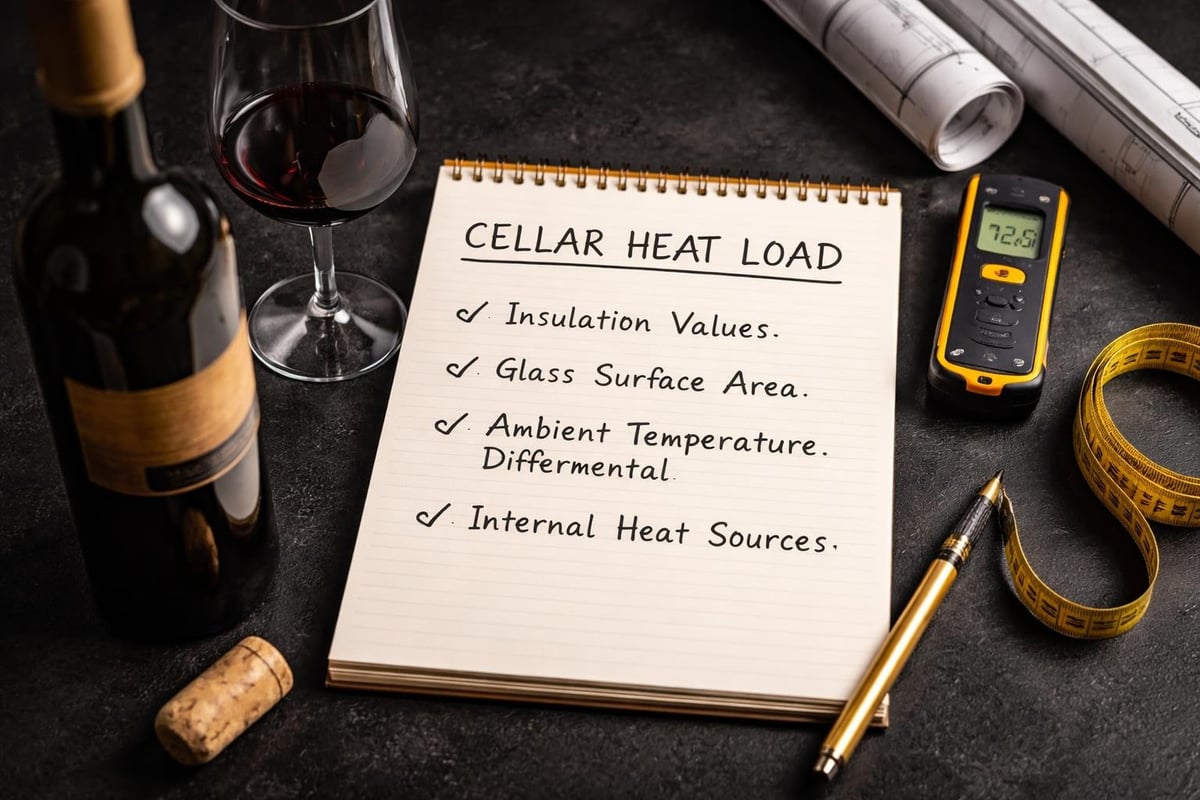
The thermal envelope of your cellar directly impacts cooling requirements. Wall insulation, ceiling construction, floor materials, glass features, lighting heat, and door traffic all contribute to the total heat load. Calculating this thermal load accurately ensures you select a unit with appropriate capacity, neither oversized nor underpowered.
Types of Cooling Systems for Wine Cellars
Selecting the appropriate cooling technology depends on cellar size, location, budget, and aesthetic preferences. Each system type offers distinct advantages for specific applications.
Self-Contained Through-Wall Units
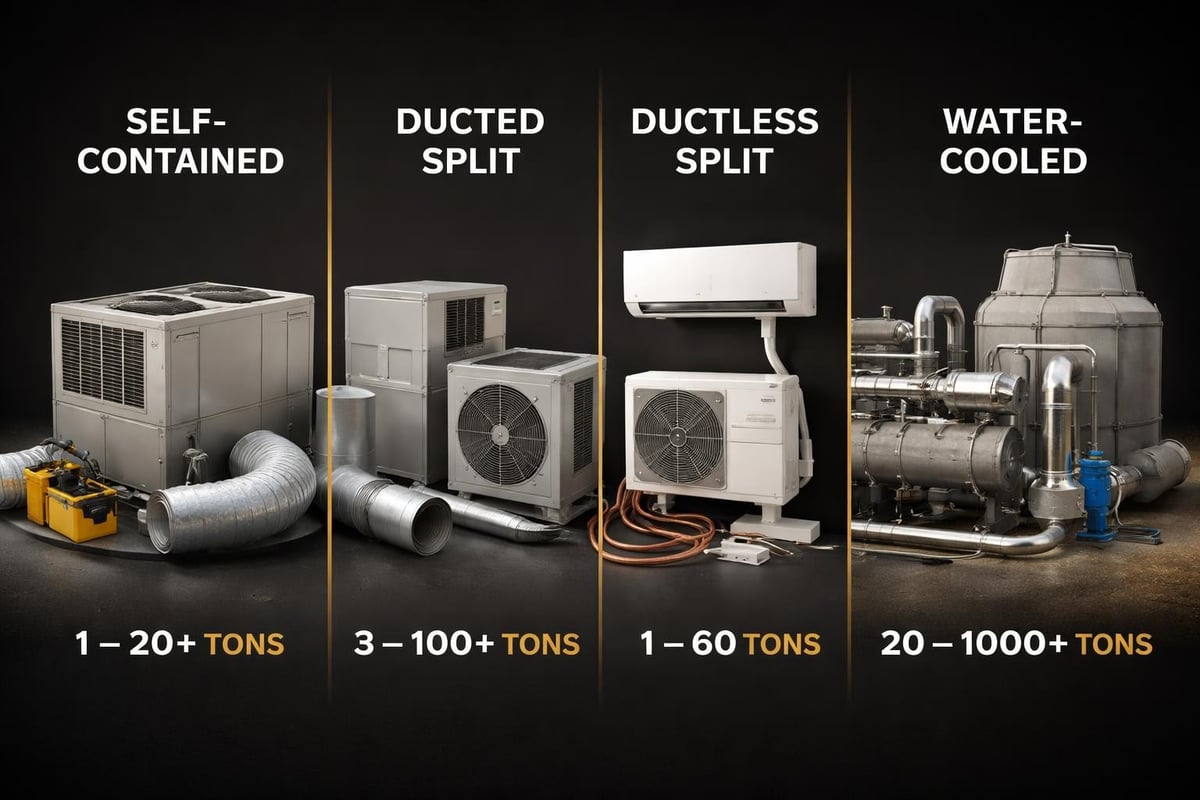
These workhorse systems mount directly through the cellar wall, exhausting heat to an adjacent space. They're the most common solution for residential cellars ranging from 200 to 2,500 cubic feet.
Advantages of through-wall systems:
Cost-effective installation with minimal modifications
Accessible for maintenance and filter changes
Immediate availability from multiple manufacturers
Straightforward troubleshooting and repair
Considerations before choosing through-wall units:
Requires an adjacent exhaust space with adequate ventilation
Visible presence inside the cellar affects design aesthetics
Operating noise may be noticeable in quiet residential settings
Limited capacity for larger commercial installations
Through-wall units work exceptionally well for residential wine cellars in Houston and other Texas locations where adequate exhaust space exists behind the cellar. They're particularly practical for basement conversions and garage installations.
Ducted Split Systems
Ducted systems separate the evaporator (inside the cellar) from the condenser (located remotely), connected by refrigerant lines. This configuration allows tremendous installation flexibility and maintains the cellar's visual integrity.
Feature | Self-Contained | Ducted Split | Ductless Split |
|---|---|---|---|
Installation Complexity | Simple | Moderate | Moderate |
Aesthetic Impact | Visible unit | Minimal | Small wall unit |
Noise Level | Moderate | Very quiet | Quiet |
Capacity Range | 200-2,500 cf | 500-10,000+ cf | 300-3,000 cf |
Cost | $ | $$$ | $$ |
Ducted split systems excel in high-end residential projects and commercial applications where the mechanical equipment must remain completely hidden. The evaporator can be mounted in a mechanical closet or attic space with supply and return ducts delivering conditioned air to the cellar.
Luxury wine cellar designs frequently specify ducted systems to preserve clean architectural lines and maintain focus on the wine collection itself. The remote condenser placement also enables installations in interior spaces without adjacent exhaust areas.
Water-Cooled and Glycol Systems
Properties with existing chiller infrastructure or commercial buildings with central cooling plants can leverage water-cooled cellar cooling units. These systems circulate chilled water or glycol solution through a heat exchanger, providing exceptional efficiency and virtually silent operation.
Water-cooled systems are particularly advantageous for:
Hotels and resorts with multiple wine storage areas
Restaurants requiring display cellars in dining rooms
Private estates with equipment rooms distant from living spaces
Projects where electrical capacity limits traditional refrigeration
The Cambria Waco Hotel wine cellar demonstrates how commercial properties benefit from integrating wine cellar cooling into existing building systems. This approach reduces equipment redundancy and operational costs while ensuring reliable performance.
Sizing Your Cooling System Accurately
The most common mistake in wine cellar climate control is improper equipment sizing. An undersized unit runs continuously without achieving target temperature, while an oversized system short-cycles, failing to remove humidity effectively.
Critical Sizing Factors
Professional sizing begins with comprehensive heat load analysis. Every element contributing to thermal gain requires calculation:
Wall, ceiling, and floor area multiplied by R-value differential
Glass surface area with appropriate solar heat gain coefficient
Ambient temperature in spaces surrounding the cellar
Lighting heat from fixtures within the cellar
Door infiltration based on expected usage patterns
Product load from wine bottles added to the collection
Understanding proper cooling system selection requires expertise in refrigeration engineering and wine cellar construction. Variables interact in complex ways that impact final unit selection.
For example, a 1,000 cubic foot cellar in a climate-controlled basement requires significantly less capacity than an identical cellar adjacent to a garage in Houston's summer heat. The ambient temperature differential alone might double the required cooling capacity.
The Danger of Oversizing
Bigger is not better when specifying cellar cooling units. Oversized equipment reaches setpoint temperature quickly, then shuts down before adequate dehumidification occurs. The result is a cold, damp cellar where mold thrives and labels deteriorate.
Properly sized units run longer cycles, extracting moisture while maintaining temperature. This balanced operation preserves cork integrity and prevents the musty conditions that plague poorly specified cellars.
Installation Considerations for Optimal Performance
Even the finest cooling equipment fails without proper installation. Location, ventilation, drainage, and electrical supply all impact system performance and longevity.
Ventilation Requirements
Self-contained and split system condensers generate substantial heat that must be exhausted effectively. Inadequate ventilation causes units to overheat, triggering safety shutoffs and compressor damage.
Minimum ventilation standards:
50 cubic feet per minute (CFM) per 1,000 BTU/hour capacity
Unrestricted airflow across condenser coils
Temperature in exhaust space below 95°F
Minimum clearances per manufacturer specifications
Exhaust spaces should never be sealed closets or unventilated attics. Energy efficiency standards for cellar cooling equipment increasingly emphasize proper installation practices that maximize operational efficiency.
For projects where adequate ventilation proves challenging, ducted systems that exhaust to building exteriors or water-cooled units provide superior alternatives to compromised installations.
Condensate Management
All cellar cooling units produce condensate as they dehumidify. This moisture must drain reliably to prevent overflow, water damage, and system malfunctions. Installation planning should address condensate disposal early in the design process.
Gravity drains work when floor drains or exterior drainage exist nearby. When gravity drainage is impossible, condensate pumps provide reliable removal. These small pumps activate automatically, lifting condensate to remote drain locations.
Common troubleshooting issues like evaporator coil icing often trace back to condensate drainage problems. Blocked drains cause water backup, which freezes on cold coils and restricts airflow.
Maintenance Essentials for Long-Term Reliability
Cellar cooling units represent significant investments that demand regular maintenance to deliver decades of reliable service. Neglected systems experience reduced efficiency, premature component failure, and eventual collapse at the worst possible time.
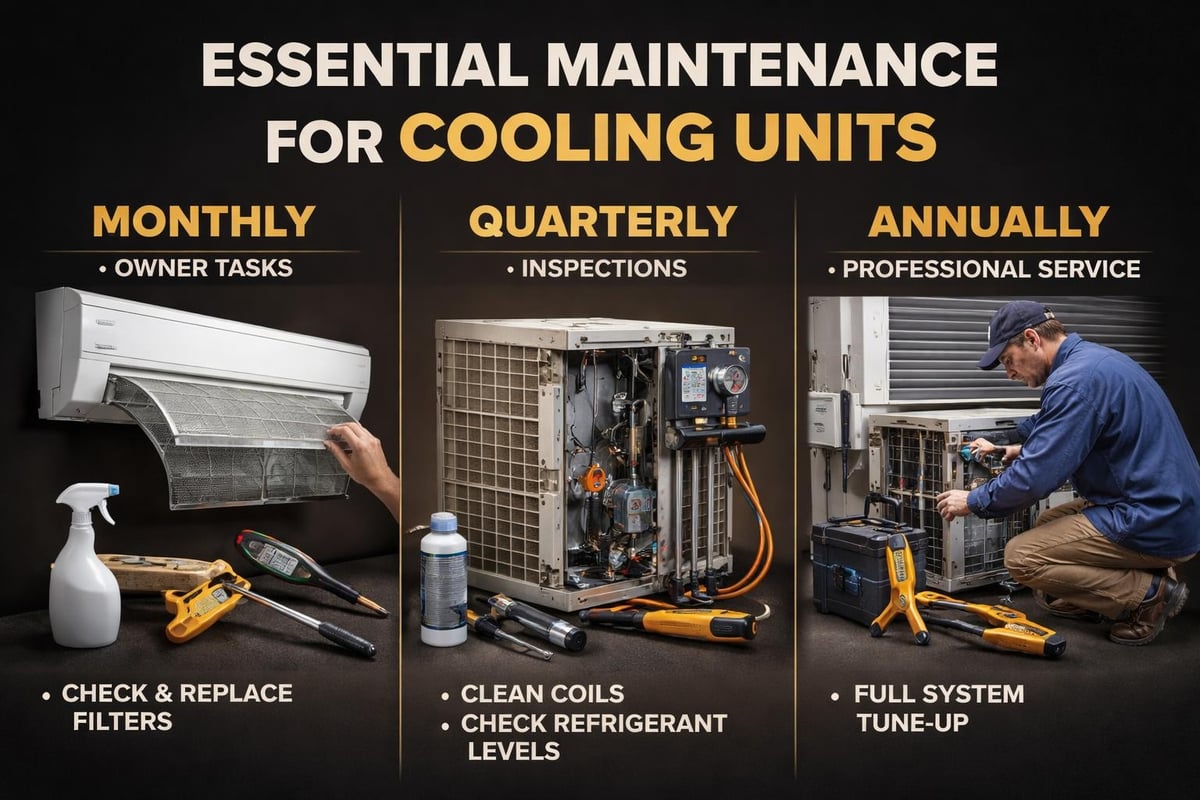
Monthly Maintenance Tasks
These simple procedures take minutes but prevent costly repairs:
Inspect and clean air filters to maintain airflow and efficiency
Check condensate drainage to ensure proper moisture removal
Verify temperature and humidity readings against system setpoints
Listen for unusual sounds that might indicate mechanical issues
Examine visible components for frost buildup or moisture
Filter maintenance alone prevents the majority of cooling system failures. Restricted airflow from dirty filters forces compressors to work harder, accelerating wear and driving up energy costs. Some systems require monthly filter service, while others need quarterly attention depending on environmental conditions.
Annual Professional Service
Comprehensive professional maintenance should occur annually, preferably before summer cooling demands peak. Wine Guardian's technical glossary helps owners understand the components that certified technicians inspect during service visits.
Professional maintenance includes:
Refrigerant charge verification and adjustment
Electrical connection inspection and tightening
Condenser coil cleaning for optimal heat transfer
Evaporator coil inspection and cleaning
Fan motor lubrication and bearing inspection
Thermostat calibration verification
Condensate pump testing and cleaning
Complete system performance evaluation
Many custom wine cellar maintenance programs bundle annual service with emergency support, providing peace of mind that your collection stays protected year-round.
Advanced Features Worth Considering
Modern cellar cooling units incorporate sophisticated controls and monitoring capabilities that enhance performance and provide early warning of potential issues.
Remote Monitoring and Alerts
High-end cooling systems now offer WiFi connectivity, enabling temperature and humidity monitoring from anywhere via smartphone apps. These systems send immediate alerts when conditions drift outside acceptable parameters, allowing quick response before wine damage occurs.
Alert capabilities typically include:
Temperature excursions beyond set thresholds
Humidity levels outside target range
Power interruptions affecting the cooling system
System malfunctions requiring service attention
For collectors with significant wine investments or estates with multiple cellars, remote monitoring provides invaluable protection. A single prevented spoilage event often justifies the monitoring system cost.
Humidity Control Options
Basic cellar cooling units control temperature but allow humidity to fluctuate with ambient conditions. Advanced systems incorporate active humidity management through integrated humidifiers and enhanced dehumidification modes.
In Texas climates where summer humidity frequently exceeds 70%, enhanced dehumidification prevents the moisture issues that plague standard systems. Conversely, winter heating seasons with single-digit humidity levels require humidification to maintain cork integrity.
Integrated humidity control eliminates the need for separate equipment while ensuring precise environmental management year-round.
Noise Considerations for Different Applications
Cooling system noise impacts design decisions differently for residential and commercial applications. Understanding sound levels and mitigation strategies helps specify appropriate equipment.
Residential Noise Management
Wine cellars in private residences often adjoin living spaces, master suites, or entertaining areas where mechanical noise proves unacceptable. Quiet operation becomes a primary specification criterion.
System Type | Typical Sound Level | Application Suitability |
|---|---|---|
Through-wall | 45-55 dB | Basement, garage locations |
Ductless split | 35-45 dB | Near living spaces |
Ducted split | 25-35 dB | Adjacent to bedrooms |
Water-cooled | 20-30 dB | Luxury applications |
Ducted systems with remote equipment placement offer the quietest operation for luxury wine cellars in Highland Park and other upscale residential locations. Sound-rated enclosures and vibration isolation further reduce mechanical noise transmission.
Commercial Display Considerations
Restaurant wine walls and hotel display cellars require near-silent operation since they're located in occupied dining or public spaces. These applications justify premium cooling solutions that prioritize acoustic performance.
Modern wine wall renovations frequently specify completely silent systems where the cooling equipment itself becomes invisible and inaudible. The wine presentation takes center stage without mechanical distraction.
Energy Efficiency and Operating Costs
Wine cellar cooling represents continuous electrical consumption that accumulates significantly over years of operation. Efficient equipment selection reduces both environmental impact and ownership costs.
Understanding Efficiency Ratings
Cellar cooling units carry efficiency ratings expressed as Energy Efficiency Ratio (EER) for cooling capacity. Higher EER values indicate better efficiency, with premium units achieving 12.0 or greater compared to basic models around 8.0.
Annual operating cost calculation:
A 2,000 cubic foot cellar requiring a 2,000 BTU/hour unit demonstrates the cost impact of efficiency choices:
Basic unit (EER 8.0): 250 watts × 8,760 hours × $0.12/kWh = $262/year
Premium unit (EER 12.0): 167 watts × 8,760 hours × $0.12/kWh = $175/year
The $87 annual savings compounds over the 15-20 year expected lifespan of quality equipment, potentially recovering the premium equipment cost while reducing environmental impact.
Insulation's Critical Role
Equipment efficiency tells only part of the energy story. Cellar insulation quality dramatically impacts actual operating costs regardless of cooling unit efficiency.
Minimum recommended insulation values for Texas wine cellars:
Walls: R-21 (3 inches) for walls against conditioned space, R-28 for exterior walls
Ceiling: R-30 to R-38 depending on attic conditions
Floor: R-13 minimum over unconditioned spaces
Vapor barriers on the warm side of insulation prevent moisture migration that degrades insulation performance and promotes mold growth. Building a properly insulated cellar proves far more cost-effective than attempting to compensate with oversized cooling equipment.
Backup Systems and Redundancy Planning
For collectors with irreplaceable or highly valuable wines, backup cooling capability provides insurance against catastrophic loss during primary system failures.
Redundancy Strategies
Multiple approaches provide backup cooling protection:
Dual independent cooling units with automatic failover controls
Portable backup units stored nearby for emergency deployment
Building management system integration allowing HVAC backup
Temperature-activated alerts enabling rapid response
The appropriate redundancy level depends on collection value and replacement difficulty. A $500,000 collection of mature Bordeaux justifies more comprehensive backup than a $20,000 collection of readily available current releases.
Emergency Response Planning
Even without backup equipment, prepared collectors can protect wines during cooling system failures. Response plans should address:
Immediate notification of system failures through monitoring
Contact information for qualified service technicians
Temporary relocation space for valuable bottles
Emergency portable cooling equipment rental sources
Texas summer temperatures make rapid response critical. A sealed, well-insulated cellar might maintain acceptable temperatures for 24-48 hours without cooling, but prompt action prevents extended exposure to damaging heat.
Integration with Overall Cellar Design
Successful wine cellars seamlessly integrate climate control with architectural vision, material selection, and collection display. Comprehensive design services coordinate these elements from project inception.
Design-Build Advantages
Early cooling system specification during design development allows architectural integration impossible with afterthought equipment selection. Ducting pathways, electrical service, drainage routing, and equipment concealment all benefit from coordinated planning.
Turnkey wine cellar design-build processes ensure climate control receives appropriate attention alongside aesthetic elements. The result is coherent spaces where technology serves the design rather than compromising it.
Material Compatibility
Cellar materials interact with climate control in ways that impact both performance and longevity. Glass features, for example, create thermal bridges that increase cooling loads while displaying wines beautifully. Stone floors provide thermal mass that stabilizes temperatures but conduct heat from surrounding spaces.
Understanding these interactions allows designers to specify appropriate cooling capacity while selecting materials that enhance rather than challenge environmental control.
Cellar cooling units form the technological foundation that transforms wine storage from risky proposition to reliable preservation system. The right equipment selection, proper installation, and diligent maintenance protect your investment while enabling the patient aging that great wines deserve. Whether you're planning a residential cellar in Austin, a restaurant display in Dallas, or a resort wine program across Texas, Prestige Wine Cellars brings decades of climate control expertise to ensure your collection enjoys optimal conditions for generations to come.
Your Dream Wine Cellar Starts Here
Let our design team craft a cellar that matches your taste, space, and your collection — built for beauty, function, and prestige.

Email us at
Serving Austin, Dallas–Fort Worth, Houston & San Antonio