
Modern Wine Racks: Elevate Your Collection in 2026
Discover how modern wine racks transform storage into art. Explore materials, designs, and trends that elevate collections in luxury cellars.
Wine storage has evolved far beyond basic functionality. Today's collectors demand solutions that showcase their prized bottles while complementing sophisticated interior design. Modern wine racks represent a perfect marriage of form and function, transforming storage into a statement piece that reflects personal style and elevates any space. Whether you're designing a dedicated cellar, incorporating wine display into a dining room, or creating an architectural focal point in a commercial setting, understanding contemporary options ensures your collection receives the presentation it deserves.
The Evolution of Wine Storage Design
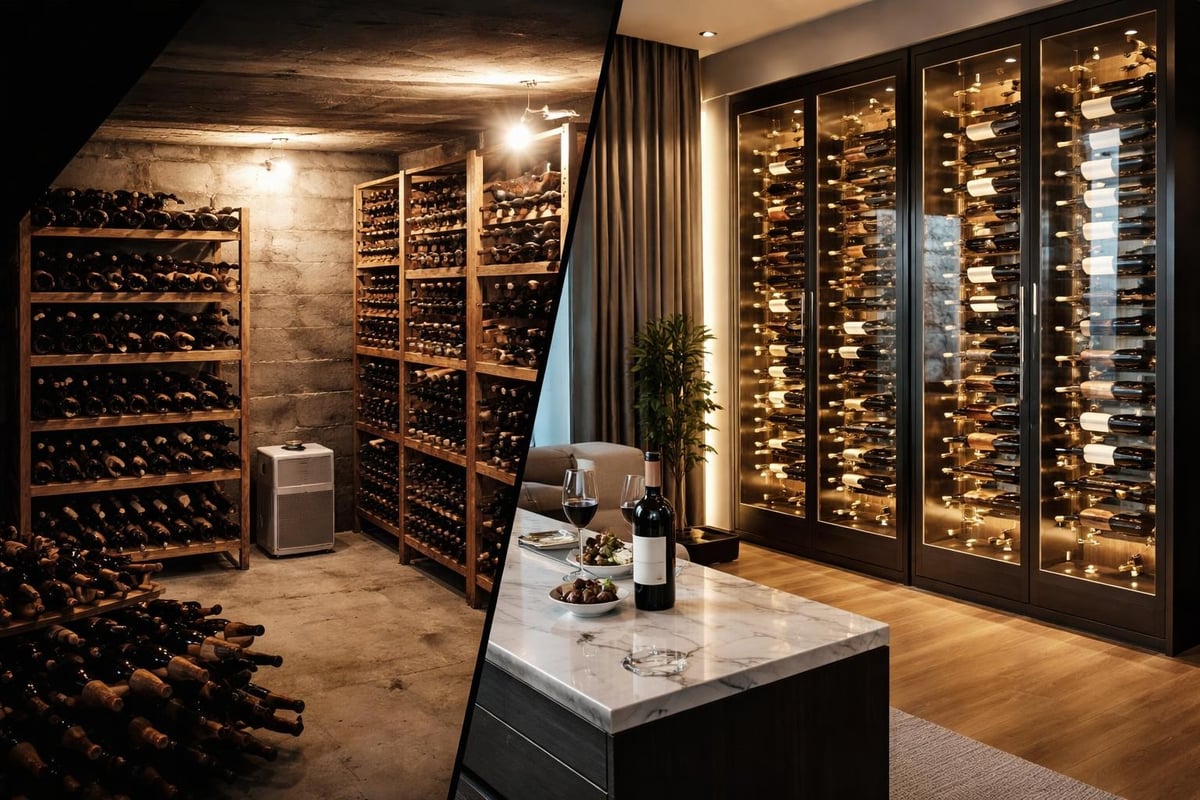
The journey from dusty basement storage to architectural centerpiece reflects broader shifts in how we experience wine. Traditional cellars emphasized concealment and utility, hiding bottles away in dark corners. Contemporary design celebrates wine as both investment and art, bringing collections into primary living spaces where they become conversation starters and design elements.
This transformation gained momentum as open-concept homes became standard and wine appreciation moved from specialized hobby to mainstream luxury. Collectors no longer wanted their bottles hidden. They sought display solutions that honored their investment while maintaining optimal storage conditions.
Key drivers of this evolution include:
Increased wine collecting among design-conscious homeowners
Integration of climate control technology into compact systems
Rising property values making dedicated cellar space more feasible
Restaurant and hospitality trends showcasing wine as experience
Social media inspiring visually striking installations
The shift has been particularly pronounced in Texas markets, where new construction and renovation projects increasingly incorporate wine display as essential rather than optional. Custom wine cellar design now starts with the question of visibility and aesthetic impact, not just bottle capacity.
Material Selection for Contemporary Installations
Choosing the right materials determines both longevity and visual impact. Modern wine racks leverage innovations in metalwork, woodcraft, and synthetic materials to achieve effects impossible a decade ago. Each material brings distinct characteristics that influence everything from maintenance requirements to design possibilities.
Metal: The Industrial-Chic Foundation
Metal racking has surged in popularity, particularly in minimalist and industrial-influenced spaces. Powder-coated steel, brushed stainless, and blackened iron offer clean lines and exceptional durability. These materials resist warping and require minimal maintenance, making them ideal for high-capacity installations.
The strength-to-profile ratio of metal allows for seemingly floating bottle displays and dramatic cantilevers. Many designers now specify metal for structural components even when wood provides the visible finish. This hybrid approach delivers both aesthetic warmth and engineering precision.
According to materials experts, stainless steel performs exceptionally well in climate-controlled environments, resisting corrosion while maintaining its polished appearance for decades. The material's thermal properties also make it suitable for refrigerated wine rooms where temperature fluctuations might affect wood.
Wood: Timeless Warmth with Modern Expression
Wood remains the gold standard for many collectors, but contemporary applications bear little resemblance to traditional racking. Today's installations feature exotic species, live-edge slabs, and geometric patterns that push wood into sculptural territory. Walnut, white oak, and reclaimed timber create rich backdrops that age gracefully.
Modern fabrication techniques enable precision impossible with hand tools. CNC machining produces intricate joinery and consistent bottle spacing, while laser cutting creates decorative panels that add depth and shadow. The result transforms humble storage into furniture-grade installations.
Sustainability concerns have elevated reclaimed wood and certified sustainable species. Collectors increasingly request materials with provenance stories, turning the racking itself into a narrative element. A wine wall crafted from whiskey barrel staves or century-old barn beams adds layers of meaning beyond pure aesthetics.
Acrylic and Glass: Transparency as Statement
Clear materials create the illusion of bottles suspended in space. Acrylic racking offers durability and flexibility at lower costs than glass, while maintaining crystal clarity. These installations work beautifully in modern homes where minimalism reigns and every element must justify its visual weight.
Glass wine walls have become signature features in luxury residential and commercial projects. The transparency showcases label-forward collections while the material itself conveys purity and precision. When backlit, glass creates dramatic effects that transform wine display into luminous sculpture.
The modern wine wall trend has particularly embraced clear materials, with designers creating floor-to-ceiling installations that become transparent dividers between spaces. These solutions work exceptionally well in open-plan homes where traditional walls would feel heavy.
Design Approaches Defining 2026
Contemporary wine storage reflects broader interior design movements while addressing specific collection needs. Understanding current approaches helps collectors and designers make choices that will feel relevant for years to come.
Minimalist Geometry
Clean lines and repetitive patterns create visual calm while accommodating substantial bottle counts. This approach favors uniform spacing, monochromatic palettes, and materials that recede rather than demand attention. The wine itself becomes the color and variation in otherwise neutral compositions.
Minimalist modern wine racks often employ modular systems that allow for expansion without disrupting the overall aesthetic. Grid patterns, both horizontal and vertical, create rhythm and order. The best examples achieve that elusive quality where complexity of engineering disappears into apparent simplicity.
Characteristics of minimalist wine storage:
Consistent bottle spacing without decorative interruption
Single material or harmonious dual-material combinations
Emphasis on negative space as design element
Integration with surrounding architecture rather than contrast
Concealed hardware and climate control components
Mixed Materials and Texture
Where minimalism strips away, maximalism celebrates layering and contrast. Mixed-material installations combine metal, wood, stone, and glass in compositions that create visual interest through juxtaposition. A wine wall might feature walnut shelving against slate panels with steel label holders and glass dividers.
This approach works particularly well in transitional spaces that bridge contemporary and traditional aesthetics. The variety in materials prevents the installation from feeling too austere while maintaining clean, modern lines. Texture becomes a tool for adding depth without pattern or ornament.
The turnkey design-build approach allows for seamless integration of multiple materials, with fabrication and installation coordinated to ensure perfect alignment and finish. Professional execution is essential when working with diverse materials that expand and contract at different rates.
Living Cellar Integration
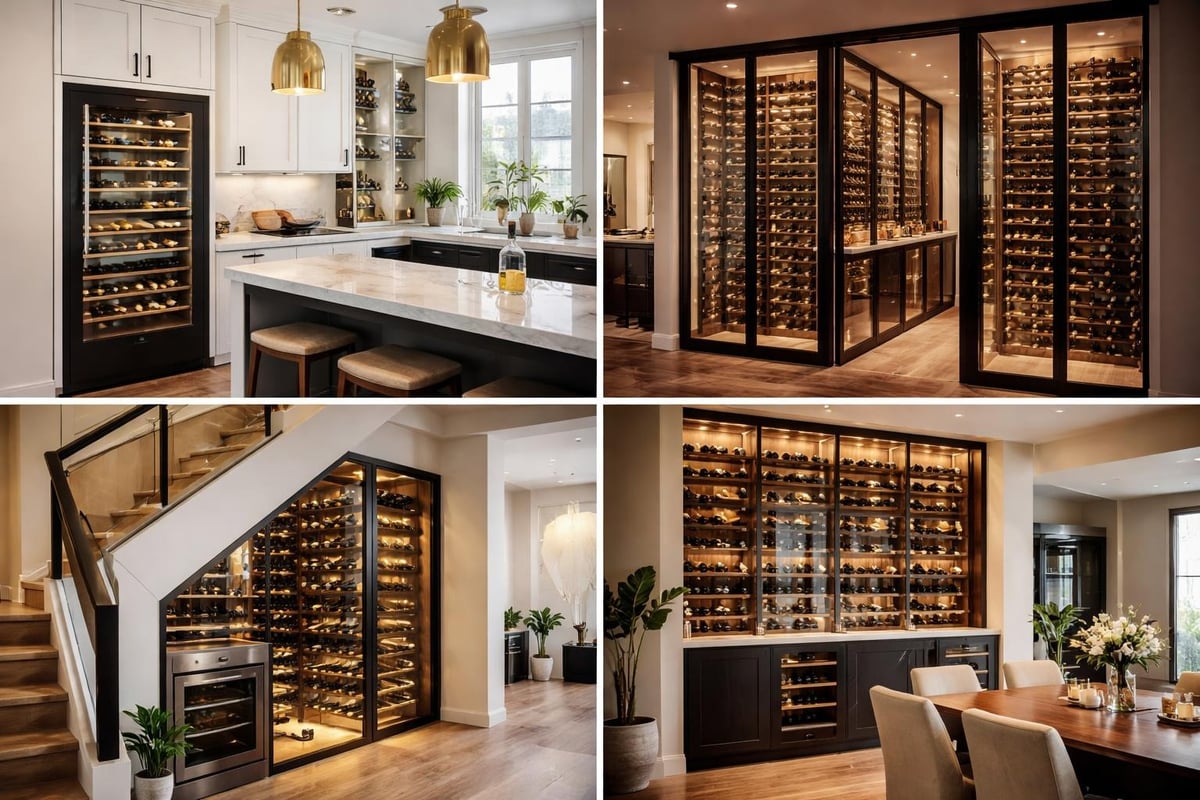
Rather than isolating wine storage in dedicated rooms, many collectors now integrate displays throughout their homes. Kitchen islands with climate-controlled wine storage, dining room feature walls, and under-stair installations bring collections into daily life. These applications demand racking that functions as furniture rather than infrastructure.
The trend toward living wine cellars reflects changing entertaining patterns and the desire to showcase collections as part of lifestyle expression. These installations must balance accessibility with preservation, ensuring bottles remain at proper temperature while remaining visually accessible.
Capacity Planning and Configuration
Beautiful design means nothing if the installation can't accommodate your collection's growth. Modern wine racks must balance aesthetic impact with practical capacity considerations that evolve over time.
Bottle Count Calculations
Standard bottles require different spacing than magnums, champagne, or Burgundy formats. Contemporary installations increasingly accommodate mixed formats, with adjustable components that prevent wasted space. A well-planned system includes zones optimized for different bottle sizes rather than forcing everything into universal slots.
Calculate capacity conservatively. Most collectors underestimate future acquisition rates, and expanding wine storage after initial installation proves expensive and visually disruptive. Building in 30-40% excess capacity at installation provides room for collection growth without compromising immediate visual impact.
Bottle Format | Width Needed | Height Needed | Depth Needed |
|---|---|---|---|
Standard 750ml | 3.5" | 12" | 11" |
Magnum 1.5L | 4.5" | 14" | 11" |
Champagne | 3.75" | 12.5" | 11" |
Burgundy | 4" | 12" | 11" |
Label-Forward vs. Label-Back Storage
Traditional racking stored bottles with labels facing inward, prioritizing capacity over display. Modern installations increasingly position bottles label-out, sacrificing some density for visual impact and collection management. This approach turns the wine itself into decorative element, with colorful labels creating mosaic effects.
Label-forward storage requires deeper racking to prevent bottles from protruding, but the tradeoff often proves worthwhile. Collectors can identify bottles at a glance, and guests appreciate seeing the collection rather than countless bottle backs. Contemporary wine storage solutions increasingly prioritize this display-oriented approach.
The decision affects overall capacity significantly. A wall that might hold 300 bottles label-back might accommodate only 180-200 label-forward. Understanding these tradeoffs early in design prevents disappointment when bottle counts fall short of expectations.
Accessibility and Display Zones
Not every bottle deserves equal prominence. Thoughtful modern wine racks include featured display zones for prized bottles or current drinking selections, with higher-density storage for longer-term holdings. This tiered approach acknowledges that some bottles are collected for investment, others for eventual enjoyment.
Display zones often incorporate specialized lighting, angled presentation, or individual bottle pedestals that elevate key selections. These focal points break up large installations and provide natural conversation starters. In commercial settings like steakhouses and hotels, display zones showcase signature bottles or premium by-the-glass offerings.
Climate Control Integration
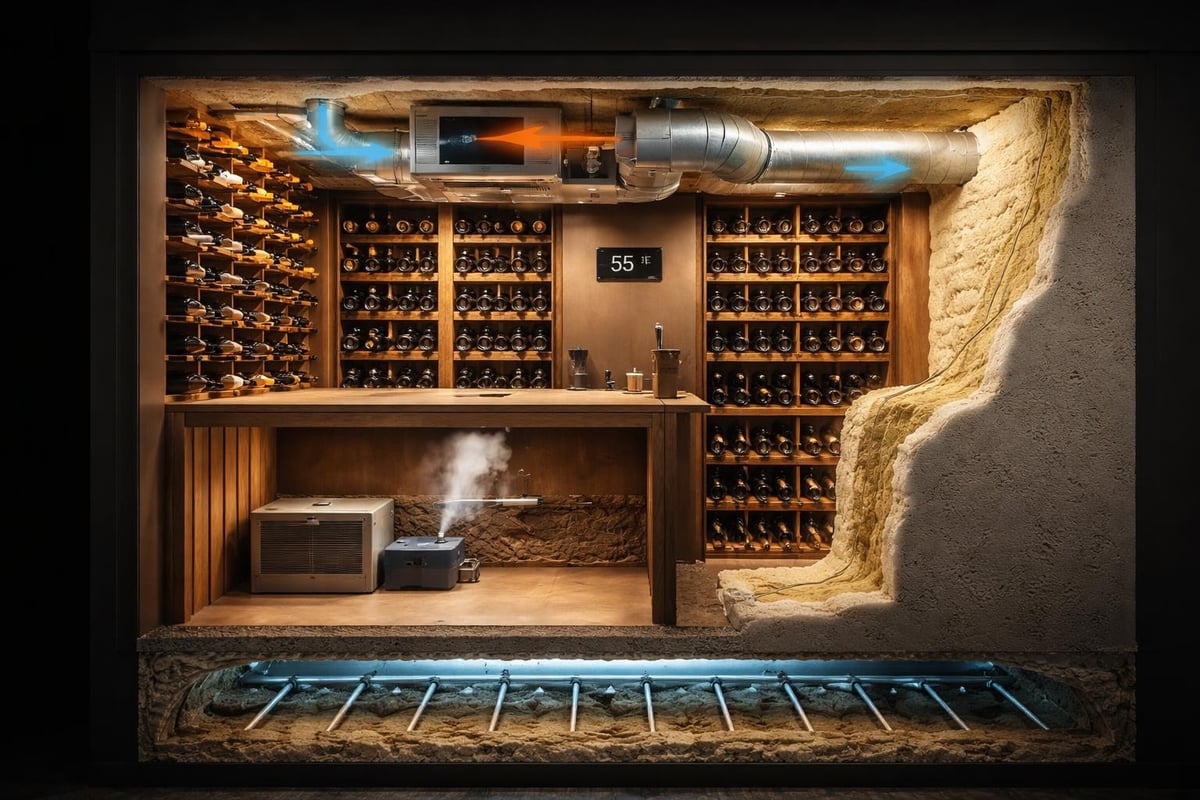
The most beautiful racking system fails if wine deteriorates from poor storage conditions. Modern installations integrate climate control seamlessly, hiding mechanical components while maintaining precise temperature and humidity.
Passive vs. Active Systems
Small collections in naturally cool, stable environments may function with passive systems that leverage existing HVAC and strategic placement. Most dedicated installations, however, require active climate control with dedicated cooling units, humidification, and circulation.
The challenge lies in integrating mechanical equipment without visual disruption. Through-wall systems place condensers outside conditioned spaces, but require exterior access and professional installation. Self-contained units simplify installation but occupy valuable interior space and generate noise.
Climate control considerations for modern installations:
Temperature range: 55-58°F optimal for long-term storage
Humidity: 60-70% prevents cork dry-out and label damage
Vibration isolation: separates wine from compressor movement
Air circulation: prevents hot or cold spots without excessive drafts
Noise levels: critical in residential applications near living spaces
Professional wine cellar maintenance ensures systems continue performing optimally, with regular filter changes, refrigerant checks, and humidity calibration preventing conditions that damage collections.
Insulation and Vapor Barriers
Climate control works only within properly sealed environments. Walls, floors, and ceilings require insulation rated for temperature differentials between cellar and surrounding spaces. Vapor barriers prevent moisture migration that leads to mold and structural damage.
These technical requirements influence design decisions, particularly for glass-enclosed installations where thermal bridging poses challenges. Modern solutions include thermally-broken frames, low-E glass coatings, and strategic placement of solid walls to minimize heat gain.
The portfolio of completed projects demonstrates how technical requirements integrate seamlessly with aesthetic vision, creating installations that perform flawlessly while looking effortless.
Commercial Applications and Hospitality Trends
Restaurants, hotels, and private clubs face unique requirements when specifying modern wine racks. These installations must impress guests while facilitating staff access and inventory management.
Restaurant Wine Walls
Glass-enclosed wine walls have become signature features in upscale dining establishments. These installations serve multiple purposes: impressing guests, showcasing inventory, and creating dramatic backdrops for dining rooms. The best examples feel like art installations that happen to hold wine.
Accessibility proves critical in commercial settings. Staff must retrieve bottles quickly during service without disrupting other diners or requiring ladders. Many restaurant installations include hidden service access behind display walls, allowing front-facing presentation with back-of-house efficiency.
Inventory management systems increasingly integrate with modern wine racks through RFID tags and database tracking. These technologies prevent theft, monitor inventory turnover, and ensure proper rotation of perishable products.
Hotel and Resort Integration
Hotels showcase wine in lobby bars, restaurants, and premium suites. These installations must withstand heavy use while maintaining luxury appearance. Material selection emphasizes durability over delicacy, with finishes that conceal fingerprints and resist damage.
Security becomes paramount in semi-public spaces. Locking systems, surveillance integration, and access controls protect valuable inventory while maintaining the open, accessible feeling guests expect. The challenge lies in implementing security without making displays feel fortress-like.
The Cambria Waco Hotel wine cellar project exemplifies how commercial installations balance showcase appeal with operational requirements, creating spaces that function as guest amenities and revenue centers.
Regional Considerations for Texas Installations
Climate, architecture, and lifestyle patterns influence wine storage design throughout Texas. Understanding regional factors ensures installations perform optimally while respecting local design vernacular.
Climate Challenges and Solutions
Texas heat and humidity stress cooling systems year-round. Installations require more robust climate control than northern climates, with oversized cooling capacity and backup systems protecting collections during equipment failures or power outages.
Exterior walls, particularly those facing south or west, gain significant heat that cooling systems must overcome. Strategic placement on northern exposures or interior locations reduces thermal load and operating costs. When exterior walls prove unavoidable, additional insulation and thermal breaks maintain stable conditions.
Texas-specific design considerations:
Oversized cooling capacity for extreme summer temperatures
Generator backup or battery systems for collection protection
Extra insulation on south and west-facing walls
Humidity control addressing both excess and deficit conditions
Material selection accounting for thermal expansion ranges
Architectural Integration with Texas Styles
Contemporary Texas homes blend modern minimalism with regional materials like stone and reclaimed wood. Wine installations often bridge these aesthetics, incorporating rustic materials in clean, contemporary configurations. A modern wine rack might feature steel framing with mesquite shelving, honoring both traditions.
Hill Country estates favor natural materials and indoor-outdoor connections. Wine walls in these settings often include extensive glass to maintain sightlines while creating climate-controlled zones. The design portfolio showcases varied approaches that respond to regional architectural character.
Urban lofts and high-rises in Dallas, Houston, and Austin demand space-efficient solutions that maximize bottle capacity within limited footprints. Vertical installations, under-utilized corners, and combination furniture pieces bring wine storage into compact quarters without sacrificing capacity or style.
Lighting Design for Maximum Impact
Strategic illumination transforms modern wine racks from storage into sculpture. Light reveals materials, creates atmosphere, and guides attention to featured bottles or architectural details.
LED Technology and Color Temperature
LED strips, pucks, and cable systems offer energy-efficient, low-heat illumination ideal for wine environments. Color temperature selection proves critical: warm whites (2700-3000K) enhance wood tones and create intimate atmosphere, while neutral whites (3500-4000K) provide clarity for label reading and maintenance.
Avoiding direct light on bottles prevents UV damage and heat accumulation. The best installations light the racking structure and surrounding architecture, allowing bottles to appear illuminated through reflected and ambient light rather than direct exposure.
Dimming capability allows installations to shift from dramatic evening showcase to subtle daytime backdrop. Control integration with whole-home automation systems ensures lighting responds to use patterns and time of day.
Accent and Feature Lighting
Beyond general illumination, accent lighting highlights special bottles, architectural details, or material transitions. Narrow-beam spots create pools of emphasis, drawing eyes to featured selections or design elements. Backlighting translucent materials like acrylic or glass creates ethereal effects that appear to defy physics.
Color-changing systems offer flexibility for events and holidays, though purists prefer consistent, sophisticated lighting that doesn't compete with wine for attention. The goal remains enhancement rather than spectacle, supporting the collection without overwhelming it.
Smart Technology and Future-Forward Features
Modern wine racks increasingly incorporate technology that enhances enjoyment, protects investment, and simplifies management. These features range from subtle to sophisticated, depending on collector preferences and budget.
Inventory Management Systems
Database applications track collection details, drinking windows, and purchase information. Advanced systems integrate with racking through location tracking, allowing collectors to identify exact bottle positions. Barcode scanners and smartphone apps simplify data entry and retrieval.
These tools prove particularly valuable for substantial collections where memory alone fails. Searching by region, vintage, or drinking window prevents bottles from aging past their prime. Purchase tracking reveals collecting patterns and investment performance over time.
Environmental Monitoring
Remote sensors track temperature and humidity continuously, alerting collectors to conditions outside acceptable ranges. This protection proves invaluable during equipment failures or power outages, allowing intervention before damage occurs. Historical data logs verify conditions remained stable, important for insurance claims and collection valuation.
Integration with home automation platforms allows monitoring from anywhere through smartphones or tablets. Some systems automatically adjust settings based on seasonal patterns or collection changes, optimizing conditions without manual intervention.
The comprehensive services approach includes technology integration from design through installation, ensuring systems work together seamlessly rather than requiring multiple vendors and platforms.
Budget Considerations and Value Engineering
Modern wine racks span enormous price ranges, from affordable modular systems to six-figure custom installations. Understanding cost drivers helps collectors make informed decisions that balance vision with budget.
Investment Tiers and Expected Outcomes
Entry-level systems ($3,000-$10,000) typically involve prefabricated components with minimal customization. These solutions work well for beginning collectors or secondary storage areas where aesthetics matter less than capacity and basic climate control.
Mid-range installations ($10,000-$50,000) incorporate custom design, quality materials, and integrated climate control. This tier delivers distinctive results that reflect personal style while maintaining appropriate storage conditions. Most residential projects fall within this range.
Premium installations ($50,000-$200,000+) represent bespoke creations with exotic materials, complex engineering, and showcase-quality finishes. These projects function as architectural statements that happen to store wine, with every detail specified for maximum impact.
Budget Tier | Typical Features | Best Applications |
|---|---|---|
Entry ($3K-$10K) | Prefab systems, basic climate control | Secondary storage, starter collections |
Mid-Range ($10K-$50K) | Custom design, quality materials, integrated systems | Primary residential cellars |
Premium ($50K-$200K+) | Bespoke creation, exotic materials, complex engineering | Signature installations, commercial showcases |
Where to Invest and Where to Save
Prioritize climate control and structural integrity over decorative elements. A modest installation with excellent environmental controls preserves wine better than showpiece racking in poorly conditioned space. Foundation elements warrant investment; accessories can upgrade later.
Material selection offers savings opportunities without compromising appearance. Powder-coated steel can mimic expensive finishes at fraction of cost. Engineered woods provide stability and consistency, though they lack solid hardwood's prestige. Clear acrylic delivers glass aesthetics without fragility or expense.
Labor represents substantial project cost, particularly for complex installations requiring specialized trades. Simplifying designs, using modular components, and concentrating custom work in visible zones reduces hours without diminishing impact. Professional design services help optimize value through strategic decisions about where craftsmanship matters most.
Design Trends Shaping the Future
Looking ahead, several movements will influence modern wine racks and cellar design. Understanding these trajectories helps create installations that remain relevant as styles evolve.
Sustainable and Reclaimed Materials
Environmental consciousness drives material selection, with collectors seeking sustainably harvested wood, recycled metals, and low-VOC finishes. Reclaimed materials add character while reducing environmental impact. Expect continued growth in certifications and provenance documentation.
The top wine rack design trends emphasize sustainability alongside aesthetics, reflecting broader consumer priorities around responsible consumption and environmental stewardship.
Multifunctional Spaces
Dedicated wine cellars yield to flexible spaces serving multiple purposes. Wine storage integrates with tasting areas, entertainment zones, and home offices. Designs must accommodate varied activities while maintaining appropriate storage conditions.
This shift reflects both space constraints and changing entertaining patterns. Collectors want wine integrated into living rather than separated, leading to creative solutions that blend storage with furniture and architectural elements.
Biophilic Design Elements
Incorporating natural elements, living walls, and organic materials creates sensory-rich environments that engage beyond pure aesthetics. Wine cellars might include vertical gardens, water features, or natural stone that connects inhabitants with nature despite being interior spaces.
These elements complement wine storage by creating memorable experiences around collection and consumption. The trend reflects growing understanding of how environment influences enjoyment and perception.
Modern wine racks represent the intersection of preservation technology, fine craftsmanship, and architectural vision. The best installations honor your collection while expressing personal style, creating spaces that inspire both pride and enjoyment. Whether you're planning an intimate residential cellar or a dramatic commercial showcase, partnering with specialists who understand both technical requirements and aesthetic possibilities ensures results that exceed expectations. Prestige Wine Cellars brings decades of experience designing and building custom wine storage solutions throughout Texas and beyond, transforming vision into reality through comprehensive services that handle every detail from initial concept through ongoing maintenance.
Your Dream Wine Cellar Starts Here
Let our design team craft a cellar that matches your taste, space, and your collection — built for beauty, function, and prestige.

Email us at
Serving Austin, Dallas–Fort Worth, Houston & San Antonio