
Wine Cellar Glass Doors: Design, Materials & Installation
Discover how wine cellar glass doors enhance luxury wine storage. Expert insights on materials, insulation, design options & climate control.
The right wine cellar glass doors transform a functional storage space into an architectural statement. These transparent barriers do far more than provide access-they create a visual connection between your collection and living spaces while maintaining the precise environmental conditions your wines demand. Whether you're planning a residential installation or a commercial showcase, understanding the engineering, design, and material considerations ensures your investment delivers both beauty and performance for decades to come.
The Engineering Behind Wine Cellar Glass Doors
Creating an effective wine cellar glass door requires balancing aesthetic appeal with rigorous performance standards. Unlike standard glass doors, these specialized barriers must maintain consistent temperature and humidity levels while preventing air infiltration that could compromise your collection.
The foundation of any successful installation begins with proper insulation values. Thermal performance dictates how well your door prevents heat transfer between the cellar and adjacent spaces. Industry standards recommend minimum R-values of 8-10 for wine cellar applications, though many luxury installations exceed these benchmarks.
Understanding Glass Specifications
Modern wine cellar glass doors utilize multiple glass technologies working in concert:
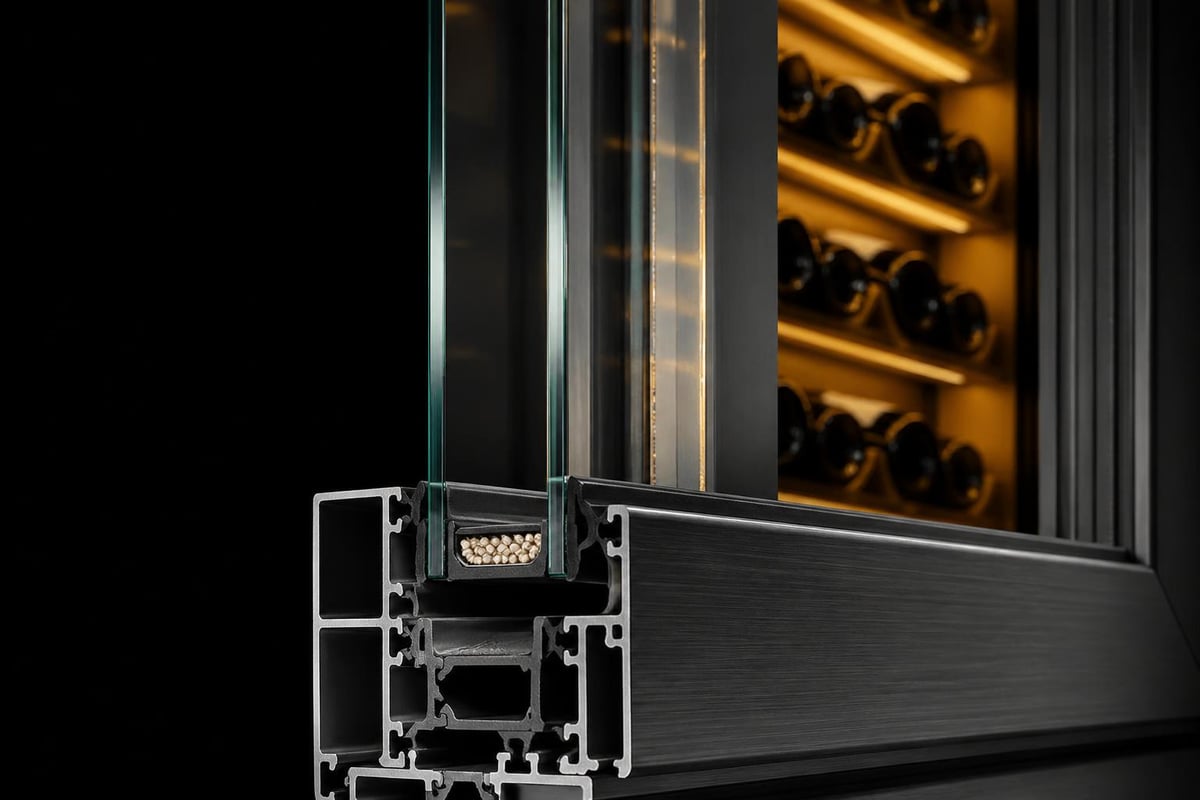
Dual-pane or triple-pane insulated glass units that create thermal barriers through sealed air gaps
Low-E coatings that reflect infrared energy while allowing visible light transmission
Argon or krypton gas fills between panes for enhanced insulation
Tempered safety glass that meets building codes and provides durability
The glass wine cellar construction considerations extend beyond the glass itself to include frame materials, seal quality, and hardware selection. Each component affects your cooling system's efficiency and long-term performance.
Glass Type | R-Value | Best Application | Considerations |
|---|---|---|---|
Dual-pane with Low-E | 6-8 | Small to medium cellars | Standard efficiency, cost-effective |
Triple-pane with argon | 10-12 | Large cellars, extreme climates | Superior insulation, higher cost |
Quad-pane specialty | 12-15 | Commercial installations | Maximum performance, significant investment |
Climate Control Integration
Your wine cellar glass doors work as part of a complete environmental system. The cooling unit capacity must account for additional heat gain through transparent surfaces compared to traditional insulated walls. Cooling glass wine cellars requires careful calculation of BTU requirements based on door surface area, glass specifications, and ambient conditions.
Professional designers calculate heat load by examining:
Total glass surface area exposed to temperature differentials
U-values of the complete door assembly including frames
Solar heat gain from natural or artificial lighting
Air infiltration rates based on seal quality and door operation frequency
These calculations directly influence cooling system selection and operating costs throughout your cellar's lifetime.
Design Options That Define Your Space
Wine cellar glass doors offer remarkable versatility in configuration and aesthetic expression. Your design choices should reflect both practical requirements and the architectural character you want to achieve.
Frame Materials and Finishes
The framework surrounding your glass determines structural integrity and visual impact. Common materials include:
Aluminum frames provide strength with minimal visual mass. Powder-coated finishes offer color matching to existing décor, while anodized options create contemporary metallic effects. Thermal breaks within aluminum frames prevent condensation and heat transfer.
Steel frames deliver maximum strength for oversized doors and commercial applications. Hot-rolled steel accepts custom finishes from brushed metal to aged patina, creating dramatic industrial or transitional aesthetics. The glass-enclosed showpiece wine cellars showcase how steel framing can become a design element rather than just structure.
Wood frames bring warmth and traditional character. Species selection ranges from classic mahogany to contemporary walnut, each accepting stain or natural oil finishes. Wood requires additional engineering to prevent warping from humidity exposure.
Configuration Styles
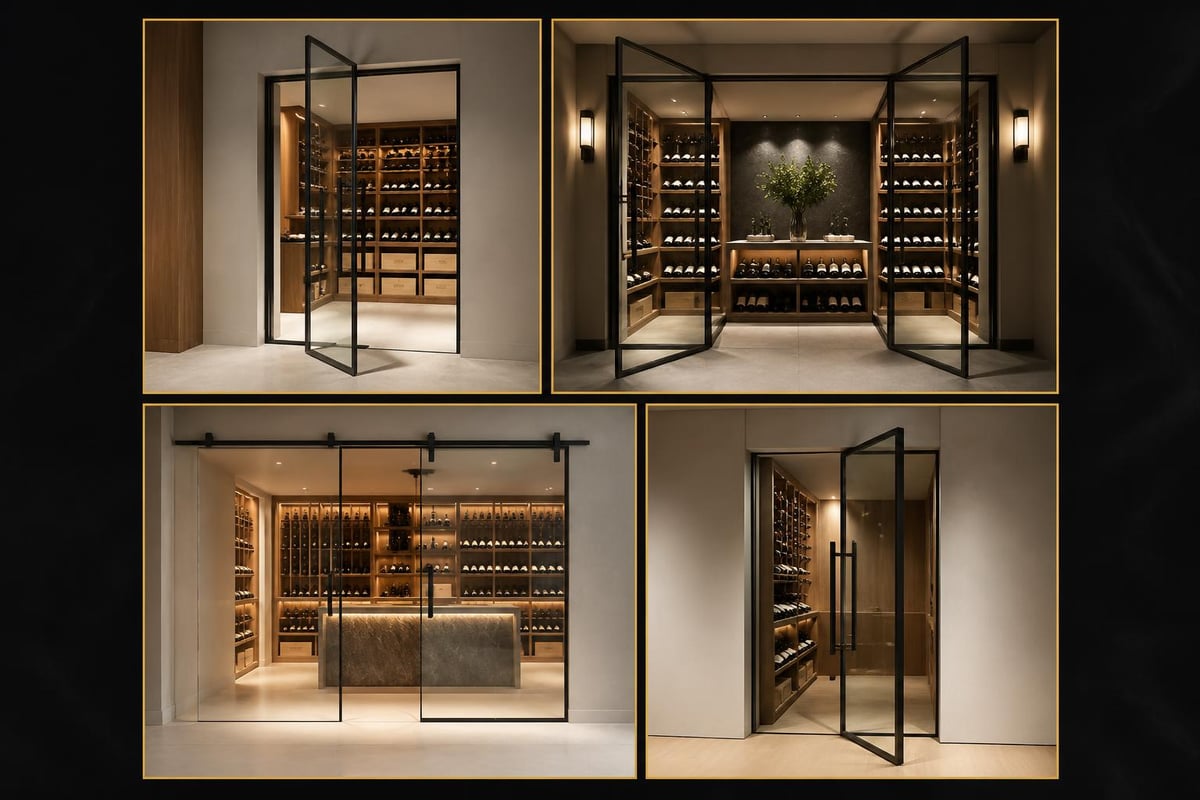
Door configuration dramatically affects both function and visual flow:
Single swing doors work beautifully for compact cellars and reach-in applications
Double doors create grand entrances for walk-in cellars and commercial installations
Sliding door systems maximize space efficiency in tight floor plans
Pivot doors make architectural statements with oversized glass panels
The modern wine wall renovation project demonstrates how sliding glass systems integrate seamlessly with contemporary architecture while maintaining climate control integrity.
Hardware Selection for Performance and Beauty
Quality hardware determines how your wine cellar glass doors function daily and maintain their seal integrity over time. This category deserves careful attention beyond mere aesthetics.
Hinges and Operating Mechanisms
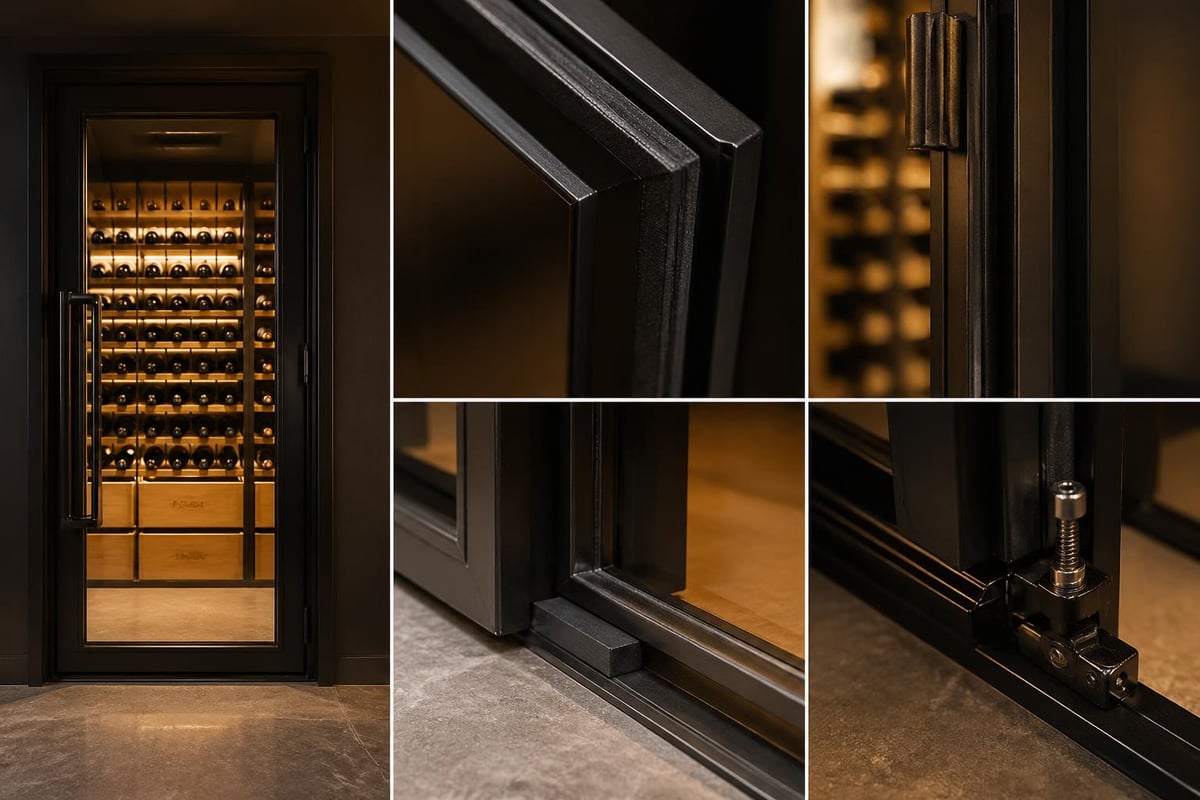
Heavy glass panels require robust support systems. Continuous hinges distribute weight evenly across the door height, preventing sagging and seal failure. Concealed pivot systems create clean lines while supporting substantial weight loads. Self-closing mechanisms ensure doors return to sealed positions, protecting your collection from temperature fluctuations when guests forget to close them manually.
Commercial-grade hardware typically includes:
Adjustable compression latches that maintain pressure against weather sealing
Coordinated finishes from polished chrome to oil-rubbed bronze
Concealed closers that control door swing speed and final closure
Magnetic seals that ensure consistent contact around the perimeter
Locking and Security Features
Fine wine collections represent significant investments requiring appropriate security. Options range from keyed cylinder locks to electronic access control systems. The specialized wine cellar doors and entryways article explores how security integrates with climate control requirements without compromising either function.
Installation Precision and Sealing Technology
Even the finest wine cellar glass doors fail without meticulous installation. Proper execution ensures your doors perform as engineered for years to come.
Rough Opening Preparation
Installation begins before your doors arrive. The rough opening must meet exact dimensional tolerances with plumb, level, and square conditions. Framing should include:
Continuous structural headers sized to support glass weight without deflection. A 500-pound door assembly requires engineering that standard residential framing doesn't provide.
Sealed vapor barriers that integrate with your cellar's moisture management system. These barriers prevent condensation within wall assemblies that could cause mold or structural damage.
Thermal breaks where the door frame contacts adjacent construction, preventing thermal bridging that undermines insulation values.
Installation Phase | Critical Elements | Common Pitfalls to Avoid |
|---|---|---|
Rough opening | Square, plumb, level within 1/8" | Assuming standard tolerances suffice |
Frame setting | Shims at hinge points, continuous support | Over-tightening anchors causing frame distortion |
Glass installation | Clean conditions, proper gasket compression | Installing glass in extreme temperatures |
Final adjustment | Even reveal, consistent compression | Accepting minor leaks as normal |
Weather Sealing and Gaskets
The perimeter seal represents your primary defense against air infiltration. Professional installations use multiple sealing strategies:
Compression gaskets at the door perimeter that create airtight barriers
Magnetic weather stripping that ensures consistent contact
Threshold seals engineered for glass door applications
Adjustable strike plates that compensate for settling
Designing wine cellars requires understanding that sealing quality directly affects cooling efficiency and collection preservation.
Lighting Integration for Visual Drama
Wine cellar glass doors create opportunities for sophisticated lighting design that showcases your collection while respecting preservation requirements. Strategic illumination transforms your cellar into a glowing jewel box visible throughout your home.
Interior Lighting Considerations
LED technology has revolutionized wine cellar illumination. These low-heat sources prevent temperature elevation while providing exceptional color rendering. Accent lighting highlights architectural features and premium bottles without exposing wines to harmful UV radiation.
Design strategies include:
Toe-kick lighting that creates a floating effect beneath racking
Shelf-edge LED strips that backlight bottles for dramatic silhouettes
Recessed downlights positioned to avoid direct bottle exposure
Color temperature selection between warm 2700K and neutral 3000K
Exterior Approach Lighting
The space beyond your wine cellar glass doors requires thoughtful illumination. Proper lighting allows the cellar to function as a design element even when you're not actively retrieving bottles. The transitional wine cellar designs demonstrate how lighting creates visual connections between traditional and contemporary spaces.
Material Considerations for Frame Longevity
Wine cellars present unique environmental challenges that influence material selection. High humidity, temperature differentials, and continuous operation demand materials engineered for these conditions.
Corrosion Resistance
Humidity levels maintained between 60-70% for optimal wine storage can corrode standard materials over time. Stainless steel hardware and anodized aluminum frames resist moisture damage while maintaining appearance. Powder-coated finishes must meet specifications for humid environments rather than standard architectural applications.
Wood elements require careful species selection and finish application. Dense hardwoods like mahogany and sapele naturally resist moisture better than softwoods. Multiple coats of catalyzed conversion varnish create moisture barriers superior to standard polyurethane.
Thermal Expansion Management
Materials expand and contract with temperature changes. Your wine cellar glass doors experience this phenomenon more dramatically than most building components due to temperature differentials between cellar interiors and adjacent spaces.
Engineered joints accommodate movement without compromising seal integrity. Frame designs include expansion allowances that prevent binding or warping. Glass-to-frame connections use flexible gasket materials that maintain contact through thermal cycling.
Cost Factors and Investment Value
Understanding the investment required for quality wine cellar glass doors helps you allocate budget appropriately within your overall project.
Price Range Breakdown
Wine cellar glass doors span a wide cost spectrum based on size, materials, and specifications:
Entry-level installations with standard dual-pane glass and aluminum frames start around $3,500-$6,000 for single doors. These provide basic functionality and visual appeal for smaller residential cellars.
Mid-range options featuring triple-pane glass, premium frames, and enhanced hardware typically range from $8,000-$15,000. This category delivers excellent performance with customization options.
Luxury installations with architectural glass, custom metalwork, and integrated technology can exceed $25,000-$50,000 for statement doors serving high-capacity cellars or commercial applications.
Investment Level | Glass Type | Frame Options | Typical Applications |
|---|---|---|---|
Standard | Dual-pane Low-E | Aluminum, standard finishes | Compact cellars, 500-1,000 bottles |
Premium | Triple-pane argon | Custom metal, wood options | Large residential, 1,000-3,000 bottles |
Luxury | Specialty quad-pane | Bespoke metalwork, exotic woods | Estates, commercial showcases, 3,000+ bottles |
Long-term Value Considerations
Initial cost represents only part of your true investment. Operating efficiency, maintenance requirements, and enhancement to property value all factor into the complete picture. Properly specified wine cellar glass doors reduce cooling costs through superior insulation while creating architectural drama that elevates home value beyond the installation cost.
The custom wine cellar design services approach examines total lifecycle value rather than just upfront expenditure, ensuring your investment performs optimally for decades.
Maintenance and Care Requirements
Wine cellar glass doors require minimal but consistent maintenance to preserve performance and appearance. Understanding care requirements ensures your installation maintains its beauty and function.
Routine Cleaning Protocols
Glass surfaces accumulate fingerprints, condensation marks, and airborne particles. Ammonia-free glass cleaners prevent damage to specialized coatings while removing residue. Microfiber cloths prevent scratching during cleaning.
Frame materials each demand specific care:
Aluminum frames require only periodic wiping with mild detergent
Steel frames benefit from occasional protective wax application
Wood frames need annual inspection and refinishing every 3-5 years depending on exposure
Seal Inspection and Hardware Adjustment
Annual inspections should verify seal integrity around the complete door perimeter. Look for:
Compressed gasket material that has lost resilience
Gaps at corner joints where frames meet
Hardware looseness from repeated operation
Hinge alignment that affects closing pressure
Minor adjustments maintain optimal performance. The wine cellar maintenance services ensure professional attention to these critical details.
Retrofitting Existing Cellars with Glass Doors
Many collectors want to upgrade traditional solid doors to transparent wine cellar glass doors. Retrofitting presents unique challenges and opportunities.
Structural Assessment
Existing rough openings may not accommodate modern insulated glass door weights. A structural engineer should verify header capacity and framing adequacy before proceeding. Additional support costs far less than repairing failed installations.
Climate System Upgrades
Adding glass surface area increases cooling load. Your existing system may lack capacity for the additional heat gain. Proper wine cellar design requires recalculating BTU requirements and potentially upgrading refrigeration equipment.
The conversion from traditional to glass doors offers an opportunity to refresh your entire cellar aesthetic while improving functionality. Projects like the Lakeway traditional wine cellar demonstrate how thoughtful updates enhance both performance and visual appeal.
Commercial Applications and Code Compliance
Restaurants, hotels, and wine bars face additional requirements beyond residential installations. Understanding these factors ensures compliant, safe installations that showcase your inventory.
Building Code Requirements
Commercial wine cellar glass doors must meet life safety codes including:
Tempered or laminated safety glass that prevents dangerous breakage
Panic hardware on egress doors serving occupied spaces
Fire rating requirements when cellars adjoin rated assemblies
Accessibility standards for hardware height and operating force
Insurance and Liability Considerations
Commercial installations require documentation of proper engineering and installation. Detailed specifications and professional installation by licensed contractors protect against liability while ensuring insurance coverage validity. The guidelines for wine cellar construction provide frameworks for compliant commercial projects.
Design Trends Shaping Modern Installations
Wine cellar glass doors continue evolving as technology and aesthetic preferences advance. Understanding current trends helps create installations that remain relevant for years.
Minimalist Frameless Designs
Contemporary architecture favors clean lines and uninterrupted transparency. Frameless glass door systems use specialized hardware and extra-thick glass to eliminate visible frames. These installations create stunning visual effects while presenting engineering challenges around sealing and support.
Smart Technology Integration
Modern wine cellars increasingly incorporate technology for inventory management and environmental monitoring. Glass doors with integrated displays show cellar conditions, inventory details, and even sommelier notes without entering the space. Wireless connectivity allows remote monitoring and alerts.
Sustainable Material Choices
Environmental consciousness influences material selection. Recycled aluminum frames, sustainably harvested woods, and energy-efficient glass coatings appeal to collectors prioritizing ecological responsibility alongside performance.
The portfolio of completed projects showcases how these trends manifest in real installations across diverse architectural styles and client preferences.
Regional Considerations for Texas Climate
Texas presents specific challenges and opportunities for wine cellar glass doors. Understanding regional factors ensures optimal performance in our demanding climate.
Heat and Humidity Management
Texas summers create extreme temperature differentials between climate-controlled cellars and ambient conditions. This stress tests sealing systems and increases cooling loads substantially. Enhanced insulation values and premium sealing become especially important in Austin, Dallas, and Houston installations.
Humidity varies dramatically across Texas. Coastal Houston presents higher ambient moisture than Hill Country locations like Fredericksburg or Boerne. Your wine cellar glass doors must accommodate these regional differences through appropriate material and seal selection.
Architectural Style Compatibility
Texas architecture ranges from Hill Country rustic to Dallas contemporary. Wine cellar glass doors adapt to these diverse styles through frame material and finish selection. Steel and reclaimed wood frames complement rustic estates, while minimal aluminum suits modern urban homes in Austin or Dallas.
Wine cellar glass doors represent the intersection of engineering precision and architectural beauty, creating installations that protect your collection while showcasing it as the art form it represents. From material selection through long-term maintenance, every decision affects both performance and aesthetic impact. Whether you're planning a new cellar or upgrading an existing space, Prestige Wine Cellars brings decades of expertise to creating bespoke installations throughout Texas and beyond, transforming your vision into a climate-controlled masterpiece that celebrates your passion for fine wine.
Your Dream Wine Cellar Starts Here
Let our design team craft a cellar that matches your taste, space, and your collection — built for beauty, function, and prestige.

Email us at
Visit our office