
Wine Cellar Rooms: Design & Build
Discover how wine cellar rooms transform your collection into art. Expert tips on design, climate control, and custom builds for Texas estates.
A well-designed wine collection deserves more than storage. It deserves a showcase. Wine cellar rooms have evolved from simple basement spaces into architectural statements that blend preservation, artistry, and lifestyle. Whether you're planning a temperature-controlled haven for 500 bottles or a glass-enclosed showcase for your prized vintages, creating the perfect wine cellar room requires careful consideration of environmental control, design aesthetics, and long-term functionality. The right approach transforms your passion into a living gallery that protects your investment while elevating your home's appeal.
Understanding Wine Cellar Room Fundamentals
Wine cellar rooms serve a dual purpose that distinguishes them from ordinary storage solutions. They must maintain precise environmental conditions while creating an experience that celebrates your collection. The science behind proper wine preservation demands temperatures between 55-58°F with 60-70% humidity levels, minimal vibration, and protection from UV light exposure.
The foundation of any successful wine cellar room starts with three critical elements:
Climate control systems engineered for consistent temperature and humidity
Proper insulation and vapor barriers that prevent external temperature fluctuations
Airtight construction that maintains the controlled environment
These technical requirements don't compromise aesthetic possibilities. Today's wine cellar rooms integrate stunning design elements while meeting rigorous preservation standards. Understanding proper installation space preparation ensures your project starts with the right structural foundation.
Location Considerations for Wine Cellar Rooms
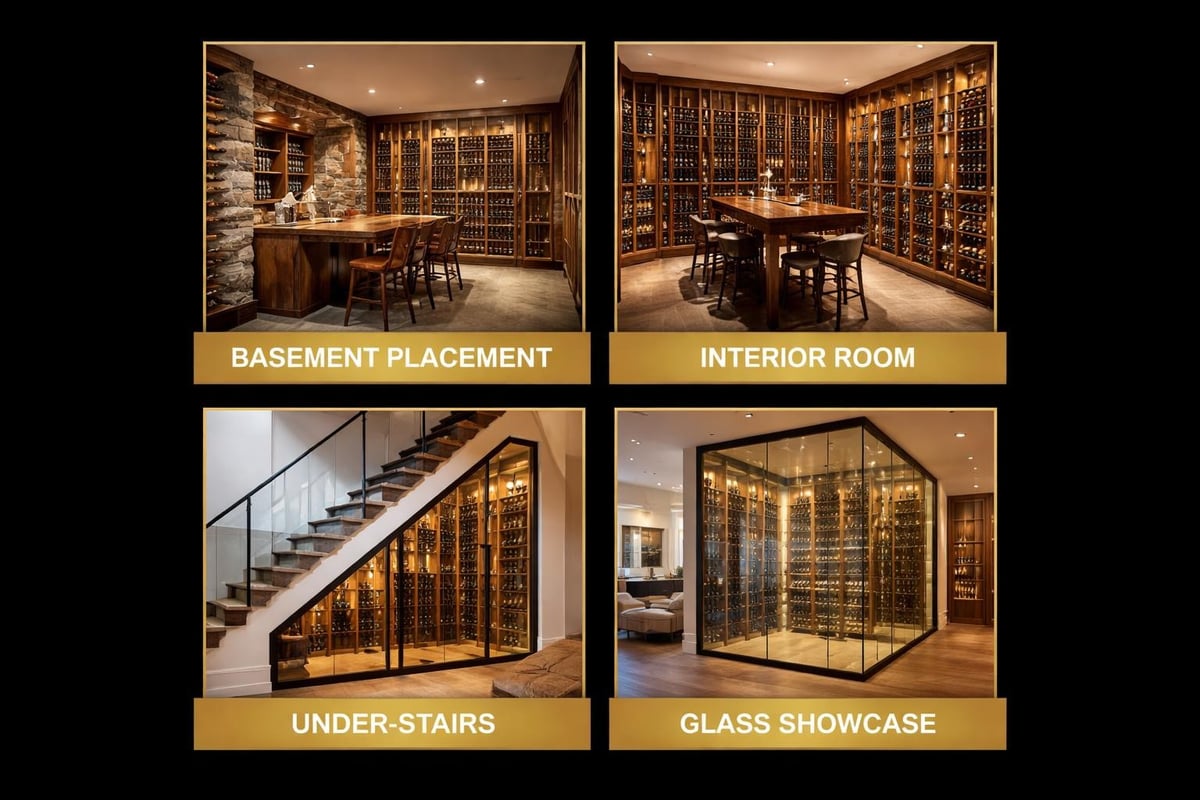
Choosing where to build your wine cellar room significantly impacts both construction complexity and long-term performance. Interior locations offer inherent advantages over exterior walls or above-grade spaces that experience greater temperature fluctuations.
Prime locations within your home include:
Below-grade basement areas with naturally cool temperatures
Interior rooms surrounded by conditioned spaces
Under-staircase areas transformed into compact showcases
Converted closets or unused storage spaces
Dedicated glass-enclosed rooms visible from entertaining areas
Each location presents unique opportunities and challenges. Basement wine cellar rooms typically require less climate control energy but demand attention to moisture management. Above-grade interior rooms offer dramatic visibility but need more robust insulation systems.
Design Elements That Define Exceptional Spaces
The aesthetic vision for wine cellar rooms should harmonize with your home's architecture while expressing your personal style. Contemporary designs featuring metal and glass create sleek, museum-like presentations. Traditional approaches with rich wood tones and stone accents evoke Old World charm. The key lies in selecting materials and finishes that support both environmental stability and visual impact.
Custom wine cellar design services translate your vision into engineered reality, balancing form with function.
Racking Systems and Storage Configurations
The backbone of any wine cellar room is its racking system. This crucial component determines bottle capacity, accessibility, and overall aesthetic. Modern wine cellars embrace diverse racking solutions tailored to specific collections and display preferences.
Racking Style | Best For | Capacity Impact | Visual Effect |
|---|---|---|---|
Individual bottle | Mixed collections | Flexible | Organized, accessible |
Diamond bins | Bulk storage | High density | Traditional elegance |
Display rows | Premium bottles | Showcase focused | Dramatic presentation |
Case storage | Investment wines | Maximum capacity | Efficient, practical |
Material selection for racking influences both durability and appearance:
Wood racking offers warmth and traditional appeal with species like mahogany, walnut, or redwood
Metal racking provides contemporary edge with powder-coated steel or aluminum
Acrylic and glass create floating, modern presentations
Cable wine systems deliver minimalist sophistication
Your collection's composition should guide racking decisions. Serious collectors with vertical vintages need different solutions than enthusiasts building diverse, drink-now selections. Exploring wine cellar materials reveals how strategic choices enhance both preservation and presentation.
Lighting Design for Wine Cellar Rooms
Illumination in wine cellar rooms requires careful planning. While showcasing your collection demands adequate lighting, wine preservation requires protection from UV exposure and heat generation. This apparent contradiction resolves through strategic lighting design.
LED technology transformed wine cellar lighting by providing:
Low heat output that doesn't compromise climate control
UV-free illumination that protects wine labels and corks
Flexible color temperatures for mood and visibility
Energy efficiency reducing operational costs
Layered lighting approaches combine ambient, task, and accent sources. Toe-kick LEDs create subtle floor-level illumination. In-rack strip lighting highlights specific bottles or shelving. Statement fixtures over tasting areas provide functional task lighting. The goal is creating drama without compromising your wines.
Climate Control Engineering for Optimal Preservation
The environmental systems within wine cellar rooms represent the most critical investment in your project's success. Unlike standard HVAC systems, wine cellar cooling units maintain precise temperature and humidity while operating continuously in sealed environments. Essential factors for wine cellar climate control go beyond simple temperature regulation.
Selecting the Right Cooling System
Cooling system selection depends on your wine cellar room's size, location, and design objectives. Through-wall units offer economical solutions for smaller spaces with access to adjacent rooms for heat exhaust. Split systems separate evaporator and condenser units, providing design flexibility. Ducted systems conceal all equipment, ideal for wine cellar rooms in finished spaces.
System sizing calculations must account for:
Total cubic footage of the sealed space
Insulation R-values and vapor barrier integrity
Glass surface area and exposure
Ambient temperature of surrounding spaces
Door type and frequency of access
Heat generated by lighting systems
Undersized systems run constantly without achieving target temperatures. Oversized units cycle too frequently, creating temperature swings and humidity problems. Professional heat load calculations prevent these costly mistakes. Using a heat load calculator provides accurate system specifications.
Insulation and Vapor Barrier Requirements
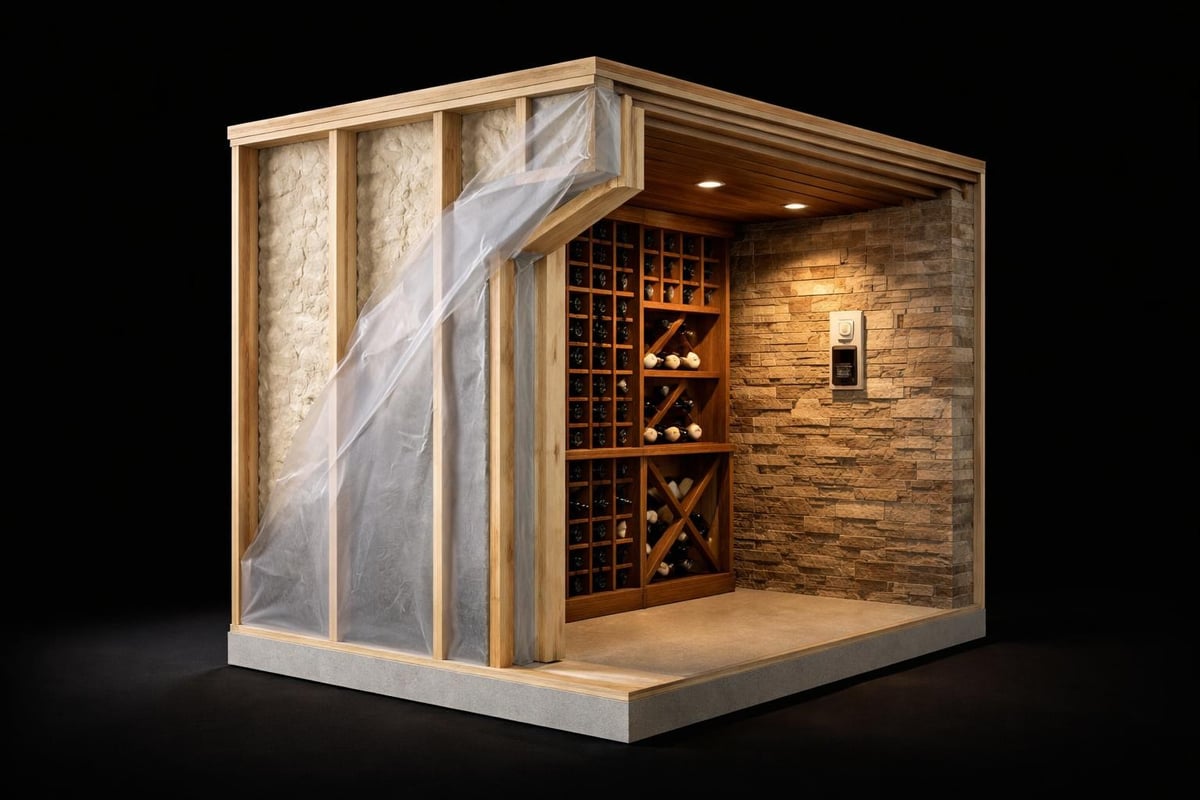
The envelope of your wine cellar room must create a complete thermal break from surrounding spaces. This demands insulation values typically exceeding standard construction. Minimum R-19 insulation in walls and R-30 in ceilings provides adequate protection, though many luxury installations exceed these baselines.
Vapor barriers prove equally critical. Proper vapor barrier installation on the warm side of insulation prevents moisture migration that causes mold, mildew, and insulation degradation. Six-mil polyethylene sheeting installed with overlapped seams and sealed penetrations creates effective barriers.
Construction sequence matters tremendously:
Frame walls with proper header clearances for doors
Install electrical and lighting infrastructure
Apply insulation filling all cavities completely
Install continuous vapor barrier with meticulous sealing
Add interior finish materials suitable for high humidity
Seal all penetrations including electrical boxes and fixtures
Wine Cellar Room Doors and Entryways
The door to your wine cellar room represents a critical juncture where design meets engineering. This threshold must provide visual appeal while maintaining the sealed environment that protects your collection. Standard doors simply cannot meet the demands of wine cellar applications.
Specialized wine cellar doors feature:
Insulated cores providing thermal breaks
Weather stripping creating airtight seals
Threshold sweeps preventing air infiltration
Magnetic or compression seals ensuring complete closure
Glass doors create stunning visual access to your collection while presenting unique challenges. Double or triple-pane insulated glass units minimize heat transfer. Low-E coatings reduce UV transmission. Proper framing with thermal breaks prevents condensation. The engineering complexity increases with glass doors, but the aesthetic reward justifies the investment.
Hardware and Access Control
Door hardware selection impacts both functionality and security. Commercial-grade hinges support the weight of insulated doors while ensuring smooth operation over decades. Locking mechanisms protect valuable collections while maintaining ease of access for authorized users.
Some wine cellar rooms incorporate advanced access control including biometric readers, keypad entry systems, or smart locks integrated with home automation. These technologies add convenience and security without compromising the sealed environment when properly installed.
Finishing Touches and Interior Details
Beyond the technical requirements, wine cellar rooms benefit from thoughtful details that enhance usability and enjoyment. Flooring materials must withstand high humidity while providing appropriate aesthetics. Stone, tile, and sealed concrete perform well in these conditions. Wood flooring requires engineered products designed for humidity tolerance.
Interior design elements that elevate wine cellar rooms include:
Tasting tables with seating for intimate gatherings
Display areas for decanters, glassware, and accessories
Art installations celebrating wine culture and viticulture
Historical artifacts or vintage signage
Technology integration for inventory management
Wall treatments in wine cellar rooms range from stone veneer and brick to wood paneling and decorative plaster. Material selection should consider both moisture tolerance and aesthetic vision. Creating comprehensive wine cellar designs addresses these finishing elements within the larger project scope.
Technology Integration in Modern Wine Cellars
Today's wine cellar rooms increasingly incorporate technology that enhances collection management and user experience. Inventory management systems track bottle locations, purchase details, and optimal drinking windows. Climate monitoring with remote alerts ensures system performance. Smart controls adjust temperature and lighting from mobile devices.
Some advanced installations feature virtual reality elements, allowing remote "visits" to your cellar. Others integrate security cameras for 24/7 monitoring. The key is selecting technologies that genuinely enhance your experience rather than adding complexity.
Commercial Applications for Wine Cellar Rooms
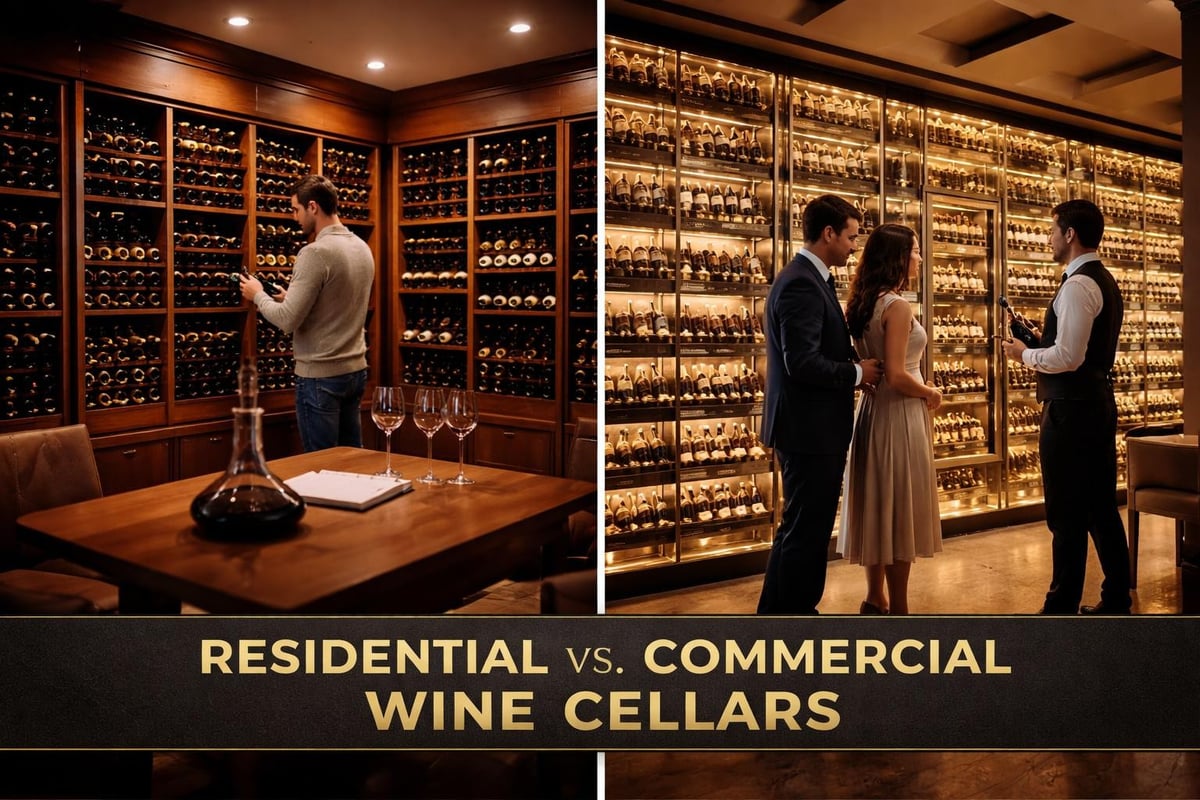
While residential wine cellar rooms capture much attention, commercial applications serve equally important functions. Restaurants, hotels, and private clubs use wine cellar rooms to protect inventory while creating memorable guest experiences. These installations often feature glass walls providing dining room views of impressive collections.
Commercial wine cellar projects demand robust systems handling frequent access and larger capacities. Restaurant wine cellar rooms must balance operational efficiency with theatrical presentation. Display areas near dining spaces create conversation and enhance the culinary experience.
Commercial wine cellar rooms require additional considerations:
Factor | Residential Focus | Commercial Focus |
|---|---|---|
Access frequency | Occasional | Multiple daily |
Capacity planning | Personal collection | Revenue-driven inventory |
Display emphasis | Personal taste | Marketing and sales |
System redundancy | Standard | Critical with backup |
Code compliance | Residential | Commercial building codes |
Steakhouses and fine dining establishments often position wine cellar rooms as focal points visible from dining areas. The bottles become both functional inventory and immersive décor. Proper engineering ensures that frequent door openings don't compromise storage conditions.
Regional Considerations for Texas Wine Cellars
Texas's climate presents specific challenges for wine cellar rooms. Hot summers and temperature fluctuations demand robust cooling systems and superior insulation. Custom wine cellars throughout Texas address these regional demands with engineered solutions proven in local conditions.
Climate Challenges and Solutions
Above-grade wine cellar rooms in Texas face substantial cooling loads. Summer temperatures exceeding 100°F create significant thermal stress on cellar envelopes. Solutions include enhanced insulation beyond minimum standards, oversized cooling systems, and strategic interior placement away from exterior walls.
Texas-specific design strategies include:
R-30 wall insulation and R-50 ceiling insulation in above-grade locations
Split cooling systems with condensers in shaded, ventilated areas
Strategic orientation avoiding western sun exposure
Integration with home automation for efficiency
Backup power systems protecting against summer outages
Humidity control proves equally important. Texas humidity levels fluctuate seasonally, requiring cooling systems with active humidification and dehumidification capabilities. Passive solutions rarely suffice in this climate.
Investment and Value Considerations
Wine cellar rooms represent significant investments in both construction and ongoing operations. Understanding the financial aspects helps set realistic expectations and ensures appropriate budget allocation. Construction costs vary widely based on size, location, materials, and system complexity.
Typical investment ranges for wine cellar rooms include:
Entry-level projects (200-400 bottles): $15,000-$30,000
Mid-range installations (400-1,000 bottles): $30,000-$75,000
Luxury showcases (1,000-2,500 bottles): $75,000-$200,000
Estate collections (2,500+ bottles): $200,000+
These ranges encompass turnkey design and build services including engineering, materials, installation, and climate control systems. Custom architectural features, rare materials, and advanced technologies increase investment levels.
Return on Investment and Home Value
Properly executed wine cellar rooms add measurable value to luxury homes. Real estate professionals recognize these amenities as significant selling points for discerning buyers. Beyond financial returns, wine cellar rooms provide lifestyle value that enhances daily living and entertainment capabilities.
The investment protects wine collections worth substantially more than the cellar itself. A $50,000 wine cellar room protecting a $200,000 collection represents prudent asset management. Proper storage prevents spoilage, maintains provenance, and allows wines to develop as vintners intended.
Maintenance and Long-Term Care
Like any sophisticated system, wine cellar rooms require ongoing maintenance ensuring continued performance. Wine cellar maintenance services address both preventive care and corrective repairs, protecting your investment over decades.
Routine Maintenance Requirements
Climate control systems need annual professional service including refrigerant level checks, condenser cleaning, and thermostat calibration. These preventive measures extend equipment life and maintain precise environmental control. Filter changes every three to six months ensure optimal air quality and system efficiency.
Recommended maintenance schedule for wine cellar rooms:
Monthly: Temperature and humidity verification, door seal inspection
Quarterly: Filter changes, visual inspection of racking and finishes
Annually: Professional climate system service, comprehensive seal testing
Bi-annually: Deep cleaning, inventory assessment, lighting inspection
Early detection of issues prevents minor problems from becoming major failures. A slight temperature drift caught early might require simple thermostat adjustment. Undetected, it could lead to compressor failure and wine damage.
Addressing Common Issues
Wine cellar rooms occasionally experience challenges despite proper design and installation. Condensation on glass doors indicates inadequate insulation or failed seals. Temperature fluctuations suggest cooling system problems or envelope breaches. Musty odors point to moisture infiltration or inadequate ventilation.
Professional diagnosis identifies root causes rather than treating symptoms. A temperature spike might stem from a failing compressor, undersized system, compromised insulation, or increased ambient load from renovated adjacent spaces. Proper troubleshooting ensures effective, lasting solutions.
Planning Your Wine Cellar Room Project
Successful wine cellar room projects begin with clear vision and realistic timelines. Reviewing portfolio examples provides inspiration while demonstrating what's achievable within various budgets and spaces. The planning phase establishes project scope, design direction, and investment parameters.
Essential planning steps include:
Collection assessment - Current bottle count and growth projections
Space evaluation - Available locations and structural considerations
Design exploration - Style preferences and feature priorities
Budget development - Investment range and financing options
Timeline planning - Project phases and completion targets
Professional selection - Choosing experienced specialists
Working with specialists who understand both the art and science of wine cellar rooms ensures your project avoids common pitfalls. Building a wine cellar properly requires expertise across multiple disciplines including architecture, mechanical engineering, and fine craftsmanship.
Questions to Ask Before Starting
Before breaking ground, clarify your priorities and constraints. Will this wine cellar room serve primarily for storage or entertaining? Does your collection focus on particular regions or varieties requiring specific configurations? How will the space integrate with your home's existing architecture and interior design?
Consider future needs as well as current requirements. Collections grow, tastes evolve, and entertaining needs change. Designing flexibility into your wine cellar room accommodates these developments without requiring major renovations. Modular racking systems, scalable cooling capacity, and thoughtful spatial planning provide adaptability.
Wine cellar rooms transform collections into experiences, blending meticulous preservation with inspired design. Whether you're envisioning an intimate showcase for cherished vintages or an expansive gallery for serious collecting, the right approach ensures your wines mature gracefully while creating a space you'll treasure. Prestige Wine Cellars brings decades of expertise to every project, crafting bespoke wine cellar rooms throughout Texas and beyond that reflect your vision while delivering uncompromising quality and performance.
Your Dream Wine Cellar Starts Here
Let our design team craft a cellar that matches your taste, space, and your collection — built for beauty, function, and prestige.

Email us at
Serving Austin, Dallas–Fort Worth, Houston & San Antonio