
Wall Wine Storage: Luxury Solutions for 2026
Discover sophisticated wall wine storage solutions that blend artistry with preservation. Expert guidance on design, climate control, and installation.
Wall wine storage represents one of the most elegant and space-efficient approaches to showcasing and preserving your collection. Whether you're designing a dedicated cellar, transforming an unused wall into a functional display, or creating a striking focal point in your dining room, vertical storage solutions offer unmatched versatility. The right wall-mounted system combines preservation science with architectural beauty, turning every bottle into part of your home's design narrative while maintaining the precise conditions your wines need to age gracefully.
Understanding Wall Wine Storage Systems
Wall wine storage encompasses a diverse range of solutions, from simple wall-mounted racks to fully integrated climate-controlled installations. The fundamental principle remains consistent: maximize vertical space while maintaining optimal storage conditions.
Modern wall storage systems fall into several categories:
Traditional wooden racking with individual bottle slots
Metal pin systems that create floating bottle displays
Glass-enclosed climate-controlled walls
Hybrid designs combining multiple materials and techniques
Modular systems that expand as your collection grows
The beauty of wall-based storage lies in its adaptability. A well-designed system works equally well in a compact urban apartment or a sprawling estate. The key is understanding how your specific space, collection size, and aesthetic preferences inform the design process.
The Science Behind Vertical Wine Preservation
Storing wine vertically on walls doesn't compromise preservation when executed correctly. In fact, wall wine storage often provides superior environmental control compared to traditional floor-standing units.
Temperature stability is paramount. Proper wine storage conditions require maintaining a consistent 55-58°F throughout the storage area. Wall systems integrated with dedicated cooling units achieve this precision by creating isolated climate zones that aren't affected by ambient room temperature fluctuations.
Humidity control presents another critical consideration. Cork integrity depends on maintaining 60-70% relative humidity. Understanding wine cellar humidity requirements helps prevent cork deterioration and wine oxidation. Wall-mounted systems with proper climate control maintain these levels consistently, protecting your investment for decades.
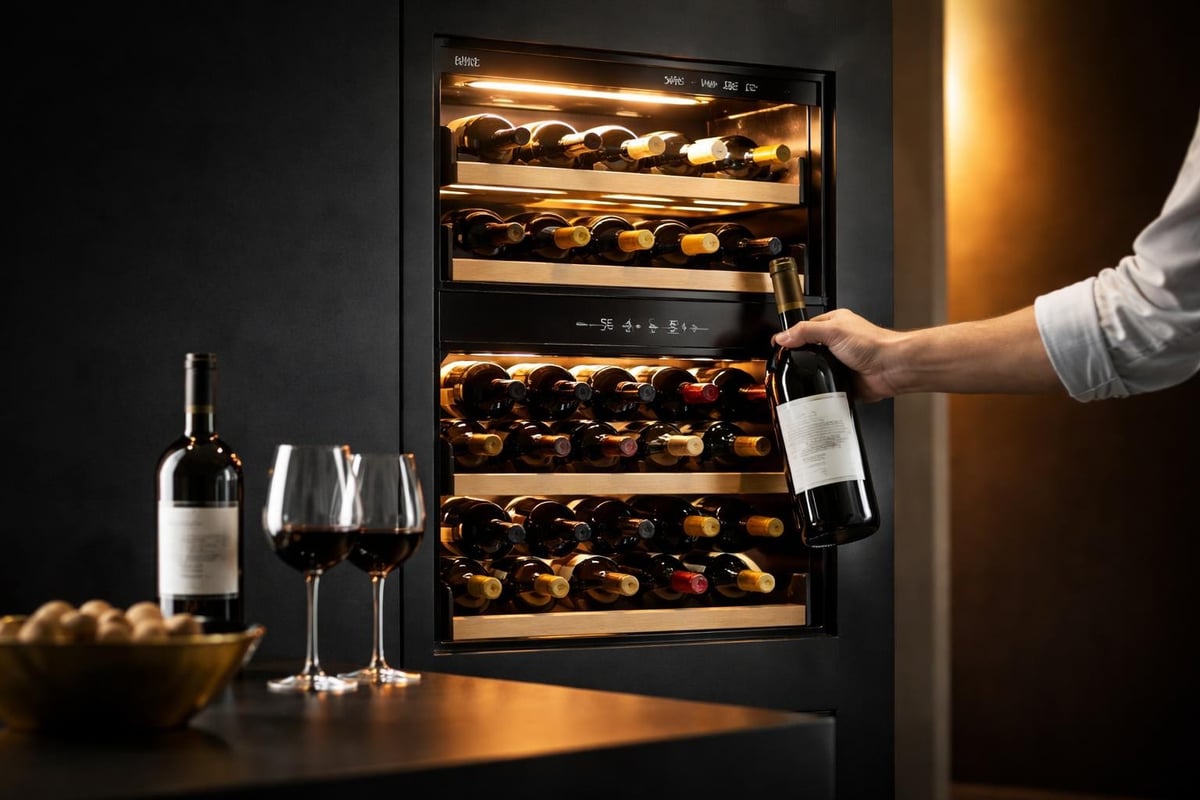
Design Considerations for Wall Wine Storage
Creating an exceptional wall wine storage solution requires balancing aesthetics with functionality. Every design decision impacts both how your collection looks and how well it ages.
Material Selection and Aesthetic Impact
The materials you choose define your storage system's character. Each option brings distinct advantages:
Material | Aesthetic | Durability | Maintenance | Best For |
|---|---|---|---|---|
Walnut | Rich, traditional warmth | Excellent | Moderate | Classic interiors |
Mahogany | Deep, luxurious tones | Outstanding | Low | Formal spaces |
Acrylic | Modern, minimalist | Very good | Easy | Contemporary designs |
Metal | Industrial, sleek | Excellent | Minimal | Modern aesthetics |
Glass | Transparent elegance | Good | Regular cleaning | Showcase displays |
Material choices extend beyond visual appeal. Wood species respond differently to humidity fluctuations. Metal systems may require powder coating to prevent corrosion in humid environments. Custom wine cellar materials expertise ensures your selections complement both your design vision and environmental requirements.
Capacity Planning and Bottle Configuration
Determining the right capacity requires honest assessment of your current collection and future acquisition patterns. Most collectors underestimate their growth trajectory.
Consider these planning factors:
Current collection size and composition
Average monthly acquisition rate
Bottle size variety (standard, magnum, split)
Display bottles versus aging inventory
Growth projections over 5-10 years
Standard wall wine storage configurations accommodate 750ml bottles in horizontal orientation. However, serious collectors need flexibility for varying bottle sizes and special formats. Custom wine cellar design services account for these nuances, creating systems that adapt as your tastes evolve.
Installation Requirements and Technical Considerations
Successful wall wine storage installation demands attention to structural, mechanical, and environmental factors. Cutting corners during installation inevitably leads to preservation problems and costly corrections.
Structural Integrity and Load Distribution
Wine weighs approximately 3 pounds per bottle. A 200-bottle wall system carries 600 pounds of product weight, plus racking materials. Wall studs, mounting hardware, and framing must support this load with safety margins.
Load-bearing considerations include:
Identifying stud locations and load-bearing walls
Calculating total system weight including racking
Selecting appropriate mounting hardware
Distributing weight across multiple attachment points
Planning for seismic considerations in certain regions
Professional installation ensures structural requirements are met. Amateur installations frequently fail when weight distribution isn't properly engineered. The investment in expertise pays dividends in system longevity and collection safety.
Climate Control Integration
Wall wine storage without climate control is merely decorative shelving. True preservation requires engineered cooling solutions that maintain consistent temperature and humidity.
Wine cooling systems vary in complexity and capacity. Through-wall units offer efficient cooling for dedicated spaces, while ducted systems serve larger installations or multiple rooms. The right choice depends on your space configuration, bottle capacity, and architectural constraints.
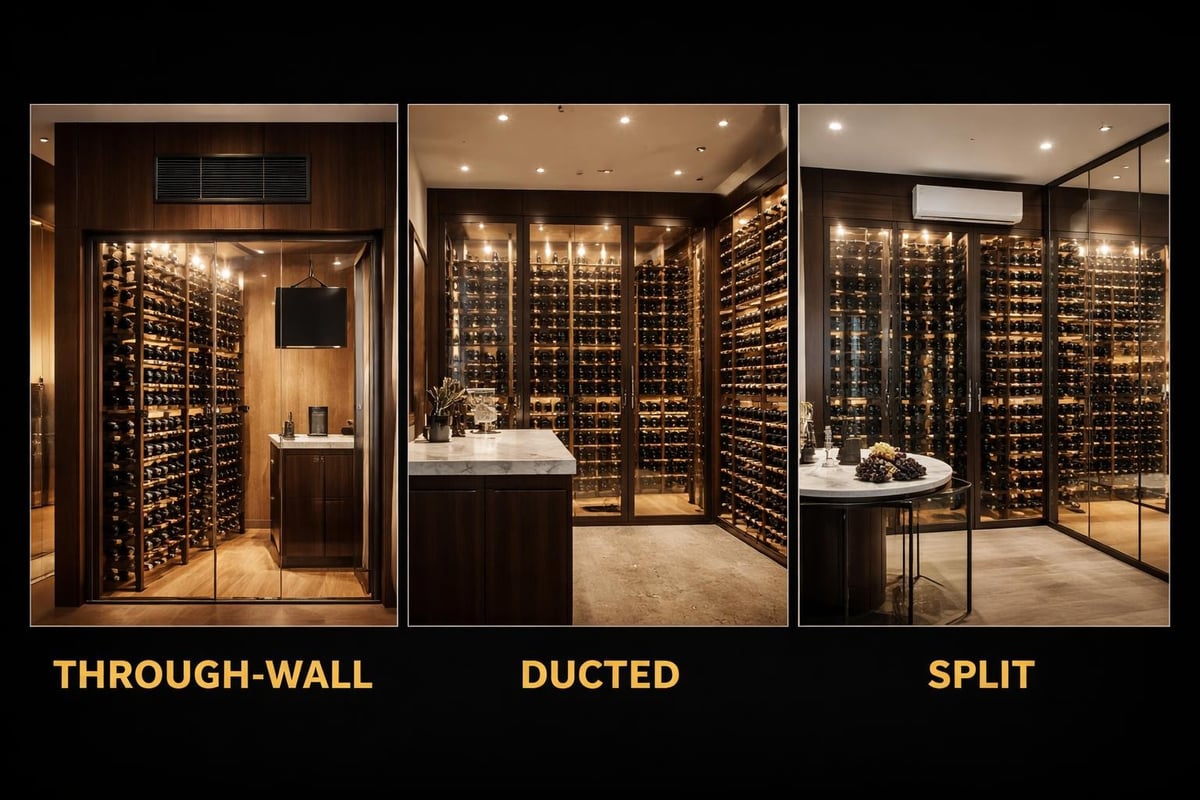
Climate control positioning affects system performance. Cool air naturally falls, so cooling unit placement relative to racking impacts temperature uniformity. Professional design accounts for air circulation patterns, ensuring every bottle experiences identical conditions regardless of wall position.
Wall Wine Storage for Different Spaces
Different environments demand tailored approaches to wall wine storage. Residential, commercial, and hospitality applications each present unique opportunities and constraints.
Residential Applications
Home wall wine storage transforms underutilized spaces into functional art. Common residential locations include:
Dining room feature walls
Under-stair installations
Kitchen integration
Basement conversions
Master suite additions
Residential wine cellar projects showcase how wall storage becomes architectural focal points. Glass-enclosed systems particularly excel in open-concept homes, where transparency maintains visual flow while creating defined spaces.
Noise considerations matter in residential settings. Cooling units generate sound that can disrupt living spaces. Strategic placement, sound-dampening materials, and equipment selection minimize acoustic impact without compromising performance.
Commercial and Hospitality Installations
Restaurants, hotels, and private clubs leverage wall wine storage for both preservation and marketing. An impressive wine display drives revenue by showcasing selection and creating ambiance.
Commercial installations require:
High-visibility placement near dining areas
Easy access for staff during service
Security features preventing unauthorized access
Dramatic lighting highlighting premium selections
Capacity for extensive inventories
Hotel wine cellar installations demonstrate how wall storage scales to commercial demands. These systems often incorporate dual-zone cooling, separating red and white storage temperatures, and include inventory management integration for operational efficiency.
Lighting Design for Wall Wine Storage
Illumination transforms wall wine storage from functional necessity to artistic statement. However, lighting requires careful planning to avoid damaging your collection.
Balancing Aesthetics and Preservation
Wine deteriorates under UV exposure and excessive heat. Traditional incandescent lighting generates both. LED technology revolutionized wine storage lighting by providing brilliant illumination without harmful effects.
LED advantages for wine storage:
Minimal heat generation
Zero UV emission
Long lifespan (50,000+ hours)
Precise color temperature control
Dimming capability for ambiance adjustment
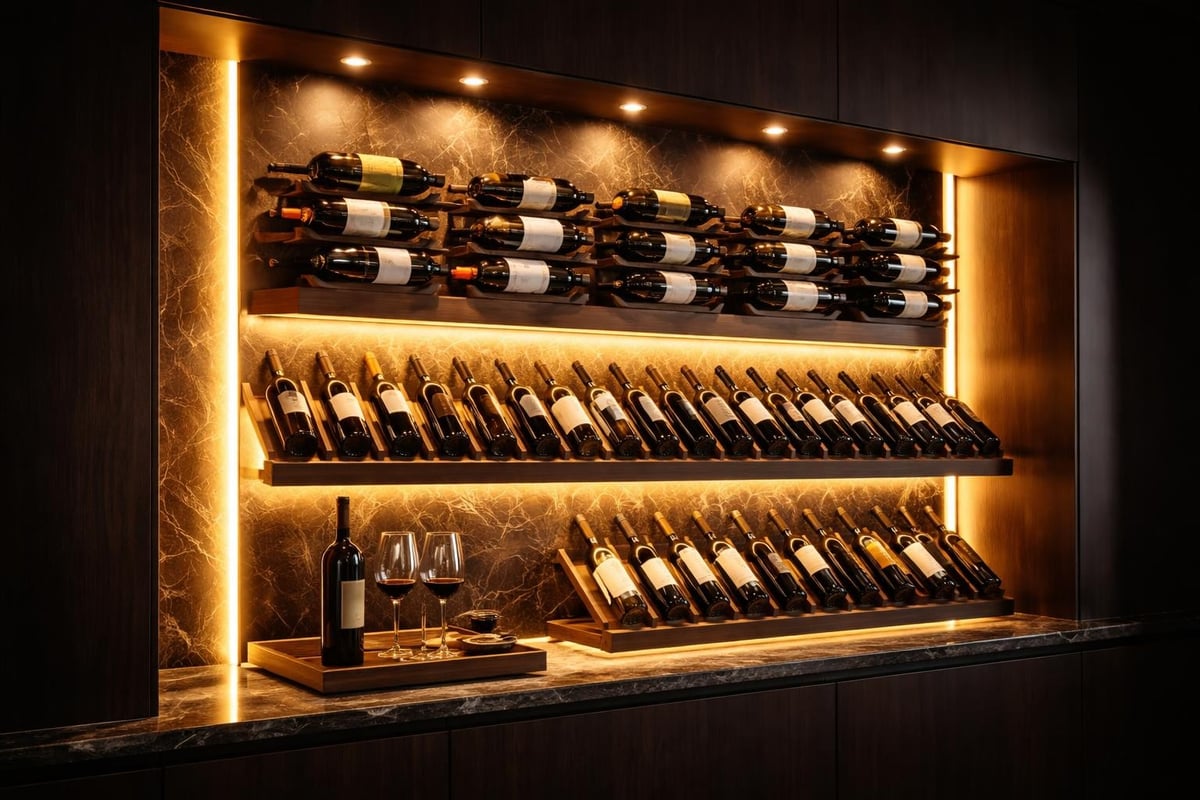
Placement strategy maximizes impact while minimizing bottle exposure. Downlighting from ceiling-mounted fixtures, backlit panels behind acrylic racking, and toe-kick lighting each create different effects. Layering multiple lighting types provides versatility for various occasions.
Creating Drama with Strategic Illumination
The most compelling wall wine storage installations use lighting to guide the eye and create focal points. Consider how light interacts with different materials and bottle colors.
Lighting Type | Effect | Application | Intensity Control |
|---|---|---|---|
Recessed Downlights | Focused drama | Highlight premium bottles | Dimmable |
LED Strips | Uniform glow | Shelf illumination | Programmable |
Backlighting | Silhouette effect | Glass installations | Color-changing |
Accent Spots | Feature emphasis | Rare bottles | Directional |
Modern wine wall installations increasingly incorporate programmable lighting scenes. Bright settings facilitate bottle selection during service, while dimmed ambient modes create intimate dining atmospheres.
Maintenance and Long-Term Care
Wall wine storage systems require ongoing maintenance to preserve both aesthetics and functionality. Establishing maintenance routines prevents problems before they affect your collection.
Climate System Maintenance
Cooling units demand regular attention. Filter replacement, coil cleaning, and refrigerant level checks ensure optimal performance and energy efficiency.
Recommended maintenance schedule:
Monthly: Visual inspection of cooling unit operation
Quarterly: Filter cleaning or replacement
Annually: Professional system service and calibration
Biennially: Comprehensive inspection and component replacement
Wine cellar maintenance services extend system lifespan and protect collection value. Professional technicians identify developing issues before they cause failures, preventing temperature excursions that damage wine.
Racking and Material Care
Different materials require specific care approaches. Wood systems benefit from occasional conditioning with furniture-appropriate products. Metal components need periodic inspection for corrosion, particularly in high-humidity environments.
Glass panels require regular cleaning to maintain transparency and visual appeal. Use ammonia-free products to avoid chemical odors that might affect wine. Microfiber cloths prevent scratching while removing fingerprints and dust.
Customization and Personalization Options
Wall wine storage offers nearly unlimited customization potential. Personal touches transform functional storage into reflections of individual taste and lifestyle.
Incorporating Personal Design Elements
Custom details distinguish exceptional installations from standard solutions. Consider integrating:
Engraved panels with family crests or monograms
Custom hardware finishes matching other home elements
Mixed materials creating textural interest
Integrated display shelving for decanters and glassware
Digital inventory systems with tablet integration
Portfolio examples demonstrate how customization creates unique expressions. No two collections or collectors are identical, and your storage system should reflect that individuality.
Adapting to Collection Evolution
Your wine preferences and purchasing patterns will evolve. Smart design accommodates this evolution without requiring complete system replacement.
Modular racking systems allow reconfiguration as your collection composition changes. Initially focused on Bordeaux? Expanding into Burgundy requires different bottle configurations. Quality wall wine storage adapts through adjustable components and expandable frameworks.
Cost Considerations and Investment Value
Wall wine storage represents a significant investment that adds tangible value to your property while protecting valuable collections. Understanding cost drivers helps make informed decisions.
Price Range and Value Factors
Installed wall wine storage costs vary dramatically based on size, materials, climate control sophistication, and customization level. Basic systems start around $3,000-5,000 for small installations, while elaborate climate-controlled walls exceed $50,000.
Cost factors include:
Linear footage and bottle capacity
Material selection and finish quality
Climate control system complexity
Custom design and engineering
Installation complexity and accessibility
Lighting sophistication and control systems
The investment pays returns through proper wine preservation and property value enhancement. Turnkey design-build services provide comprehensive solutions with predictable costs and timelines, eliminating surprises during construction.
Return on Investment
Quality wall wine storage systems last decades when properly maintained. The preservation benefits prevent wine spoilage that quickly exceeds system costs. A single damaged case of premium wine often equals thousands in losses that proper storage would have prevented.
Property value considerations matter for estate planning and eventual sale. Luxury home buyers increasingly expect sophisticated wine storage. A well-executed wall wine storage system differentiates properties in competitive markets, particularly in wine-enthusiast regions like Texas Hill Country.
Selecting the Right Room for Wall Wine Storage
Location selection fundamentally impacts system performance and collection longevity. Not all walls are created equal when it comes to wine preservation.
Environmental Assessment
Selecting appropriate rooms for wine storage requires evaluating temperature stability, humidity conditions, light exposure, and vibration sources.
Ideal locations avoid:
Exterior walls with significant temperature fluctuation
Spaces above garages or near HVAC equipment
Rooms with excessive natural light exposure
Areas near mechanical equipment generating vibration
High-traffic zones with frequent door openings
Interior walls adjacent to conditioned spaces provide natural temperature stability. Basement locations offer inherent cooling advantages, though humidity control becomes more critical. Preparing installation spaces properly ensures wall wine storage systems perform optimally regardless of location.
Integration with Existing Architecture
Successful wall wine storage feels intentional, not forced into spaces where it doesn't belong. Consider how storage systems interact with existing architectural elements.
Ceiling height affects storage capacity and design proportions. Eight-foot ceilings limit vertical capacity compared to ten-foot heights. However, skilled designers maximize available space through clever configuration and visual techniques that create the illusion of greater height.
Door and window placements influence racking layout and access patterns. Traffic flow matters, particularly in commercial settings where staff must access bottles during service without disrupting guests. Professional design accounts for these practical considerations while maintaining aesthetic cohesion.
Wall wine storage transforms how you experience and preserve your collection, combining preservation science with architectural artistry to create installations that delight the eye while protecting your investment. Whether you're envisioning an intimate residential display or a dramatic commercial installation, the right approach balances capacity, climate control, materials, and personalization into a cohesive whole. Prestige Wine Cellars brings decades of expertise to every project, crafting bespoke wall wine storage solutions that reflect your unique vision while delivering the precision engineering your collection deserves.
Your Dream Wine Cellar Starts Here
Let our design team craft a cellar that matches your taste, space, and your collection — built for beauty, function, and prestige.

Email us at
Serving Austin, Dallas–Fort Worth, Houston & San Antonio