
Local Wine Cellar Maintenance: Expert Care Guide
Discover expert strategies for local wine cellar maintenance. Learn climate control, cleaning protocols, and preventive care for luxury collections.
Your wine cellar represents a significant investment in both craftsmanship and collection value. Whether you've commissioned a bespoke installation in your River Oaks estate or created an intimate wine room in your Westlake home, the longevity of your cellar and the quality of your wine depend entirely on consistent, professional care. Local wine cellar maintenance isn't just about keeping your space pristine-it's about protecting vintages that may be irreplaceable, ensuring climate systems operate flawlessly, and preserving the architectural beauty that makes your cellar a showpiece. Regular attention from knowledgeable professionals who understand your specific installation makes the difference between a cellar that ages gracefully and one that becomes a costly problem.
Understanding the Foundation of Local Wine Cellar Maintenance
Every luxury wine cellar functions as a precisely engineered ecosystem. The materials, climate control systems, and spatial design work together to create ideal conditions for aging wine. When any element falls out of balance, the entire collection suffers.
Climate system performance forms the core of effective maintenance. Your cooling unit operates continuously to maintain the narrow temperature range wines demand-typically between 55°F and 58°F. This system works harder than your home HVAC because it must counteract Texas heat, wall infiltration, and door openings. Understanding wine cooling systems fundamentals helps you appreciate why professional monitoring catches small efficiency losses before they become failures.
Critical Components Requiring Regular Attention
Local wine cellar maintenance encompasses multiple interconnected systems:
Cooling units and condensers that regulate temperature precisely
Humidity control devices maintaining 60-70% relative humidity
Insulation and vapor barriers preventing moisture infiltration
Door seals and weatherstripping preserving the envelope
Racking systems supporting bottle weight safely
Lighting fixtures providing visibility without heat damage
Flooring materials resisting moisture and temperature fluctuation
Each component deserves systematic inspection. A degraded door seal, for instance, forces your cooling unit to run constantly, increasing energy costs while risking temperature swings. The comprehensive maintenance services we provide address these interdependencies.
Climate Control System Maintenance Protocols
Your cooling system represents the beating heart of wine preservation. Professional local wine cellar maintenance begins with comprehensive climate system evaluation every quarter.
Temperature Stability Assessment
We measure temperature at multiple cellar locations using calibrated instruments. Corner pockets, upper shelving areas, and zones near doors often show variance. A properly functioning system maintains consistency within one degree throughout the space.
Cooling unit inspection involves checking refrigerant levels, cleaning condenser coils, testing thermostats, and verifying airflow patterns. Dust accumulation on coils reduces efficiency by 20-30%, forcing the compressor to work harder and shortening its lifespan. Regular cleaning during maintenance visits prevents this gradual degradation.
Condensate drainage also requires attention. Blocked drain lines cause water backup, potentially damaging cabinetry or flooding the cellar floor. We clear these lines and verify proper slope during each service call.
Humidity Management and Monitoring
Maintaining proper humidity levels protects corks from drying out while preventing mold growth. This balance proves especially challenging in Texas, where exterior humidity varies dramatically by season.
Season | Exterior Humidity | Cellar Challenge | Maintenance Focus |
|---|---|---|---|
Summer | 70-85% | Excess moisture infiltration | Vapor barrier inspection, dehumidification |
Winter | 35-50% | Excessive drying | Humidification systems, seal integrity |
Spring | 60-75% | Variable conditions | System calibration, sensor accuracy |
Fall | 45-65% | Transition stability | Preventive adjustments, filter replacement |
We install hygrometers in strategic locations and log readings over time. Trending data reveals developing problems before they impact your wine. When humidity drifts outside ideal ranges, we investigate root causes-perhaps a deteriorating vapor barrier or an undersized humidification system.
Structural and Material Preservation
The materials that create your cellar's aesthetic also require specific maintenance approaches. Local wine cellar maintenance must account for how wood, glass, metal, and stone respond to constant humidity and temperature.
Wood racking systems expand and contract slightly with seasonal changes. We inspect joints for separation, check mounting hardware for looseness, and verify that weight distribution remains safe. Custom hardwood installations may need periodic conditioning with appropriate wood treatments that don't off-gas volatile compounds.
Glass wine walls demand different care. We clean glass panels with pH-neutral solutions, inspect framing systems for corrosion, and verify that structural mounting remains secure. The dramatic visual impact of these installations depends on crystal-clarity, making regular professional cleaning essential.
Flooring and Surface Care
Different flooring materials require tailored maintenance schedules:
Hardwood floors: Annual inspection for moisture damage, cupping, or finish degradation
Stone or tile: Grout seal verification, surface cleaning, drainage evaluation
Specialty finishes: Manufacturer-specific care protocols, protective reapplication
Your cellar's aesthetic deserves the same attention as its functionality. Wine stains, dust accumulation, and mineral deposits from humidity systems diminish the space's luxury appeal. Our portfolio of completed projects showcases how proper maintenance preserves original design intent for decades.
Preventive Maintenance Schedules and Protocols
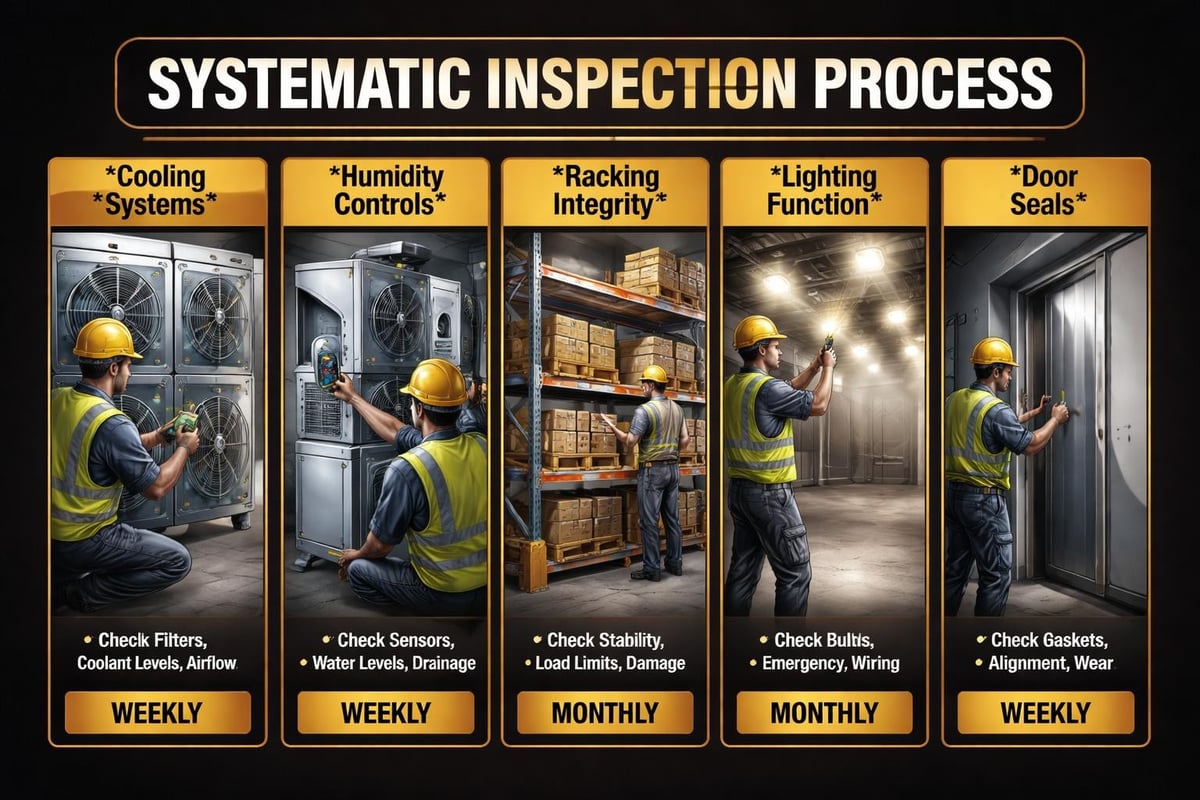
Successful local wine cellar maintenance follows a structured calendar that anticipates needs rather than reacting to failures. We've developed protocols based on thousands of service calls across Texas installations.
Bi quarterly Service Visits
Every three months, professional technicians should perform comprehensive evaluations:
Climate system diagnostics including temperature mapping and humidity logging
Cooling unit service with coil cleaning, refrigerant check, and component testing
Seal and insulation inspection around doors, windows, and penetrations
Racking stability assessment verifying weight capacity and mounting security
Lighting system review checking for heat generation and proper function
General cleaning of surfaces, floors, and ventilation areas
These visits typically take 90-120 minutes for residential cellars and longer for commercial installations. The investment proves minimal compared to replacing a failed cooling system or losing irreplaceable wine.
Annual Deep Maintenance
Once yearly, more intensive maintenance addresses components that degrade slowly. This includes testing backup power systems, calibrating sensors, evaluating structural integrity, and updating documentation of your collection and systems.
Understanding the dos and don'ts of wine cellar maintenance helps you know what to expect during professional service calls and what you can safely handle yourself between visits.
Environmental Monitoring and Data Logging
Modern luxury cellars incorporate sophisticated monitoring systems that track conditions continuously. Local wine cellar maintenance now includes managing these digital tools effectively.
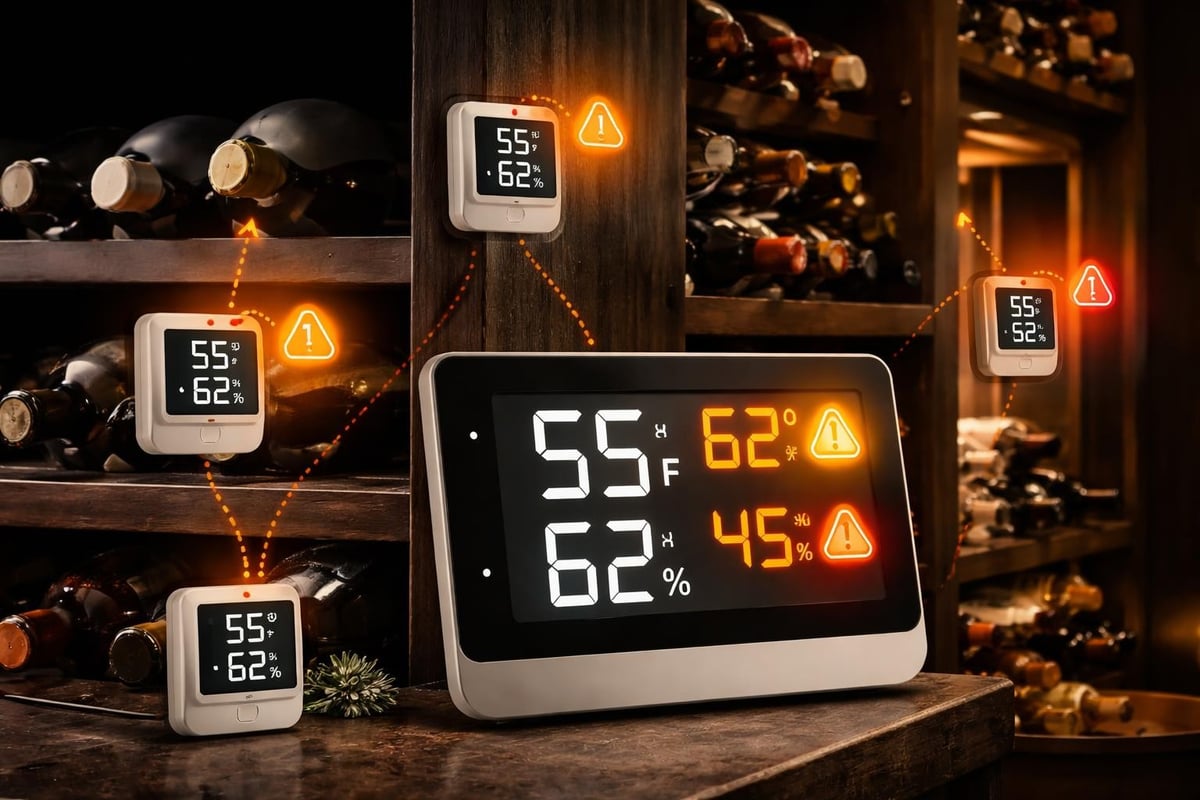
Remote monitoring systems alert you to temperature spikes, humidity excursions, or power failures immediately. We install cellular-connected sensors that don't depend on your home WiFi, ensuring uninterrupted protection even during internet outages.
Data logging reveals patterns invisible during single inspections. A cooling unit that struggles to maintain temperature on hot afternoons may need capacity upgrades before it fails completely. Monthly reports show you exactly how your investment performs.
Alarm System Integration
Sophisticated cellars include:
Temperature threshold alarms (triggered above 62°F or below 52°F)
Humidity alerts (activated outside 55-75% range)
Power failure notifications
Door ajar warnings
Equipment malfunction detection
We program these systems during installation and verify their function during each maintenance visit. Many clients integrate cellar monitoring with home automation systems, receiving alerts on their smartphones regardless of location.
Lighting, Electrical, and Safety Considerations
Wine cellars require specialized lighting that provides visibility without generating damaging heat or UV radiation. Local wine cellar maintenance includes evaluating these critical but often overlooked systems.
LED lighting systems have revolutionized wine cellar illumination. These fixtures produce minimal heat, consume little energy, and last for decades. However, they still require periodic inspection for proper function, dimming capability, and secure mounting.
We verify that lighting controls work correctly and that automated timers prevent lights from staying on unnecessarily. Extended light exposure, even from appropriate LED sources, can gradually impact wine quality. The best practices for wine storage emphasize minimizing light exposure alongside climate control.
Electrical System Integrity
Your cellar's electrical infrastructure powers critical systems. Annual inspection should include:
Circuit capacity verification for cooling equipment
GFCI outlet testing in moisture-prone areas
Backup power system functionality
Wiring inspection for damage or deterioration
Control panel assessment and calibration
Electrical failures often cascade. A tripped breaker may go unnoticed for hours, allowing temperature to rise dangerously. Redundant systems and monitoring prevent these scenarios.
Handling Common Maintenance Challenges
Even meticulously maintained cellars face occasional issues. Recognizing problems early and addressing them professionally prevents minor concerns from becoming major crises.
Temperature Fluctuation Troubleshooting
When temperature varies beyond acceptable ranges, systematic diagnosis identifies causes:
Check cooling unit operation for unusual sounds, ice buildup, or cycling frequency
Inspect door seals with the dollar bill test (seal should grip firmly)
Evaluate external heat sources including nearby equipment or sun exposure
Assess cellar usage patterns that might explain temporary fluctuations
Review recent changes in adjacent spaces or home systems
Professional local wine cellar maintenance technicians carry diagnostic tools that pinpoint issues quickly. What seems like a mysterious temperature problem often traces to a simple cause like a degraded seal or obstructed air return.
Humidity Issues and Solutions
Both excessive and insufficient humidity require prompt attention. Maintaining optimal humidity protects corks while preventing mold growth on labels, wood, or walls.
Symptom | Likely Cause | Professional Solution |
|---|---|---|
Consistently low humidity (<55%) | Inadequate humidification, air leakage | Install larger humidifier, seal penetrations |
Consistently high humidity (>75%) | Poor ventilation, exterior moisture | Enhance vapor barriers, adjust dehumidification |
Fluctuating humidity | Seasonal changes, door usage | Recalibrate controls, optimize air circulation |
Condensation on surfaces | Cold spots, inadequate insulation | Thermal imaging, targeted insulation upgrades |
We often recommend installing proper vapor barriers during construction, but retrofitting existing cellars requires specialized techniques that preservation-focused contractors understand.
Professional vs. DIY Maintenance Tasks
Understanding what you can handle yourself versus what requires professional expertise ensures effective local wine cellar maintenance without risking your investment.
Tasks Suitable for Owners
Between professional service visits, you can safely:
Monitor daily temperatures using installed thermometers or apps
Record humidity levels and note significant changes
Dust accessible surfaces with appropriate cleaning products
Organize bottles following proper handling techniques
Check door function ensuring smooth operation and secure closure
Clean glass surfaces with approved cleaners
These simple actions keep you connected to your cellar's condition. Expert advice on home wine cellar maintenance emphasizes regular observation as your first line of defense against problems.
Professional-Only Maintenance
Certain tasks demand specialized knowledge and tools:
Refrigerant system service and refrigerant handling
Electrical system repairs and modifications
Climate control calibration and programming
Structural assessment and modifications
Vapor barrier evaluation and repair
Custom racking adjustments or expansions
Attempting these tasks without proper training risks damaging expensive equipment, voiding warranties, or creating unsafe conditions. The turnkey services we provide include comprehensive maintenance programs that handle all technical aspects professionally.
Regional Considerations for Texas Wine Cellars
Texas presents unique challenges for local wine cellar maintenance that demand region-specific strategies. Our climate extremes, building codes, and construction methods require adaptive approaches.
Heat Load Management
Summer temperatures regularly exceed 100°F across much of Texas. Cellars located on exterior walls, in attics, or in spaces adjacent to garages face extraordinary heat loads. Your cooling system works hardest during these months, making preventive maintenance before summer essential.
We schedule intensive service calls in March and April, ensuring systems operate at peak efficiency before the brutal heat arrives. This proactive timing prevents mid-summer failures when replacement parts take longer to obtain and emergency service costs escalate.
Humidity Variability Across Texas Regions
Houston area cellars face high ambient humidity that can overwhelm basic vapor barriers. Cellars in The Woodlands, Sugar Land, and Memorial Villages require robust moisture control systems. Our Houston-area installations incorporate enhanced dehumidification from the design phase.
Dallas region cellars experience more dramatic humidity swings between seasons. Projects in Highland Park, Southlake, and Frisco benefit from adaptive climate systems that transition smoothly between humidification and dehumidification modes.
Austin cellars fall somewhere between these extremes but face unique challenges from limestone foundations and varied topography. Understanding these regional nuances makes local wine cellar maintenance more effective than generic approaches.
Documentation and Record Keeping
Professional maintenance generates valuable data that informs future decisions and protects your investment. Comprehensive records provide multiple benefits for serious collectors.
Maintenance Logs and Service History
We maintain detailed documentation of every service visit including:
Date, time, and duration of service
Temperature and humidity readings at multiple locations
Specific maintenance tasks performed
Parts replaced or serviced
Observations about equipment condition
Recommendations for future attention
Photographic documentation of conditions
This history proves invaluable when troubleshooting intermittent problems or evaluating system performance over time. It also transfers to new owners if you sell your property, demonstrating the cellar's professional care.
Collection Inventory Integration
Some clients integrate maintenance records with collection management software. Knowing exactly when climate conditions varied helps explain bottle variation or identify potentially compromised vintages. This level of documentation elevates your cellar from storage space to professionally managed wine repository.
Seasonal Maintenance Strategies
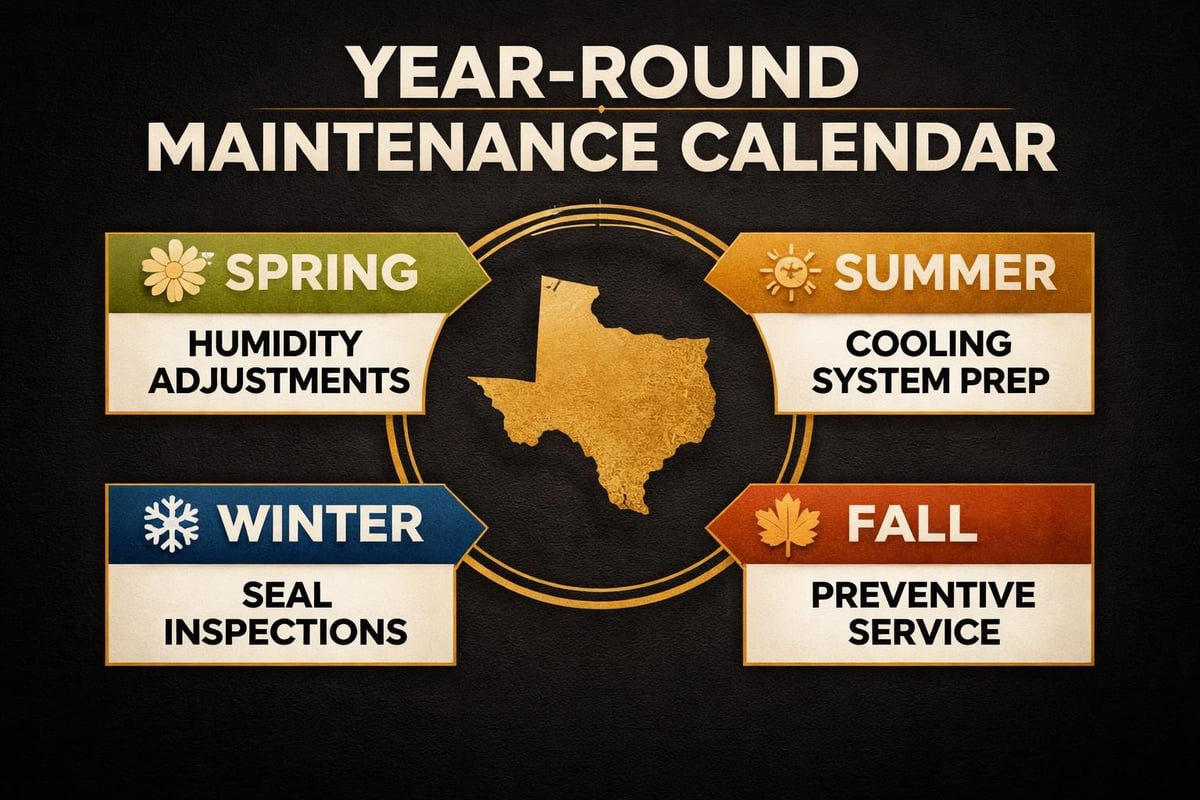
Local wine cellar maintenance adapts to Texas seasons, anticipating challenges before they impact your collection. Each season brings specific focus areas that proactive service addresses.
Spring Preparation
As temperatures begin rising, we focus on:
Deep cleaning cooling unit components
Verifying refrigerant charge and system capacity
Testing controls under increasing heat loads
Inspecting seals that may have contracted during winter
Calibrating humidity systems for higher external moisture
Spring maintenance prepares your cellar for the demanding summer months ahead. This timing also allows scheduling flexibility before vacation season when access might be limited.
Fall Optimization
Cooler weather provides opportunities for:
Equipment upgrades or replacements without climate stress
Structural improvements that require temporary system shutdown
Seal replacement or enhancement before winter drying
System calibration for lower cooling demands
Preventive repairs identified during summer operation
Many collectors schedule major projects during fall when moderate temperatures provide margin for error and extended timelines.
Emergency Response and Backup Systems
Despite excellent maintenance, emergencies occasionally occur. Local wine cellar maintenance includes preparing for worst-case scenarios through redundant systems and rapid-response protocols.
Backup cooling capacity might include portable units kept on standby or service agreements guaranteeing four-hour response times. For ultra-premium collections, some clients install dual cooling systems with automatic failover.
Power backup systems range from simple UPS units that maintain monitoring during brief outages to whole-cellar generators that preserve climate control during extended power loss. Texas weather creates real risks of multi-day outages during severe storms.
Emergency contact protocols ensure you reach qualified technicians immediately when problems arise. Our clients receive direct phone numbers and guaranteed response commitments that reflect the value of their collections. The learning resources we provide include emergency procedures specific to your installation.
Long-Term Value Protection
Viewing local wine cellar maintenance as investment protection rather than operational expense changes your perspective. Professional care preserves both collection value and architectural investment simultaneously.
A well-maintained cellar adds significant value to luxury properties. Prospective buyers recognize the difference between a neglected space and one with documented professional care. Service records, system warranties, and proven performance history become selling points.
Collection insurance often requires proof of proper climate control and maintenance. Carriers may reduce premiums or expand coverage when you demonstrate consistent professional care. Some policies specifically require quarterly inspections by qualified technicians.
The wines themselves appreciate most dramatically when storage conditions remain flawless. A 1990 Bordeaux stored at perfect temperature and humidity for 36 years reaches its peak. That same bottle exposed to temperature swings or dry conditions becomes undrinkable. Professional maintenance protects investments worth thousands per bottle.
Material-Specific Care Protocols
Different cellar materials require specialized maintenance approaches. Understanding these distinctions ensures your local wine cellar maintenance preserves both function and beauty.
Custom Millwork and Cabinetry
High-end cellars feature custom racking crafted from premium hardwoods, exotic veneers, or specialty finishes. These installations deserve care beyond standard furniture maintenance:
Annual conditioning with appropriate wood treatments that don't off-gas
Hardware inspection ensuring drawer slides, hinges, and mounting brackets remain secure
Finish assessment identifying areas requiring touch-up or refinishing
Joint inspection verifying that humidity cycling hasn't loosened connections
The custom designs we create become more beautiful over time when properly maintained, developing the rich patina that marks quality craftsmanship.
Metal and Glass Features
Contemporary cellars increasingly incorporate metal accents and glass elements that demand specific care:
Stainless steel requires cleaning with grain-directional technique using pH-neutral products
Powder-coated finishes need gentle cleaning to preserve color and prevent chipping
Glass panels benefit from professional cleaning that eliminates streaking and spotting
Metal racking systems require corrosion inspection, especially in high-humidity environments
These materials resist moisture better than wood but show dirt and fingerprints more readily. Regular professional cleaning maintains the pristine appearance that defines luxury cellars.
Integration with Smart Home Systems
Modern luxury homes incorporate wine cellars into broader automation systems. Local wine cellar maintenance now includes managing these digital integrations effectively.
Climate monitoring integration allows you to view cellar conditions alongside other home systems through unified interfaces. We ensure these connections remain secure and functional during maintenance visits.
Access control systems that log door openings help identify usage patterns that might explain temperature fluctuations. This data proves especially valuable for commercial installations in restaurants and hotels where multiple staff access the cellar.
Voice control, scheduled lighting, and automated inventory management add convenience while requiring periodic verification of proper function. As these systems update, compatibility maintenance becomes essential.
Protecting your wine collection and the architectural investment housing it requires consistent professional attention tailored to your specific installation and regional climate. Whether your cellar graces a private estate or anchors a commercial venue, systematic maintenance preserves both function and beauty for decades. Prestige Wine Cellars brings deep expertise in luxury cellar design, construction, and ongoing care to clients throughout Texas and beyond, offering comprehensive maintenance programs that ensure your investment continues delivering the performance and aesthetic excellence you demand.
Your Dream Wine Cellar Starts Here
Let our design team craft a cellar that matches your taste, space, and your collection — built for beauty, function, and prestige.

Email us at
Serving Austin, Dallas–Fort Worth, Houston & San Antonio