
Texas Custom Wine Racks: Design & Materials
Discover how custom wine racks transform storage into art. Expert guide to materials, styles, and design for luxury cellars in 2026.
The foundation of every exceptional wine cellar lies in its storage system. While off-the-shelf solutions serve basic needs, custom wine racks transform ordinary storage into an architectural statement that protects your investment while elevating your space. Whether you're building a private estate cellar in River Oaks or designing a statement wine wall for a boutique hotel, understanding the nuances of custom racking systems ensures your collection receives the showcase it deserves. The right design harmonizes with your interior aesthetic, accommodates your specific bottle dimensions, and creates an experience that speaks to your taste and sophistication.
Material Selection: The Foundation of Lasting Quality
Choosing the right material for your custom wine racks determines not only the visual impact but also the longevity and performance of your storage system. Each material brings distinct characteristics that affect everything from humidity resistance to aging patina.
Wood Species and Their Characteristics
Premium hardwoods remain the gold standard for custom wine racks, offering warmth, versatility, and natural beauty that develops character over time. Mahogany delivers rich reddish-brown tones and exceptional stability in climate-controlled environments. Walnut provides deep chocolate hues with striking grain patterns that create dramatic visual interest. Oak, whether red or white, offers traditional appeal with superior strength and density.
The selection process extends beyond aesthetics. Wood density affects how racking systems perform under load, while grain structure influences finishing options and long-term stability. Craftsmanship in custom wine rack creation involves understanding how each species responds to the controlled environment of a wine cellar.
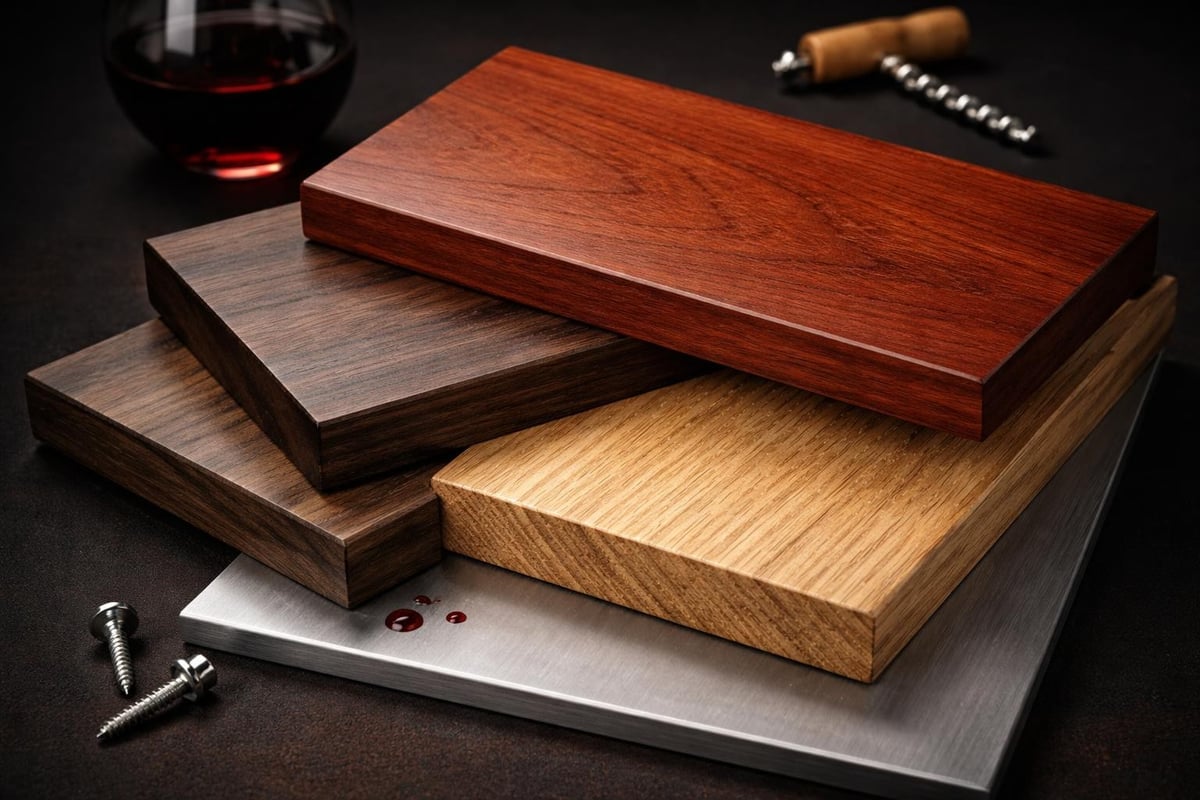
Climate considerations matter significantly:
Mahogany maintains dimensional stability in varying humidity levels
Walnut resists warping and requires minimal maintenance
Oak accepts stains beautifully while providing structural integrity
Cherry darkens gracefully over time, developing rich patina
Metal and Contemporary Alternatives
Metal racking systems have evolved far beyond utilitarian warehouse solutions. Powder-coated steel offers industrial elegance in matte black, brushed nickel, or custom colors that complement modern interiors. Wrought iron provides Old World charm with hand-forged details and architectural presence. Aluminum delivers lightweight strength ideal for glass-enclosed displays and floating installations.
Material | Aesthetic | Maintenance | Price Range | Best Application |
|---|---|---|---|---|
Mahogany | Traditional luxury | Low | $$$$ | Estate cellars, traditional homes |
Walnut | Modern sophistication | Very low | $$$$$ | Contemporary spaces, statement walls |
Powder-coated steel | Industrial chic | Minimal | $$$ | Modern wine walls, commercial displays |
Wrought iron | Old World elegance | Moderate | $$$$ | Mediterranean, rustic designs |
Hybrid wood/metal | Transitional | Low | $$$$ | Versatile applications |
The portfolio of design possibilities demonstrates how material choices create entirely different experiences within the same space parameters.
Configuration Styles: Matching Function to Form
Custom wine racks accommodate far more than standard bottle dimensions. Your configuration must reflect how you collect, what you collect, and how you want to interact with your wine.
Bin Storage vs. Individual Bottle Display
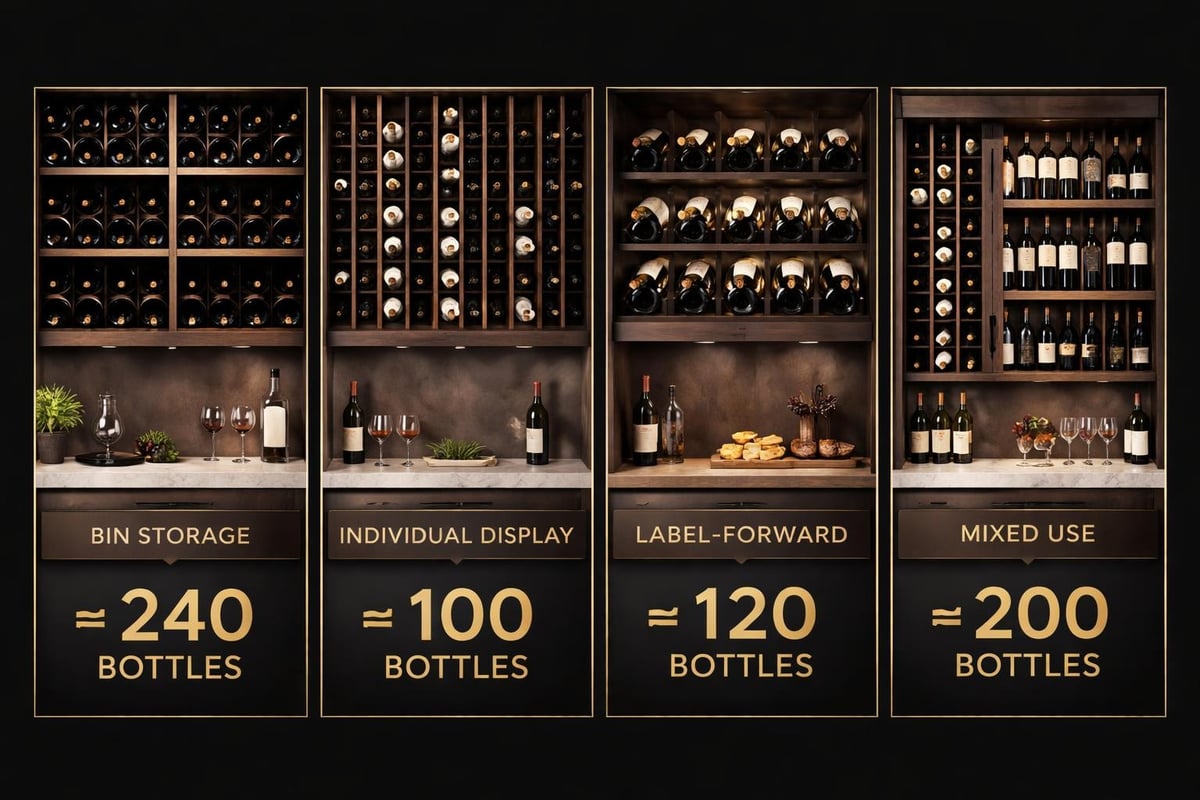
Bin-style racking stores multiple bottles of the same vintage horizontally in diamond-shaped compartments, ideal for serious collectors who purchase by the case. This approach maximizes density while maintaining organization. Individual bottle displays showcase each wine as a distinct element, perfect for eclectic collections or when visual impact takes precedence over volume.
The decision between these approaches often comes down to collecting philosophy. Are you cellaring futures to age? Bin storage provides efficient bulk organization. Do you curate a diverse selection for different occasions? Individual racking lets each bottle shine.
Display Racking and Presentation Features
Modern custom wine racks incorporate presentation elements that transform storage into theater:
LED backlighting highlights bottles and creates ambient illumination
Label-forward displays angle bottles to showcase vintage and vineyard
Tasting ledges integrate counter space for sampling and service
Vertical presentation columns create floor-to-ceiling focal points
Commercial installations particularly benefit from display-oriented designs. A steakhouse wine wall must captivate diners while remaining accessible to staff. Commercial wine cellar projects balance these dual imperatives with thoughtful configuration planning.
Design Integration: Architectural Harmony
Custom wine racks should never feel like afterthoughts inserted into existing spaces. The most successful installations achieve seamless integration with their architectural context.
Matching Interior Design Styles
Your wine storage system exists within a larger design narrative. Traditional interiors call for rich woods, turned posts, crown molding details, and classic proportions. Contemporary spaces demand clean lines, minimal ornamentation, floating elements, and unexpected materials. Transitional designs blend both worlds with simplified traditional forms in modern finishes.
The signature styles available in custom cellar design demonstrate this principle in action. A Tuscan villa aesthetic requires entirely different racking vocabulary than a minimalist loft conversion.
Consider these integration principles:
Scale racking elements to room proportions, not just bottle count
Repeat architectural details from adjacent spaces in your racking design
Use finish selections that complement existing millwork and cabinetry
Incorporate lighting that enhances rather than competes with ambient illumination
Spatial Planning and Accessibility
Thoughtful spatial planning separates adequate storage from exceptional wine cellars. Aisle width must accommodate comfortable browsing without wasted square footage. Standard 36-inch aisles work for residential applications, while commercial settings may require 42-48 inches for staff and guest circulation.
Vertical organization follows logical patterns. Most-accessed wines belong at chest height. Reserve bottles can occupy higher reaches with ladder access. Heavy magnums and larger formats require reinforced lower shelving with appropriate depth.
The relationship between custom wine racks and climate control deserves careful attention. Racking systems must allow proper air circulation while avoiding direct exposure to cooling vents. Dense bin storage requires more robust climate systems than open individual displays.
Capacity Planning: Building for Growth
Most wine collectors underestimate their future needs. A well-designed custom racking system anticipates growth while avoiding the wasteful expense of unused capacity.
Calculating Realistic Requirements
Start with current inventory, then apply realistic growth projections. Active collectors typically expand their holdings 15-20% annually in early years before stabilizing. Casual enthusiasts might grow 5-10% as interest deepens. Serious investors in wine futures require substantially more capacity planning.
Bottle mix matters significantly:
Standard Bordeaux: 3.5 bottles per square foot of racking
Mixed formats: 2.5-3 bottles per square foot average
Champagne-focused: 4+ bottles per square foot
Magnum collectors: 1.5-2 bottles per square foot
Don't forget specialized storage. Case storage for futures awaiting maturity needs accessible bin space. Display reserves for current favorites deserve prime positioning. Archival storage for investment-grade bottles may require locked compartments or separate security measures.
Flexibility and Adaptability
The most successful custom wine cellar designs incorporate flexibility for evolving needs. Modular components allow reconfiguration as collecting priorities shift. Adjustable shelving accommodates format changes. Expandable systems grow with collections without requiring complete reinstallation.
Capacity | Square Footage | Typical Configuration | Investment Range |
|---|---|---|---|
500 bottles | 50-60 sq ft | Single wall, mixed storage | $15,000-$25,000 |
1,000 bottles | 90-110 sq ft | Two walls or walk-in | $30,000-$50,000 |
2,500 bottles | 200-250 sq ft | Full room, multiple zones | $75,000-$125,000 |
5,000+ bottles | 400+ sq ft | Estate cellar, display features | $150,000+ |
These figures reflect complete installations including climate control, but racking systems typically represent 10-25% of total project investment.
Craftsmanship Details: The Difference Quality Makes
The gap between adequate and exceptional custom wine racks lives in details most people never consciously notice but always subconsciously appreciate.
Joinery and Construction Methods
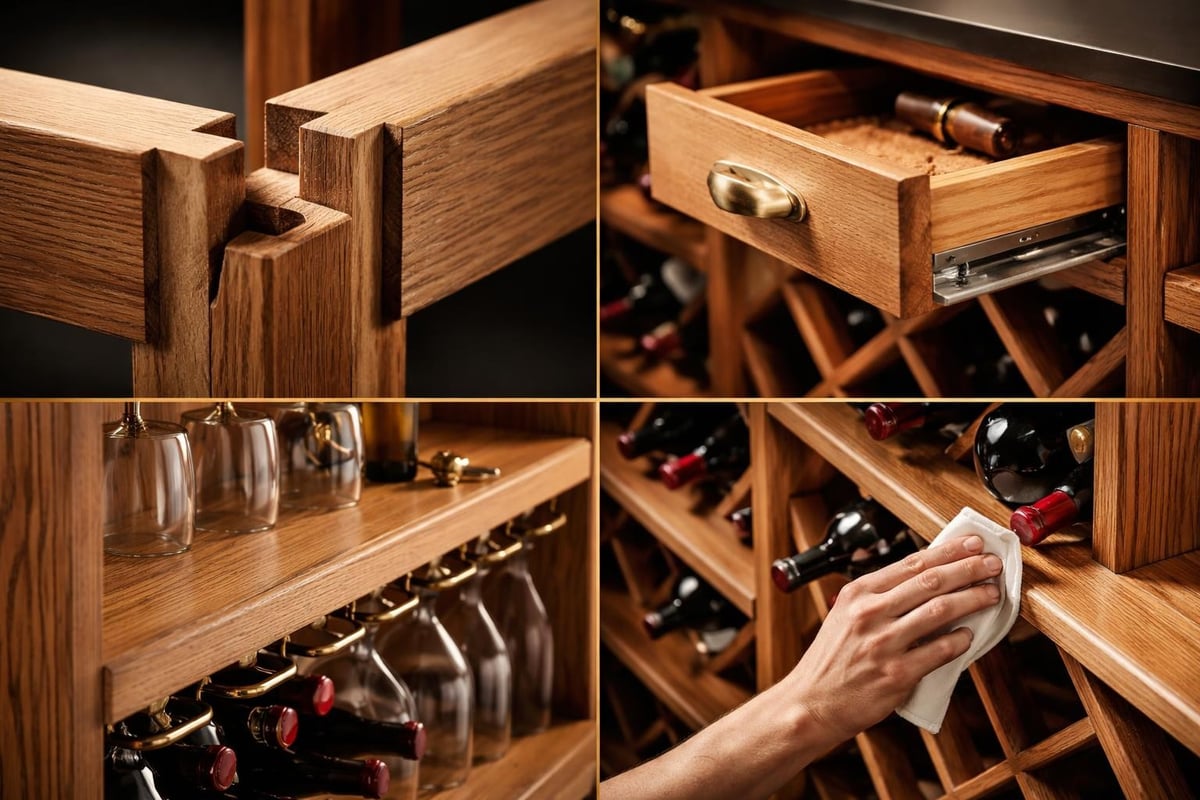
Premium custom wine racks employ traditional woodworking joinery rather than relying solely on hardware. Mortise-and-tenon joints provide strength that improves with age. Dovetail construction in drawer units demonstrates commitment to craft. Hand-fitted connections ensure each component aligns perfectly without gaps or misalignment.
The finish quality reveals construction standards beneath. Hand-rubbed oil finishes enhance natural wood character while providing protection. Multiple-coat lacquers deliver glass-smooth surfaces with depth and clarity. Wire-brushed textures add tactile interest to contemporary designs.
Manufacturing approaches vary significantly across the industry, from fully automated production to artisan workshops. Understanding these differences helps you evaluate proposals and understand pricing variations.
Hardware and Functional Elements
Quality hardware elevates functionality while contributing to aesthetic cohesion. Soft-close drawer mechanisms protect bottles from vibration during access. Concealed European hinges on cabinet doors maintain clean lines while ensuring smooth operation. LED strip lighting with dimming controls creates ambiance without heat that could affect wine.
Don't overlook practical details. Bottle stops prevent accidental roll-out on individual displays. Label protection strips along shelf edges prevent damage during insertion and removal. Humidity-resistant finishes protect wood surfaces in properly controlled environments.
Commercial Applications: Beyond Residential Storage
Custom wine racks serve dramatically different purposes in commercial settings, where they must perform as both functional inventory systems and marketing tools.
Restaurant and Hospitality Design
Restaurant wine walls face unique demands. They must showcase inventory to inspire guest selections while remaining accessible to staff during service. Visual merchandising principles apply, with premium bottles displayed prominently and backup inventory stored efficiently behind the scenes.
Climate control becomes more complex in public-facing installations. Glass-enclosed wine walls require robust cooling systems to counteract heat from dining room exposure. Turnkey design-build approaches coordinate these systems seamlessly with architectural elements.
Commercial racking priorities:
Accessibility during service without disrupting guest experience
Visual impact that reinforces brand positioning
Inventory rotation systems for optimal stock management
Security features protecting high-value bottles
Maintenance accessibility for cleaning and system service
Retail and Tasting Room Installations
Wine retailers and tasting rooms use custom wine racks to create immersive brand experiences. Category organization helps customers navigate selections, while featured displays highlight premium offerings and current promotions. Hybrid storage combines high-density back stock with customer-facing presentation areas.
The inspiration possibilities demonstrated across different installation types show how custom racking adapts to varied commercial needs while maintaining design integrity.
Investment Considerations: Value Beyond Price
Custom wine racks represent significant investment, but understanding value propositions helps frame decisions appropriately.
Cost Factors and Budget Allocation
Several variables drive custom racking investment. Material selection affects base costs dramatically, with exotic woods commanding premium pricing. Complexity of design increases engineering and fabrication time. Installation difficulty varies based on site conditions and access constraints. Integration requirements with climate control, lighting, and structural elements add coordination costs.
Budget allocation typically follows these percentages in complete cellar projects:
Climate control systems: 25-30%
Custom racking: 10-25%
Architectural finishes: 15-20%
Lighting and electrical: 8-12%
Project management and design: 20-30%
Value manifests in multiple dimensions:
Protection of wine investment through proper storage conditions
Enhanced property value from luxury amenity addition
Personal enjoyment of curated collection display
Entertainment value as conversation piece and hosting feature
Long-term durability avoiding replacement costs
Return on Investment Perspectives
For commercial applications, custom wine racks directly impact revenue. An impressive wine wall increases average check sizes by encouraging bottle sales. Proper storage protects inventory value. Visual merchandising drives discovery and trial of higher-margin selections.
Residential installations contribute to property value, though return on investment varies by market. In luxury markets across Texas, from Houston to Dallas, well-executed wine cellars appeal to discerning buyers and distinguish properties in competitive markets.
Maintenance and Longevity: Protecting Your Investment
Custom wine racks require minimal maintenance but benefit from periodic attention that preserves beauty and function.
Routine Care Protocols
Wood racking systems thrive in properly climate-controlled environments, typically requiring only gentle dusting and occasional cleaning. Microfiber cloths remove surface dust without scratching finishes. Slightly dampened cleaning addresses any spills or residue, followed immediately by dry buffing. Avoid harsh chemicals that can damage finishes or leave residues affecting wine.
Metal components need even less attention. Powder-coated finishes resist corrosion and maintain appearance with simple wiping. Stainless steel elements benefit from occasional polishing with appropriate cleaners. Check hardware periodically to ensure drawer glides and hinges operate smoothly.
Seasonal inspection points:
Verify all bottles remain secure in their positions
Check wood surfaces for any moisture damage or finish degradation
Test lighting systems and replace any failed LED elements
Examine drawer mechanisms and door hinges for smooth operation
Ensure adequate clearance around climate control vents
Professional Maintenance Services
Annual professional maintenance visits address issues beyond routine care. Technicians inspect structural integrity, adjust hardware, refresh finishes as needed, and verify proper integration with climate systems. Wine cellar maintenance programs provide peace of mind while extending system longevity.
Professional attention becomes particularly important after any climate control issues. Humidity fluctuations can affect wood moisture content, potentially requiring adjustment or refinishing. Catching these concerns early prevents minor issues from becoming major repairs.
Technology Integration: Modern Conveniences
Today's custom wine racks seamlessly incorporate technology that enhances both functionality and enjoyment.
Inventory Management Systems
Digital inventory platforms track your collection through smartphone apps, logging purchase dates, drinking windows, storage locations, and tasting notes. Some systems integrate QR codes or RFID tags on individual bottles for instant access to detailed information. Cloud synchronization keeps records accessible across devices.
Physical racking design should accommodate these systems. Consistent grid patterns simplify location coding. Clear sight lines allow easy scanning with mobile devices. Integrated tablets or touchscreens can display collection data without requiring separate devices.
Smart Lighting and Climate Monitoring
LED lighting systems with smart controls adjust color temperature and intensity to suit different occasions. Motion sensors illuminate sections as you browse without switches. Scheduled programming can create ambient lighting during entertaining while conserving energy during unoccupied periods.
Climate monitoring technology provides real-time alerts about temperature or humidity variations. Sensors communicate with smartphone apps, allowing remote verification of cellar conditions. Integration with home automation systems creates unified control of your wine storage environment.
Regional Considerations: Texas Climate Challenges
Texas presents unique challenges for wine storage that inform custom wine rack design decisions.
Heat and Humidity Management
Texas summers test even robust climate control systems. Custom wine racks must work in concert with cooling equipment rather than against it. Open racking designs promote air circulation, reducing strain on climate systems. Strategic placement avoids blocking vents or creating dead zones where conditioned air can't reach.
Material selection considers regional conditions. Humidity-resistant finishes protect wood from moisture-related issues during humid Gulf Coast summers. Sealed construction prevents ambient humidity from affecting internal cellar conditions. Thermal mass considerations help stabilize temperature fluctuations.
Local Architectural Styles
Custom wine racks should harmonize with predominant regional architectural traditions. Texas Hill Country aesthetics often incorporate rustic wood with wrought iron accents. Contemporary Austin designs embrace clean lines and mixed materials. Houston traditional estates lean toward classic wood racking with refined details.
Understanding these regional preferences helps create storage solutions that feel indigenous rather than imported. The best custom wine racks appear as though they've always belonged in their spaces.
Custom wine racks represent the intersection of craftsmanship, functionality, and personal expression, transforming wine storage from necessity into art. Whether you're planning an intimate residential cellar or a dramatic commercial installation, the right approach balances aesthetic vision with practical requirements while anticipating future needs. Prestige Wine Cellars brings decades of expertise to every project, crafting bespoke storage solutions that protect your investment while creating spaces that inspire and delight across Texas and beyond.
Your Dream Wine Cellar Starts Here
Let our design team craft a cellar that matches your taste, space, and your collection — built for beauty, function, and prestige.

Email us at
Serving Austin, Dallas–Fort Worth, Houston & San Antonio