
Creating a Wine Cellar: The Best Texas Guide
Discover everything you need to know about creating a wine cellar, from climate control to design. Expert tips for building luxury wine storage.
Creating a wine cellar represents far more than adding storage to your home. It's an investment in preservation, a celebration of craftsmanship, and a statement about how you value the extraordinary. Whether you're a seasoned collector with hundreds of bottles or someone just beginning to appreciate fine wine, the process of designing and building a proper wine cellar requires thoughtful planning, expert execution, and attention to critical environmental factors. The difference between a simple storage room and a true wine cellar lies in understanding how temperature, humidity, light, and vibration affect your collection over time.
Understanding the Essential Elements of Wine Storage
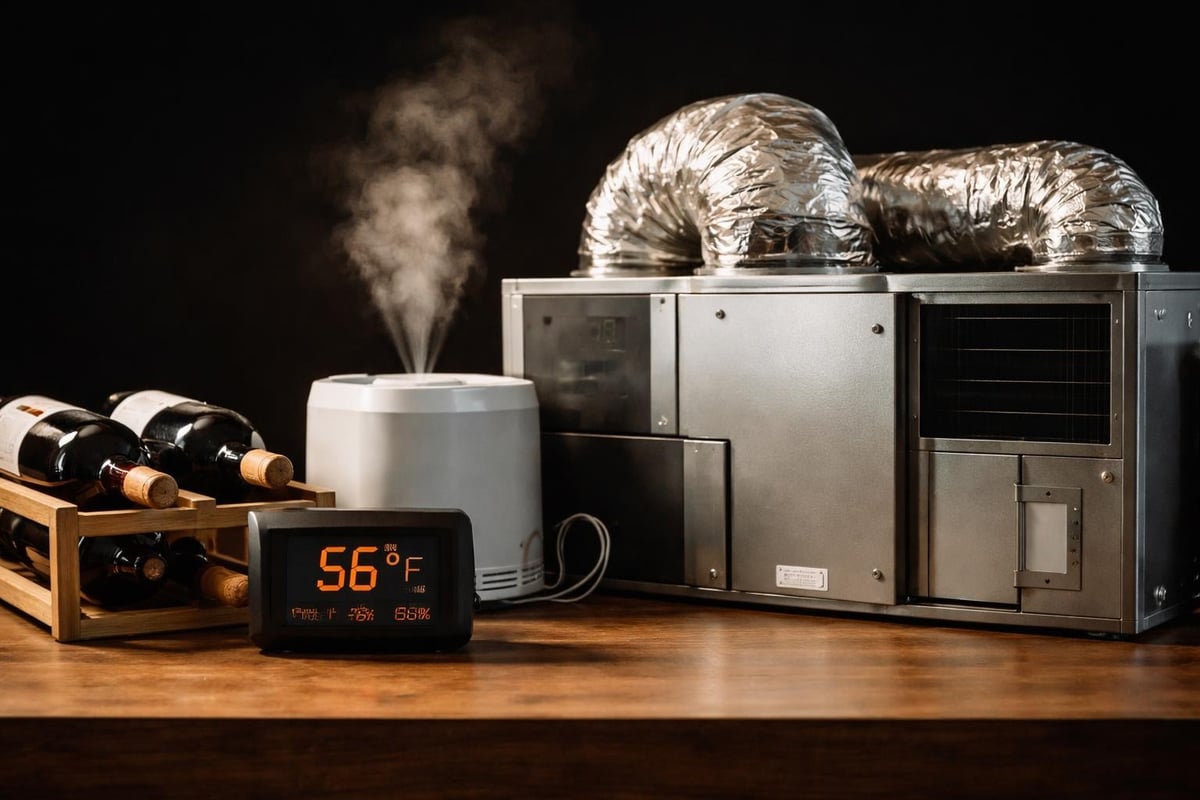
Temperature control stands as the most critical factor when creating a wine cellar. Wine demands consistency. The ideal storage temperature hovers between 55°F and 58°F, with absolutely minimal fluctuation throughout the year.
Even small variations can accelerate aging or damage delicate flavor compounds that took years to develop in the bottle. Professional-grade cooling systems aren't optional luxuries; they're foundational requirements. Unlike standard HVAC systems designed for comfort, specialized wine cellar cooling units maintain precise conditions regardless of external weather patterns.
Humidity and Air Quality Considerations
Relative humidity between 60% and 70% protects corks from drying out while preventing mold growth. Too dry, and oxygen seeps into bottles, ruining wine. Too humid, and labels deteriorate while mold threatens both bottles and structure.
Modern climate control systems address both challenges simultaneously:
Active humidification during dry winter months
Dehumidification in humid summer conditions
Air circulation without creating harmful vibration
Filtration systems removing odors and contaminants
The relationship between temperature and humidity requires constant monitoring. A quality system adjusts both parameters automatically, ensuring your collection remains protected without daily intervention.
Location and Space Planning Fundamentals
Choosing where to build your wine cellar dramatically impacts both construction costs and long-term performance. Below-grade locations offer natural advantages. Basements maintain more stable temperatures year-round, reducing the workload on cooling systems and lowering energy consumption.
Above-grade locations require more robust climate control but open creative possibilities. Converting underutilized spaces like spare closets, beneath staircases, or within great rooms creates stunning focal points.
Location Type | Advantages | Challenges |
|---|---|---|
Basement | Natural temperature stability, lower cooling costs | Moisture management, access considerations |
Main Floor | Visual impact, convenient access | Higher cooling requirements, space competition |
Under Stairs | Space efficiency, unique design | Limited capacity, structural constraints |
Climate-Controlled Room | Custom environment, expansion flexibility | Higher construction costs, dedicated square footage |
Calculating Your Storage Needs
Before breaking ground, assess your collection's current size and growth trajectory. Most collectors underestimate their future needs by 30% to 50%. Planning for expansion prevents costly renovations later.
Standard bottle capacity guidelines:
100 bottles: Small dedicated space, 25-40 square feet
500 bottles: Serious collector, 75-100 square feet
1,000+ bottles: Estate-level storage, 150+ square feet
Commercial installations: Custom calculations based on inventory turnover
Factor in accessibility. Will you retrieve bottles weekly, monthly, or seasonally? Daily access demands different layout strategies than long-term aging storage. The design phase addresses these workflow considerations before construction begins.
Design Aesthetics That Enhance Function
Creating a wine cellar involves balancing preservation requirements with visual storytelling. Your cellar should reflect personal style while respecting wine's environmental needs.
Material selection extends beyond aesthetics. Wood species affect humidity management, thermal properties, and longevity. Mahogany, redwood, and certain oak varieties resist moisture damage while adding warmth. Metal racking systems offer contemporary elegance with superior stability.
Glass enclosures have transformed modern wine cellar design. Floor-to-ceiling glass walls showcase collections as living art while maintaining environmental separation from surrounding spaces. These installations require specialized engineering to manage condensation and thermal transfer without compromising wine safety.
Racking Systems and Organization Strategies
Strategic racking maximizes capacity while ensuring easy access and proper bottle orientation:
Individual bottle storage: Premium flexibility, higher cost per bottle
Bin storage: Economical bulk storage for case quantities
Display rows: Feature bottles at eye level for showcasing special vintages
Ladder systems: Vertical capacity in rooms with higher ceilings
Organization methods vary by collecting style. Some enthusiasts prefer regional groupings (Burgundy, Bordeaux, California). Others organize by varietal or vintage year. Still others incorporate sophisticated inventory management systems with digital cataloging.
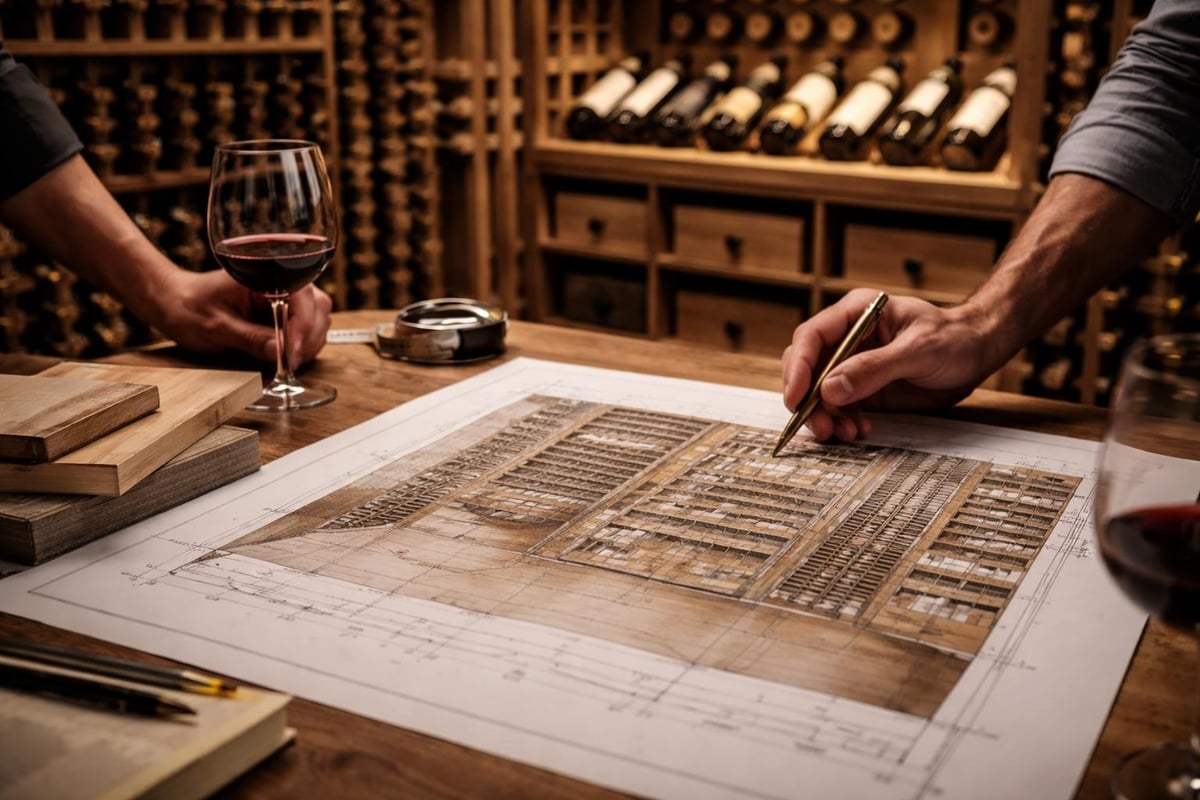
Consider bottle positioning carefully. Most wines age best stored horizontally, keeping corks moist. Sparkling wines tolerate vertical storage due to internal pressure. Your racking system should accommodate both orientations.
Climate Control Systems and Technology Integration
Modern wine cellars employ sophisticated technology far beyond simple refrigeration. The engineering behind creating a wine cellar determines whether your investment protects or endangers your collection.
Ducted versus ductless systems represent the primary decision point. Ducted systems place the condenser remotely, reducing noise and heat in the cellar itself. Ductless self-contained units offer simpler installation but generate more ambient noise.
System Type | Best Applications | Key Benefits | Considerations |
|---|---|---|---|
Through-wall | Small to medium cellars | Cost-effective, straightforward installation | Visible unit, moderate noise |
Ducted split | Large residential cellars | Quiet operation, remote placement | Higher installation complexity |
Fully ducted | Commercial applications | Complete customization | Most expensive option |
WhisperKOOL | Compact spaces | Quiet operation, efficiency | Capacity limitations |
Backup Systems and Monitoring
Professional installations include redundancy planning. Power outages, equipment failures, or extreme weather events threaten collections worth thousands or even millions of dollars.
Essential safeguards include:
Temperature alarms with remote notifications
Backup cooling capacity for critical collections
Generator connections for power continuity
Smart monitoring systems accessible via smartphone
Some collectors invest in comprehensive maintenance programs that include regular inspections, filter replacements, and system optimization. These services catch minor issues before they become expensive disasters.
Insulation and Vapor Barrier Requirements
Creating a wine cellar demands construction standards exceeding typical building codes. The goal isn't just temperature control but creating a completely sealed environment resistant to external fluctuations.
Insulation values should reach R-19 in walls and R-30 or higher in ceilings. Closed-cell spray foam offers superior performance over traditional fiberglass batts, eliminating air gaps that compromise thermal barriers.
Vapor barriers deserve equal attention. Moisture migrates toward cooler temperatures. Without proper barriers, humidity infiltrates from warmer adjacent spaces, overworking climate systems and encouraging mold growth. Professional installations place vapor barriers on the warm side of insulation, sealed meticulously at every seam and penetration.
Door Selection and Sealing
Entry doors represent the weakest point in thermal envelopes. Standard interior doors leak air catastrophically. Wine cellar doors require:
Solid core construction: Minimum 1.75-inch thickness
Weather stripping: Complete seals on all four sides
Automatic door bottoms: Compression seals when closed
Insulated glass: If incorporating viewing panels
Glass wine cellar doors add dramatic visual impact but demand specialized engineering. Triple-pane insulated glass with low-E coatings prevents thermal transfer while maintaining transparency.
Lighting Design for Preservation and Beauty
Light represents a double-edged sword when creating a wine cellar. You need illumination to navigate and appreciate your collection, yet ultraviolet rays damage wine over time, causing premature aging and off flavors.
LED technology solves this dilemma elegantly. Modern LED systems emit virtually no UV radiation while consuming minimal energy and generating negligible heat. Color temperature matters-warm white (2700K-3000K) creates inviting ambiance without harshness.
Lighting placement strategies include:
Accent lighting highlighting architectural features
Shelf-integrated strips illuminating labels
Overhead ambient lighting for general visibility
Display lighting drawing attention to prized bottles
Dimming capabilities add versatility. Full brightness assists inventory management and bottle selection. Lower levels create atmosphere for tastings or entertaining. Motion sensors conserve energy when the cellar sits unoccupied.
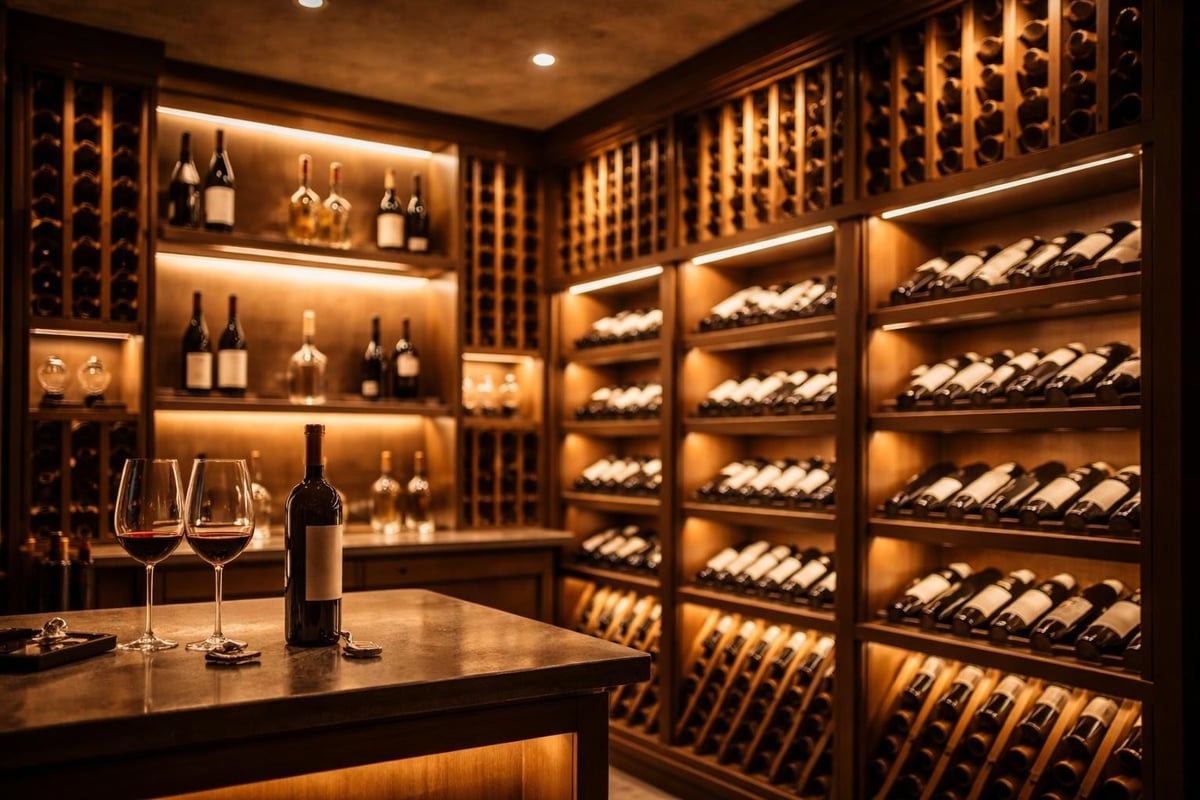
Construction Process and Timeline Expectations
The journey from concept to completion follows a structured path. Understanding this process helps set realistic expectations and prevents costly mistakes.
Phase One: Design and Engineering (1-2 weeks)
Initial consultations establish vision, budget, and technical requirements. Designers create detailed plans addressing spatial layout, climate systems, materials, and aesthetic elements. Reviewing portfolio examples helps crystallize style preferences.
Engineering calculations determine cooling loads, insulation requirements, and structural considerations. Every project requires custom calculations accounting for room dimensions, climate zone, surrounding spaces, and wine capacity.
Phase Two: Permits and Preparation (1-3 weeks)
Securing building permits prevents future complications. Professional contractors handle this bureaucracy, ensuring compliance with local codes. Preparation includes demolition if renovating existing spaces, rough-in work for electrical and refrigeration lines, and coordination with other trades.
Construction and Installation Timeline
Phase Three: Build-Out (1-2 weeks)
Framing establishes the cellar's footprint. Insulation installation follows, with meticulous attention to eliminating thermal bridges. Vapor barriers seal the environment. HVAC systems arrive and connect. This phase determines long-term performance more than any other.
Phase Four: Finishing Details (1-2 weeks)
Racking systems install once environmental construction completes. Doors hang and seal. Flooring finalizes the space-often stone, tile, or hardwood species resistant to humidity. Lighting integrates throughout. Final commissioning tests all systems under load, verifying temperature and humidity stability.
Total timeline typically spans 8-16 weeks from design kickoff to stocking bottles. Complex projects with custom millwork, extensive glass work, or challenging locations may extend longer.
Budget Planning and Investment Considerations
Creating a wine cellar represents substantial investment, but costs vary enormously based on scope, location, materials, and finishes. Understanding budget drivers helps align expectations with financial reality.
Small residential cellars (100-300 bottles) typically start around $15,000-$30,000, including climate control, basic racking, and essential construction. These projects often convert closets or small rooms with straightforward designs.
Mid-sized custom installations (500-1,000 bottles) range from $40,000-$100,000. These incorporate premium materials, sophisticated racking systems, glass enclosures, and turnkey design-build services.
Estate and commercial projects exceed $100,000, sometimes substantially. These showpiece installations feature architectural millwork, museum-quality display systems, commercial-grade cooling redundancy, and bespoke design elements found nowhere else.
Budget Component | Percentage of Total | Variables Affecting Cost |
|---|---|---|
Climate Control | 15-25% | System type, cellar size, ambient conditions |
Racking & Storage | 20-30% | Material choice, capacity, customization |
Construction | 25-35% | Location, insulation needs, structural work |
Design & Engineering | 5-10% | Complexity, custom elements |
Finishes & Details | 15-25% | Materials, lighting, doors, flooring |
Long-Term Operating Costs
Beyond initial construction, factor in ongoing expenses. Energy consumption for climate control typically runs $50-$200 monthly depending on cellar size and local utility rates. Annual maintenance including filter changes, system inspections, and minor adjustments averages $300-$800.
These operating costs pale against the value of properly stored wine. A comprehensive guide on building custom cellars emphasizes that inadequate climate control can destroy more value in a single summer than a decade of utility bills.
Residential Versus Commercial Applications
Creating a wine cellar for private estates differs significantly from restaurant, hotel, or resort installations. Understanding these distinctions ensures appropriate design decisions.
Residential cellars prioritize personal collecting habits, aesthetic integration with home architecture, and convenient access for entertaining. Layout optimization focuses on showcasing favorite regions or vintages. Many homeowners incorporate tasting areas with seating, transforming the cellar into an experience destination rather than mere storage.
Commercial applications emphasize inventory management, staff workflow efficiency, and customer visibility. Restaurant wine programs require high turnover access to popular selections while preserving investment bottles in optimal conditions. Hotel installations often serve dual purposes-functional storage plus dramatic visual impact for guests.
Capacity planning differs dramatically. Residential cellars accommodate personal collections growing over decades. Commercial cellars handle constant inventory rotation, requiring robust organization systems and multiple access points.
Common Mistakes to Avoid
Even well-intentioned projects stumble over predictable pitfalls. Learning from others' missteps saves money and heartache.
Undersizing climate capacity ranks among the most frequent errors. Systems running constantly to maintain temperature fail prematurely and drive energy costs upward. Professional load calculations prevent this problem.
Inadequate insulation creates similar issues. Attempting to control temperature without proper thermal barriers resembles heating a home with windows open. Understanding what makes effective wine storage prevents these fundamental mistakes.
Poor vapor barrier installation allows moisture infiltration, destroying insulation effectiveness and encouraging mold. Even small gaps compromise entire systems.
Additional pitfalls include:
Installing incorrect door types without proper sealing
Selecting inappropriate racking that damages labels or doesn't accommodate bottle sizes
Overlooking expansion capacity in initial design
Choosing aesthetic elements that compromise climate control
Neglecting backup systems and monitoring
Working with experienced professionals who specialize in creating wine cellars eliminates these risks. The comprehensive services offered by specialized firms encompass every detail, ensuring nothing falls through cracks.
Customization Options and Personal Expression
While environmental requirements remain non-negotiable, nearly everything else offers creative latitude. Your cellar should tell your story through thoughtful details.
Architectural style sets the overall tone. Traditional cellars employ rich wood tones, arched entries, and Old World craftsmanship. Modern installations feature clean lines, minimalist racking, and dramatic glass expanses. Transitional designs blend both aesthetics, creating timeless elegance.
Material selections communicate sophistication. Rare wood species, hand-forged metal details, custom stone work, and artisan glass all elevate basic storage into curated environments. These choices also affect material selection considerations during the planning phase.
Display Features and Focal Points
Strategic focal points transform collections into conversation pieces:
Featured bottle displays: Individual lighting highlighting rare or valuable bottles
Tasting bars: Integrated counters for sampling and entertaining
Label-forward presentation: Angled displays showcasing bottle fronts
Vertical vintages: Dedicated sections displaying sequential years
Some collectors incorporate artwork, antique wine tools, or historical artifacts that celebrate wine culture. Others prefer minimalist restraint, letting bottles speak for themselves.
The portfolio of completed projects demonstrates how personal vision translates into unique physical spaces, each reflecting different collecting philosophies and aesthetic preferences.
Regional Considerations for Texas Installations
Creating a wine cellar in Texas presents specific challenges and opportunities. The state's climate extremes demand robust solutions while its architectural diversity encourages creative design.
Summer heat across Texas taxes cooling systems mercilessly. Above-grade installations in Houston, Dallas, or Austin require commercial-grade climate control typically reserved for larger cellars elsewhere. Proper insulation becomes even more critical.
Winter temperature swings, while less severe than summer heat, still stress systems differently than stable climates. Equipment must handle both extremes reliably.
Local Expertise and Service
Working with Texas-based specialists ensures familiarity with regional building codes, climate challenges, and architectural styles prevalent across the state. Local firms provide faster service response for maintenance and repairs-critical when equipment failures threaten valuable collections.
Understanding neighborhood aesthetics helps too. A traditional wine cellar in Westlake might incorporate Hill Country stone and rustic elements. A modern Houston installation could feature industrial chic with glass and steel.
Maintenance and Long-Term Care
The work doesn't end when construction completes. Proper maintenance preserves both your cellar and your collection indefinitely.
Quarterly inspections should verify:
Temperature and humidity remaining within target ranges
No unusual noises from cooling equipment
Door seals maintaining compression
Lighting functioning properly across all zones
No signs of moisture infiltration or mold
Annual professional service includes filter replacements, refrigerant level checks, condenser cleaning, and system calibration. These preventive measures cost far less than emergency repairs or wine replacement.
Keep detailed records of all maintenance activities. Documentation helps identify patterns if issues develop and proves valuable for warranty claims or insurance purposes.
The Investment in Experience and Pleasure
Beyond preservation and property value, creating a wine cellar enhances daily life in immeasurable ways. The ritual of descending into your cellar, selecting the perfect bottle for an occasion, and sharing it with people you care about creates lasting memories.
A well-designed cellar encourages exploration. Easy access to your full collection invites experimentation with pairings, regions, and vintages you might otherwise overlook. Organization systems reveal patterns in your collecting habits, informing future purchases.
For serious collectors, the cellar becomes a retreat. A quiet space for contemplation, study, and appreciation separate from daily chaos. The craftsmanship surrounding you-the carefully selected materials, precisely engineered systems, and thoughtful layout-elevates wine from beverage to art form.
According to Wine Spectator's insights on private cellars, thoughtfully designed wine storage fundamentally changes how collectors interact with their passion, transforming acquisition into genuine curation.
Creating a wine cellar represents one of the most rewarding investments a collector can make, blending practical preservation with personal expression in equal measure. From initial planning through daily enjoyment, every element contributes to protecting what you've carefully assembled while creating a space that inspires continued discovery. Whether you envision an intimate residential collection or a grand commercial showcase, bringing that vision to life requires expertise, precision, and artistic sensibility. Prestige Wine Cellars transforms ideas into reality through comprehensive design, engineering, and construction services across Texas and beyond, ensuring your cellar becomes a timeless masterpiece worthy of your collection.
Your Dream Wine Cellar Starts Here
Let our design team craft a cellar that matches your taste, space, and your collection — built for beauty, function, and prestige.

Email us at
Serving Austin, Dallas–Fort Worth, Houston & San Antonio