
Modern Wine Cabinets: Luxury Design Meets Preservation
Discover how modern wine cabinets blend sleek aesthetics with climate control technology. Expert insights on selecting luxury storage solutions.
The evolution of wine storage has transformed dramatically over the past decade, with modern wine cabinets emerging as sophisticated centerpieces that marry form and function. Today's discerning collectors no longer accept compromising between proper preservation conditions and stunning visual appeal. Whether you're designing a private estate in River Oaks, outfitting a boutique hotel in downtown Austin, or creating an intimate wine experience in your home, modern wine cabinets represent the pinnacle of contemporary wine storage innovation. These pieces have transcended their utilitarian roots to become architectural statements that celebrate your collection while protecting your investment.
The Renaissance of Wine Cabinet Design
Modern wine cabinets have experienced a remarkable transformation, shifting from purely functional appliances to luxury design elements that command attention in any space. This evolution reflects broader trends in both residential and commercial design, where wine storage becomes interior design through thoughtful integration and artful presentation.
Architectural Integration in Contemporary Spaces
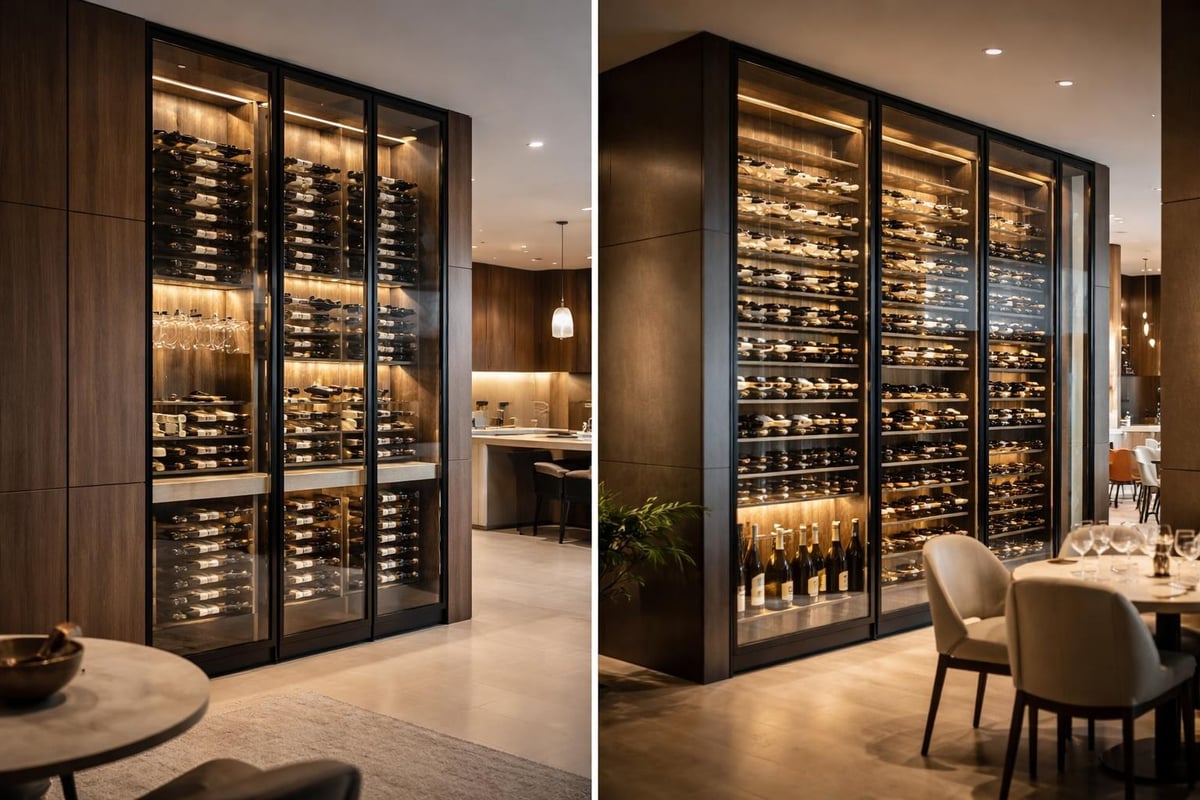
The most striking modern wine cabinets seamlessly blend into their surroundings while maintaining a distinct presence. Clean lines, minimalist profiles, and sophisticated materials define today's premium offerings. Glass-fronted units with LED lighting showcase bottles like museum pieces, while matte black or brushed metal finishes complement modern interiors without competing for visual dominance.
Key architectural considerations include:
Floor-to-ceiling units that maximize vertical space without overwhelming room proportions
Frameless glass construction that creates visual continuity
Integrated cabinetry that flows with existing millwork
Floating designs that maintain spatial flow in open-concept layouts
Custom dimensions that fit unique architectural challenges
Material Innovation and Craftsmanship
Modern wine cabinets showcase extraordinary attention to material selection and construction techniques. Premium hardwoods like walnut and oak remain popular, but contemporary designs increasingly incorporate mixed materials that create compelling visual narratives. Metal accents in brass, copper, or stainless steel add warmth and contrast, while natural stone elements bring texture and organic sophistication.
The craftsmanship standards for luxury wine cabinets have never been higher. Precision joinery, hand-finished surfaces, and meticulous attention to thermal sealing separate exceptional pieces from ordinary storage solutions. Many manufacturers now offer customization options that rival bespoke wine cellar materials, allowing homeowners and designers to specify exact dimensions, finishes, and configurations.
Material Category | Popular Options | Design Impact |
|---|---|---|
Wood Species | Walnut, Oak, Mahogany | Warmth, traditional elegance |
Metals | Brass, Stainless, Bronze | Contemporary edge, durability |
Glass | Low-iron, Tinted, UV-filtering | Transparency, protection |
Stone | Marble, Granite, Slate | Texture, permanence |
Climate Control Technology in Modern Formats
The defining characteristic separating modern wine cabinets from decorative furniture is their sophisticated climate management systems. Proper wine preservation demands precise temperature control, humidity regulation, and vibration dampening-all engineered into compact, aesthetically pleasing formats.
Dual-Zone Temperature Management
Serious collectors appreciate the flexibility of dual-zone climate control, which allows simultaneous storage of reds and whites at their optimal temperatures. Premium modern wine cabinets incorporate independent cooling systems for upper and lower compartments, maintaining red wines at 55-58°F while keeping whites at 45-50°F.
Advanced temperature features to consider:
Thermoelectric cooling systems that eliminate vibration entirely
Compressor-based units offering superior cooling capacity for larger collections
Digital controls with smartphone connectivity for remote monitoring
Backup temperature alerts that notify you of system failures
Energy-efficient operation that reduces long-term costs
The technology behind these systems has become increasingly sophisticated. Luxury wine cabinets now feature whisper-quiet operation, intelligent temperature algorithms, and fail-safe mechanisms that protect collections during power fluctuations.
Humidity and Vibration Control
Temperature alone doesn't ensure proper wine preservation. Humidity levels between 50-70% prevent cork deterioration and maintain proper seals. Modern wine cabinets incorporate active humidity management systems-some featuring separate water reservoirs, others using passive regulation through specially engineered materials.
Vibration represents another critical concern, particularly in urban environments or near mechanical equipment. High-end modern wine cabinets employ vibration isolation systems ranging from simple rubber mounting pads to sophisticated magnetic suspension technologies originally developed for laboratory equipment.
Capacity Planning for Different Applications
Selecting the appropriate size and configuration requires careful consideration of your current collection and future acquisition plans. Modern wine cabinets range from compact 20-bottle units perfect for casual enthusiasts to expansive 300-bottle installations rivaling dedicated wine rooms.
Residential Applications
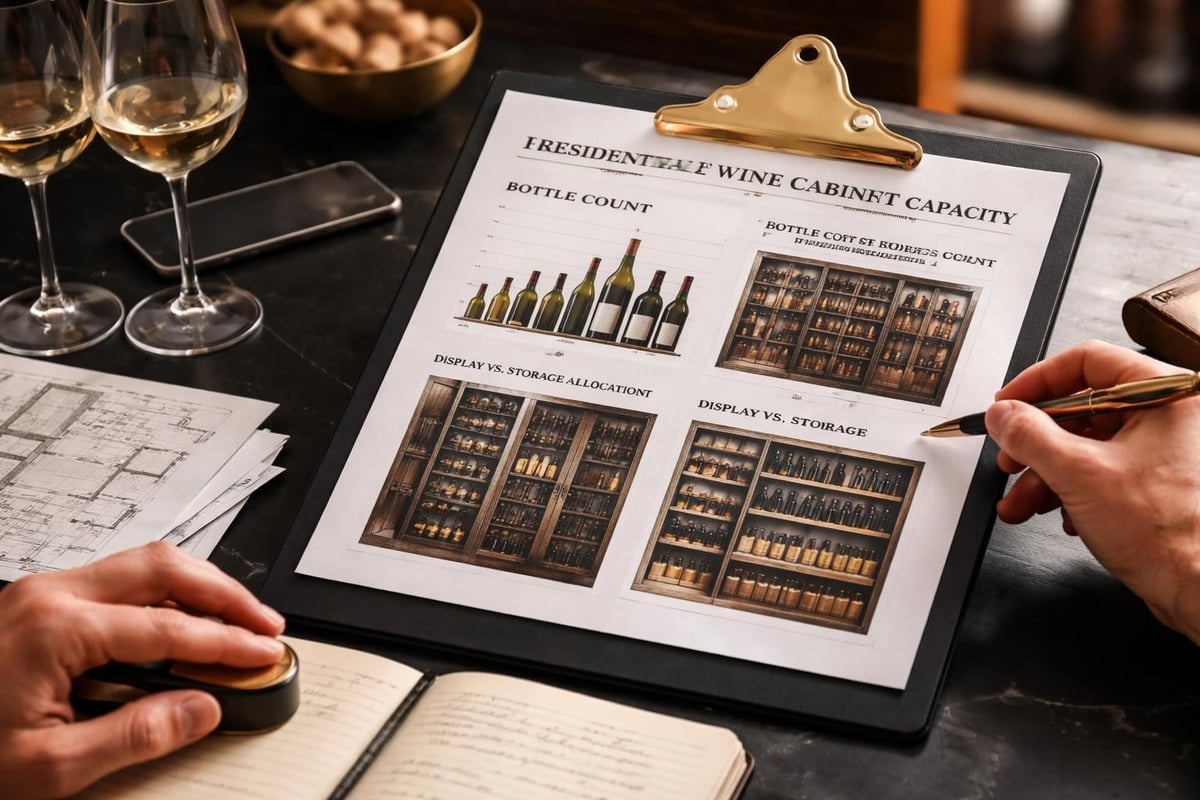
Home installations vary widely based on available space, collection size, and lifestyle patterns. A 100-bottle modern wine cabinet often represents the sweet spot for serious home collectors-large enough for meaningful variety yet compact enough for standard residential spaces. When planning capacity, consider these factors:
Growth projection: Most collectors expand their holdings by 20-30% annually
Bottle size variety: Champagne, Burgundy, and Bordeaux bottles require different spacing
Entertaining frequency: Higher consumption rates may justify larger capacity
Display versus storage: Allocate 30-40% of capacity for bottles you'll showcase
Seasonal rotation: Summer whites, winter reds, special occasion reserves
Commercial and Hospitality Settings
Restaurants, hotels, and private clubs require different capacity approaches than residential installations. Custom wine cellar design for commercial spaces balances operational efficiency with guest experience, often incorporating modern wine cabinets as dramatic focal points in dining rooms or lobbies.
Commercial capacity considerations:
Venue Type | Typical Capacity | Key Features |
|---|---|---|
Fine Dining Restaurant | 200-500 bottles | Dual access, display lighting |
Boutique Hotel Lobby | 100-200 bottles | Dramatic lighting, security |
Private Club | 300-800 bottles | Member storage, mixed formats |
Steakhouse Bar | 150-300 bottles | Quick access, temperature zones |
Design Styles That Define Modern Aesthetics
Modern wine cabinets encompass diverse aesthetic approaches, from stark minimalism to warm contemporary elegance. Understanding these design languages helps you select pieces that harmonize with your overall vision while making bold statements about your appreciation for fine wine.
Minimalist Transparency
The minimalist approach celebrates pure form and transparency, using frameless glass construction and nearly invisible hardware. These modern wine cabinets appear to float within their spaces, creating dramatic visual impact through simplicity. Metal racking systems-often in matte black or brushed stainless steel-provide sculptural contrast against clear glass panels.
This design philosophy particularly suits contemporary homes with open floor plans, where visual weight must be carefully managed. The transparency prevents these substantial pieces from fragmenting sightlines while still commanding attention through their contents and lighting effects.
Industrial Luxe
Industrial aesthetics bring unexpected warmth to modern wine cabinets through materials like reclaimed wood, exposed metal framework, and vintage-inspired hardware. These pieces work beautifully in converted lofts, modern farmhouses, and transitional spaces where rustic elements meet contemporary sensibilities.
The industrial luxe approach often incorporates mixed finishes-perhaps weathered oak shelving within powder-coated steel frames, or copper-toned LED strips illuminating bottles against blackened metal backgrounds. This style proves particularly effective in restaurant and hospitality settings, where it reinforces brand narratives around authenticity and craftsmanship.
Sleek Modernism
Sleek modern wine cabinets emphasize geometric precision, monochromatic color schemes, and integrated technology. High-gloss finishes, seamless joinery, and concealed hinges create crisp, architectural presences that complement minimalist and contemporary interiors. These pieces often feature touch-screen controls, automatic lighting systems, and smartphone integration.
Luxury wine cabinets featured in Forbes exemplify this approach, prioritizing user experience alongside pristine aesthetics. The result is furniture that feels more like precision instruments than traditional cabinetry-appropriate for spaces where technology and design intersect seamlessly.
Strategic Placement and Spatial Considerations
Location dramatically impacts both the functionality and visual impact of modern wine cabinets. Unlike traditional wine cellars relegated to basements, these units thrive in high-visibility areas where they enhance daily living and entertaining experiences.
Living Areas and Open Concepts
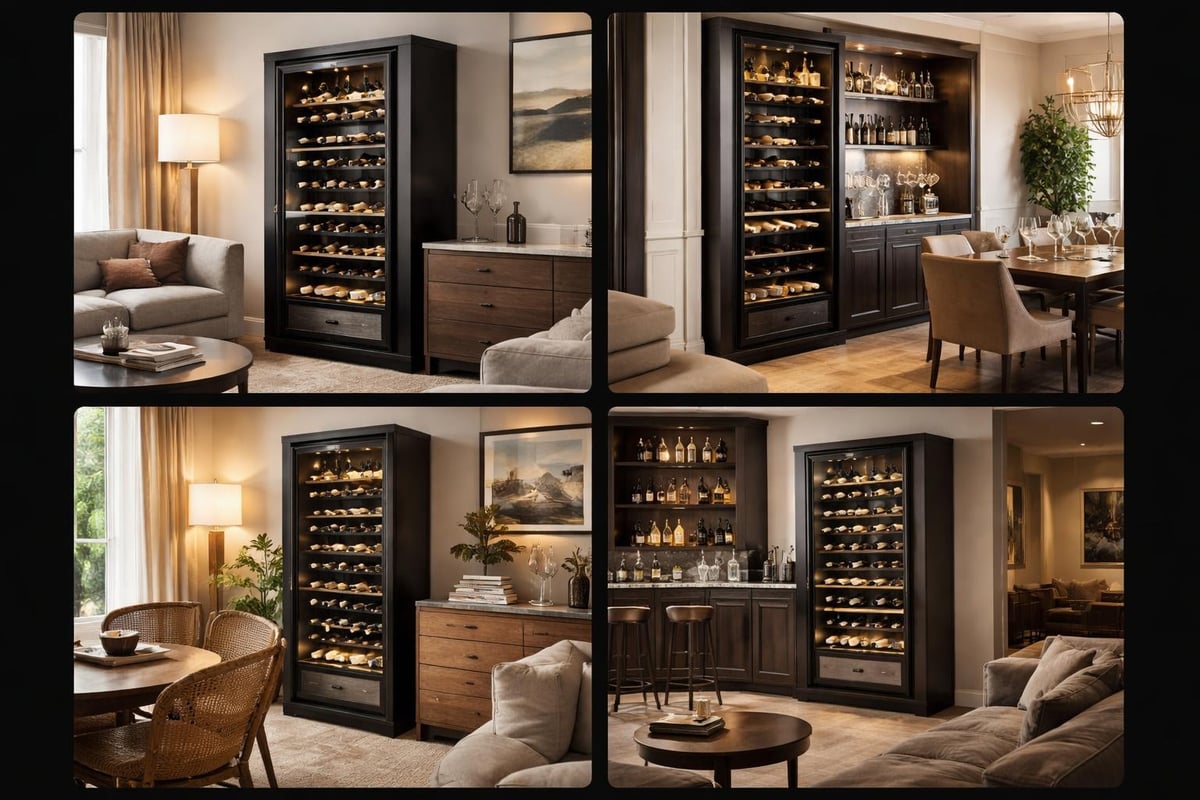
Modern wine cabinets excel in living rooms, great rooms, and open-concept spaces where they serve multiple roles. As room dividers, they define spaces without creating visual barriers. Positioned against feature walls, they become focal points that anchor seating arrangements or dining areas. The key is balancing accessibility with integration-close enough to dining areas for convenience, but positioned to showcase the collection advantageously.
Optimal living area placements:
Adjacent to butler's pantries for entertaining efficiency
Between kitchen and dining areas as functional transitions
Flanking fireplaces to create symmetrical focal points
Within home bars or beverage stations
Along gallery walls as artistic elements
Dining Rooms and Entertainment Spaces
Dedicated dining rooms offer ideal environments for modern wine cabinets, where they enhance meals while remaining protected from kitchen heat and humidity. Consider sight lines carefully-units with glass fronts and interior lighting create beautiful backdrops for dinner parties, essentially functioning as illuminated art installations.
Many homeowners incorporate modern wine cabinets into broader custom wine cellar design plans, using freestanding units to complement larger storage installations. This approach provides convenient access to current selections while maintaining long-term storage for aging wines elsewhere.
Commercial Visibility and Brand Expression
In commercial settings, modern wine cabinets become brand ambassadors that communicate values and sophistication. Hotel lobbies use dramatic installations to establish luxury credentials immediately upon guest arrival. Restaurant wine programs leverage visible storage to demonstrate collection depth and quality, building confidence before guests even examine wine lists.
The placement strategy for commercial applications must balance visibility, security, and operational efficiency. Temperature-controlled units positioned within guest views but accessible to service staff optimize both guest experience and operational workflow. Projects like commercial wine cellars in hospitality venues demonstrate how modern wine cabinets can be integrated into larger installations for maximum impact.
Technology Integration and Smart Features
Contemporary wine storage increasingly incorporates smart technology that extends beyond basic climate control. Modern wine cabinets now offer connectivity, inventory management, and user experience enhancements that would have seemed futuristic just a few years ago.
Connected Climate Management
WiFi-enabled modern wine cabinets allow remote monitoring and adjustment via smartphone apps. You can check internal temperatures while traveling, receive alerts about temperature fluctuations or door openings, and adjust settings seasonally without physically accessing control panels. This connectivity proves particularly valuable for vacation homes or commercial installations where constant supervision isn't practical.
Advanced units track temperature and humidity over time, creating data logs that document storage conditions-useful information when selling prized bottles or pursuing insurance claims. Some systems integrate with home automation platforms, allowing voice control through Alexa or Google Assistant.
Inventory and Collection Management
Premium modern wine cabinets sometimes include integrated inventory systems using RFID tags or barcode scanning. These features track bottle locations, purchase dates, optimal drinking windows, and current valuations. When properly maintained, these digital catalogs become invaluable tools for collection management, insurance documentation, and entertaining planning.
The Wine Guardian buyer's guide emphasizes the importance of considering technological features alongside traditional climate control capabilities when selecting premium wine storage solutions.
Customization and Personalization Options
The most distinctive modern wine cabinets reflect individual tastes and specific collection requirements through thoughtful customization. While ready-made units serve many applications beautifully, bespoke options elevate wine storage from functional necessity to personal expression.
Racking Configurations
Standard wine racks accommodate Bordeaux bottles efficiently, but diverse collections require flexibility. Custom racking addresses bottles of varying sizes-from half-bottles to magnums and larger formats. Angled display positions showcase special bottles, while standard horizontal storage maximizes capacity for aging wines.
Custom racking options include:
Champagne cradles for larger-diameter bottles
Display shelves for trophy bottles or decanters
Pull-out shelves for easy access to back rows
Label-forward positions that showcase specific vintages
Lockable sections for exceptionally valuable bottles
Aesthetic Personalization
Modern wine cabinets offer extensive finish and material customization that allows perfect alignment with existing décor. Wood species, stains, metal finishes, glass treatments, and hardware selections create endless combination possibilities. Some manufacturers offer hand-carved details, inlaid designs, or custom engraving that transforms cabinets into heirloom pieces.
Lighting customization proves equally important. LED color temperature affects how wines and spaces appear-warmer tones (2700K-3000K) create inviting ambiance, while cooler lighting (4000K+) emphasizes modern aesthetics. Dimmable systems provide flexibility for different occasions and times of day.
Investment Considerations and Long-Term Value
Quality modern wine cabinets represent significant investments that deserve careful financial consideration. Understanding cost drivers, maintenance requirements, and long-term value helps ensure informed decisions that serve your collection for decades.
Price Factors and Budget Planning
Modern wine cabinets span enormous price ranges, from several thousand dollars for quality entry-level units to six-figure investments for custom architectural installations. Understanding what drives these price differences helps you allocate budget appropriately and identify genuine value versus unnecessary features.
Price Tier | Capacity Range | Key Features | Typical Cost |
|---|---|---|---|
Entry Premium | 50-100 bottles | Single zone, basic climate control | $3,000-$8,000 |
Mid-Range Luxury | 100-200 bottles | Dual zone, quality materials, smart features | $8,000-$20,000 |
High-End Custom | 200-500 bottles | Fully bespoke, architectural integration | $20,000-$75,000+ |
Ultra-Luxury | 500+ bottles | Museum-quality, cutting-edge technology | $75,000-$250,000+ |
Climate control sophistication significantly impacts pricing. Thermoelectric systems cost less initially but offer limited capacity, while compressor-based units handle larger collections with superior temperature stability. Custom installations incorporating turnkey design-build services command premium pricing but deliver seamless results that standalone units cannot match.
Operating Costs and Energy Efficiency
Beyond acquisition costs, modern wine cabinets incur ongoing expenses through electricity consumption and maintenance. Energy-efficient units with proper insulation and advanced compressors typically consume 100-200 watts continuously-roughly $100-$200 annually in electricity costs depending on local rates. Larger installations or less efficient models may double or triple these figures.
Strategies to minimize operating costs:
Choose ENERGY STAR certified units when available
Maintain consistent ambient room temperatures to reduce cooling demands
Position units away from direct sunlight and heat sources
Keep door gaskets clean and properly sealed
Schedule professional maintenance annually to ensure peak efficiency
Maintenance and Service Requirements
Premium modern wine cabinets require minimal but essential maintenance to preserve performance and protect your investment. Annual professional servicing should include refrigeration system inspection, gasket condition assessment, interior cleaning, and control calibration. Between professional visits, monthly cleaning of exterior surfaces and quarterly vacuum cleaning of condenser coils maintain optimal operation.
The importance of professional wine cellar maintenance applies equally to freestanding modern wine cabinets, particularly for high-value installations. Preventive care dramatically extends equipment lifespan while protecting the wines themselves from climate-related damage.
Selecting the Right Modern Wine Cabinet
Choosing among the impressive array of modern wine cabinets requires systematic evaluation of your specific requirements, spatial constraints, and aesthetic preferences. A structured approach ensures your selection delivers both immediate satisfaction and long-term value.
Assessment Framework
Begin by documenting current collection size and composition-bottle counts by type, special formats requiring custom racking, and estimated growth over five years. Measure available space precisely, noting ceiling heights, electrical access, and clearance requirements for door swings or drawer extensions. Photograph the intended location and surrounding décor to reference during selection.
Critical evaluation criteria:
Storage capacity with 30% growth allowance
Temperature zone requirements based on collection composition
Spatial footprint and installation requirements
Climate control technology appropriate to collection value
Aesthetic compatibility with existing interior design
Budget including installation and first-year operating costs
Quality Indicators and Red Flags
Distinguishing exceptional modern wine cabinets from mediocre offerings requires understanding construction quality markers. Premium units feature thick glass (at least 6mm), solid wood construction rather than veneered particleboard, commercial-grade refrigeration components, and precise joinery throughout. Interior materials should resist moisture without off-gassing that might affect wine aromas.
Red flags include excessively loud operation (quality units emit under 40 decibels), temperature fluctuations greater than 2°F, visible gaps in door seals, flimsy shelving that flexes under weight, and warranties shorter than three years on refrigeration components. Browse modern wine cabinet selections to develop visual literacy around quality markers and design excellence.
Professional Guidance and Installation
Complex installations benefit enormously from professional design consultation. Experts assess spatial challenges, recommend appropriate climate control systems, specify custom features, and coordinate installation seamlessly. This guidance proves especially valuable when integrating modern wine cabinets into comprehensive wine cellar projects where freestanding units complement dedicated storage rooms.
Professional installation ensures proper electrical connections, optimal positioning for climate control efficiency, and secure mounting that protects both cabinet and bottles. Many premium manufacturers require professional installation to maintain warranty coverage, recognizing that improper setup compromises performance regardless of product quality.
Blending Wine Cabinets with Broader Design Visions
Modern wine cabinets achieve their greatest impact when thoughtfully integrated into holistic interior design schemes. Rather than treating these pieces as isolated furniture, consider how they contribute to broader spatial narratives and functional flows.
Creating Wine Experiences
The most successful modern wine cabinet installations create what designers call "wine moments"-spaces and sequences that elevate the simple act of selecting a bottle into a mini-experience. This might involve positioning cabinets along natural circulation paths where guests naturally pause, incorporating seating nearby for contemplative selection, or designing lighting that dramatizes the collection during evening entertaining.
These experiential considerations align with broader trends toward wine storage as interior design, where functional elements become design features that enhance daily life while serving practical purposes.
Complementary Design Elements
Modern wine cabinets interact with surrounding elements to create cohesive aesthetic statements. Adjacent cabinetry for glassware storage, serving areas for decanting and presentation, and comfortable seating for wine appreciation create complete entertaining environments. Material continuity between wine cabinet finishes and nearby millwork, flooring, or architectural details strengthens visual coherence.
Lighting design deserves particular attention. While modern wine cabinets include interior illumination, supplementary ambient and accent lighting enhances their presence. Picture lights above cabinets, recessed ceiling fixtures that graze surfaces, or linear LED strips that outline architectural elements all contribute to integrated lighting schemes that showcase both wine and space.
Modern wine cabinets represent the convergence of preservation science, luxury craftsmanship, and contemporary design aesthetics, offering discerning collectors sophisticated solutions that enhance both collections and living spaces. Whether you're envisioning a statement piece for your home, outfitting a boutique hotel, or creating an unforgettable restaurant wine program, the right modern wine cabinet becomes an investment in both your collection's future and your space's present beauty. Prestige Wine Cellars brings decades of expertise in custom wine storage solutions, working with homeowners, designers, and commercial clients throughout Texas to create bespoke installations that seamlessly blend modern wine cabinets with comprehensive cellar designs, ensuring your collection receives the showcase and protection it deserves.
Your Dream Wine Cellar Starts Here
Let our design team craft a cellar that matches your taste, space, and your collection — built for beauty, function, and prestige.

Email us at
Serving Austin, Dallas–Fort Worth, Houston & San Antonio