
Local Wine Cellar Repair Guide: Expert Tips for 2026
Safeguard your collection with our local wine cellar repair guide for 2026 Learn expert tips to diagnose fix and maintain cellar elegance with confidence
A malfunctioning wine cellar can quickly put your prized collection at risk. Are you ready to protect your investment as technology and design evolve in 2026?
This guide is designed to give local wine cellar repair insights to owners who value craftsmanship and preservation. You will learn how to spot early warning signs, tackle repairs with confidence, and maintain optimal storage conditions.
Discover expert tips tailored for modern cellars, from diagnosing issues to knowing when to call a professional. Safeguard your cellar and enjoy peace of mind with every bottle.
Understanding Modern Wine Cellar Systems
Modern wine cellars have transformed into sophisticated, climate-controlled sanctuaries for valuable collections. As expectations rise in 2026, proper system knowledge is crucial for owners seeking reliable local wine cellar repair and ongoing protection.
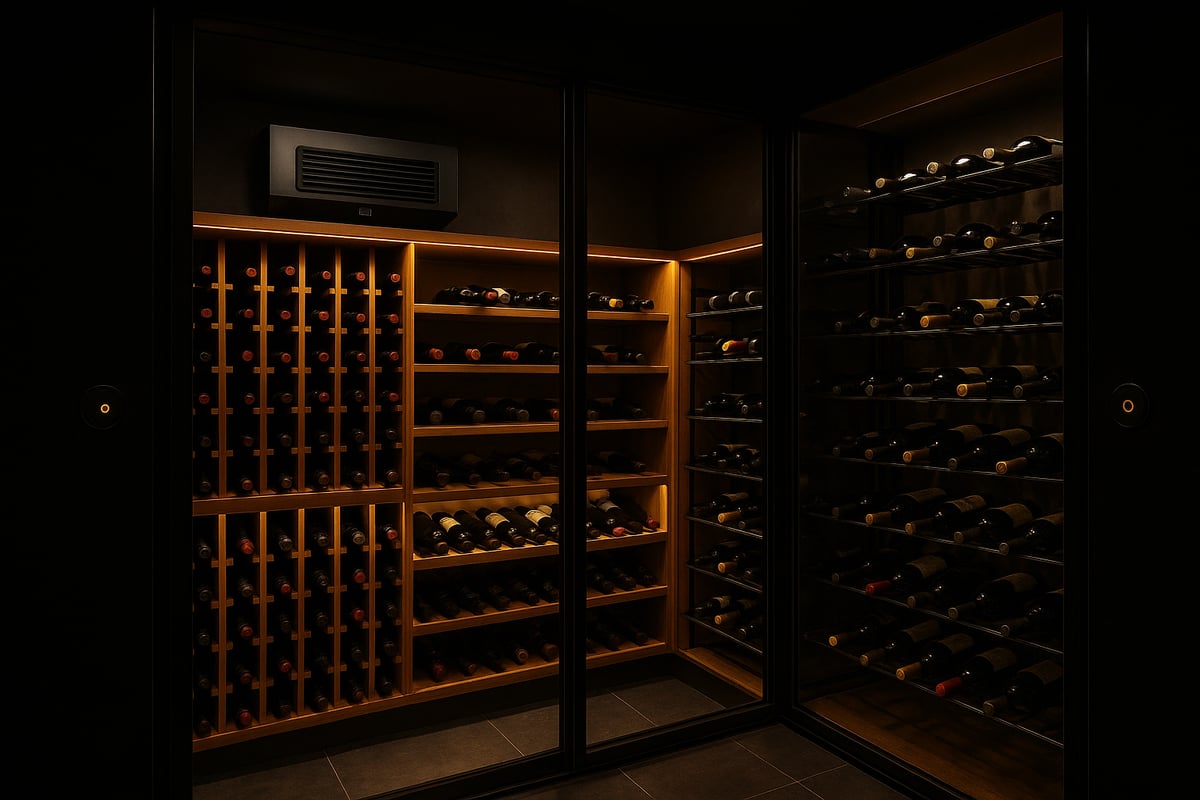
Key Components of Contemporary Wine Cellars
A modern cellar is more than just a cool room. It’s an engineered environment built to precise standards. The essentials include:
Insulation and Vapor Barriers: These prevent temperature swings and moisture intrusion, both vital for wine longevity and local wine cellar repair efficiency.
Racking Systems: Wood, metal, or a blend of both provide storage and display. Each material requires unique care to avoid warping or corrosion.
Climate Control: Advanced cooling systems with variable-speed compressors, smart thermostats, and humidity controls keep bottles safe. In fact, 70% of new luxury cellars in 2026 feature these advanced systems.
Glass Installations: Glass walls and doors are increasingly popular, offering visual drama but introducing repair challenges. Seals, condensation, and chips demand specialized local wine cellar repair skills. For more on these challenges, see Modern Glass Wine Cellar Tips.
Smart Technology: Sensors, remote monitoring, and automation allow owners to manage conditions from anywhere. These innovations are now standard in luxury builds.
Energy Efficiency: Sustainable materials and systems are a priority, reducing utility costs and environmental impact.
Integration: Many cellars now connect with home automation and security, providing seamless control and peace of mind.
Material | Common Use | Maintenance Needs |
|---|---|---|
Wood | Racks, shelves | Regular sealing, humidity control |
Metal | Racks, frames | Check for corrosion, clean finishes |
Glass | Walls, doors | Inspect seals, clean, repair chips |
Owners should be proactive in local wine cellar repair, especially as materials and technology advance. Knowing each component’s role helps you spot issues before they threaten your collection.
Recognizing Signs of Trouble
Even the best-built cellar needs vigilant care. Early detection is the secret to effective local wine cellar repair and long-term preservation.
Temperature and Humidity Fluctuations: Small shifts are normal, but wide swings signal trouble. Use built-in sensors and manual checks to monitor.
Visual Cues: Condensation on glass, mold growth, warped wood, or frost on equipment are all red flags. Each points to issues with insulation, vapor barriers, or climate controls that may need local wine cellar repair.
Unusual Odors: Musty or chemical smells often mean mold, mildew, or coolant leaks. Don’t ignore them.
Alarms and Notifications: Modern systems send digital alerts for temperature spikes or humidity dips. Always investigate these promptly.
Case Example: A local cellar repeatedly suffered condensation on its glass wall. Investigation revealed a failed vapor barrier, which only a targeted local wine cellar repair could resolve efficiently.
Stay alert to these signs, and your cellar will reward you with years of trouble-free performance.
Diagnosing Common Wine Cellar Problems
Even with a state-of-the-art cellar, issues can arise that threaten your wine’s quality. Knowing how to diagnose problems is the first step in proactive local wine cellar repair. Let’s break down the most common trouble spots and how to spot them before they escalate.
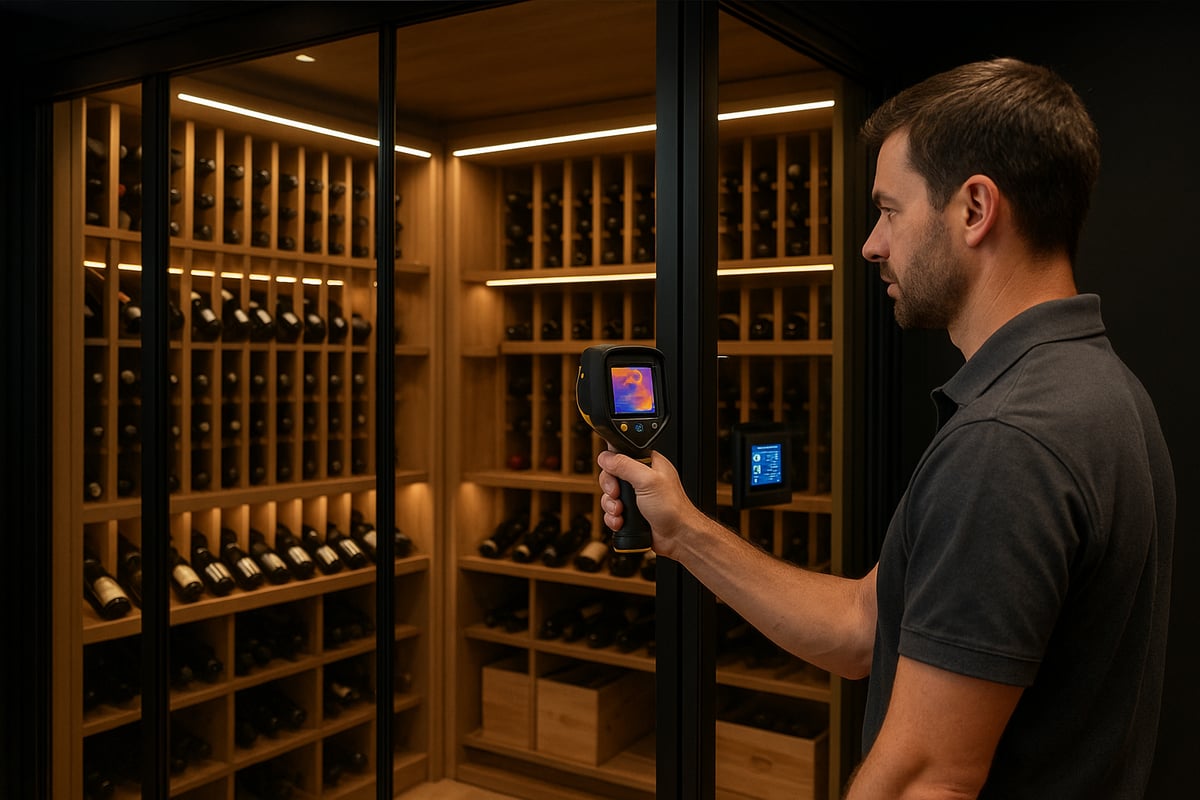
Step 1: Assessing Climate Control Failures
Consistent temperature and humidity are vital for wine preservation. If you notice temperature swings or humidity drops, start with your climate control system. Use both built-in sensors and a manual thermometer to confirm readings. Check for signs like frost buildup or unusual noises from the cooling unit. Dirty filters, compressor failure, or coolant leaks are common culprits in local wine cellar repair situations.
For deeper troubleshooting, inspect the compressor and ensure airflow around the unit. In 2026, compressor replacement rates have risen due to more advanced but sensitive components. About 40% of service calls stem from cooling malfunctions. For a comprehensive guide to these systems, visit the Cellar Cooling System Guide. Accurate diagnosis early on can prevent costly wine loss.
Step 2: Detecting Moisture and Mold Issues
Moisture problems can quietly undermine your cellar. Look for visible mold, mildew patches, or water stains, especially on wood or drywall. A musty smell is a classic warning sign that local wine cellar repair may be needed. Use a digital hygrometer to verify humidity levels—optimal is usually 55–65%. Deviations point to vapor barrier breaches or insulation failure.
Improper barriers let outside air in, leading to condensation and mold. Local regulations may require specific mold remediation steps, so document findings carefully. Regularly checking for leaks and promptly repairing insulation will keep your collection safe and your cellar compliant with health standards. When in doubt, call a specialist to handle persistent issues.
Step 3: Evaluating Structural and Racking Integrity
Your racks must be sturdy and level to protect bottles. Inspect for sagging, loose joints, or warped wood, which often result from excess moisture. Metal racks may show corrosion or finish wear. If your cellar features glass, check for chips, broken seals, or condensation between panes that signal a repair need.
A local wine cellar repair project might include reinforcing shelves or replacing damaged mahogany after a flood. Regularly tighten screws and polish wood to prevent future warping. Addressing these issues early preserves both the safety and aesthetic appeal of your cellar, ensuring it remains a showcase for your collection.
Step 4: Troubleshooting Electrical and Lighting Issues
Electrical faults can disrupt cellar operation and pose safety hazards. Flickering LEDs, tripped breakers, or unresponsive controls are common flags. Start by checking all connections and testing bulbs and switches. Power surges may require a surge protector or even rewiring for safety.
Local wine cellar repair often involves upgrading to energy-efficient lighting systems, particularly in 2026, where smart LEDs are the norm. Proper lighting not only enhances display but also prevents heat buildup that can harm wine. Always follow local codes when making electrical repairs, and consider professional help for complex issues.
Step 5: Reviewing Security and Automation Features
Modern wine cellars rely on smart locks, alarms, and automated climate controls. If you receive frequent digital alerts or notice unauthorized access attempts, start by updating firmware and resetting devices. Test all sensors and review access logs regularly. Connectivity issues can often be resolved with a system reboot or software update.
In local wine cellar repair, security upgrades are increasingly common. For example, a timely software update once prevented a major temperature spike by restoring lost remote monitoring. Staying on top of these features helps safeguard your investment and provides peace of mind, especially in high-value collections.
Step-by-Step Wine Cellar Repair Guide
A well-maintained wine cellar preserves the essence and value of every bottle. If you notice temperature swings, odd smells, or visible wear, immediate action can safeguard your collection. This step-by-step local wine cellar repair guide ensures that every homeowner, designer, or restaurant manager can confidently address issues before they escalate.
Whether you are dealing with climate hiccups or structural woes, the right approach—paired with the right tools—makes all the difference. Ready to roll up your sleeves? Let’s dive into the essentials of local wine cellar repair.
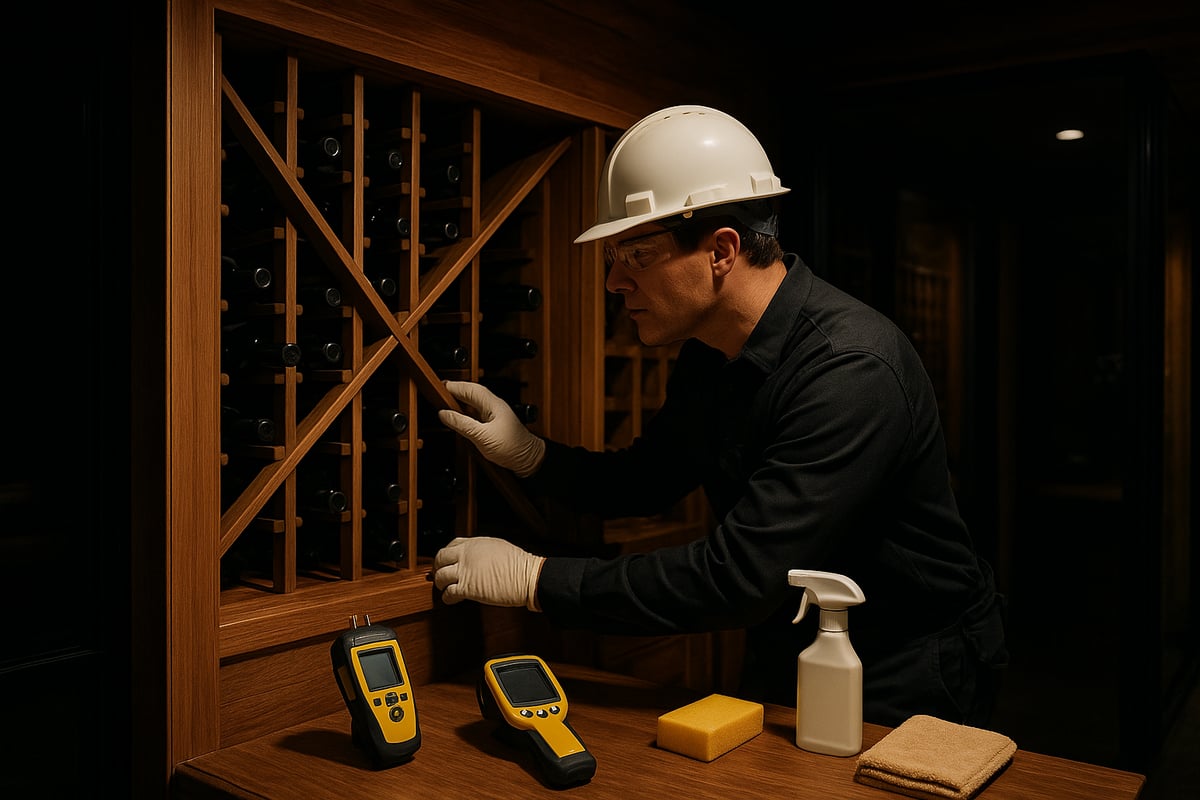
Preparing for Repairs: Safety and Tools
Before tackling any local wine cellar repair, prioritize your safety. Always turn off power at the breaker when working with electrical components. Wear gloves and a mask for mold or chemical cleaning tasks.
Equip yourself with the following:
Moisture meter and thermal camera for diagnostics
Basic hand tools (screwdrivers, pliers, wrenches)
EPA-approved cleaning agents and protective gear
Keep manuals or manufacturer instructions nearby, especially for climate systems or automation. If you are unsure about a step, consult a pro rather than risk costly mistakes. Preparation is the foundation of a successful local wine cellar repair.
Repairing Climate Control Systems
A healthy cellar climate is non-negotiable. Start by checking air filters—clogged filters restrict airflow and cause cooling failures. Clean or replace them regularly. Inspect condenser coils for dust buildup and clear any drainage lines to prevent leaks.
If temperature inconsistencies persist, test thermostats and sensors. Some repairs, like recharging refrigerant, may require certified technicians depending on local laws. Here’s a quick comparison:
Task | DIY Cost | Pro Cost |
|---|---|---|
Filter Replacement | $20 | $100 |
Thermostat Swap | $50 | $200 |
Refrigerant Charge | N/A | $300+ |
Balancing DIY efforts with professional support is key in local wine cellar repair.
Fixing Moisture and Mold Problems
Mold and excess moisture threaten both your wine and your investment. Begin by removing surface mold with EPA-approved products, wearing gloves and a mask. Check for water stains, musty odors, or visible mildew.
Seal any leaks with proper vapor barriers, and replace damaged insulation or drywall. If you notice persistent humidity spikes, inspect your cellar’s insulation and vapor barrier for hidden breaches. Mold-related repairs make up a significant portion of local wine cellar repair expenses, so early action pays off.
Restoring Racks, Shelving, and Glass
Over time, wooden racks can loosen, warp, or crack—especially after moisture issues. Tighten fasteners and reinforce joints for stability. For wood care, polish and seal surfaces to prevent future damage. For a detailed guide on maintaining wood elements, see Wine Cellar Wood Care.
Inspect glass panels and doors for chips or fogging between panes. Replace worn gaskets to maintain a perfect seal. Addressing these issues promptly ensures your local wine cellar repair efforts are both functional and elegant.
Addressing Electrical and Lighting Faults
Lighting does more than illuminate—it protects your wine from heat and UV exposure. If you notice flickering LEDs, buzzing, or outages, check wiring and replace bulbs as needed. Upgrade to smart, energy-efficient lighting for better control and longevity.
Always follow local codes when handling electrical repairs. If you lack experience, hire a licensed electrician for your local wine cellar repair. Safety is paramount, and compliant lighting can elevate both form and function.
Updating Security and Automation Features
Modern wine cellars often feature smart locks, alarms, and remote monitoring. Regularly update firmware and reset passwords to keep your system secure. If connectivity issues arise, troubleshoot your network or consult your device’s manual.
Automation upgrades can offer peace of mind and prevent costly mistakes. For example, a recent software update in a local wine cellar repair project averted a temperature spike by alerting the owner in real time. Embrace technology to protect your collection’s future.
Preventative Maintenance for Long-Term Cellar Health
Protecting your wine investment for years to come requires more than just a beautiful cellar. Smart, regular preventative maintenance keeps everything running smoothly and ensures your local wine cellar repair needs are minimal. Let's break down the essentials for lasting cellar health.
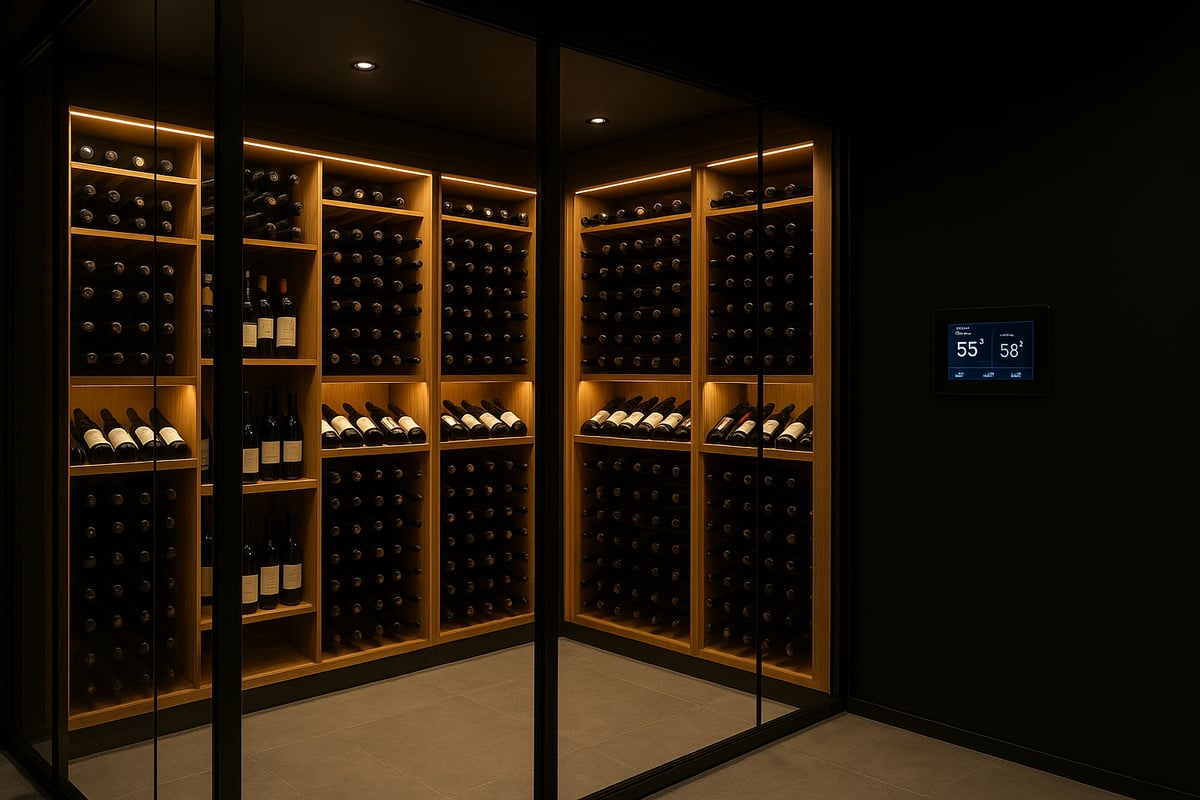
Routine Inspection Checklist
Consistency is key. Develop a monthly, quarterly, and annual inspection routine to catch issues before they escalate. Use digital monitoring systems to get early alerts for any deviations in temperature or humidity, reducing the likelihood of emergency local wine cellar repair.
Sample Inspection Table:
Task | Frequency | Tools Needed |
|---|---|---|
Check climate systems | Monthly | Sensor, thermometer |
Inspect racks/glass | Quarterly | Flashlight |
Test alarms/security | Monthly | App, manual test |
Review insulation | Annually | Visual check |
Keep a detailed log of inspections and repairs. This record helps spot patterns, supports warranty claims, and guides future maintenance.
Cleaning and Upkeep Best Practices
A spotless cellar is a healthy cellar. Use only safe, non-abrasive cleaners on wood, metal, and glass surfaces. Avoid harsh chemicals that could taint wine aromas or damage finishes. Regular dusting and wiping prevent mold and buildup, key to reducing the need for local wine cellar repair.
Manage humidity and airflow by keeping vents clear and checking seals. For deeper insight, explore wine cellar maintenance best practices for expert advice on cleaning and environmental control.
Schedule a seasonal deep clean each spring and fall, focusing on hidden corners and behind racks. This stops minor issues from becoming major headaches.
Climate System Servicing
Your climate control system is the heart of your cellar. Schedule professional tune-ups every year and replace air filters as recommended by your manufacturer. Neglecting these tasks is a leading cause of local wine cellar repair requests.
Modern systems may use variable-speed compressors and eco-friendly refrigerants, reducing energy use and extending lifespan. Learn more about energy-efficient wine cooling systems and how they save up to 25 percent on energy bills.
Regular servicing can add years to your equipment and help you spot leaks, worn parts, or calibration errors before they threaten your collection.
Protecting Against Power Outages and Surges
Power interruptions can spell disaster for a wine cellar. Install backup power sources, such as battery backups or generators, to keep climate systems running during outages. Surge protectors safeguard sensitive electronics from sudden voltage spikes, reducing the chance of emergency local wine cellar repair.
Did you know that in 2026, cellar owners reported significant wine losses due to brief power failures? Preparation is your best insurance.
Test your backup systems quarterly and replace batteries as needed. Document every test in your maintenance log for peace of mind.
Enhancing Cellar Security and Monitoring
Security goes beyond locked doors. Regularly update passwords for all smart devices and monitoring apps. Keep firmware current on alarms, sensors, and remote controls to protect against digital threats. This proactive approach limits the risk of needing urgent local wine cellar repair after a breach.
Consider integrating new tech, like biometric locks or AI-driven monitoring, as it becomes available. Set reminders to review access permissions and system logs, especially after staff changes or home renovations.
When to Replace vs. Repair
Sometimes, repair is not the best option. Compare the cost and expected lifespan of fixing a component versus installing a new one. Use manufacturer warranties and service contracts to your advantage, as they often cover more than you expect for local wine cellar repair.
Cost-Benefit Table:
Scenario | Repair | Replace |
|---|---|---|
Minor rack damage | $150 | $800 |
Cooling system failure | $700 | $3,500 |
Mold remediation | $300 | $1,200 |
If repairs are frequent or costly, upgrading may save you money in the long run. Always check that any work performed does not void your warranty.
In summary, proactive care and smart habits are your best defense. With these strategies, your cellar will stand the test of time, and local wine cellar repair will be needed less often, giving you peace of mind to savor every bottle.
When to Call a Professional for Wine Cellar Repairs
Not every wine cellar issue can be handled with DIY solutions. Sometimes, the risks to your collection, property, and safety are simply too high. Knowing when to contact a local wine cellar repair expert can save you time, money, and peace of mind. Let’s explore exactly when it’s best to bring in a professional.
Identifying Complex or Hazardous Repairs
Some wine cellar problems are simply too complex or hazardous for homeowners. If you spot persistent mold growth, electrical faults, or structural instability, it’s time to step back. Handling mold beyond surface cleaning, for example, requires specialized equipment and training. Electrical issues, such as power surges or faulty wiring, pose serious safety risks and can threaten your wine.
Structural concerns, especially with glass walls or custom racking, demand the precision only a local wine cellar repair professional can provide. If your climate system fails or leaks refrigerant, you need licensed technicians who understand modern cellar technology and local building codes.
Here’s a quick checklist of repairs that always require an expert:
Major climate control failures or refrigerant leaks
Mold remediation involving insulation or drywall replacement
Structural repairs to glass, steel, or custom woodwork
Electrical system diagnostics or rewiring
If you feel unsure, always err on the side of caution and call a local wine cellar repair specialist.
Selecting a Qualified Local Specialist
Your wine cellar deserves the best, so choosing the right professional is essential. Look for technicians with certifications in refrigeration, electrical work, and mold remediation. Experience with luxury cellars, especially those featuring advanced climate control or glass installations, is a must.
Ask for references and check online reviews. A reputable local wine cellar repair provider should be familiar with regional climate challenges and preferred cellar materials.
When evaluating options, consider specialists who offer both repair and Wine Cellar Maintenance Services. This ensures continuity and expert oversight for your collection’s long-term health. Don’t hesitate to ask about their process, materials, and response times.
Here’s a quick selection checklist:
Proper licensing and certifications
Portfolio of completed cellar projects
Transparent pricing and detailed quotes
Positive client testimonials
A true expert will listen to your needs and tailor solutions for your unique cellar.
Cost Estimates and Service Contracts
Understanding the costs involved in local wine cellar repair helps you budget wisely. Simple repairs, such as replacing a thermostat or fixing a door seal, may cost a few hundred dollars. Major climate system repairs or glass wall replacements can run into the thousands, especially for custom installations.
Many specialists offer maintenance contracts, which provide regular inspections and discounted repairs. These contracts can prevent costly emergencies and extend the lifespan of your cellar’s critical systems.
Here’s a sample comparison:
Service Type | Typical Cost (2026) | Included in Contract? |
|---|---|---|
Thermostat Replacement | $250–$400 | Yes |
Mold Remediation | $1,200–$3,000 | Partial |
Climate System Overhaul | $2,500–$15,000 | Discounted |
Glass Panel Replacement | $800–$10,500 | No |
For high-value cellars, investing in a service contract with a trusted local wine cellar repair company brings peace of mind and long-term savings.
Warranty and Insurance Considerations
Before authorizing any local wine cellar repair, review your manufacturer warranties. Many warranties require that repairs are performed by certified professionals, or you risk voiding coverage. Keep all documentation and receipts in case you need to make a claim.
Insurance can also help offset the cost of major repairs, especially after events like floods or power surges. Work with your repair provider to document damage and gather the necessary paperwork. Some insurance policies even require regular professional maintenance as a condition of coverage.
Tips for protecting your investment:
Confirm repair eligibility under warranty before work begins
Save all invoices and service records
Notify your insurer promptly after cellar damage
By partnering with a local wine cellar repair expert, you safeguard both your collection and your cellar’s long-term value.
As you care for your wine collection and navigate the latest repair challenges, it’s reassuring to know that expert support is just a step away. Whether you’ve spotted subtle signs that need attention, want to ensure your cellar’s climate control is flawless, or simply value the peace of mind that comes with professional craftsmanship, we’re here to help. At Prestige Wine Cellars, we blend technical know how with artistry to protect and enhance your investment. If you’re ready for tailored solutions that preserve both the elegance and integrity of your cellar, let’s start a conversation—Contact Us.
Your Dream Wine Cellar Starts Here
Let our design team craft a cellar that matches your taste, space, and your collection — built for beauty, function, and prestige.

Email us at
Serving Austin, Dallas–Fort Worth, Houston & San Antonio