
How to Build Wine Cellars: The Right Way In TX
Discover expert guidance on how to build wine cellars with proper climate control, design, and materials for luxury homes and commercial spaces.
Creating a proper wine storage environment requires more than just a cool room with shelves. When you build wine cellars, you're designing a precision-controlled space where temperature, humidity, light exposure, and vibration all work in harmony to protect your investment. Whether you're planning a residential sanctuary for your growing collection or a statement piece for a commercial venue, understanding the technical and aesthetic elements ensures your cellar becomes both functional art and a safeguard for bottles worth preserving for decades.
Understanding the Foundation of Wine Cellar Construction
The decision to build wine cellars starts with recognizing that wine is a living product requiring specific environmental conditions. Temperature fluctuations, excessive humidity, and UV exposure cause chemical reactions that degrade wine quality, turning complex flavors into vinegary disappointment.
Professional wine cellars maintain three critical parameters:
Consistent temperature between 55°F and 58°F
Relative humidity levels of 60% to 70%
Complete darkness or filtered lighting to prevent UV damage
These aren't suggestions. They're requirements backed by centuries of winemaking tradition and modern scientific analysis. Proper temperature control and humidity management form the cornerstone of any serious wine storage project, whether you're housing 200 bottles or 2,000.
Location Selection and Space Planning
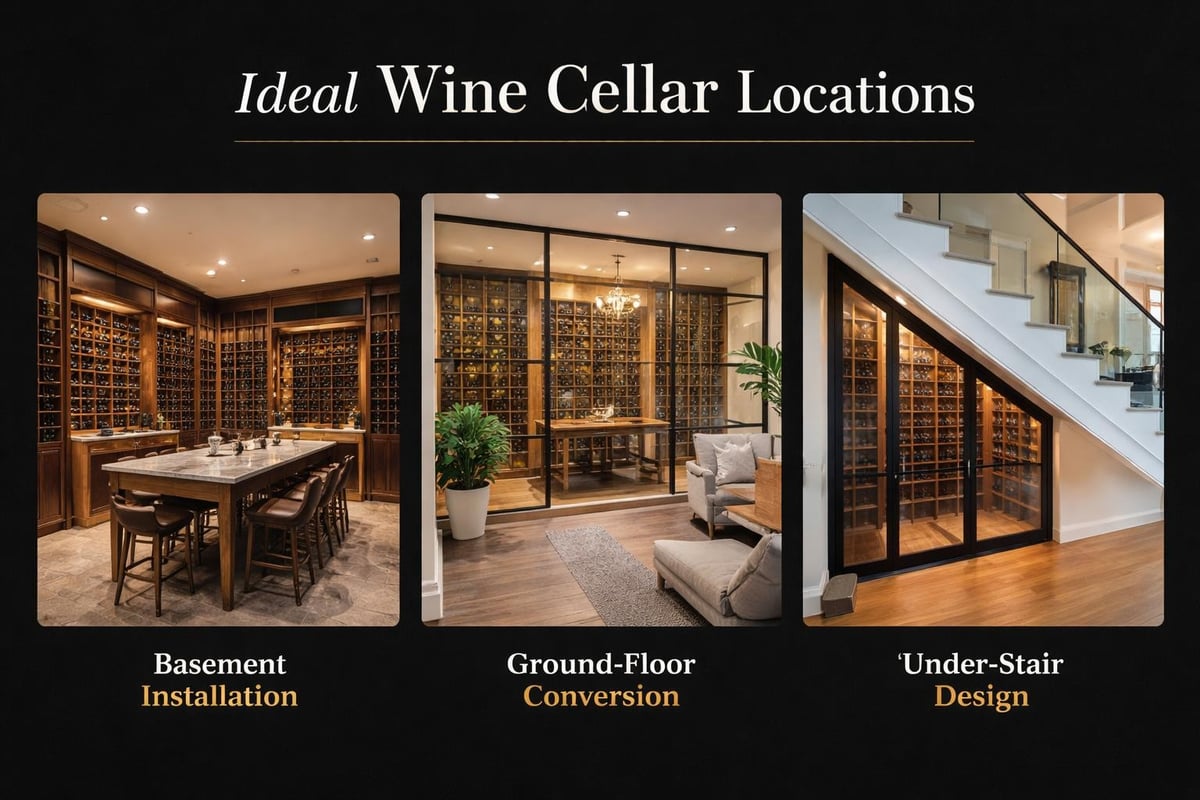
Before you can build wine cellars that perform flawlessly, you need the right location. Interior spaces away from exterior walls offer superior temperature stability. Basements provide natural coolness, though Texas homes often lack traditional underground spaces.
Ground-floor interior rooms, converted closets, or even under-staircase alcoves can work beautifully when properly engineered. The key consideration is accessibility to climate control infrastructure and adequate insulation potential.
Climate Control Systems: The Heart of Every Wine Cellar
When you build wine cellars in warm climates like Texas, mechanical cooling isn't optional. Through-wall systems, ducted units, and split systems each offer distinct advantages depending on your space configuration and aesthetic preferences.
Cooling capacity must account for:
Room dimensions and total cubic footage
Insulation R-values in walls, ceiling, and flooring
Glass surface area and door specifications
Expected bottle capacity and density
Adjacent room temperatures and heat transfer
The heat load calculator provides precise specifications for your unique situation. Undersizing cooling equipment creates constant cycling and eventual system failure. Oversizing wastes energy and creates humidity problems through short-cycling.
System Type | Best Application | Noise Level | Installation Complexity |
|---|---|---|---|
Through-Wall | Small to medium cellars | Moderate | Low |
Ducted Split | Large cellars, remote placement | Low | High |
Self-Contained | Medium cellars, flexible | Moderate-High | Moderate |
Wine Guardian | Precision control needed | Low | Moderate-High |
Climate control considerations extend beyond temperature. Humidity control prevents cork desiccation while avoiding mold growth. Most quality systems integrate both functions, but verify specifications before purchasing.
Insulation and Vapor Barriers
To build wine cellars that maintain stable conditions efficiently, treat them like commercial refrigeration units. Every surface requires proper insulation and vapor barrier installation.
Walls need minimum R-19 insulation, while ceilings benefit from R-30 or higher. Closed-cell spray foam provides superior performance, creating both insulation and vapor barrier in one application. Traditional batt insulation works when paired with proper plastic sheeting vapor barriers on the warm side of the wall.
Floor insulation often gets overlooked but matters significantly:
Concrete slabs transfer ground temperature fluctuations
Wooden subfloors above unconditioned spaces leak conditioned air
Proper floor insulation reduces system runtime by 15-20%
The vapor barrier prevents moisture migration from warmer areas into your cooled cellar. Without it, condensation forms inside walls, degrading insulation effectiveness and promoting mold growth.
Design Elements That Define Luxury Wine Cellars
Technical requirements established, aesthetic choices transform functional storage into experiential spaces. When you build wine cellars for luxury homes or high-end restaurants, design becomes equally important as engineering.
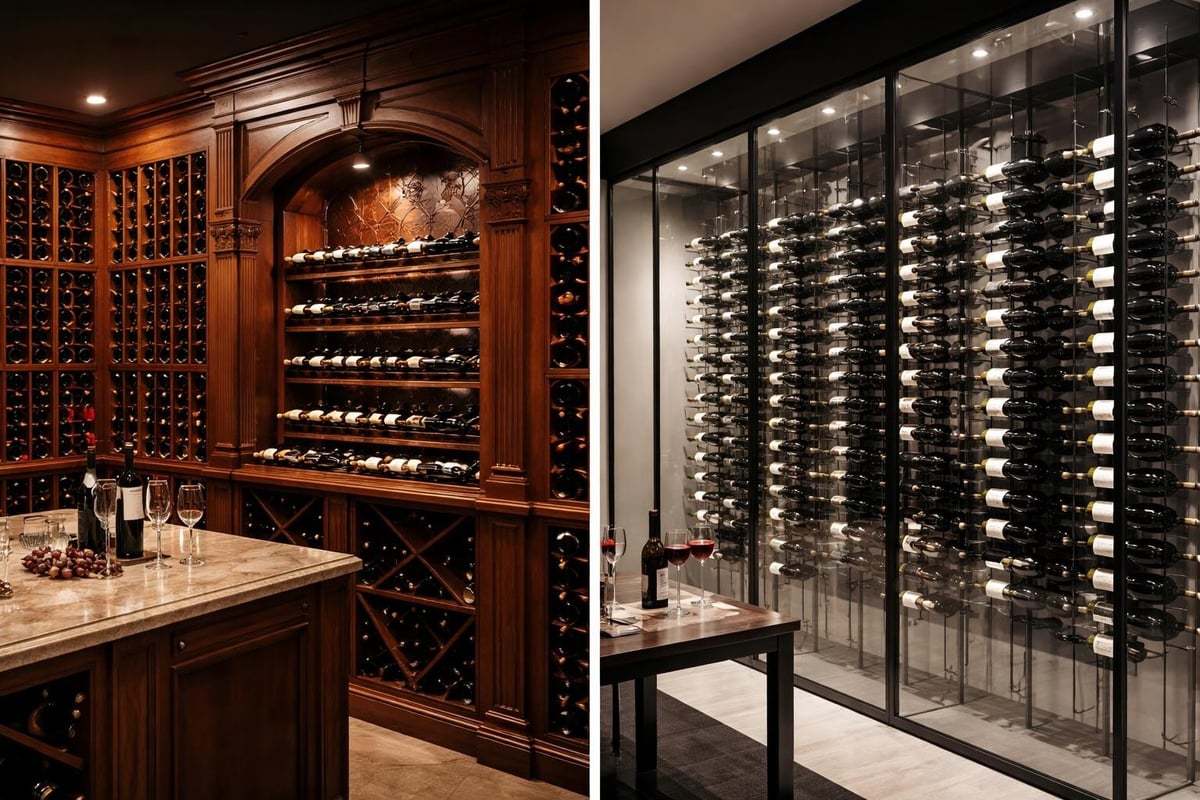
Racking systems range from traditional wooden installations to contemporary metal and acrylic displays. Custom wine cellar design services incorporate your collection's unique requirements, architectural context, and personal aesthetic preferences.
Material Selection and Craftsmanship
Premium materials elevate wine cellars from storage to showcase:
Mahogany and Walnut: Rich, traditional appearance with natural humidity resistance
Redwood: Classic choice with inherent rot resistance and beautiful grain
Metal and Cable Systems: Contemporary aesthetic with industrial elegance
Acrylic and Glass: Modern transparency creating dramatic visual impact
Wood selection impacts more than appearance. Aromatic woods like cedar, while beautiful, can impart unwanted flavors to wine through cork absorption. Neutral hardwoods or properly sealed alternatives prevent this contamination.
Wine cellar materials must withstand constant humidity without warping, expanding, or degrading. Quality construction uses mortise-and-tenon joinery, marine-grade adhesives, and finishes designed for high-moisture environments.
Lighting Design for Display and Preservation
Proper lighting enhances presentation while protecting wine from harmful UV exposure. LED systems provide the ideal solution, offering precise color rendering without heat generation or ultraviolet emissions.
Layer lighting creates depth and drama. Accent lights highlight special bottles or architectural features. Task lighting illuminates labels for selection. Ambient lighting provides overall visibility without overwhelming brightness.
Strategic lighting placement includes:
Toe-kick lighting beneath bottom racking
Crown molding cove lighting for soft ambient glow
Individual bottle spotlighting for showcase displays
Backlit onyx or glass panels for dramatic effect
Dimmers allow adjustment based on usage. Bright task lighting assists bottle selection, while dimmed ambiance suits entertaining. Motion sensors ensure lights aren't accidentally left on, protecting wine from unnecessary exposure.
Entry Systems and Architectural Integration
The door to your wine cellar isn't merely functional. It's an architectural statement and critical component of the climate envelope. When you build wine cellars, door selection impacts both aesthetics and performance.
Solid core wood doors offer traditional elegance with good insulation properties. Minimum 1.75-inch thickness with weather stripping maintains the temperature differential between cellar and adjacent spaces.
Glass doors create stunning visual connections while presenting thermal challenges. Triple-pane insulated glass with low-E coatings minimizes heat transfer. Frame materials should offer thermal breaks preventing condensation.
Design portfolios showcase how door selections complement overall architectural vision, from wrought-iron and glass combinations to solid mahogany with custom millwork.
Commercial Wine Cellar Considerations
Restaurants, hotels, and private clubs face unique requirements when they build wine cellars. Display visibility encourages wine sales and creates memorable guest experiences. Commercial installations balance theatrical presentation with operational efficiency.
Key commercial design elements:
High-visibility glass walls for dramatic sight lines
Accessible organization supporting staff efficiency
Security features protecting valuable inventory
Scalable capacity accommodating collection growth
Feature | Residential Priority | Commercial Priority |
|---|---|---|
Display Visibility | Moderate | Critical |
Access Efficiency | Low | High |
Capacity Density | Moderate | High |
Security Systems | Moderate | Critical |
Aesthetic Impact | High | Critical |
Commercial spaces in Texas cities require specialized expertise understanding local building codes, health department regulations, and ADA accessibility requirements that don't typically apply to residential projects.
Racking Configurations and Storage Capacity
Bottle storage methodology significantly impacts capacity calculations when you build wine cellars. Standard 750ml Bordeaux bottles measure approximately 12 inches tall and 3 inches in diameter, but Champagne, Burgundy, and specialty formats require different accommodations.
Common racking styles include:
Individual bottle storage: Maximum flexibility, premium presentation
Bin storage: High-density capacity for case storage
Display rows: Showcase selections at eye level
Diamond bins: Decorative accent storage
Waterfall displays: Dramatic presentation of premium bottles
Step-by-step construction guidance helps DIY enthusiasts understand racking installation, though professional fabrication ensures precision fit and finish matching luxury expectations.
Capacity Planning and Organization
Serious collectors build wine cellars with growth capacity exceeding current inventory by 30-50%. Collections expand faster than anticipated, particularly as enthusiasm deepens.
Organization systems range from simple regional separation to sophisticated database-driven cataloging. Label-forward displays aid identification but sacrifice density. Neck-forward storage maximizes capacity while requiring inventory management systems.
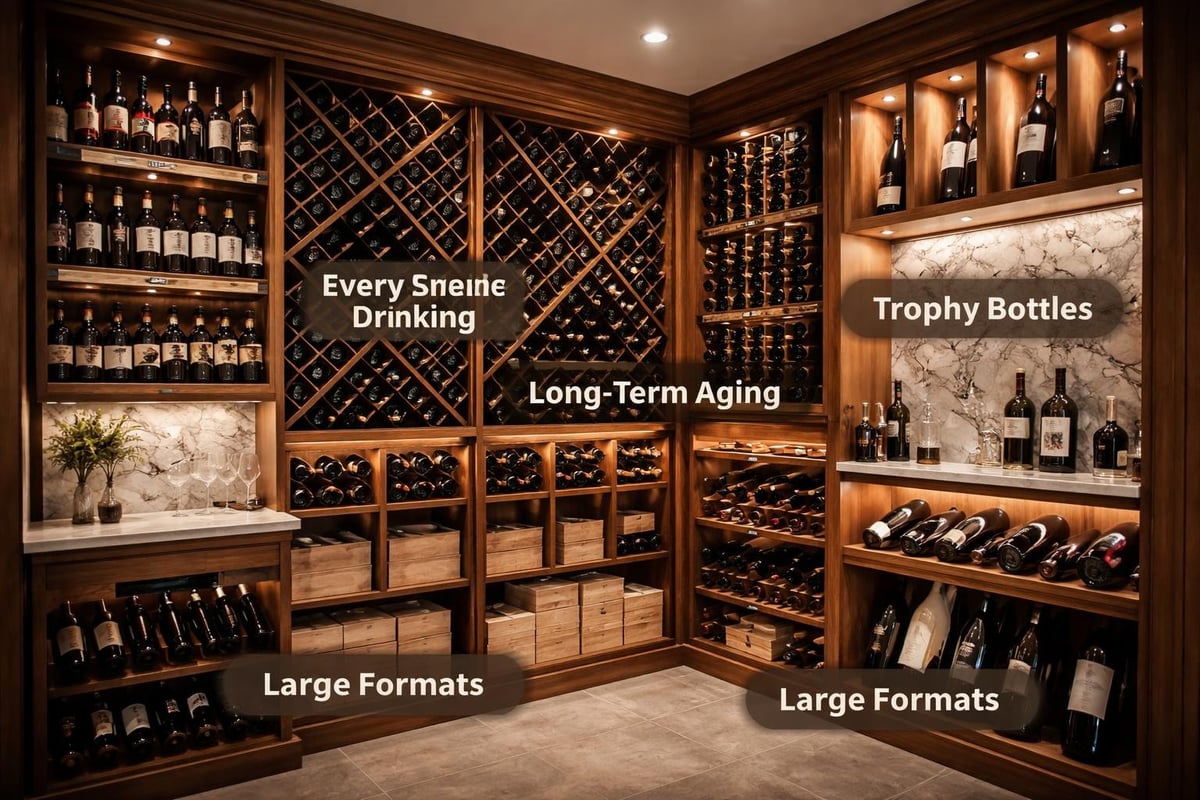
Functional zones optimize cellar usage:
Everyday drinking: Easily accessible, mid-height placement
Aging inventory: Dense bin storage, climate-optimal locations
Trophy bottles: Secure, showcase positioning
Large formats: Specialized shelving for magnums and larger
Sparkling wines: Horizontal storage preventing cork drying
Technical Infrastructure and Hidden Systems
Beyond visible elements, when you build wine cellars, concealed infrastructure ensures reliable performance. Electrical systems power cooling equipment, lighting, and monitoring devices. Adequate amperage prevents nuisance breaker trips.
Plumbing infrastructure supports:
Condensate drainage from cooling systems
Humidification systems requiring water supply
Future expansion and modification flexibility
Comprehensive service planning addresses often-overlooked details like emergency drainage, backup power for cooling systems, and remote monitoring capabilities.
Monitoring and Automation Technology
Modern wine cellars integrate smart technology providing real-time environmental monitoring and automated responses to changing conditions. Wi-Fi enabled thermostats allow remote temperature adjustment and alert notifications when conditions drift outside parameters.
Advanced monitoring systems track:
Temperature fluctuations with timestamp logging
Humidity levels with automated adjustment
Door access and security breach alerts
System performance and maintenance schedules
Power outages requiring immediate response
These systems protect collections worth tens or hundreds of thousands of dollars. A 2 AM temperature alarm might seem inconvenient until you consider the cost of spoiled vintage Bordeaux.
Professional Installation vs. DIY Approaches
The question of whether to build wine cellars yourself or hire professionals depends on technical expertise, available time, and desired quality level. Comprehensive design resources educate homeowners about construction complexities.
DIY projects work best for:
Smaller spaces under 150 bottles
Straightforward rectangular layouts
Conversion of existing climate-controlled spaces
Homeowners with construction experience
Professional installation becomes essential for larger projects, complex designs, or situations requiring structural modifications. Commercial installations virtually always demand professional expertise due to code compliance requirements and liability considerations.
The Turnkey Construction Advantage
Turnkey design-build services streamline the construction process through single-source accountability. Design, engineering, fabrication, installation, and commissioning proceed seamlessly under unified project management.
Benefits of integrated project delivery:
Coordinated timelines preventing delays
Unified warranty coverage across all components
Design optimization for buildability
Value engineering reducing costs without compromising quality
Simplified client communication and decision-making
This approach particularly benefits homeowners managing comprehensive renovations where wine cellar construction coordinates with adjacent spaces, finish schedules, and overall project timelines.
Maintenance and Long-Term Performance
Once you build wine cellars, ongoing maintenance ensures decades of reliable service. Climate systems require annual professional servicing including filter changes, refrigerant level checks, and component inspection.
Routine maintenance tasks include:
Monthly temperature and humidity verification
Quarterly filter replacement or cleaning
Annual professional system service
Periodic racking inspection for stability
Door seal and weather stripping condition checks
Professional maintenance services provide preventive care and rapid response when issues arise. A failed cooling system in July Texas heat can destroy a collection in 24 hours without prompt intervention.
Regional Considerations for Texas Wine Cellars
Building wine cellars in Texas presents unique challenges compared to cooler climates. Extreme summer heat, high humidity levels, and significant seasonal temperature swings demand robust engineering and quality equipment.
Interior locations away from west-facing walls minimize solar heat gain. Additional insulation beyond minimum code requirements pays dividends in reduced operating costs and system longevity. Regional expertise ensures designs account for local climate realities rather than applying generic solutions.
Challenge | Texas Impact | Mitigation Strategy |
|---|---|---|
Summer Heat | 100°F+ temperatures | Enhanced insulation, oversized cooling |
Humidity | 80%+ summer levels | Robust dehumidification capacity |
Temperature Swings | 40°F seasonal variation | Interior placement, vapor barriers |
Construction Methods | Slab-on-grade common | Floor insulation, thermal breaks |
Cities throughout Texas from Dallas to San Antonio share these climatic challenges requiring specialized design approaches rather than northern climate templates.
Investment Considerations and Value Creation
When you build wine cellars as part of luxury home construction or renovation, budget allocation must balance immediate costs against long-term value creation. Quality construction protecting valuable wine collections justifies premium investment in superior materials and engineering.
Budget components typically include:
Climate control equipment: 25-35% of total cost
Racking and millwork: 30-40% of total cost
Construction and installation: 20-30% of total cost
Design and engineering: 5-10% of total cost
Finishing and details: 5-10% of total cost
Proper wine storage adds tangible value to luxury properties. Discriminating buyers recognize quality installation, while poor execution suggests deferred maintenance and construction shortcuts elsewhere in the home.
Return on Investment Through Proper Storage
Beyond property value, wine cellars provide financial return through proper collection preservation. Temperature-abused wine loses market value. Ullage increases, color degrades, and flavor profiles collapse. A $500 bottle stored improperly might sell for $50 or become unsaleable.
Proper storage maintains or enhances value as wines age into their drinking windows. Burgundy purchased en primeur at $200 matures into $800 bottles under ideal conditions. Poor storage creates expensive vinegar.
Collection protection calculates as risk mitigation:
500-bottle collection averaging $100 per bottle equals $50,000 at risk
Annual collection growth of 100 bottles adds $10,000 inventory
Professional cellar construction costing $30,000-$50,000 protects this investment
Payback period through preservation alone runs 3-5 years
This analysis excludes intangible benefits like entertaining confidence, aesthetic enjoyment, and the simple pleasure of knowing your wines rest in perfect conditions.
Creating Statement Spaces Beyond Storage
Elite wine cellars transcend mere storage to become experiential destinations within luxury homes and commercial venues. When you build wine cellars with this vision, tasting areas, sommelier stations, and lounge seating transform collections into lifestyle centerpieces.
Experiential design elements include:
Tasting counters with glass rinse sinks
Decanting stations with proper lighting
Comfortable seating for intimate gatherings
Display systems for empty bottles from memorable occasions
Artwork and design features celebrating wine culture
Portfolio examples demonstrate how architectural vision elevates functional requirements into memorable spaces where wine appreciation becomes art appreciation.
Building a wine cellar that truly protects and showcases your collection requires balancing precise environmental engineering with sophisticated design vision. From climate control fundamentals to material selection and architectural integration, every decision impacts both performance and aesthetics. Whether you're planning an intimate residential space or a dramatic commercial installation, Prestige Wine Cellars brings the expertise, craftsmanship, and innovation to transform your vision into reality, creating timeless spaces where your collection thrives for generations.
Your Dream Wine Cellar Starts Here
Let our design team craft a cellar that matches your taste, space, and your collection — built for beauty, function, and prestige.

Email us at
Serving Austin, Dallas–Fort Worth, Houston & San Antonio