
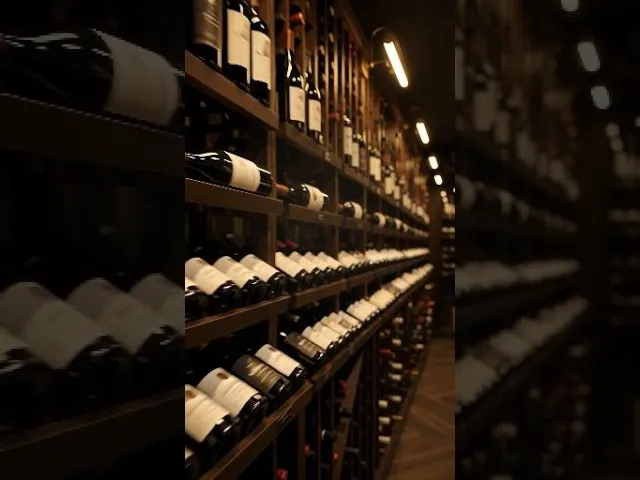
What Does It Cost When a Wine Cellar Fails?
It can cost the whole collection. 500 bottles averaging $150 is about $75,000 in one room. If the vapor barrier is botched and the cooling fails while nobody is home, Texas heat and humidity push the wine cellar to ambient. Corks dry, oxygen gets in, and within a week the wine is destroyed, not just damaged.
Transcript
Q: What does it cost when a wine cellar fails?
500 bottles, one failed vapor barrier, and the whole collection is gone in a week. Do the math with me. 500 bottles averaging around $150 each is roughly $75,000 sitting in one room.
Now picture this: an inexperienced contractor botches the vapor barrier. They skip the closed-cell seal, which leaves the whole cavity open to moisture. For six to 12 months you would never even know. Then the cooling fails while you’re on vacation, and there’s no one in the house to catch it. In a Texas summer, heat and humidity will flood that room.
Temperature swings are worse for wine than a steady temperature that’s slightly off, and these aren’t swings. They’re a free climb to ambient. Corks dry, oxygen creeps in, and within a week the collection isn’t damaged, it’s destroyed. And I mean gone.
This is exactly why you’re not paying for a closet with a cooling unit bolted in. You’re paying for a fortress around a $75,000 asset: a sealed envelope, redundant climate control, and a smart monitoring alert that fires before a small failure becomes a total loss. Share this with the collector who’s cutting corners.
The Full Breakdown
Price the collection before you price the wine cellar. Most buyers compare wine cellar quotes against each other. The better comparison is against what the room will hold. Count bottles, estimate an average value, and you have the size of the asset the build is protecting. A few thousand dollars saved on insulation or cooling looks very different next to a five- or six-figure collection.
Failures stack quietly. A missing vapor barrier rarely shows up on day one. Moisture migrates into the wall cavity over months, insulation loses performance, and the cooling unit works harder to hold 55°F. That extra strain makes a breakdown more likely, and breakdowns tend to happen at the worst time: a summer week when the house is empty. A wine cellar that’s built right is designed so one problem doesn’t become the next one.
Steady beats perfect, and nothing beats an early warning. Wine handles a temperature that’s a few degrees off far better than repeated swings. The real danger is an unmonitored failure, where the room drifts all the way up to the temperature of the house around it. That’s why we pair a continuous closed-cell envelope with properly sized, serviceable cooling and smart temperature and humidity monitoring that alerts your phone. You hear about a problem in minutes, not when you get back from vacation.
Build the Fortress, Not the Closet
We design the sealed envelope, right-sized cooling, and smart monitoring together, so one failure never costs you the collection.