
Why Do Wine Cellars Grow Mold?
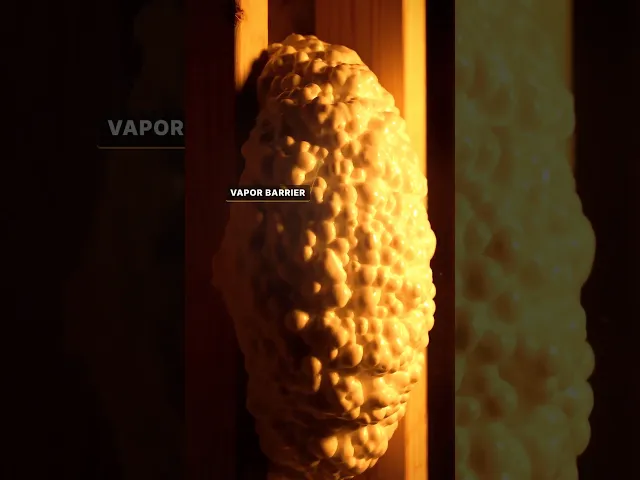
Wine cellars grow mold when they're built without a continuous vapor barrier. A 55°F cellar inside a 75°F house creates condensation inside the wall cavity; with no barrier, that moisture soaks the framing and mold takes the walls. We strip to the studs and seal the entire envelope in closed-cell spray foam before any glass or racking goes up.
Transcript
It’s called a vapor barrier — the one layer you’ll never see. Here’s the problem: you’ve got a 55-degree room sitting inside a 75-degree Texas house. Cold meets warm right there in the wall cavity, and that creates condensation you can’t see. Skip the barrier, and that moisture has nowhere to go. It soaks the framing. Mold takes the walls. So before any glass or racking goes up, we strip to studs and seal the entire envelope in closed-cell foam. The pretty part comes last. The barrier comes first.
The Full Breakdown
The damage happens where you can’t see it. A wine cellar runs ~20°F colder than the house around it. Somewhere inside the wall, warm humid air hits a surface cold enough to reach its dew point, and water condenses inside the cavity — invisible until the drywall stains, the framing softens, and mold blooms.
A continuous closed-cell spray-foam vapor barrier stops it. Closed-cell foam is both insulation (~R-6 to R-7 per inch) and a true vapor retarder, so moisture can’t reach the framing in the first place. That’s why we gut a cellar to the studs and seal every cavity and seam before a single rack or pane goes in. In the Texas climate especially, the barrier isn’t optional — it’s the entire difference between a cellar that lasts a lifetime and one that quietly destroys itself.
The Barrier Comes First
We strip every wine cellar to the studs and seal the envelope in closed-cell foam — so mold never gets a foothold.